He represented Great Britain as a hurdler and Wales as a rugby player, and
now Nigel Walker is helping other athletes achieve in his role as national
director for the English Institute of Sport. He talks to Magali Robathan
By Magali Robathan | Published in Leisure Management 2014 issue 4
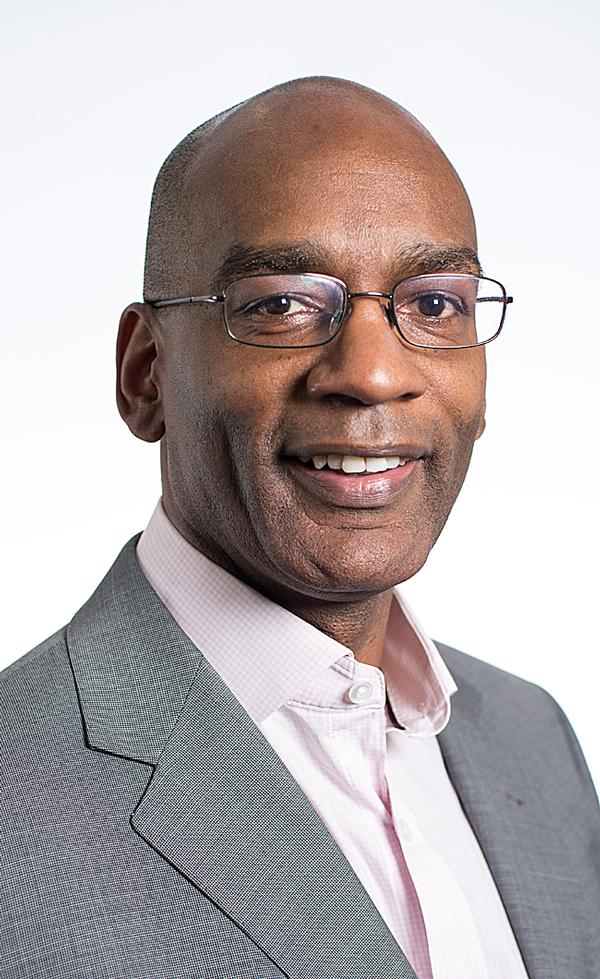
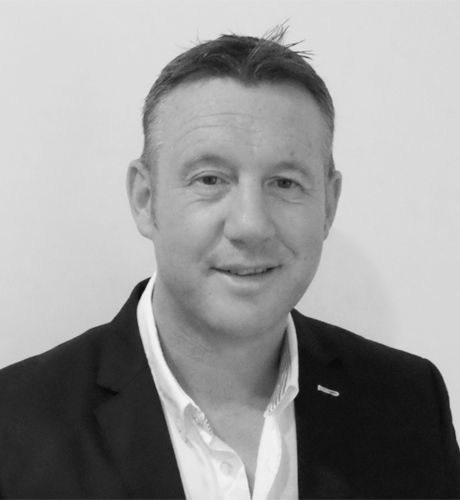
Nigel Walker has been national director for the EIS since 2010
UK Sport recently announced that it believes Great Britain can make history at the Rio Olympic and Paralympic Games in 2016 by being the first country to win more medals post hosting the Olympics and Paralympics.
It’s an ambitious target, but there’s no denying that Great Britain is flying high in terms of sporting success at the moment. The recent Commonwealth Games in Glasgow saw the home nations win 63 per cent of the medals in Olympic and Paralympic disciplines (including 77 per cent of the gold medals), the Sochi Winter Olympics were Team GB’s best in terms of medals since 1924 and Team GB far outperformed its target of 48 medals at London 2012 with a total of 65 medals.
This success is not a matter of chance. The UK now has a very well funded elite sports system, and behind each athlete is a whole team of people – from coaches and physiotherapists to performance analysts, scientists and engineers – working to improve their chances of success.
This is where the English Institute of Sport comes in. The EIS – or the ‘team behind the team’ as it’s often referred to – is UK Sport’s science, medicine and technology arm. Introduced in 2002, the publicly-funded body now has more than 300 staff and delivers over 4,000 hours of sport science and medicine to around 1,700 athletes every week out of its network of high performance centres around the UK.
The organisation worked with 86 per cent of the Olympic and Paralympic medallists at London 2012, and 70 per cent of Team England, 30 per cent of Team Scotland and 35 per cent of Team Wales at the Commonwealth Games in Glasgow this year.
Next on the horizon, of course, are the 2016 Olympic and Paralympic Games in Rio, and the EIS is already working hard to prepare Great Britain’s athletes for success.
Here we talk to EIS national director and ex athletics champion and rugby player Nigel Walker about how the EIS works, the athletes it’s helped and its plans for Rio and beyond.
How would you sum up the aims of the English Institute of Sport? The EIS is there to provide support and intervention across science, medicine, technology and engineering; in short to make our athletes more equipped, better equipped, more robust and technically more proficient so that their chances of success on the international stage are increased.
Science covers strength and conditioning, physiology, nutrition, psychology, performance analysis, biomechanics, performance lifestyle and talent ID. Across medicine our work centres mainly around the provision of physiotherapy, soft tissue therapy and doctors. Our work within technology and engineering is mainly done with our partners – including BAE Systems and McLaren Applied Technologies – and is in those sports, predominantly, which have a vehicle of some description, such as rowing, canoeing, sailing, cycling, bobsleigh, and skeleton.
Can you give an example of an athlete EIS has helped? Lizzie Yarnold is a good example. Lizzie was identified by one of the initiatives we run as part of our Performance Pathways scheme [the Girls4Gold talent identification scheme is a joint initiative run by the EIS and UK Sport]. Once Lizzie had been selected as a skeleton athlete, we helped her with physiotherapy, strength and conditioning and all the science and medicine I’ve already talked about. We also helped to design her sled, and we designed her helmet and suit to cut down wind resistance. Of course she went on to win a gold medal at the Sochi Winter Olympics.
What does your role as national director of the EIS involve? My role is to set the direction of travel for the organisation; to make sure it’s equipped to provide the support service we offer today, and that we also have an eye on the future four or eight years ahead. We haven’t got Rio out of the way yet, but already we’re beginning to plan for Tokyo 2020 and the PyeongChang Winter Olympics in 2018.
We try to look at trends, and establish what changes might take place in sport. The world of sport is very different today than it was in 2004 in Athens, or even 2008 in Beijing. We’ve made changes, and are moving towards a more technical interface with sports, working together to identify what it takes to win and then ensuring the right expertise is applied to deliver results.
If I take you back to 1996 in Atlanta, Great Britain only won one gold medal. A lot has happened since then. The most significant change has been the introduction of the National Lottery in 1997; we are very well funded now. Back in 1986, if you’d said that in 2008 Team GB would win 47 medals, of which 19 would be gold, people would have laughed at you. If you’d said that four years later Team GB would win 65 medals or ParalympicsGB would win 120 medals, no one would have believed you. It’s been a huge change.
How important is partnership working to the EIS? It’s very important to us. Our best known partnerships are with UK Sport, the national governing bodies of the various sports, the British Olympic Association and the British Paralympic Association. We also have partnerships with those involved in the facilities we operate out of such as Sport England and the landlords of the partner sites we operate out of, including Bath University, Loughborough University and Bisham Abbey.
Then of course we’ve got commercial partnerships for everything from nutrition products to engineering and software. These partnerships are vital to us, because they have the products and/or expertise we need. If you think of McLaren F1 and the speed those cars go, you can imagine the engineering and technological advances which McLaren have at their disposal which we couldn’t otherwise afford. Our partners open up their facilities to allow us to test and stay one step ahead of the opposition. We also have academic partnerships with universities which allow us to further our understanding of performance questions in an applied environment.
We talked about Lizzie Yarnold and the aerodynamics of her suit and helmet. All of that work was done in partnership with other organisations.
Who takes the lead on your partnerships with McLaren and Systems? We’ve got a performance solutions team which is responsible for putting a team in place to work alongside sports to provide bespoke performance impacting solutions. Each performance lead within the team has three or four sports they work with. It’s their job to identify with the sport what the performance solution will be to particular performance issues. The EIS will then go out and establish the best partnership to strike up to solve that issue.
Our research and innovations team has a series of partnerships with external providers who help develop solutions, test equipment and give us in-kind expertise or technology that will provide expertise or solutions that we simply couldn’t provide in-house.
How has 2014 been for you? It’s been good. Sochi was the best Winter Olympics and Paralympics in living memory for Great Britain. Knowing that employees of the EIS have contributed to the success of those athletes is enormously gratifying.
We’ve also just come off the back of the Commonwealth Games where not just Team England, but also Team Wales, Team Scotland and Team Northern Ireland did particularly well.
Glasgow was fantastic. It’s not just about the sport – of course that’s very important – but also about the atmosphere and the camaraderie. People were beginning to question whether the Commonwealth Games had a future; the Games in Glasgow have very firmly answered that.
You started your career as a hurdler. What were the highlights? I represented Great Britain on 30 occasions. I first competed in the Olympic Games in 1984 and was a semi finalist that year. I won bronze medals at the World Indoor Championships and the European Indoor Championships in 1987. My personal highlight was probably winning bronze at the World Indoor Championships in 1987. I felt absolutely amazing on the day.
At the time, way before Lottery funding, I was working full time in the civil service. I was training eight or 10 sessions a week around my job. To be rewarded with a medal made me feel that all the sacrifices were worth it.
There were also plenty of low points. I fell in the semi final at the 1984 Los Angeles Olympic Games, I was injured for a large part of the 1988 season and therefore didn’t get to go back to the Olympics in 1992. I came fifth in the Olympic trials in 1992, which prompted me to retire from athletics and take up rugby.
As a Welshman, I’d always had a yearning to play rugby, and had played as a teenager. I knew at that stage that I’d no longer be able to represent Great Britain at the highest level and at 29, it was a question of now or never, so I decided to throw my lot in with my local club Cardiff.
What was the highlight of your rugby career? Playing for Wales. In 1994 we played France at home, after beating Scotland and Ireland. I scored the try that sealed the game against France and we went on to play the grand slam decider against England. All these years later, people still come up to me to talk about that game.
What did you do next? I made my final appearance against England in 1998, then worked as a broadcaster for three or four years. I worked for ITV, Channel Four and British Eurosport as an athletics commentator and rugby pundit. I joined the BBC as head of sport in 2001. I worked for the BBC in various roles, including head of internal communication, until I joined the EIS in 2010.
How did you get the role at the EIS? I was on the UK Sport board from 2006 to 2010 so people were aware of me. I was asked to apply and was successful in my application.
At the time, I wasn’t working in sport, although I was on the board of UK Sport. I was aware of the sea change that was going across the high performance system and I wanted to be part of it. There was a real shift in terms of funding, the attitude towards elite sport and the development of UK Sport’s ‘No Compromise’ approach.
What is the EIS doing to prepare for the Rio 2016 Olympic and Paralympic Games? We’re working very closely with the BPA and the BOA to prepare our athletes. I have to be a little bit coy about the details of what we’re working on with them, but I can say that we’re looking at wind direction, climate, humidity and suitable clothing for our athletes.
As soon as our athletes leave this country they will go to a holding camp either in Brazil or in some cases other destinations, in order to acclimatise them. We’re helping to do a lot of the work involved in identifying those holding camps and the conditions the athletes are going to face in Rio.
What are our chances of being the first nation to win more Olympic medals post hosting? I think we’ve got an excellent chance. It’s a very challenging target – you’d expect it to be, as no-one has ever done it before – but I think the sports are going to rise to the challenge.
We’re two years away from the Rio 2016 Olympics, and we’re better placed than we were two years away from the London Olympics.
That’s not to say anybody’s getting complacent, of course, but we are in a good position at the moment.
What are biggest differences between when you were an athlete and today? It’s the level of support available. Today our athletes have 360 degree support from experts in performance lifestyle, psychology, physiotherapy, nutrition and so on.
I had a full time job outside of athletics and I didn’t have any of those support services. My physiotherapist was the wife of a friend, nutrition was what my mum put on the table, performance analysis would be me remembering to ask my mum to tape my race so I could look at it afterwards.
What are the biggest trends affecting the work of the EIS? The biggest trend is probably in other nations becoming equally well funded, or bridging the gap in funding, and then putting in place a high performance system like we have in the UK.
How do you spend your free time? I’m married, and I’ve got three daughters, aged 21, 19 and 16 so I have my hands full. With the amount of travelling I do, just being at home is often relaxation enough.
Through its network of nine high performance centres across England, the EIS is able to provide athletes and coaches with access to high quality facilities that are specifically designed for elite athletes.
English Institute of Sport’s high performance sites: - Sportcity Manchester - EIS Sheffield - Loughborough University - Bisham Abbey - University of Bath - Alexander Stadium, Birmingham - Lee Valley Athletics Centre - Lilleshall National Sports Centre - National Badminton Centre, Milton Keynes
The EIS also has a further nine partner sites
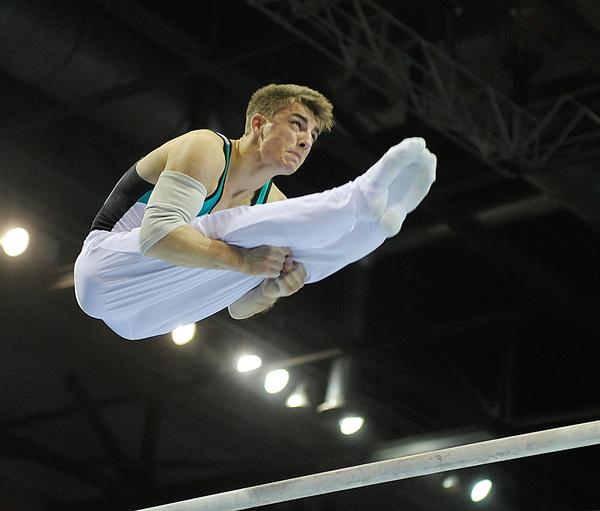
CASE STUDY Gymnastics’ athlete profiling The English Institute of Sport (EIS) sport science and medical team, working with British Gymnastics, have built an athlete profiling system to help inform individualised performance plans as well as collect a breadth of data they hope will inform their work over future Olympic cycles.
“We’ve been screening athletes for years” says EIS head of sport science and medicine for British Gymnastics, Louise Fawcett. “However, what we’ve been working towards over the past cycle is a profiling process, giving coaches and athletes immediate feedback and information but also storing data which could help inform work we do in four, eight, 12 years.”
EIS physiotherapist Simon Spencer, who has worked closely with the team on rehabilitation and profiling, explains what profiling aims to give to the programme.
“Profiling provides an opportunity to identify intrinsic risk factors that may predispose an athlete to injury, the ability to establish potential links between the physical characteristics of athletes and injuries they sustain, and individualised performance targets for return to play following injury.”
The process involves athletes being put through a series of tests by EIS practitioners working in medicine, strength and conditioning, physiotherapy, performance nutrition and performance analysis.
The results are then fed back to athletes and their coaches within 24/48 hours, something the team says is vital in giving athletes a picture of where they are right now – as opposed to weeks or months down the line.
Spencer then reviews the data in an attempt to identify potential performance benchmarks before a more detailed meeting is held between sport science and medical staff and national coaches. These meetings help establish the significance of the data collected, potential links to performance and what work is required to achieve the agreed benchmarks.
“We’re beginning to understand what physical abilities underpin elite gymnastic performance,” explains Spencer.
“Some physical qualities help identify athletic competency and robustness and are capped at an acceptable level – once they are achieved, further improvements are unlikely to result in performance gains. Other qualities are directly linked to performance output where on-going development is an important part of the gymnast’s overall training plan.”
www.eis2win.co.uk
PHOTO: British Gymnastics
Gymnastics’ athlete profiling
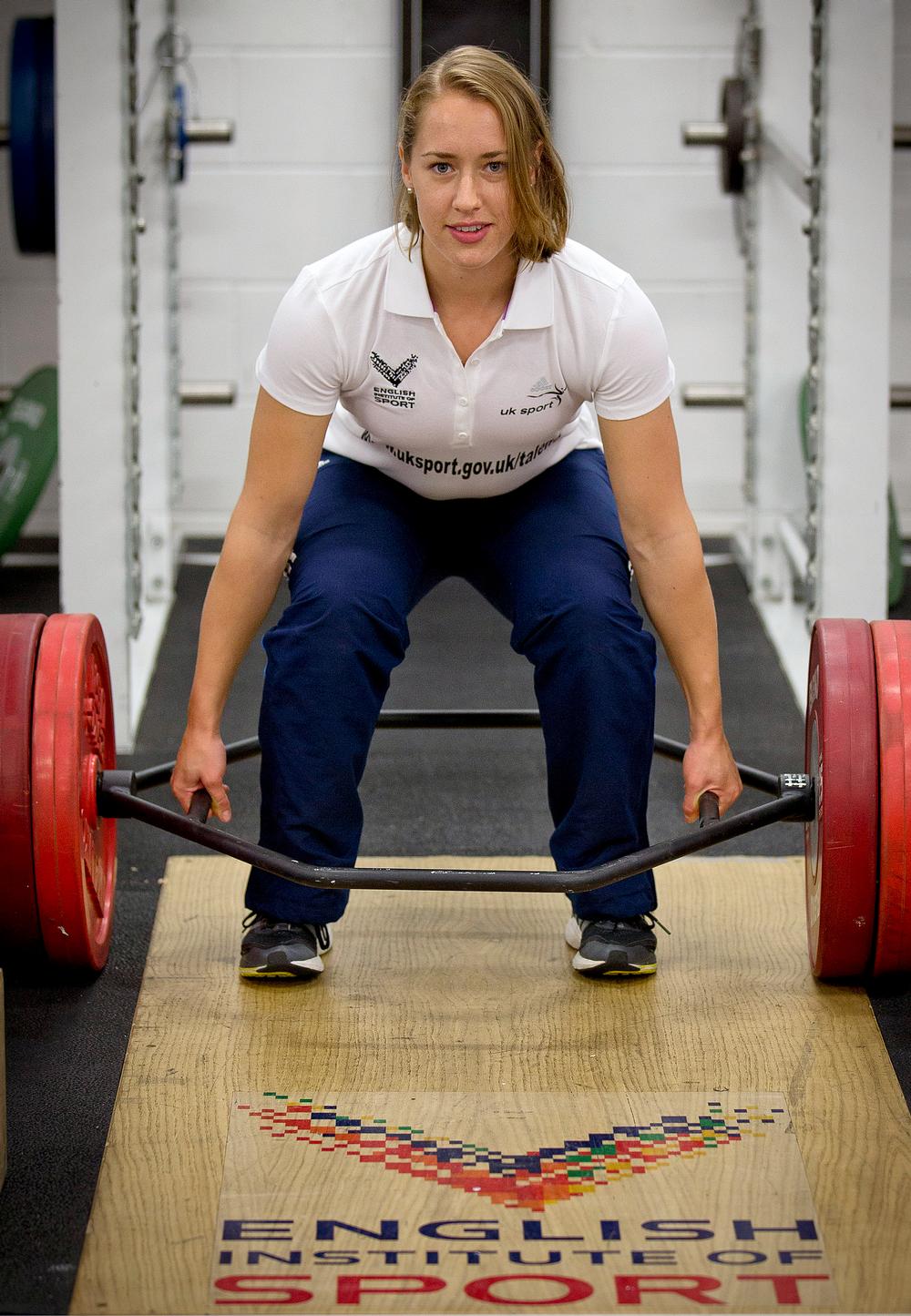
The EIS helped to identify Lizzie Yarnold and worked with her to prepare for Sochi 2014
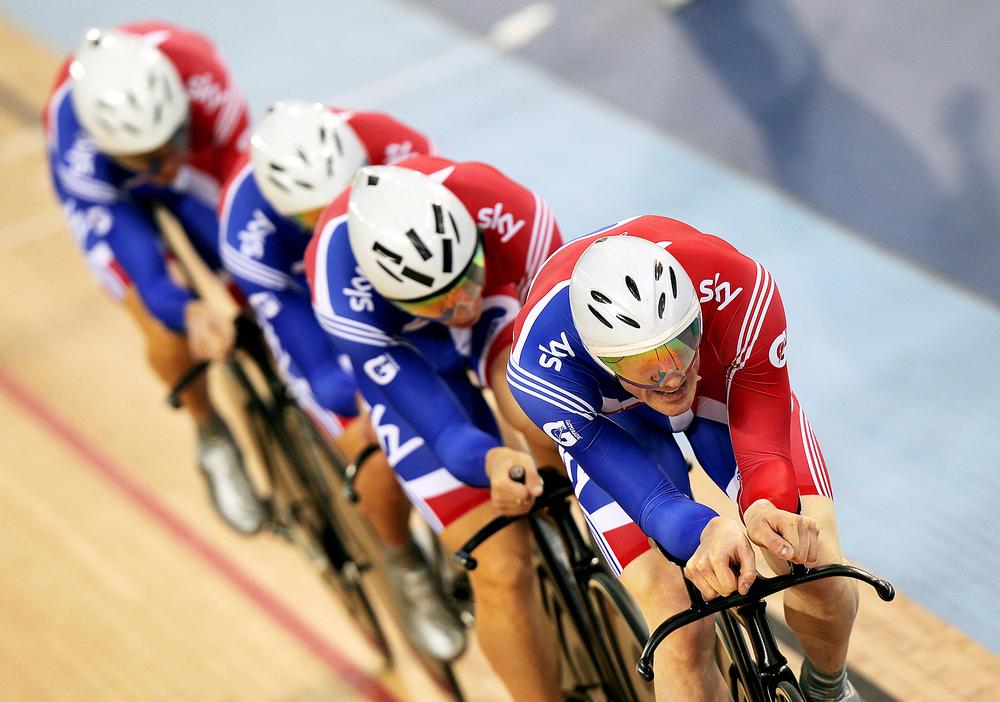
The EIS has worked with Ed Clancy who won medals at the Commonwealth Games
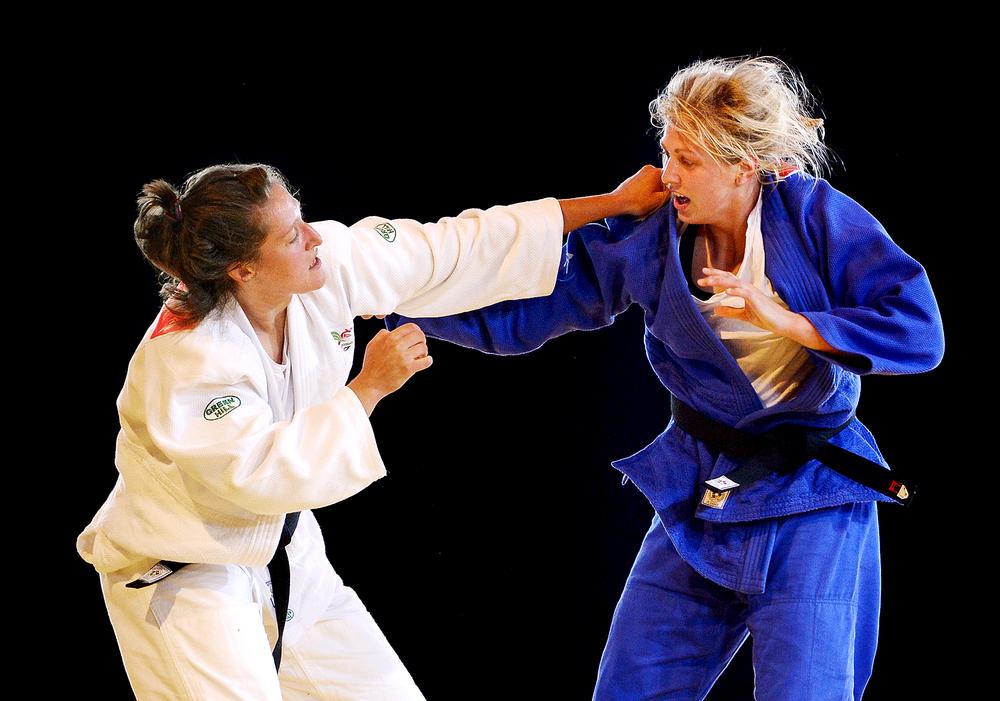
The EIS has worked with Gemma Gibbons, who won medals at the Commonwealth Games / PHOTOS: Press Association
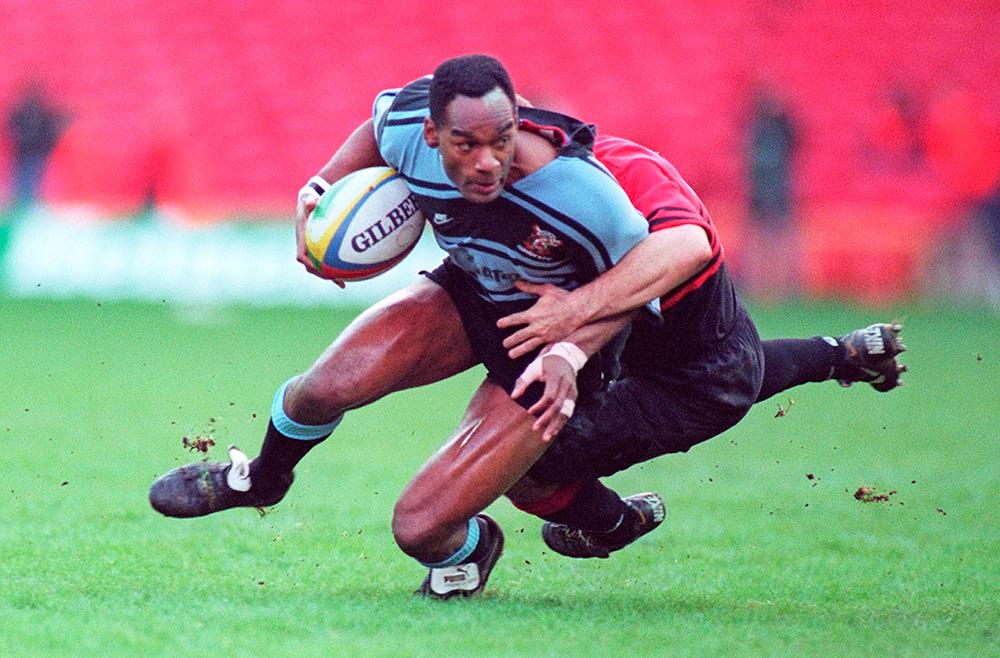
Walker retired from athletics in 1992 to pursue a second career as a rugby player for Cardiff RFC / PHOTO: Huw Evans Agency
COMPANY PROFILES
TechnoAlpin Indoor
TechnoAlpin is the world leader for snowmaking systems. With the Indoor snow division, TechnoAlpin c [more...]
An opportunity to reimagine one of the UK’s most recognisable towers has been formally
opened by Rivington Hark, as St Johns Beacon invites operators and partners to shape its
next phase. [more...]
He represented Great Britain as a hurdler and Wales as a rugby player, and
now Nigel Walker is helping other athletes achieve in his role as national
director for the English Institute of Sport. He talks to Magali Robathan
By Magali Robathan | Published in Leisure Management 2014 issue 4
Nigel Walker has been national director for the EIS since 2010
UK Sport recently announced that it believes Great Britain can make history at the Rio Olympic and Paralympic Games in 2016 by being the first country to win more medals post hosting the Olympics and Paralympics.
It’s an ambitious target, but there’s no denying that Great Britain is flying high in terms of sporting success at the moment. The recent Commonwealth Games in Glasgow saw the home nations win 63 per cent of the medals in Olympic and Paralympic disciplines (including 77 per cent of the gold medals), the Sochi Winter Olympics were Team GB’s best in terms of medals since 1924 and Team GB far outperformed its target of 48 medals at London 2012 with a total of 65 medals.
This success is not a matter of chance. The UK now has a very well funded elite sports system, and behind each athlete is a whole team of people – from coaches and physiotherapists to performance analysts, scientists and engineers – working to improve their chances of success.
This is where the English Institute of Sport comes in. The EIS – or the ‘team behind the team’ as it’s often referred to – is UK Sport’s science, medicine and technology arm. Introduced in 2002, the publicly-funded body now has more than 300 staff and delivers over 4,000 hours of sport science and medicine to around 1,700 athletes every week out of its network of high performance centres around the UK.
The organisation worked with 86 per cent of the Olympic and Paralympic medallists at London 2012, and 70 per cent of Team England, 30 per cent of Team Scotland and 35 per cent of Team Wales at the Commonwealth Games in Glasgow this year.
Next on the horizon, of course, are the 2016 Olympic and Paralympic Games in Rio, and the EIS is already working hard to prepare Great Britain’s athletes for success.
Here we talk to EIS national director and ex athletics champion and rugby player Nigel Walker about how the EIS works, the athletes it’s helped and its plans for Rio and beyond.
How would you sum up the aims of the English Institute of Sport? The EIS is there to provide support and intervention across science, medicine, technology and engineering; in short to make our athletes more equipped, better equipped, more robust and technically more proficient so that their chances of success on the international stage are increased.
Science covers strength and conditioning, physiology, nutrition, psychology, performance analysis, biomechanics, performance lifestyle and talent ID. Across medicine our work centres mainly around the provision of physiotherapy, soft tissue therapy and doctors. Our work within technology and engineering is mainly done with our partners – including BAE Systems and McLaren Applied Technologies – and is in those sports, predominantly, which have a vehicle of some description, such as rowing, canoeing, sailing, cycling, bobsleigh, and skeleton.
Can you give an example of an athlete EIS has helped? Lizzie Yarnold is a good example. Lizzie was identified by one of the initiatives we run as part of our Performance Pathways scheme [the Girls4Gold talent identification scheme is a joint initiative run by the EIS and UK Sport]. Once Lizzie had been selected as a skeleton athlete, we helped her with physiotherapy, strength and conditioning and all the science and medicine I’ve already talked about. We also helped to design her sled, and we designed her helmet and suit to cut down wind resistance. Of course she went on to win a gold medal at the Sochi Winter Olympics.
What does your role as national director of the EIS involve? My role is to set the direction of travel for the organisation; to make sure it’s equipped to provide the support service we offer today, and that we also have an eye on the future four or eight years ahead. We haven’t got Rio out of the way yet, but already we’re beginning to plan for Tokyo 2020 and the PyeongChang Winter Olympics in 2018.
We try to look at trends, and establish what changes might take place in sport. The world of sport is very different today than it was in 2004 in Athens, or even 2008 in Beijing. We’ve made changes, and are moving towards a more technical interface with sports, working together to identify what it takes to win and then ensuring the right expertise is applied to deliver results.
If I take you back to 1996 in Atlanta, Great Britain only won one gold medal. A lot has happened since then. The most significant change has been the introduction of the National Lottery in 1997; we are very well funded now. Back in 1986, if you’d said that in 2008 Team GB would win 47 medals, of which 19 would be gold, people would have laughed at you. If you’d said that four years later Team GB would win 65 medals or ParalympicsGB would win 120 medals, no one would have believed you. It’s been a huge change.
How important is partnership working to the EIS? It’s very important to us. Our best known partnerships are with UK Sport, the national governing bodies of the various sports, the British Olympic Association and the British Paralympic Association. We also have partnerships with those involved in the facilities we operate out of such as Sport England and the landlords of the partner sites we operate out of, including Bath University, Loughborough University and Bisham Abbey.
Then of course we’ve got commercial partnerships for everything from nutrition products to engineering and software. These partnerships are vital to us, because they have the products and/or expertise we need. If you think of McLaren F1 and the speed those cars go, you can imagine the engineering and technological advances which McLaren have at their disposal which we couldn’t otherwise afford. Our partners open up their facilities to allow us to test and stay one step ahead of the opposition. We also have academic partnerships with universities which allow us to further our understanding of performance questions in an applied environment.
We talked about Lizzie Yarnold and the aerodynamics of her suit and helmet. All of that work was done in partnership with other organisations.
Who takes the lead on your partnerships with McLaren and Systems? We’ve got a performance solutions team which is responsible for putting a team in place to work alongside sports to provide bespoke performance impacting solutions. Each performance lead within the team has three or four sports they work with. It’s their job to identify with the sport what the performance solution will be to particular performance issues. The EIS will then go out and establish the best partnership to strike up to solve that issue.
Our research and innovations team has a series of partnerships with external providers who help develop solutions, test equipment and give us in-kind expertise or technology that will provide expertise or solutions that we simply couldn’t provide in-house.
How has 2014 been for you? It’s been good. Sochi was the best Winter Olympics and Paralympics in living memory for Great Britain. Knowing that employees of the EIS have contributed to the success of those athletes is enormously gratifying.
We’ve also just come off the back of the Commonwealth Games where not just Team England, but also Team Wales, Team Scotland and Team Northern Ireland did particularly well.
Glasgow was fantastic. It’s not just about the sport – of course that’s very important – but also about the atmosphere and the camaraderie. People were beginning to question whether the Commonwealth Games had a future; the Games in Glasgow have very firmly answered that.
You started your career as a hurdler. What were the highlights? I represented Great Britain on 30 occasions. I first competed in the Olympic Games in 1984 and was a semi finalist that year. I won bronze medals at the World Indoor Championships and the European Indoor Championships in 1987. My personal highlight was probably winning bronze at the World Indoor Championships in 1987. I felt absolutely amazing on the day.
At the time, way before Lottery funding, I was working full time in the civil service. I was training eight or 10 sessions a week around my job. To be rewarded with a medal made me feel that all the sacrifices were worth it.
There were also plenty of low points. I fell in the semi final at the 1984 Los Angeles Olympic Games, I was injured for a large part of the 1988 season and therefore didn’t get to go back to the Olympics in 1992. I came fifth in the Olympic trials in 1992, which prompted me to retire from athletics and take up rugby.
As a Welshman, I’d always had a yearning to play rugby, and had played as a teenager. I knew at that stage that I’d no longer be able to represent Great Britain at the highest level and at 29, it was a question of now or never, so I decided to throw my lot in with my local club Cardiff.
What was the highlight of your rugby career? Playing for Wales. In 1994 we played France at home, after beating Scotland and Ireland. I scored the try that sealed the game against France and we went on to play the grand slam decider against England. All these years later, people still come up to me to talk about that game.
What did you do next? I made my final appearance against England in 1998, then worked as a broadcaster for three or four years. I worked for ITV, Channel Four and British Eurosport as an athletics commentator and rugby pundit. I joined the BBC as head of sport in 2001. I worked for the BBC in various roles, including head of internal communication, until I joined the EIS in 2010.
How did you get the role at the EIS? I was on the UK Sport board from 2006 to 2010 so people were aware of me. I was asked to apply and was successful in my application.
At the time, I wasn’t working in sport, although I was on the board of UK Sport. I was aware of the sea change that was going across the high performance system and I wanted to be part of it. There was a real shift in terms of funding, the attitude towards elite sport and the development of UK Sport’s ‘No Compromise’ approach.
What is the EIS doing to prepare for the Rio 2016 Olympic and Paralympic Games? We’re working very closely with the BPA and the BOA to prepare our athletes. I have to be a little bit coy about the details of what we’re working on with them, but I can say that we’re looking at wind direction, climate, humidity and suitable clothing for our athletes.
As soon as our athletes leave this country they will go to a holding camp either in Brazil or in some cases other destinations, in order to acclimatise them. We’re helping to do a lot of the work involved in identifying those holding camps and the conditions the athletes are going to face in Rio.
What are our chances of being the first nation to win more Olympic medals post hosting? I think we’ve got an excellent chance. It’s a very challenging target – you’d expect it to be, as no-one has ever done it before – but I think the sports are going to rise to the challenge.
We’re two years away from the Rio 2016 Olympics, and we’re better placed than we were two years away from the London Olympics.
That’s not to say anybody’s getting complacent, of course, but we are in a good position at the moment.
What are biggest differences between when you were an athlete and today? It’s the level of support available. Today our athletes have 360 degree support from experts in performance lifestyle, psychology, physiotherapy, nutrition and so on.
I had a full time job outside of athletics and I didn’t have any of those support services. My physiotherapist was the wife of a friend, nutrition was what my mum put on the table, performance analysis would be me remembering to ask my mum to tape my race so I could look at it afterwards.
What are the biggest trends affecting the work of the EIS? The biggest trend is probably in other nations becoming equally well funded, or bridging the gap in funding, and then putting in place a high performance system like we have in the UK.
How do you spend your free time? I’m married, and I’ve got three daughters, aged 21, 19 and 16 so I have my hands full. With the amount of travelling I do, just being at home is often relaxation enough.
Through its network of nine high performance centres across England, the EIS is able to provide athletes and coaches with access to high quality facilities that are specifically designed for elite athletes.
English Institute of Sport’s high performance sites: - Sportcity Manchester - EIS Sheffield - Loughborough University - Bisham Abbey - University of Bath - Alexander Stadium, Birmingham - Lee Valley Athletics Centre - Lilleshall National Sports Centre - National Badminton Centre, Milton Keynes
The EIS also has a further nine partner sites
CASE STUDY Gymnastics’ athlete profiling The English Institute of Sport (EIS) sport science and medical team, working with British Gymnastics, have built an athlete profiling system to help inform individualised performance plans as well as collect a breadth of data they hope will inform their work over future Olympic cycles.
“We’ve been screening athletes for years” says EIS head of sport science and medicine for British Gymnastics, Louise Fawcett. “However, what we’ve been working towards over the past cycle is a profiling process, giving coaches and athletes immediate feedback and information but also storing data which could help inform work we do in four, eight, 12 years.”
EIS physiotherapist Simon Spencer, who has worked closely with the team on rehabilitation and profiling, explains what profiling aims to give to the programme.
“Profiling provides an opportunity to identify intrinsic risk factors that may predispose an athlete to injury, the ability to establish potential links between the physical characteristics of athletes and injuries they sustain, and individualised performance targets for return to play following injury.”
The process involves athletes being put through a series of tests by EIS practitioners working in medicine, strength and conditioning, physiotherapy, performance nutrition and performance analysis.
The results are then fed back to athletes and their coaches within 24/48 hours, something the team says is vital in giving athletes a picture of where they are right now – as opposed to weeks or months down the line.
Spencer then reviews the data in an attempt to identify potential performance benchmarks before a more detailed meeting is held between sport science and medical staff and national coaches. These meetings help establish the significance of the data collected, potential links to performance and what work is required to achieve the agreed benchmarks.
“We’re beginning to understand what physical abilities underpin elite gymnastic performance,” explains Spencer.
“Some physical qualities help identify athletic competency and robustness and are capped at an acceptable level – once they are achieved, further improvements are unlikely to result in performance gains. Other qualities are directly linked to performance output where on-going development is an important part of the gymnast’s overall training plan.”
www.eis2win.co.uk
PHOTO: British Gymnastics
Gymnastics’ athlete profiling
The EIS helped to identify Lizzie Yarnold and worked with her to prepare for Sochi 2014
The EIS has worked with Ed Clancy who won medals at the Commonwealth Games
The EIS has worked with Gemma Gibbons, who won medals at the Commonwealth Games / PHOTOS: Press Association
Walker retired from athletics in 1992 to pursue a second career as a rugby player for Cardiff RFC / PHOTO: Huw Evans Agency
Hotel de France, located on the British Isle of Jersey, has created a wellness retreat package
that includes a hot yoga session that will take place in Jersey Zoo’s butterfly sanctuary.
A new immersive attraction designed to transport visitors into the final hours of ancient Pompeii
is preparing to open near the world-famous archaeological site in southern Italy.
Experience design company, BRC Imagination Arts, has completed a transition that sees founder
Bob Rogers pass ownership of the business to four long-serving senior executives, while
remaining actively involved with the company.
Movie Park Germany has opened a new Paramount Pictures-themed attraction as part of its 30th
anniversary celebrations, using immersive storytelling and adaptive reuse to reinforce the park’s
longstanding “Hollywood in Germany” positioning.
Therme Manchester’s 28-acre development, which will include interconnected glass pavilions
that measure 65,000sq m, will be the largest bathing and wellbeing attraction in the world once
complete, according to prof David Russell, CEO of Therme UK.
Efteling has opened Hooghmoed, a new family drop tower designed to broaden the appeal of its
recently launched Sirene Island themed area and introduce younger visitors to thrill attractions.
A proposed Puy du Fou development near Bicester and Universal Destinations and Experiences’
planned resort in Bedford are emerging as part of a wider transformation of the Oxford–
Cambridge Growth Corridor into a major centre for UK leisure and tourism inv
Shedd Aquarium has opened the Immersion Theater developed in partnership with SimEx-
Iwerks, as part of a wider strategy to enhance the guest experience and create additional
revenue opportunities.
The UK government has announced a temporary reduction in VAT on visitor attractions and
children’s meals as part of a summer cost-of-living support package designed to stimulate the
visitor economy and encourage family days out.
As designer Yinka Ilori prepares for his first solo gallery show in London, he speaks exclusively
to CLADmag about his mission to spread joy, the power of play, and his bold approach to using
colour (including the colours you won’t see in his work).
The government of Thailand is exploring plans for a THB300bn (£6.3bn, US$8.3bn)
entertainment complex in the country’s Eastern Economic Corridor (EEC), with officials
proposing a large-scale theme park and sports destination as part of a broader tourism and
economic development strategy.
+ More news
COMPANY PROFILES
TechnoAlpin Indoor TechnoAlpin is the world leader for snowmaking systems. With the Indoor snow division, TechnoAlpin c [more...]
An opportunity to reimagine one of the UK’s most recognisable towers has been formally
opened by Rivington Hark, as St Johns Beacon invites operators and partners to shape its
next phase. [more...]