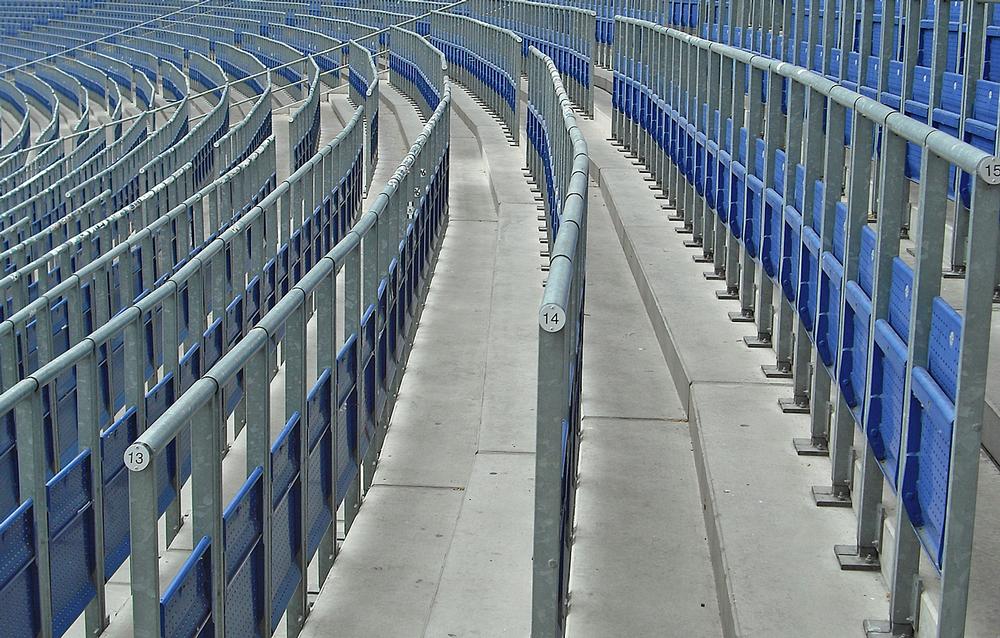
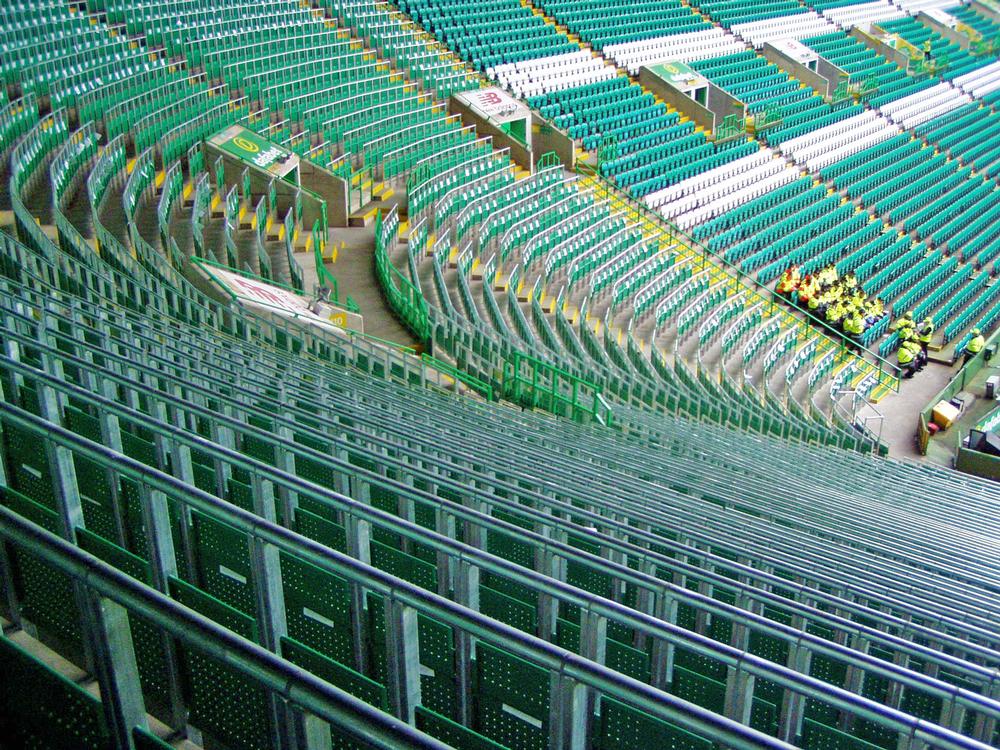
Rail seating is installed at the HDI Arena in Hannover, Germany
Standing areas disappeared from major English stadiums in the 1990s as a result of the Taylor Report, which was produced in the aftermath of the 1989 Hillsborough disaster – a human crush during an FA Cup semi-final that caused 96 fatalities and 766 injuries. Although it specified that “a failure of police control” was the main cause of the disaster, the report also deemed the terraces and poor quality crush barriers were a contributing factor.
The Taylor Report put forward 76 recommendations, including that all major stadiums should become all-seater venues and all spectators should be allocated a seat. The recommendations were passed into law, bringing an end to standing and radically re-shaping stadium design and the fan experience within English football.
Today, standing is still permitted in the lower leagues, where capacities tend to be smaller, but clubs in the top two divisions – the English Premier League and the Championship – are required to play their games at all-seater stadiums. The all-seater requirement also extends to any other stadiums used for international competitions, such as Wembley and the Principality Stadium in Cardiff.
There is, however, a growing groundswell of support for the return of standing areas from a number of sections of English football. Fans, clubs, stadium operators and even safety authorities have voiced views that there could be a place for properly-designed, purpose-built ‘safe standing’ areas within modern football stadiums.
MATTER OF CHOICE One of the leading campaigners for bringing back standing is the Football Supporters’ Federation (FSF). One of its major arguments in favour of standing is that the move would improve the atmosphere and fan experience during games. In its National Supporter Survey, the FSF asked fans why they would most like to stand at matches, and 71.6 per cent of the 4,287 respondents said standing would provide ‘a better atmosphere’.
There is also a customer-service aspect to reintroducing standing. “As campaigners, we think spectators should have a choice,” says John Darch, FSF member and the driving force behind the Safe Standing Roadshow campaign.
“A football crowd is now made up of a diverse range of people. There are those who prefer a VIP treatment in a comfortable hospitality box, there are families who want to sit together in a safe environment and there are those who like to stand up to watch their football. We feel that the fans who want to stand up are being denied that choice.”
WHAT IS SAFE STANDING? Introducing standing areas at all-seater stadiums would require – alongside a change in the Football Spectators Act 1989 – the reconfiguration of existing seating areas into standing zones. The standing areas would also need to have the ability to be converted back to seating during European and international games, as both FIFA and UEFA require all games under their jurisdiction to be played in all-seater stadiums.
A number of stadiums outside the UK now house these convertible standing areas. They’re particularly popular in Germany, where all-seater stadiums have never required for domestic games.
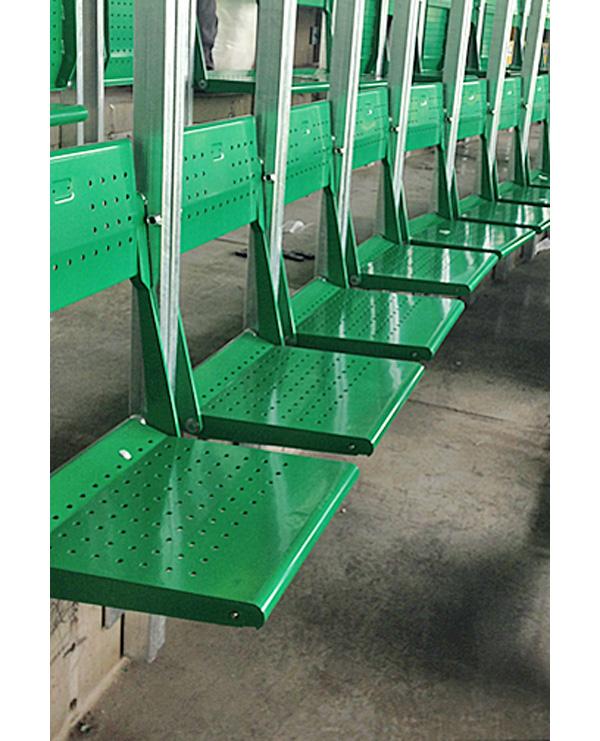
In principle, there are three different ways to provide adjustable safe standing areas. Perhaps the most popular method – and the one favoured by the FSF – is rail seating, in which fold-up metal seats are fitted within a metal frame, which forms a waist-high rail that keeps spectators separated into rows.
Bolt-on seats, meanwhile, are a way of making traditional terracing fit UEFA regulations. To convert to a seated area, the terraces’ crush barriers are removed and each row is fitted with temporary seating, fixed into place using secure bolts.
There are also fold-away seating products, in which seats are hidden away under aluminium terrace steps to create a standing area. During domestic games, the area has the appearance of traditional terracing with crush barriers, but for UEFA and FIFA games, the aluminium steps are folded back and the seats flipped up.
In the UK, it is the rail seating product which is providing the most popular possible solution for clubs – and the focus for the FSF when campaigning for safe standing. “Seeing the rail seating that is being introduced in Germany has given us something that we can now put in front of the politicians,” Darch says.
“We can also point out that we already have standing in our stadia – people are standing in seated areas not designed for the purpose. Wouldn’t it be far better to let the fans who are standing – and will go on standing – stand in a safe area?”
SAFETY HAZARD The introduction of secure standing areas at stadiums – particularly those using rail seats – has secured the cautious backing of the Sports Ground Safety Authority (SGSA).
As the organisation responsible for safety at the UK’s sports venues, the SGSA has acknowledged that all-seater stadiums haven’t eradicated standing. It sees the current trend of fans standing in seating areas as one of the major safety hazards at modern football stadiums. Earlier this year, SGSA’s chief inspector, Ken Scott, said that the government should address supporters’ wishes to stand, before “something happens”.
Caroline Hale, SGSA’s head of communications, is keen to emphasise that the authority’s tentative support for safe standing is down to tackling the safety issue. “I think it’s important to distinguish that there are two issues here – the desire to return to standing, which the FSF is campaigning on, and the issue of persistent standing, where people are choosing to stand for a prolonged time in seating areas,” Hale says.
“People who stand in seating areas are much more at risk of injury than they are in an area that’s designed for standing – so therefore we do see safe standing as a potential solution to the issue.“
CELTIC STANDING As well German stadia, safe standing advocates in England can point north of the border to Scotland for a successful example. Thanks to differing stadia legislation, Scottish Premiership club Celtic FC became the first club in the UK to install rail seating at an all-seater stadium. In 2016, the club installed nearly 3,000 rail seats – from UK supplier Ferco – at its Celtic Park home. As well as eradicating the issue of persistent standing, the safe standing zone has been credited with improving the stadium’s atmosphere.
“Originally we were challenged by our local authority safety team to come up with a solution for fans persistently standing in seated areas,” says Robert Buchanan, Celtic FC’s stadium manager.
“We looked at various solutions and the rail seating we saw in Germany was by far the best one for us. We picked a corner site at Celtic Park, because it fitted in with the dynamics of the stadium – and we didn’t lose too many seats in that area. It’s been a fantastic success – the fans enjoy it.”
Buchanan adds that there are also safety management advantages in using the rail seating. “There are no surges and no danger of fans being pushed over,” he says.
“Also, when we first installed the standing area, the fire brigade and ambulance service were worried about access and how they’d be able to get into the area.
“Since they’ve worked in the area, they’ve said that it’s a fantastic solution and the ‘best thing that could have happened’, as they are fully protected on both sides when they go into the crowd.”
WHAT NEXT? There is no doubt that the momentum towards introducing safe standing areas at English clubs is increasing. In 2014, the English Football League (EFL) voted in favour of exploring safe standing and called for the minister for sport to review stadium arrangements for Championship clubs. Meanwhile, the English Premier League is expected to complete its own consultation of safe standing by the end of 2017.
There is also movement at government level. Sports minister Tracey Crouch is set to have a meeting with representatives of the SGSA later this year, which is significant, considering that for standing areas to return, the government would need to instigate a change in law.
The final say of whether a stadium will introduce standing areas, however, should always lie with the clubs, says Michael Brunskill, FSF’s director of communications.
“We’ve always said that it should be up to each club – in consultation with their fans,” Brunskill says. “We’d never say, ‘every club has to have a safe standing area’, but the opportunity should be there. If a club and its fans want one, they should be allowed to have one.”
Shreswbury town first with safe standing League One club Shrewsbury Town is set to become the first English club to establish a safe standing area at an all-seater stadium. Earlier this year, the club launched a crowdfunding campaign to fund the installation of 550 rail seats at its Montgomery Waters Meadow stadium. In October, the club reached its target of £65,000.
Brian Caldwell, Shrewsbury Town CEO, said: “We’re delighted that Shrewsbury Town will be the flagship club in addressing this issue, which is so important to so many fans. We’ll now continue to work closely with our local Safety Advisory Group to gain the necessary certification for the safe standing area and we hope to have supporters watching home games from the safe standing area before the end of the season.”
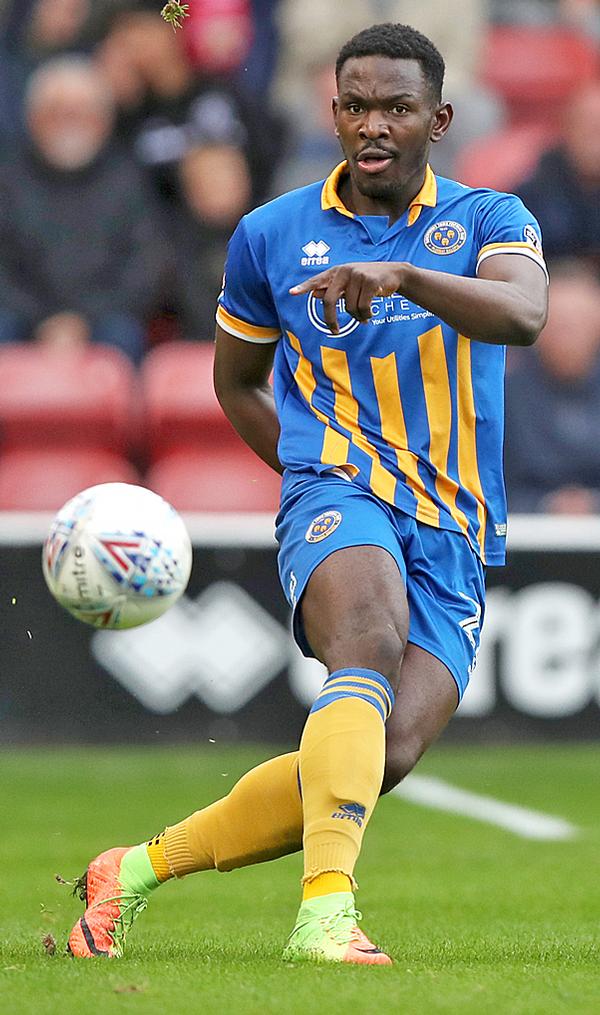
Shrewsbury Town’s Aristote Nsiala
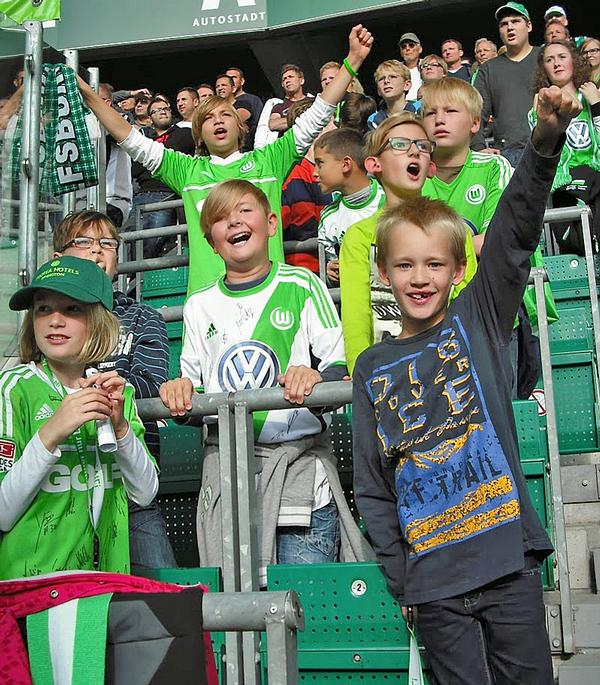
Standing can even be safe for kids
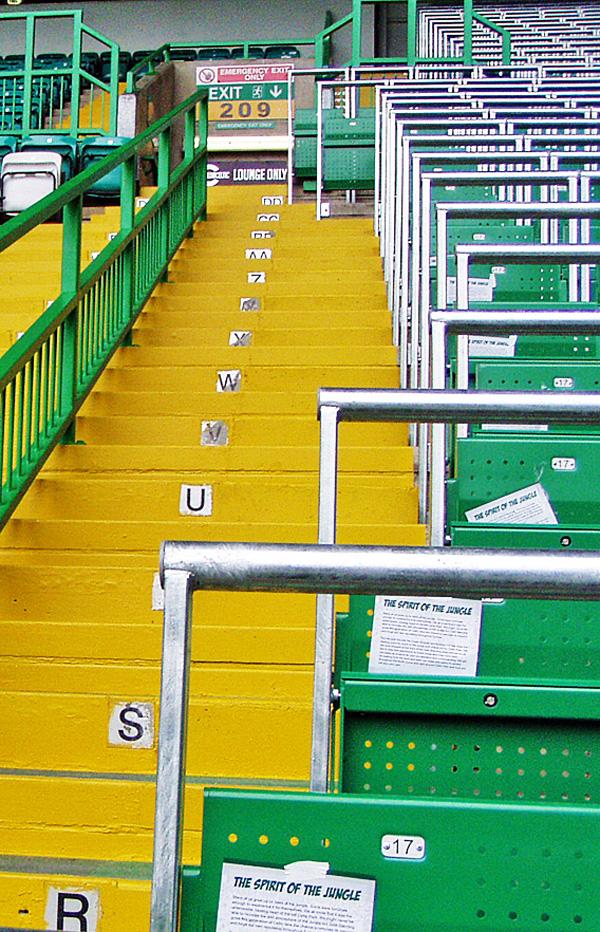
Fans at Celtic FC’s Celtic Park stadium enjoy the atmosphere in a safe standing area
Rail seating features folding seats within a metal frame that separates the rows
Celtic FC installed nearly 3,000 rail seats in 2016, a move credited with improving the atmosphere of matches
Kids safe standing area at VfL Wolfsburg 800
Separation barriers prevent surges
and protect access to the area
Rail seating is installed at the HDI Arena in Hannover, Germany
Standing areas disappeared from major English stadiums in the 1990s as a result of the Taylor Report, which was produced in the aftermath of the 1989 Hillsborough disaster – a human crush during an FA Cup semi-final that caused 96 fatalities and 766 injuries. Although it specified that “a failure of police control” was the main cause of the disaster, the report also deemed the terraces and poor quality crush barriers were a contributing factor.
The Taylor Report put forward 76 recommendations, including that all major stadiums should become all-seater venues and all spectators should be allocated a seat. The recommendations were passed into law, bringing an end to standing and radically re-shaping stadium design and the fan experience within English football.
Today, standing is still permitted in the lower leagues, where capacities tend to be smaller, but clubs in the top two divisions – the English Premier League and the Championship – are required to play their games at all-seater stadiums. The all-seater requirement also extends to any other stadiums used for international competitions, such as Wembley and the Principality Stadium in Cardiff.
There is, however, a growing groundswell of support for the return of standing areas from a number of sections of English football. Fans, clubs, stadium operators and even safety authorities have voiced views that there could be a place for properly-designed, purpose-built ‘safe standing’ areas within modern football stadiums.
MATTER OF CHOICE One of the leading campaigners for bringing back standing is the Football Supporters’ Federation (FSF). One of its major arguments in favour of standing is that the move would improve the atmosphere and fan experience during games. In its National Supporter Survey, the FSF asked fans why they would most like to stand at matches, and 71.6 per cent of the 4,287 respondents said standing would provide ‘a better atmosphere’.
There is also a customer-service aspect to reintroducing standing. “As campaigners, we think spectators should have a choice,” says John Darch, FSF member and the driving force behind the Safe Standing Roadshow campaign.
“A football crowd is now made up of a diverse range of people. There are those who prefer a VIP treatment in a comfortable hospitality box, there are families who want to sit together in a safe environment and there are those who like to stand up to watch their football. We feel that the fans who want to stand up are being denied that choice.”
WHAT IS SAFE STANDING? Introducing standing areas at all-seater stadiums would require – alongside a change in the Football Spectators Act 1989 – the reconfiguration of existing seating areas into standing zones. The standing areas would also need to have the ability to be converted back to seating during European and international games, as both FIFA and UEFA require all games under their jurisdiction to be played in all-seater stadiums.
A number of stadiums outside the UK now house these convertible standing areas. They’re particularly popular in Germany, where all-seater stadiums have never required for domestic games.
In principle, there are three different ways to provide adjustable safe standing areas. Perhaps the most popular method – and the one favoured by the FSF – is rail seating, in which fold-up metal seats are fitted within a metal frame, which forms a waist-high rail that keeps spectators separated into rows.
Bolt-on seats, meanwhile, are a way of making traditional terracing fit UEFA regulations. To convert to a seated area, the terraces’ crush barriers are removed and each row is fitted with temporary seating, fixed into place using secure bolts.
There are also fold-away seating products, in which seats are hidden away under aluminium terrace steps to create a standing area. During domestic games, the area has the appearance of traditional terracing with crush barriers, but for UEFA and FIFA games, the aluminium steps are folded back and the seats flipped up.
In the UK, it is the rail seating product which is providing the most popular possible solution for clubs – and the focus for the FSF when campaigning for safe standing. “Seeing the rail seating that is being introduced in Germany has given us something that we can now put in front of the politicians,” Darch says.
“We can also point out that we already have standing in our stadia – people are standing in seated areas not designed for the purpose. Wouldn’t it be far better to let the fans who are standing – and will go on standing – stand in a safe area?”
SAFETY HAZARD The introduction of secure standing areas at stadiums – particularly those using rail seats – has secured the cautious backing of the Sports Ground Safety Authority (SGSA).
As the organisation responsible for safety at the UK’s sports venues, the SGSA has acknowledged that all-seater stadiums haven’t eradicated standing. It sees the current trend of fans standing in seating areas as one of the major safety hazards at modern football stadiums. Earlier this year, SGSA’s chief inspector, Ken Scott, said that the government should address supporters’ wishes to stand, before “something happens”.
Caroline Hale, SGSA’s head of communications, is keen to emphasise that the authority’s tentative support for safe standing is down to tackling the safety issue. “I think it’s important to distinguish that there are two issues here – the desire to return to standing, which the FSF is campaigning on, and the issue of persistent standing, where people are choosing to stand for a prolonged time in seating areas,” Hale says.
“People who stand in seating areas are much more at risk of injury than they are in an area that’s designed for standing – so therefore we do see safe standing as a potential solution to the issue.“
CELTIC STANDING As well German stadia, safe standing advocates in England can point north of the border to Scotland for a successful example. Thanks to differing stadia legislation, Scottish Premiership club Celtic FC became the first club in the UK to install rail seating at an all-seater stadium. In 2016, the club installed nearly 3,000 rail seats – from UK supplier Ferco – at its Celtic Park home. As well as eradicating the issue of persistent standing, the safe standing zone has been credited with improving the stadium’s atmosphere.
“Originally we were challenged by our local authority safety team to come up with a solution for fans persistently standing in seated areas,” says Robert Buchanan, Celtic FC’s stadium manager.
“We looked at various solutions and the rail seating we saw in Germany was by far the best one for us. We picked a corner site at Celtic Park, because it fitted in with the dynamics of the stadium – and we didn’t lose too many seats in that area. It’s been a fantastic success – the fans enjoy it.”
Buchanan adds that there are also safety management advantages in using the rail seating. “There are no surges and no danger of fans being pushed over,” he says.
“Also, when we first installed the standing area, the fire brigade and ambulance service were worried about access and how they’d be able to get into the area.
“Since they’ve worked in the area, they’ve said that it’s a fantastic solution and the ‘best thing that could have happened’, as they are fully protected on both sides when they go into the crowd.”
WHAT NEXT? There is no doubt that the momentum towards introducing safe standing areas at English clubs is increasing. In 2014, the English Football League (EFL) voted in favour of exploring safe standing and called for the minister for sport to review stadium arrangements for Championship clubs. Meanwhile, the English Premier League is expected to complete its own consultation of safe standing by the end of 2017.
There is also movement at government level. Sports minister Tracey Crouch is set to have a meeting with representatives of the SGSA later this year, which is significant, considering that for standing areas to return, the government would need to instigate a change in law.
The final say of whether a stadium will introduce standing areas, however, should always lie with the clubs, says Michael Brunskill, FSF’s director of communications.
“We’ve always said that it should be up to each club – in consultation with their fans,” Brunskill says. “We’d never say, ‘every club has to have a safe standing area’, but the opportunity should be there. If a club and its fans want one, they should be allowed to have one.”
Shreswbury town first with safe standing League One club Shrewsbury Town is set to become the first English club to establish a safe standing area at an all-seater stadium. Earlier this year, the club launched a crowdfunding campaign to fund the installation of 550 rail seats at its Montgomery Waters Meadow stadium. In October, the club reached its target of £65,000.
Brian Caldwell, Shrewsbury Town CEO, said: “We’re delighted that Shrewsbury Town will be the flagship club in addressing this issue, which is so important to so many fans. We’ll now continue to work closely with our local Safety Advisory Group to gain the necessary certification for the safe standing area and we hope to have supporters watching home games from the safe standing area before the end of the season.”
Shrewsbury Town’s Aristote Nsiala
Standing can even be safe for kids
Fans at Celtic FC’s Celtic Park stadium enjoy the atmosphere in a safe standing area
Rail seating features folding seats within a metal frame that separates the rows
Celtic FC installed nearly 3,000 rail seats in 2016, a move credited with improving the atmosphere of matches
Kids safe standing area at VfL Wolfsburg 800
Separation barriers prevent surges
and protect access to the area
OMA has completed a major transformation of New York's New Museum, creating a larger
cultural campus that combines expanded exhibition spaces with learning, performance,
hospitality and public programming.
A US$50 million (£44.2 million, €51.2 million) transformation of Chicago's historic McCormick
Mansion has created a new destination that combines live magic, immersive theatre, dining and
private membership under one roof.
The Montana Historical Society has officially celebrated the opening of its new Montana
Heritage
Center, a US$107 million (£79 million, €92 million) destination that combines immersive
storytelling with cutting-edge audiovisual technology to bring the sta
San Antonio Zoo has reported a US$283 million economic impact for 2025, following a decade-
long transformation programme that has seen almost US$200 million invested into the Texas
attraction.
Plans for the AU$180 million redevelopment of Reef HQ Aquarium in Townsville, Australia, are
progressing, with the project set to transform the attraction into a global centre for reef
education and conservation.
Abu Dhabi-based investment firm Mubadala Capital has made a binding, fully financed
€1 billion
offer to acquire Pierre and Vacances SA, the European holiday resort operator behind the
continental European Center Parcs business.
Disney has reaffirmed its commitment to investing US$30 billion in its US parks and cruise
business by 2033, using new America250 celebrations to underline the role its attractions play
in supporting jobs, tourism and economic growth.
Expo 2030 Riyadh is being planned as a permanent visitor destination, with organisers
confirming the six-million-square-metre site will become a Global Village after the event closes.
The owner of one of Australia's best-known waterparks has acquired a major competitor,
creating a new attractions business spanning two of the country's largest visitor destinations.
The Toverland theme park in the Netherlands has announced a €98m expansion programme
that will add a resort, new attractions and staff facilities as it pursues plans to become a multi-
day destination.