An opportunity to put mental health evidence into practice
Patrick Murphy
Patrick MurphyDevelopment Services ManagerSouth Lanarkshire Leisure and Culture
I was interested to read your recent piece on how health clubs can get involved in mental health (‘Emotional Wellbeing’, HCM Feb 17, p52). South Lanarkshire Leisure and Culture has not only recognised the percentage of residents affected by mental health issues, but has made a conscious effort to embed solutions into our services.
This has not been a specific marketing tool but more a shift in organisational focus, which is very much welcomed by the recently formed Health and Social Care Partnership.
From an operational point of view, the key driver has been to engage GPs to proactively prescribe physical activity while encouraging patients to ‘invest in their health’. However, it has taken time to build partnerships with the NHS and convince GPs that services and programmes are both professional and have positive outcomes.
SLL&C has also noticed that not every mental health referral from a GP results in physical activity prescription. Many referrals instead focus on weight management, walking or even cultural pursuits like reading or pottery. We do, however, have some specific programmes that are a perfect fit for people suffering from low mood, stress or anxiety like the Weigh To Go: New Mum, Active Mornings or Healthy Families programmes.
Unfortunately, I feel that both the general public and our health partners have a long way to go in discussing the stigma that surrounds mental health issues. I strongly feel there is a true opportunity to get behind the evidence that simple physical activity has an almost immediate benefit to an individual. We need to make that very clear when an individual seeks advice.
“Physical activity has an almost immediate benefit to an individual. We need to make this clear when they seek advice”
shutterstock.com
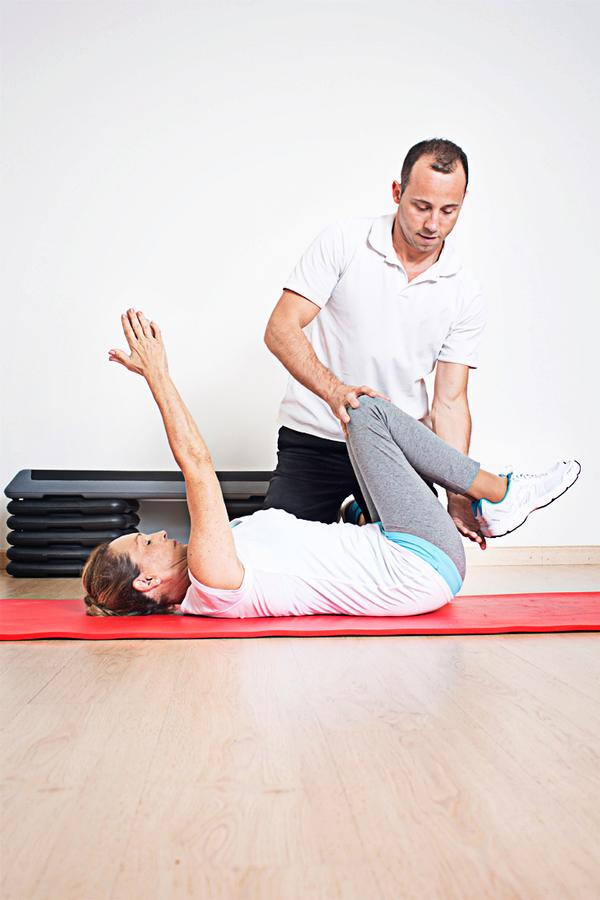
Exercise has been proven to alleviate mental health conditions such as depression and anxiety
By leaving fitness out of T Levels, the government is undermining its own strategy
Rob May
Rob MayDirectorYMCA Awards
In his first budget announcement, the Chancellor pledged £500m to new ‘T Levels’, a technical alternative to A Levels. In doing so, the education routes for more than half of UK occupations have been left out in the cold.
The definition of what constitutes a ‘technical’ occupation has never been properly explained. The 15 technical routes earmarked for investment were decided by a five-member panel and were included in the government’s new Post-16 Skills Plan, without consultation, by the then Skills Minister Nick Boles.
Given previous pledges to restore the nation’s health, it came as a great surprise when fitness was left out for not being ‘technical enough’. This could drastically undermine the government’s own ambition to reduce strain on the NHS by creating a more active nation.
The £4.4bn fitness sector isn’t just about leisure time. It needs a rich supply of highly technical, trained professionals who can work with the rising number of patients referred by GPs, as well as hard-to-reach populations at grassroots level.
The investment in T Levels may result in training providers gravitating towards funding and cancelling courses in neglected sectors. This will de-professionalise the sector and create future problems.
We need a properly funded skills strategy, aligned to the economic and health needs of the country. If the government is serious about improving the UK’s health, it needs to invest in its future workforce now.
“If the government is serious about improving the UK’s health, it needs to invest in its future workforce now”
shutterstock
We need a rich supply of highly trained professionals
Trampoline parks are not as risky as media reports make out
Gill Twell
Gill TwellHead of Group Development and Quest OperationsRight Directions
I was disappointed to read The Sun’s recent article ‘Flipping Dangerous’, which stated that more than 35 people are taken to A&E every day with trampoline-related injuries.
With over 34 per cent of year six children (aged 10–11) currently overweight or obese in the UK, it’s important to find new and innovative ways to get them active. Trampoline parks have cornered this niche, by being so much fun, children don’t even see it as exercise.
It’s estimated that thousands of people visit trampoline parks every week; while injuries do occur, they are few compared to the number of people using the parks, and considerably fewer than in sports such as rugby and football.
However, safety must be the number one concern, and that’s why the International Association of Trampoline Parks was behind the launch of the BSI Publicly Accessible Specification (PAS) 5000:2017 that came into effect in March. Alongside our Trampoline Park Safety Operating Plan – which sets out how a trampoline park should operate on a day-to-day basis – the PAS helps operators identify key risks at both design and operational stages, establishing an effective approach to managing, if not entirely removing, the risk of injury to customers and staff.
shutterstock.com
Trampolining is so much fun, children don’t realise it’s exercise
Government policies are squeezing young people out of the industry
Gary Lockwood
Gary LockwoodCEO24/7 Fitness
The last 10 years has seen significant downward pressure on the price of gym memberships, with many clubs charging less for a membership today than they did a decade ago. At the same time, the UK government has repeatedly refused to remove VAT from gym memberships and has consistently increased the minimum wage.
This, together with rapidly rising utility and facility costs, leaves many operators with shrinking profits and a dilemma. Raising prices in such a price-sensitive market is too bold a move for most, and with facility costs fixed, the only alternative is to employ fewer people.
Sites that previously employed 20 people are now running with two or three members of staff. Fitness instructors have been replaced with freelance personal trainers. No employment rights and no guaranteed income mean many PTs leave the industry for more secure work after only a short period. Meanwhile, most management positions are now rolled up into one multi-purpose manager with a tiny team and few upward progression prospects.
Fitness has traditionally been a haven for youngsters who perhaps struggled academically. With so few jobs now available in the industry, what does the future hold for them?
“No employment rights and no guaranteed income mean many PTs leave the industry for more secure work”
shutterstock
Many operators have reduced their staffing levels
Why hasn’t customer service in health clubs improved yet?
Mike Hill
Mike HillDirectorLeisure-net Solutions
It was good to read three great articles in the January 17 issue of Health Club Management, all on different aspects of customer service: Paul Bedford’s ‘War on attrition’ (p48), Andy Bourne’s ‘A service culture’ (p74) and Chris Brindley’s ‘Creating fans not customers’ (p80).
However, if you look back at past issues of HCM you’ll see similar messages from similarly enlightened contributors over the last 10 years. So why haven’t things improved?
During the 14 years I’ve been running Leisure-net – with only a few exceptions – we haven’t seen a measurable improvement in customer experience, despite the time, money and effort put in and the advances in technology, data and insight. In fact, a lot of the ‘new thinking’ is made up of the same ideas many of us had over a decade ago, just wrapped up in new technology.
Increasingly, I believe the UK lacks a service culture. When visiting countries like the US, Chile and New Zealand, I see a different understanding of ‘service’ and pride in its delivery.
So can we change this culture? Perhaps, but it will take time, because we need to attract and recruit a different sort of person and spend time developing their communication and motivational skills. Then, finally, we must reward them as the professionals we expect them to be, to stop them leaving for jobs that pay significantly more and are more highly valued by society.
“During the past 14 years, we haven’t seen a measurable improvement in customer experience, despite the time, money and effort put in”
shutterstock.com
It’s important for staff to develop communication and motivation skills
COMPANY PROFILES
Simworx Ltd
The company was initially established
in 1997. Terry Monkton and Andrew
Roberts are the key stakeh [more...]
IAAPA EMEA
IAAPA Expo Europe was established in 2006 and has grown to the largest international conference and [more...]
Polin Waterparks
Polin was founded in Istanbul in 1976. Polin
has since grown into a leading company in
the waterpa [more...]
Painting With Light
By combining lighting, video, scenic and architectural elements, sound and special effects we tell s [more...]
An opportunity to put mental health evidence into practice
Patrick Murphy
Patrick MurphyDevelopment Services ManagerSouth Lanarkshire Leisure and Culture
I was interested to read your recent piece on how health clubs can get involved in mental health (‘Emotional Wellbeing’, HCM Feb 17, p52). South Lanarkshire Leisure and Culture has not only recognised the percentage of residents affected by mental health issues, but has made a conscious effort to embed solutions into our services.
This has not been a specific marketing tool but more a shift in organisational focus, which is very much welcomed by the recently formed Health and Social Care Partnership.
From an operational point of view, the key driver has been to engage GPs to proactively prescribe physical activity while encouraging patients to ‘invest in their health’. However, it has taken time to build partnerships with the NHS and convince GPs that services and programmes are both professional and have positive outcomes.
SLL&C has also noticed that not every mental health referral from a GP results in physical activity prescription. Many referrals instead focus on weight management, walking or even cultural pursuits like reading or pottery. We do, however, have some specific programmes that are a perfect fit for people suffering from low mood, stress or anxiety like the Weigh To Go: New Mum, Active Mornings or Healthy Families programmes.
Unfortunately, I feel that both the general public and our health partners have a long way to go in discussing the stigma that surrounds mental health issues. I strongly feel there is a true opportunity to get behind the evidence that simple physical activity has an almost immediate benefit to an individual. We need to make that very clear when an individual seeks advice.
“Physical activity has an almost immediate benefit to an individual. We need to make this clear when they seek advice”
shutterstock.com
Exercise has been proven to alleviate mental health conditions such as depression and anxiety
By leaving fitness out of T Levels, the government is undermining its own strategy
Rob May
Rob MayDirectorYMCA Awards
In his first budget announcement, the Chancellor pledged £500m to new ‘T Levels’, a technical alternative to A Levels. In doing so, the education routes for more than half of UK occupations have been left out in the cold.
The definition of what constitutes a ‘technical’ occupation has never been properly explained. The 15 technical routes earmarked for investment were decided by a five-member panel and were included in the government’s new Post-16 Skills Plan, without consultation, by the then Skills Minister Nick Boles.
Given previous pledges to restore the nation’s health, it came as a great surprise when fitness was left out for not being ‘technical enough’. This could drastically undermine the government’s own ambition to reduce strain on the NHS by creating a more active nation.
The £4.4bn fitness sector isn’t just about leisure time. It needs a rich supply of highly technical, trained professionals who can work with the rising number of patients referred by GPs, as well as hard-to-reach populations at grassroots level.
The investment in T Levels may result in training providers gravitating towards funding and cancelling courses in neglected sectors. This will de-professionalise the sector and create future problems.
We need a properly funded skills strategy, aligned to the economic and health needs of the country. If the government is serious about improving the UK’s health, it needs to invest in its future workforce now.
“If the government is serious about improving the UK’s health, it needs to invest in its future workforce now”
shutterstock
We need a rich supply of highly trained professionals
Trampoline parks are not as risky as media reports make out
Gill Twell
Gill TwellHead of Group Development and Quest OperationsRight Directions
I was disappointed to read The Sun’s recent article ‘Flipping Dangerous’, which stated that more than 35 people are taken to A&E every day with trampoline-related injuries.
With over 34 per cent of year six children (aged 10–11) currently overweight or obese in the UK, it’s important to find new and innovative ways to get them active. Trampoline parks have cornered this niche, by being so much fun, children don’t even see it as exercise.
It’s estimated that thousands of people visit trampoline parks every week; while injuries do occur, they are few compared to the number of people using the parks, and considerably fewer than in sports such as rugby and football.
However, safety must be the number one concern, and that’s why the International Association of Trampoline Parks was behind the launch of the BSI Publicly Accessible Specification (PAS) 5000:2017 that came into effect in March. Alongside our Trampoline Park Safety Operating Plan – which sets out how a trampoline park should operate on a day-to-day basis – the PAS helps operators identify key risks at both design and operational stages, establishing an effective approach to managing, if not entirely removing, the risk of injury to customers and staff.
shutterstock.com
Trampolining is so much fun, children don’t realise it’s exercise
Government policies are squeezing young people out of the industry
Gary Lockwood
Gary LockwoodCEO24/7 Fitness
The last 10 years has seen significant downward pressure on the price of gym memberships, with many clubs charging less for a membership today than they did a decade ago. At the same time, the UK government has repeatedly refused to remove VAT from gym memberships and has consistently increased the minimum wage.
This, together with rapidly rising utility and facility costs, leaves many operators with shrinking profits and a dilemma. Raising prices in such a price-sensitive market is too bold a move for most, and with facility costs fixed, the only alternative is to employ fewer people.
Sites that previously employed 20 people are now running with two or three members of staff. Fitness instructors have been replaced with freelance personal trainers. No employment rights and no guaranteed income mean many PTs leave the industry for more secure work after only a short period. Meanwhile, most management positions are now rolled up into one multi-purpose manager with a tiny team and few upward progression prospects.
Fitness has traditionally been a haven for youngsters who perhaps struggled academically. With so few jobs now available in the industry, what does the future hold for them?
“No employment rights and no guaranteed income mean many PTs leave the industry for more secure work”
shutterstock
Many operators have reduced their staffing levels
Why hasn’t customer service in health clubs improved yet?
Mike Hill
Mike HillDirectorLeisure-net Solutions
It was good to read three great articles in the January 17 issue of Health Club Management, all on different aspects of customer service: Paul Bedford’s ‘War on attrition’ (p48), Andy Bourne’s ‘A service culture’ (p74) and Chris Brindley’s ‘Creating fans not customers’ (p80).
However, if you look back at past issues of HCM you’ll see similar messages from similarly enlightened contributors over the last 10 years. So why haven’t things improved?
During the 14 years I’ve been running Leisure-net – with only a few exceptions – we haven’t seen a measurable improvement in customer experience, despite the time, money and effort put in and the advances in technology, data and insight. In fact, a lot of the ‘new thinking’ is made up of the same ideas many of us had over a decade ago, just wrapped up in new technology.
Increasingly, I believe the UK lacks a service culture. When visiting countries like the US, Chile and New Zealand, I see a different understanding of ‘service’ and pride in its delivery.
So can we change this culture? Perhaps, but it will take time, because we need to attract and recruit a different sort of person and spend time developing their communication and motivational skills. Then, finally, we must reward them as the professionals we expect them to be, to stop them leaving for jobs that pay significantly more and are more highly valued by society.
“During the past 14 years, we haven’t seen a measurable improvement in customer experience, despite the time, money and effort put in”
shutterstock.com
It’s important for staff to develop communication and motivation skills
San Antonio Zoo has reported a US$283 million economic impact for 2025, following a decade-
long transformation programme that has seen almost US$200 million invested into the Texas
attraction.
Plans for the AU$180 million redevelopment of Reef HQ Aquarium in Townsville, Australia, are
progressing, with the project set to transform the attraction into a global centre for reef
education and conservation.
Abu Dhabi-based investment firm Mubadala Capital has made a binding, fully financed
€1 billion
offer to acquire Pierre and Vacances SA, the European holiday resort operator behind the
continental European Center Parcs business.
Disney has reaffirmed its commitment to investing US$30 billion in its US parks and cruise
business by 2033, using new America250 celebrations to underline the role its attractions play
in supporting jobs, tourism and economic growth.
Expo 2030 Riyadh is being planned as a permanent visitor destination, with organisers
confirming the six-million-square-metre site will become a Global Village after the event closes.
The owner of one of Australia's best-known waterparks has acquired a major competitor,
creating a new attractions business spanning two of the country's largest visitor destinations.
The Toverland theme park in the Netherlands has announced a €98m expansion programme
that will add a resort, new attractions and staff facilities as it pursues plans to become a multi-
day destination.
Hotel de France, located on the British Isle of Jersey, has created a wellness retreat package
that includes a hot yoga session that will take place in Jersey Zoo’s butterfly sanctuary.
A new immersive attraction designed to transport visitors into the final hours of ancient Pompeii
is preparing to open near the world-famous archaeological site in southern Italy.
Experience design company, BRC Imagination Arts, has completed a transition that sees founder
Bob Rogers pass ownership of the business to four long-serving senior executives, while
remaining actively involved with the company.