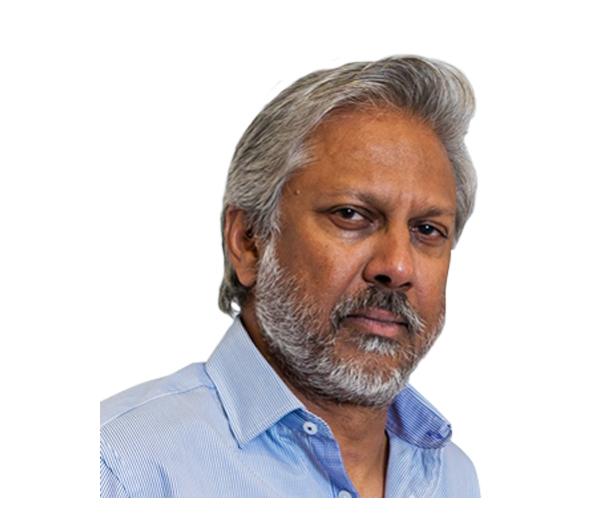
South African architect, Ruben Reddy, the masterplanner for the 2022 Durban Commonwealth Games, wants temporary structures to create a sustainable future for sport. Matthew Campelli reports
By Matthew Campelli | Published in Sports Management Jan Feb 2017 issue 129
Reddy does not shy from challenging the status quo
When Sports Management first met the highly-regarded South African architect Ruben Reddy, he had just told a room packed full of football industry bods that West Ham United made a mistaking moving into the London Stadium, that Manchester United should move in with Manchester City, and that football stadiums were, generally, unsustainable.
Unorthodox, but full of logic, his arguments during his panel session at the Soccerex Global Convention made people sit up and take notice. While many sessions and keynotes at the conference provided moments of insight, Reddy’s talk was one of the few to challenge the status quo.
The thrust of his short address centred on the sustainability – or, more accurately, unsustainability – of sport stadiums. He said, if possible, that sports clubs playing in the same city should attempt to share a venue, while all sporting infrastructure for major events should be temporary.
While the latter point will resonate with many, particularly in light of the white elephants that dominate the skyline of Athens, and potentially now Rio de Janeiro post-Olympics, the ambition appears to be a fanciful one.
Governments with five-to-10 year terms like to build monument when it comes to hosting major events, but with sustainability being a key part of the International Olympic Committee’s (IOC) Agenda 2020, combined with the rising cost of staging major events, Reddy is sure temporary venues will become the norm in the not-too-distant future.
“Adopting temporary venues will have to be feasible,” Reddy tells Sports Management. “I can’t see it going any other way.”
Burden on the taxpayer Durban-based Reddy has seen first-hand what a burden on the public purse permanent venues can be. He was involved in the 2014 Winter Olympics in Sochi and also had a view of the work that was completed for the 2010 FIFA World Cup in South Africa.
Of the former, Reddy says: “Not a hell of a lot happens in that coastal Olympic Park.”
But his main focus is South Africa after being handed the brief to oversee the masterplan of the Durban 2022 Commonwealth Games. He is clear that he doesn’t want to repeat the mistakes of the World Cup in a nation that is still developing.
“We’re not going to be burdening the taxpayers of Durban Province and the country to upkeep the maintenance of capital projects,” he explains.
“We’ve learned a hard lesson in South Africa because of the 2010 World Cup. We gave, gave, gave, gave, gave, gave and didn’t get a hell of a lot back in return apart from a pat on the back to say ‘well done’.”
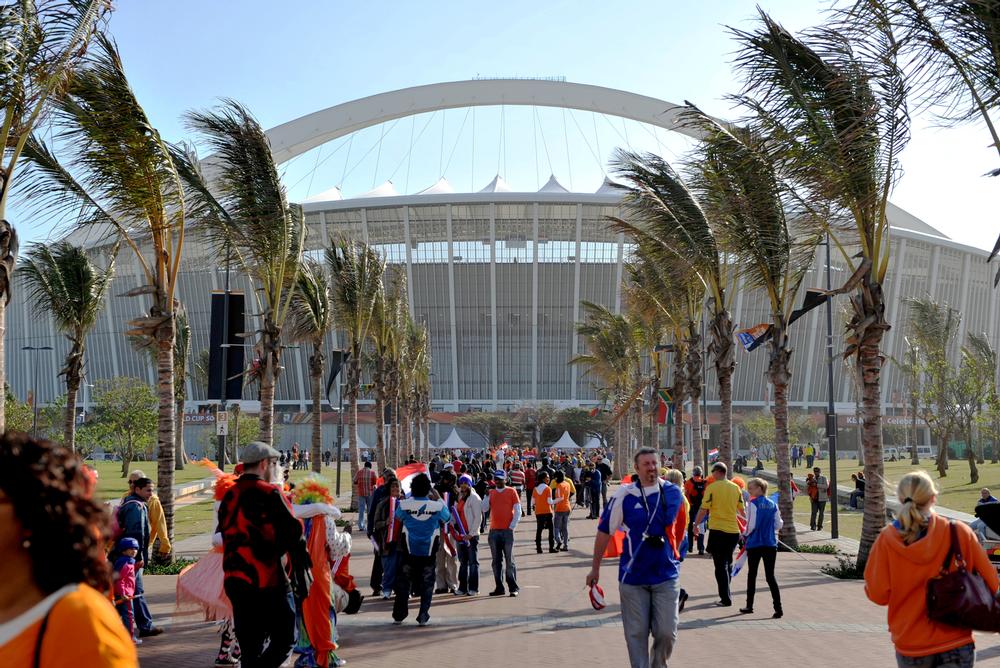
He highlights the Durban-based Moses Mabhida Stadium, which cost US$450m to construct, as an example of a venue which has not be sustainable for the South African government. While the original outlay was significant enough, Reddy is keen to demonstrate that sustainability becomes an issue when considering the ongoing maintenance of the building.
Reddy says: “Building the stadium is only 25 per cent of its life cycle. Keeping the thing to a world-class standard is a constant drain on the budget. Every year that it sits there that money could be used for something else.
“We’re a developing country and our priority list is quite long. Never get away from the fact that these events should come to the developing world – of course they should. They must be global in all their forms and go to far-flung parts of the world.”
To create the right conditions for these countries to bid and host these events – without stretching themselves financially – Reddy is an evangelical advocate of the use of temporary venues.
Durban 2022 In fact, all of the venues he has designed for the Durban Games are temporary. Facilities for weightlifting, volleyball, hockey, squash and table tennis have been designed by his firm, and will all be temporary, using materials that will be reused following the Games. All the permanent structures that have been earmarked for the Commonwealth Games have been built already.
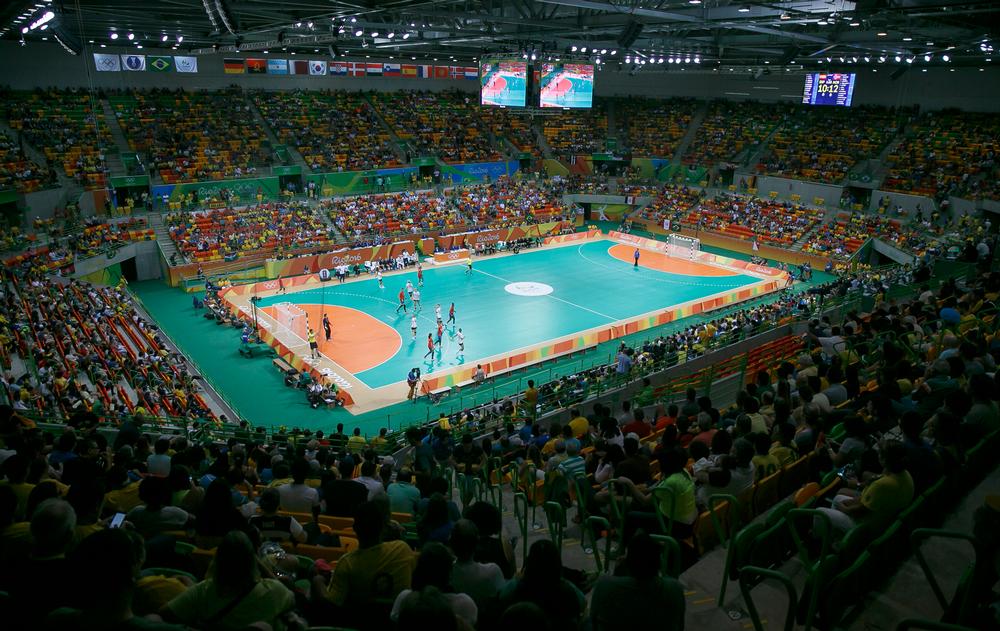
Reddy lauded examples of good practice with temporary facilities, such as the handball court constructed for the Rio Olympic Games. Following the event the venue was deconstructed and used to build four schools, but Reddy reveals Durban’s plans are slightly more modest than that.
He explains: “The total infrastructure spend of a Commonwealth Games is around eight per cent of the Olympic Games. The temporary facilities we’ll look at will be standard stock and not on the same level as Rio.”
But the principle remains the same, says Reddy, and stresses that it should be implemented at every major event. However, difficulties occur when governing bodies, such as FIFA, promise broadcast rights-holders that each stadium will have at least 45,000 spectators to attract sponsorship.
“What do you do afterwards with a building of 45,000 seats when your average gate for the local club is between 5,000 and 10,000 spectators per game?” he asked.
FIFA and the IOC “have to take the lead” on stadium sustainability, he says, adding that the latter must now “operationalise” its Agenda 2020 plan and “take the actions required in order to make the policy work”.
Government, says Reddy, should not view the hosting of an event as a “big megalomaniac ribbon-cutting opportunity”, but need to be supported by the sports governing bodies to make the right decision for their nation’s society and economy.
Change in perspective Reddy’s fellow architects also have a responsibility to drive the agenda forward, but he doubts many of his contemporaries will have a similar stance.
“Why don’t architects promote temporary facilities? You have to be a stupid architect like me who has talked himself out of a job,” he says, tongue in cheek. “Why would any architect want to tell you not to build something, when their living is premised on the fact you have to build? Maybe I’m a pioneer or maybe I’m a village idiot.”
Architects with a differing opinion can point towards sustainable practices when building, with several new stadiums being awarded the Leadership in Energy and Environmental Design (LEED) certification. But Reddy is sceptical the award means anything substantial. He says: “LEED is suppose to be the thing that everyone hangs their hat on, but how is it possible when you can build a 40,000-seater facility, upwards of 180,000sq m? How can that be sustainable? It doesn’t matter what technology you add to save on water, electricity and heating.
“If we take the ridiculous end of sustainability – not to build at all – my argument is closer to that than saying ‘let’s build it’.”
Brave words from a man who makes his living designing buildings, but it may just take renegades like Reddy to make sport infrastructure more economically and environmentally sustainable.
The handball arena built for the Rio 2016 Olympics was a temporary structure, which became four schools / Poppe Cornelius/Scanpix Norway/PA
The handball arena built for the Rio 2016 Olympics was a temporary structure, which became four schools / Sabelo Mngoma / PA
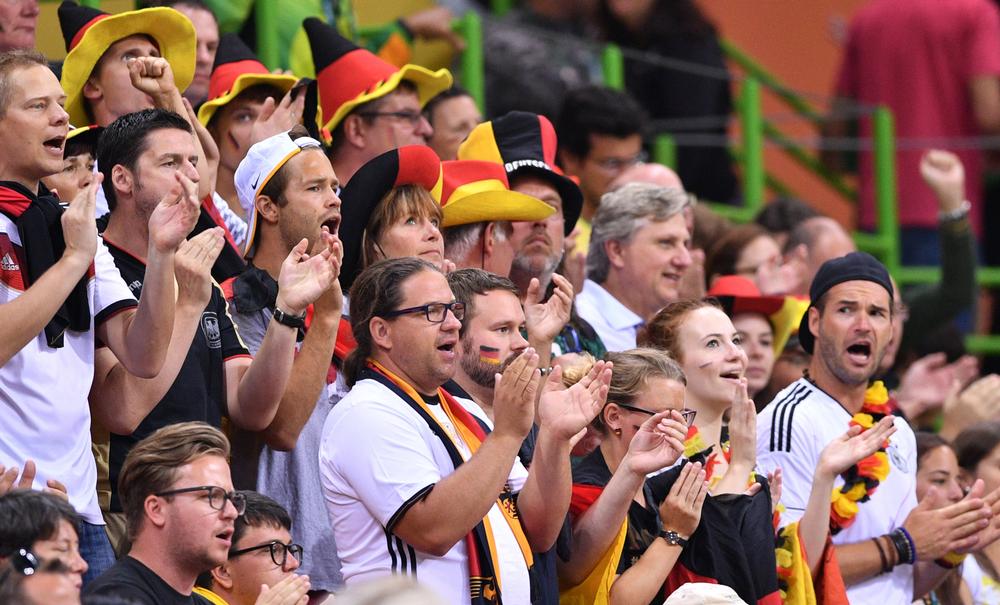
German supporters cheer for their handball team in one of the permanent stadiums built for the Rio 2016 Olympics / lukas schulze / press association
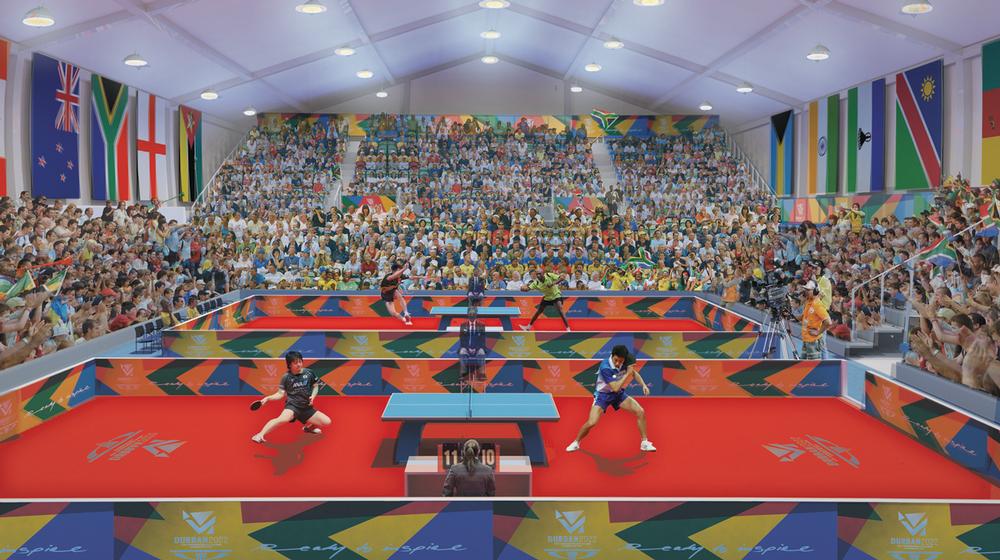
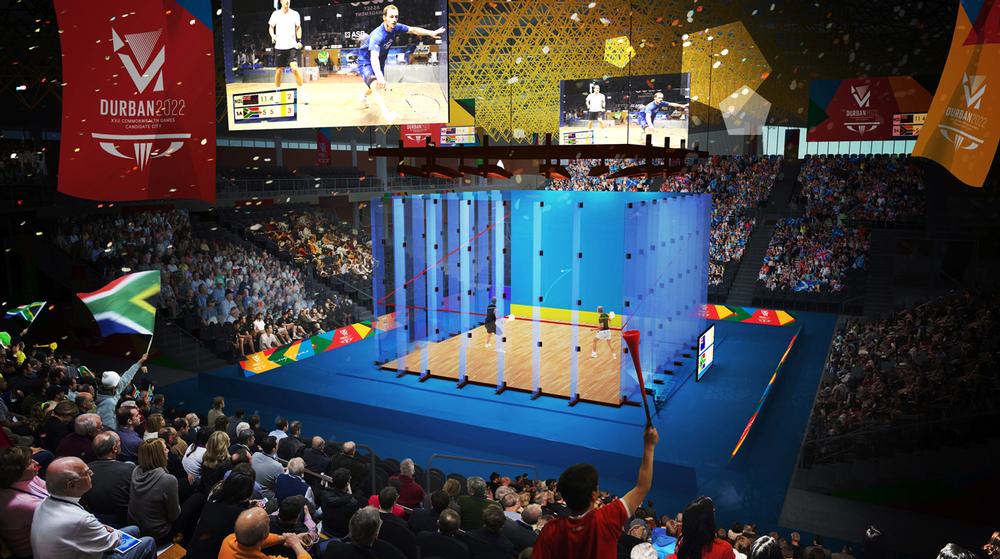
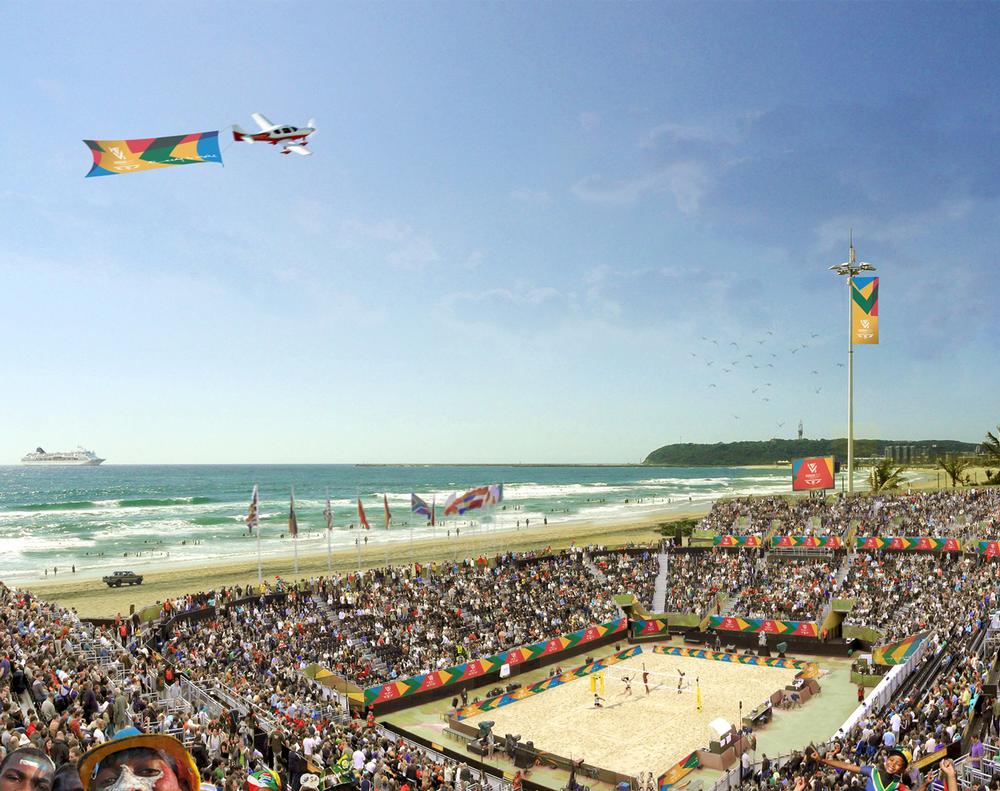
All venues for the Durban 2022 Commonwealth Games, such as the table tennis arena, squash venue and beach volleyball stadium, will be temporary structures
All venues for the Durban 2022 Commonwealth Games, such as the table tennis arena, squash venue and beach volleyball stadium, will be temporary structures
All venues for the Durban 2022 Commonwealth Games, such as the table tennis arena, squash venue and beach volleyball stadium, will be temporary structures
COMPANY PROFILES
QubicaAMF UK
QubicaAMF is the largest and most
innovative bowling equipment provider with
600 employees worldwi [more...]
South African architect, Ruben Reddy, the masterplanner for the 2022 Durban Commonwealth Games, wants temporary structures to create a sustainable future for sport. Matthew Campelli reports
By Matthew Campelli | Published in Sports Management Jan Feb 2017 issue 129
Reddy does not shy from challenging the status quo
When Sports Management first met the highly-regarded South African architect Ruben Reddy, he had just told a room packed full of football industry bods that West Ham United made a mistaking moving into the London Stadium, that Manchester United should move in with Manchester City, and that football stadiums were, generally, unsustainable.
Unorthodox, but full of logic, his arguments during his panel session at the Soccerex Global Convention made people sit up and take notice. While many sessions and keynotes at the conference provided moments of insight, Reddy’s talk was one of the few to challenge the status quo.
The thrust of his short address centred on the sustainability – or, more accurately, unsustainability – of sport stadiums. He said, if possible, that sports clubs playing in the same city should attempt to share a venue, while all sporting infrastructure for major events should be temporary.
While the latter point will resonate with many, particularly in light of the white elephants that dominate the skyline of Athens, and potentially now Rio de Janeiro post-Olympics, the ambition appears to be a fanciful one.
Governments with five-to-10 year terms like to build monument when it comes to hosting major events, but with sustainability being a key part of the International Olympic Committee’s (IOC) Agenda 2020, combined with the rising cost of staging major events, Reddy is sure temporary venues will become the norm in the not-too-distant future.
“Adopting temporary venues will have to be feasible,” Reddy tells Sports Management. “I can’t see it going any other way.”
Burden on the taxpayer Durban-based Reddy has seen first-hand what a burden on the public purse permanent venues can be. He was involved in the 2014 Winter Olympics in Sochi and also had a view of the work that was completed for the 2010 FIFA World Cup in South Africa.
Of the former, Reddy says: “Not a hell of a lot happens in that coastal Olympic Park.”
But his main focus is South Africa after being handed the brief to oversee the masterplan of the Durban 2022 Commonwealth Games. He is clear that he doesn’t want to repeat the mistakes of the World Cup in a nation that is still developing.
“We’re not going to be burdening the taxpayers of Durban Province and the country to upkeep the maintenance of capital projects,” he explains.
“We’ve learned a hard lesson in South Africa because of the 2010 World Cup. We gave, gave, gave, gave, gave, gave and didn’t get a hell of a lot back in return apart from a pat on the back to say ‘well done’.”
He highlights the Durban-based Moses Mabhida Stadium, which cost US$450m to construct, as an example of a venue which has not be sustainable for the South African government. While the original outlay was significant enough, Reddy is keen to demonstrate that sustainability becomes an issue when considering the ongoing maintenance of the building.
Reddy says: “Building the stadium is only 25 per cent of its life cycle. Keeping the thing to a world-class standard is a constant drain on the budget. Every year that it sits there that money could be used for something else.
“We’re a developing country and our priority list is quite long. Never get away from the fact that these events should come to the developing world – of course they should. They must be global in all their forms and go to far-flung parts of the world.”
To create the right conditions for these countries to bid and host these events – without stretching themselves financially – Reddy is an evangelical advocate of the use of temporary venues.
Durban 2022 In fact, all of the venues he has designed for the Durban Games are temporary. Facilities for weightlifting, volleyball, hockey, squash and table tennis have been designed by his firm, and will all be temporary, using materials that will be reused following the Games. All the permanent structures that have been earmarked for the Commonwealth Games have been built already.
Reddy lauded examples of good practice with temporary facilities, such as the handball court constructed for the Rio Olympic Games. Following the event the venue was deconstructed and used to build four schools, but Reddy reveals Durban’s plans are slightly more modest than that.
He explains: “The total infrastructure spend of a Commonwealth Games is around eight per cent of the Olympic Games. The temporary facilities we’ll look at will be standard stock and not on the same level as Rio.”
But the principle remains the same, says Reddy, and stresses that it should be implemented at every major event. However, difficulties occur when governing bodies, such as FIFA, promise broadcast rights-holders that each stadium will have at least 45,000 spectators to attract sponsorship.
“What do you do afterwards with a building of 45,000 seats when your average gate for the local club is between 5,000 and 10,000 spectators per game?” he asked.
FIFA and the IOC “have to take the lead” on stadium sustainability, he says, adding that the latter must now “operationalise” its Agenda 2020 plan and “take the actions required in order to make the policy work”.
Government, says Reddy, should not view the hosting of an event as a “big megalomaniac ribbon-cutting opportunity”, but need to be supported by the sports governing bodies to make the right decision for their nation’s society and economy.
Change in perspective Reddy’s fellow architects also have a responsibility to drive the agenda forward, but he doubts many of his contemporaries will have a similar stance.
“Why don’t architects promote temporary facilities? You have to be a stupid architect like me who has talked himself out of a job,” he says, tongue in cheek. “Why would any architect want to tell you not to build something, when their living is premised on the fact you have to build? Maybe I’m a pioneer or maybe I’m a village idiot.”
Architects with a differing opinion can point towards sustainable practices when building, with several new stadiums being awarded the Leadership in Energy and Environmental Design (LEED) certification. But Reddy is sceptical the award means anything substantial. He says: “LEED is suppose to be the thing that everyone hangs their hat on, but how is it possible when you can build a 40,000-seater facility, upwards of 180,000sq m? How can that be sustainable? It doesn’t matter what technology you add to save on water, electricity and heating.
“If we take the ridiculous end of sustainability – not to build at all – my argument is closer to that than saying ‘let’s build it’.”
Brave words from a man who makes his living designing buildings, but it may just take renegades like Reddy to make sport infrastructure more economically and environmentally sustainable.
The handball arena built for the Rio 2016 Olympics was a temporary structure, which became four schools / Poppe Cornelius/Scanpix Norway/PA
The handball arena built for the Rio 2016 Olympics was a temporary structure, which became four schools / Sabelo Mngoma / PA
German supporters cheer for their handball team in one of the permanent stadiums built for the Rio 2016 Olympics / lukas schulze / press association
All venues for the Durban 2022 Commonwealth Games, such as the table tennis arena, squash venue and beach volleyball stadium, will be temporary structures
All venues for the Durban 2022 Commonwealth Games, such as the table tennis arena, squash venue and beach volleyball stadium, will be temporary structures
All venues for the Durban 2022 Commonwealth Games, such as the table tennis arena, squash venue and beach volleyball stadium, will be temporary structures
London Museum will open four new food and drink destinations when it launches its new home
at Smithfield on 28 November, making hospitality a central part of the visitor experience at one
of the capital's biggest cultural openings of the year.
OMA has completed a major transformation of New York's New Museum, creating a larger
cultural campus that combines expanded exhibition spaces with learning, performance,
hospitality and public programming.
A US$50 million (£44.2 million, €51.2 million) transformation of Chicago's historic McCormick
Mansion has created a new destination that combines live magic, immersive theatre, dining and
private membership under one roof.
The Montana Historical Society has officially celebrated the opening of its new Montana
Heritage
Center, a US$107 million (£79 million, €92 million) destination that combines immersive
storytelling with cutting-edge audiovisual technology to bring the sta
San Antonio Zoo has reported a US$283 million economic impact for 2025, following a decade-
long transformation programme that has seen almost US$200 million invested into the Texas
attraction.
Plans for the AU$180 million redevelopment of Reef HQ Aquarium in Townsville, Australia, are
progressing, with the project set to transform the attraction into a global centre for reef
education and conservation.
Abu Dhabi-based investment firm Mubadala Capital has made a binding, fully financed
€1 billion
offer to acquire Pierre and Vacances SA, the European holiday resort operator behind the
continental European Center Parcs business.
Disney has reaffirmed its commitment to investing US$30 billion in its US parks and cruise
business by 2033, using new America250 celebrations to underline the role its attractions play
in supporting jobs, tourism and economic growth.
Expo 2030 Riyadh is being planned as a permanent visitor destination, with organisers
confirming the six-million-square-metre site will become a Global Village after the event closes.
The owner of one of Australia's best-known waterparks has acquired a major competitor,
creating a new attractions business spanning two of the country's largest visitor destinations.