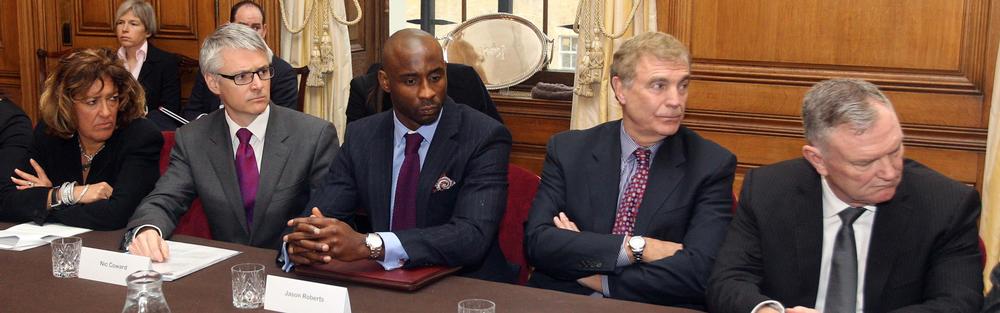
The FA’s Heather Rabbatts (far left)at a Downing Street summit / Lewis whyld / press association
Gender diversity on boards has been a hot topic within the sports sector for some time. National Governing Bodies have been working towards a target of at least 25 per cent female representation by 2017 and many have made good progress, but the new UK Sports Governance Code has now increased this target to 30 per cent.
I think (and definitely hope) the case for board diversity has been won in relation to (but not limited to), gender diversity. I believe most people would agree that having a wide range of perspectives will enrich the quality of the discussion, the relative experience around the board table, the potential to check and challenge perceived wisdom and – ultimately – that it will improve decision making.
From a gender perspective, it seems wrong to think that the perspective, views and opinions of 51 per cent of the population shouldn’t be equally represented, particularly in a sector that needs to compete for customer attention.
Active recruitment However, making the case theoretically and implementing it are two different things, and the latter certainly should not be considered either easy or achieved. We won’t get more women on boards by simply including something on the job description that says we welcome or particularly encourage applications from women – we must look for them and make them aware of the opportunities that exist in sport and how they can contribute.
It’s also important that organisations establish a recruitment process based on skills. Whether you’ve elected or appointed directors, a skills audit allows you to identify which skills you need and which ones are already represented.
You can then specifically target the gaps and go looking in the right places for the people you need. This might lead you to consider advertising to the wider sector and/or to different industries. The broader the search, the more diverse a selection of candidates you’ll encourage to apply.
Diversity of thought Ultimately, the end goal for any organisation is diversity of ‘thought’, as this leads to better and fresher thinking and avoids group agreement. As a female board member, I don’t want to be always offering the female perspective – usually I’m drawing on my work experience and wider understanding of the sector – but sometimes I’m sure my view will be different from those of my colleagues because I am a woman.
Let’s be clear though – it’s variety that we want. A board that is 100 per cent female (or white or able bodied) would not be the right outcome either.
The new UK Sports Governance Code will be more prescriptive than the sector has been accustomed to across all aspects of diversity, but I look forward to working with our members to understand and implement the new requirements and make sure that the sector continues to stay fit for the future.
Emma Boggis is the CEO of the Sport & Recreation Alliance and a non-executive director of the British Paralympic Association.
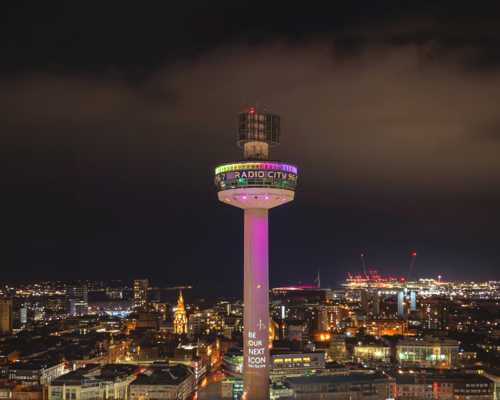
An opportunity to reimagine one of the UK’s most recognisable towers has been formally
opened by Rivington Hark, as St Johns Beacon invites operators and partners to shape its
next phase. [more...]
The FA’s Heather Rabbatts (far left)at a Downing Street summit / Lewis whyld / press association
Gender diversity on boards has been a hot topic within the sports sector for some time. National Governing Bodies have been working towards a target of at least 25 per cent female representation by 2017 and many have made good progress, but the new UK Sports Governance Code has now increased this target to 30 per cent.
I think (and definitely hope) the case for board diversity has been won in relation to (but not limited to), gender diversity. I believe most people would agree that having a wide range of perspectives will enrich the quality of the discussion, the relative experience around the board table, the potential to check and challenge perceived wisdom and – ultimately – that it will improve decision making.
From a gender perspective, it seems wrong to think that the perspective, views and opinions of 51 per cent of the population shouldn’t be equally represented, particularly in a sector that needs to compete for customer attention.
Active recruitment However, making the case theoretically and implementing it are two different things, and the latter certainly should not be considered either easy or achieved. We won’t get more women on boards by simply including something on the job description that says we welcome or particularly encourage applications from women – we must look for them and make them aware of the opportunities that exist in sport and how they can contribute.
It’s also important that organisations establish a recruitment process based on skills. Whether you’ve elected or appointed directors, a skills audit allows you to identify which skills you need and which ones are already represented.
You can then specifically target the gaps and go looking in the right places for the people you need. This might lead you to consider advertising to the wider sector and/or to different industries. The broader the search, the more diverse a selection of candidates you’ll encourage to apply.
Diversity of thought Ultimately, the end goal for any organisation is diversity of ‘thought’, as this leads to better and fresher thinking and avoids group agreement. As a female board member, I don’t want to be always offering the female perspective – usually I’m drawing on my work experience and wider understanding of the sector – but sometimes I’m sure my view will be different from those of my colleagues because I am a woman.
Let’s be clear though – it’s variety that we want. A board that is 100 per cent female (or white or able bodied) would not be the right outcome either.
The new UK Sports Governance Code will be more prescriptive than the sector has been accustomed to across all aspects of diversity, but I look forward to working with our members to understand and implement the new requirements and make sure that the sector continues to stay fit for the future.
Emma Boggis is the CEO of the Sport & Recreation Alliance and a non-executive director of the British Paralympic Association.
The Toverland theme park in the Netherlands has announced a €98m expansion programme
that will add a resort, new attractions and staff facilities as it pursues plans to become a multi-
day destination.
Hotel de France, located on the British Isle of Jersey, has created a wellness retreat package
that includes a hot yoga session that will take place in Jersey Zoo’s butterfly sanctuary.
A new immersive attraction designed to transport visitors into the final hours of ancient Pompeii
is preparing to open near the world-famous archaeological site in southern Italy.
Experience design company, BRC Imagination Arts, has completed a transition that sees founder
Bob Rogers pass ownership of the business to four long-serving senior executives, while
remaining actively involved with the company.
Movie Park Germany has opened a new Paramount Pictures-themed attraction as part of its 30th
anniversary celebrations, using immersive storytelling and adaptive reuse to reinforce the park’s
longstanding “Hollywood in Germany” positioning.
Therme Manchester’s 28-acre development, which will include interconnected glass pavilions
that measure 65,000sq m, will be the largest bathing and wellbeing attraction in the world once
complete, according to prof David Russell, CEO of Therme UK.
Efteling has opened Hooghmoed, a new family drop tower designed to broaden the appeal of its
recently launched Sirene Island themed area and introduce younger visitors to thrill attractions.
A proposed Puy du Fou development near Bicester and Universal Destinations and Experiences’
planned resort in Bedford are emerging as part of a wider transformation of the Oxford–
Cambridge Growth Corridor into a major centre for UK leisure and tourism inv
Shedd Aquarium has opened the Immersion Theater developed in partnership with SimEx-
Iwerks, as part of a wider strategy to enhance the guest experience and create additional
revenue opportunities.
The UK government has announced a temporary reduction in VAT on visitor attractions and
children’s meals as part of a summer cost-of-living support package designed to stimulate the
visitor economy and encourage family days out.
An opportunity to reimagine one of the UK’s most recognisable towers has been formally
opened by Rivington Hark, as St Johns Beacon invites operators and partners to shape its
next phase. [more...]