Richard Rogers of Rogers Stirk Harbour + Partners calls on architects to contribute to the public good
Richard Rogers has warned that the “erosion of public space by the private market is a really serious problem in cities.”
In an interview with CLAD at the launch of the 2016 Venice Architecture Biennale, where his firm Rogers Stirk Harbour + Partners were exhibiting, he urged architects, developers and the public to “defend our public spaces.”
“Leisure space – public space – is at the very root of democracy, and architecture is about democracy,” he says. “When I studied architecture in the 1950s, 80 per cent of architects in England worked for schools, hospitals and other public buildings. Today, I gather the number is 20 per cent, which in a way reflects the need to defend the public domain.”
Rogers says that it’s the responsibility of all architects to try to help solve today’s social and environmental challenges.
“We have a responsibility, no question. We have a responsibility not only as architects, but also as citizens. Our responsibility is to defend the quality of life of the individual.”
Rogers said that architects could still work for private clients and contribute to the public good. He cited the example of RSHP’s Leadenhall office building, saying “we managed to persuade the local government and the owner to have the bottom of the building as public space.”
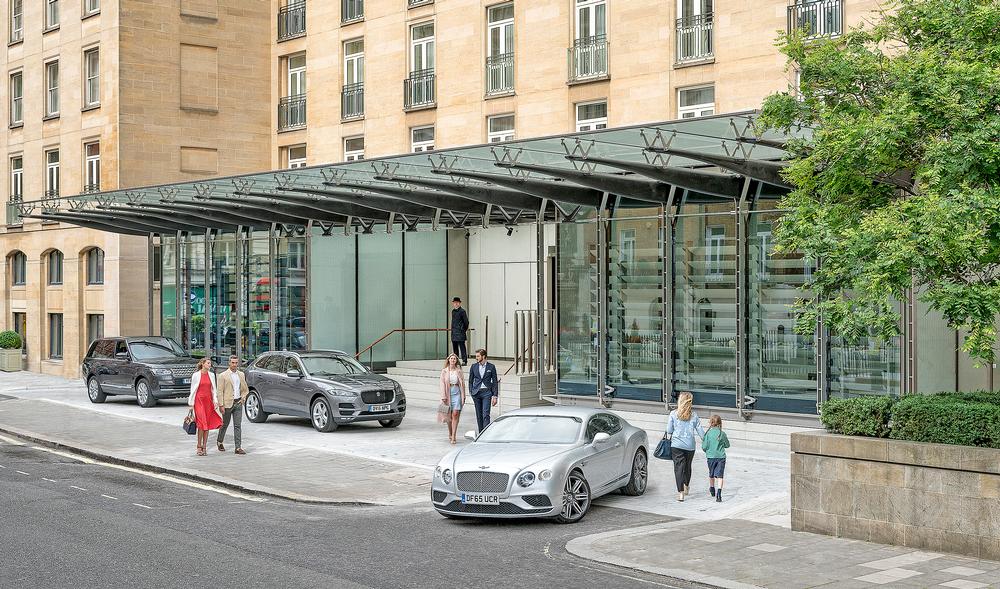
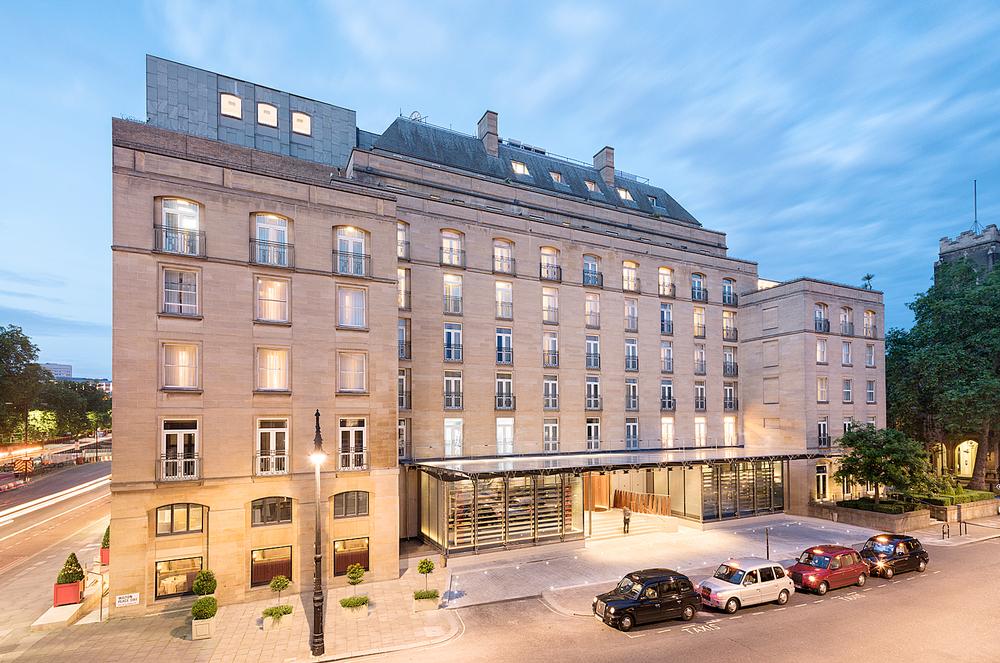
RSHP designed a new architectural façade for the Berkeley hotel in Knightsbridge, London, adding “a touch of contemporary theatre” to the 1970s building, which incorporates restored features from the original hotel that was on Berkeley Street.
The hotel’s entrance has been extended outwards and fitted with glass, steel and carbon fibre beams to create what the hotel’s developers describe as “a unique and show-stopping canopy which will take our London landmark into the 21st century.”
The new façade is part of a wider redesign at the Berkeley which includes the lobby, the Blue Bar and the Collins Room.
Construction work also recently began on the RSHP-designed International Spy Museum in Washington, DC, due to open in 2018.
Richard Rogers of Rogers Stirk Harbour + Partners calls on architects to contribute to the public good
Richard Rogers has warned that the “erosion of public space by the private market is a really serious problem in cities.”
In an interview with CLAD at the launch of the 2016 Venice Architecture Biennale, where his firm Rogers Stirk Harbour + Partners were exhibiting, he urged architects, developers and the public to “defend our public spaces.”
“Leisure space – public space – is at the very root of democracy, and architecture is about democracy,” he says. “When I studied architecture in the 1950s, 80 per cent of architects in England worked for schools, hospitals and other public buildings. Today, I gather the number is 20 per cent, which in a way reflects the need to defend the public domain.”
Rogers says that it’s the responsibility of all architects to try to help solve today’s social and environmental challenges.
“We have a responsibility, no question. We have a responsibility not only as architects, but also as citizens. Our responsibility is to defend the quality of life of the individual.”
Rogers said that architects could still work for private clients and contribute to the public good. He cited the example of RSHP’s Leadenhall office building, saying “we managed to persuade the local government and the owner to have the bottom of the building as public space.”
RSHP designed a new architectural façade for the Berkeley hotel in Knightsbridge, London, adding “a touch of contemporary theatre” to the 1970s building, which incorporates restored features from the original hotel that was on Berkeley Street.
The hotel’s entrance has been extended outwards and fitted with glass, steel and carbon fibre beams to create what the hotel’s developers describe as “a unique and show-stopping canopy which will take our London landmark into the 21st century.”
The new façade is part of a wider redesign at the Berkeley which includes the lobby, the Blue Bar and the Collins Room.
Construction work also recently began on the RSHP-designed International Spy Museum in Washington, DC, due to open in 2018.
OMA has completed a major transformation of New York's New Museum, creating a larger
cultural campus that combines expanded exhibition spaces with learning, performance,
hospitality and public programming.
A US$50 million (£44.2 million, €51.2 million) transformation of Chicago's historic McCormick
Mansion has created a new destination that combines live magic, immersive theatre, dining and
private membership under one roof.
The Montana Historical Society has officially celebrated the opening of its new Montana
Heritage
Center, a US$107 million (£79 million, €92 million) destination that combines immersive
storytelling with cutting-edge audiovisual technology to bring the sta
San Antonio Zoo has reported a US$283 million economic impact for 2025, following a decade-
long transformation programme that has seen almost US$200 million invested into the Texas
attraction.
Plans for the AU$180 million redevelopment of Reef HQ Aquarium in Townsville, Australia, are
progressing, with the project set to transform the attraction into a global centre for reef
education and conservation.
Abu Dhabi-based investment firm Mubadala Capital has made a binding, fully financed
€1 billion
offer to acquire Pierre and Vacances SA, the European holiday resort operator behind the
continental European Center Parcs business.
Disney has reaffirmed its commitment to investing US$30 billion in its US parks and cruise
business by 2033, using new America250 celebrations to underline the role its attractions play
in supporting jobs, tourism and economic growth.
Expo 2030 Riyadh is being planned as a permanent visitor destination, with organisers
confirming the six-million-square-metre site will become a Global Village after the event closes.
The owner of one of Australia's best-known waterparks has acquired a major competitor,
creating a new attractions business spanning two of the country's largest visitor destinations.
The Toverland theme park in the Netherlands has announced a €98m expansion programme
that will add a resort, new attractions and staff facilities as it pursues plans to become a multi-
day destination.
+ More news
COMPANY PROFILES
Alterface Alterface’s Creative Division team is
seasoned in concept and ride development,
as well as storyte [more...]