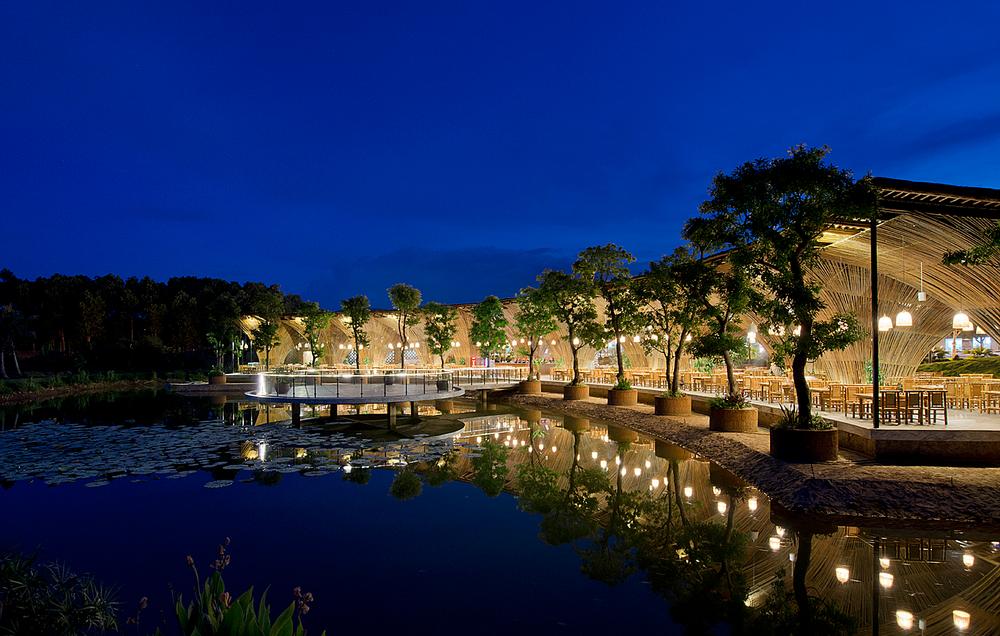
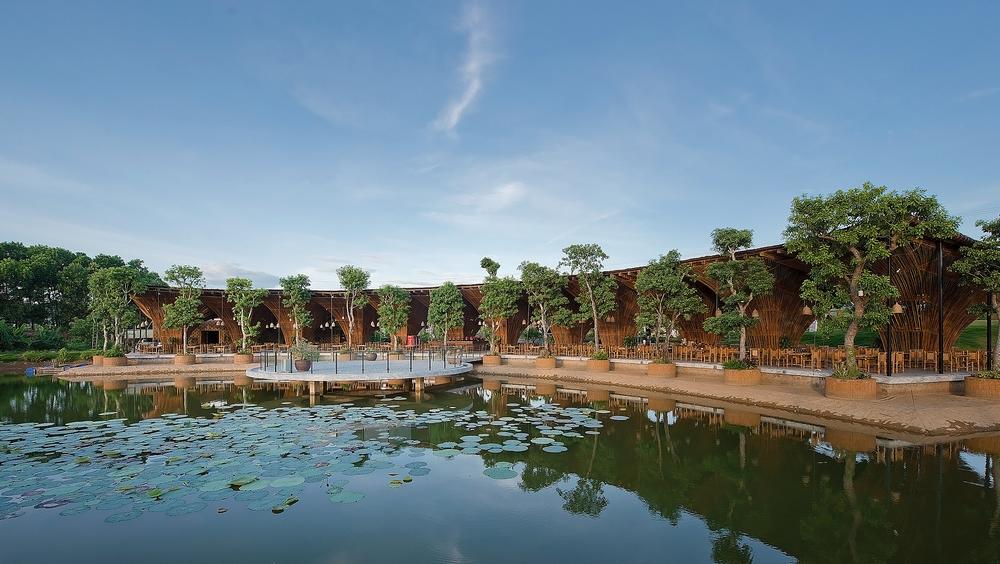
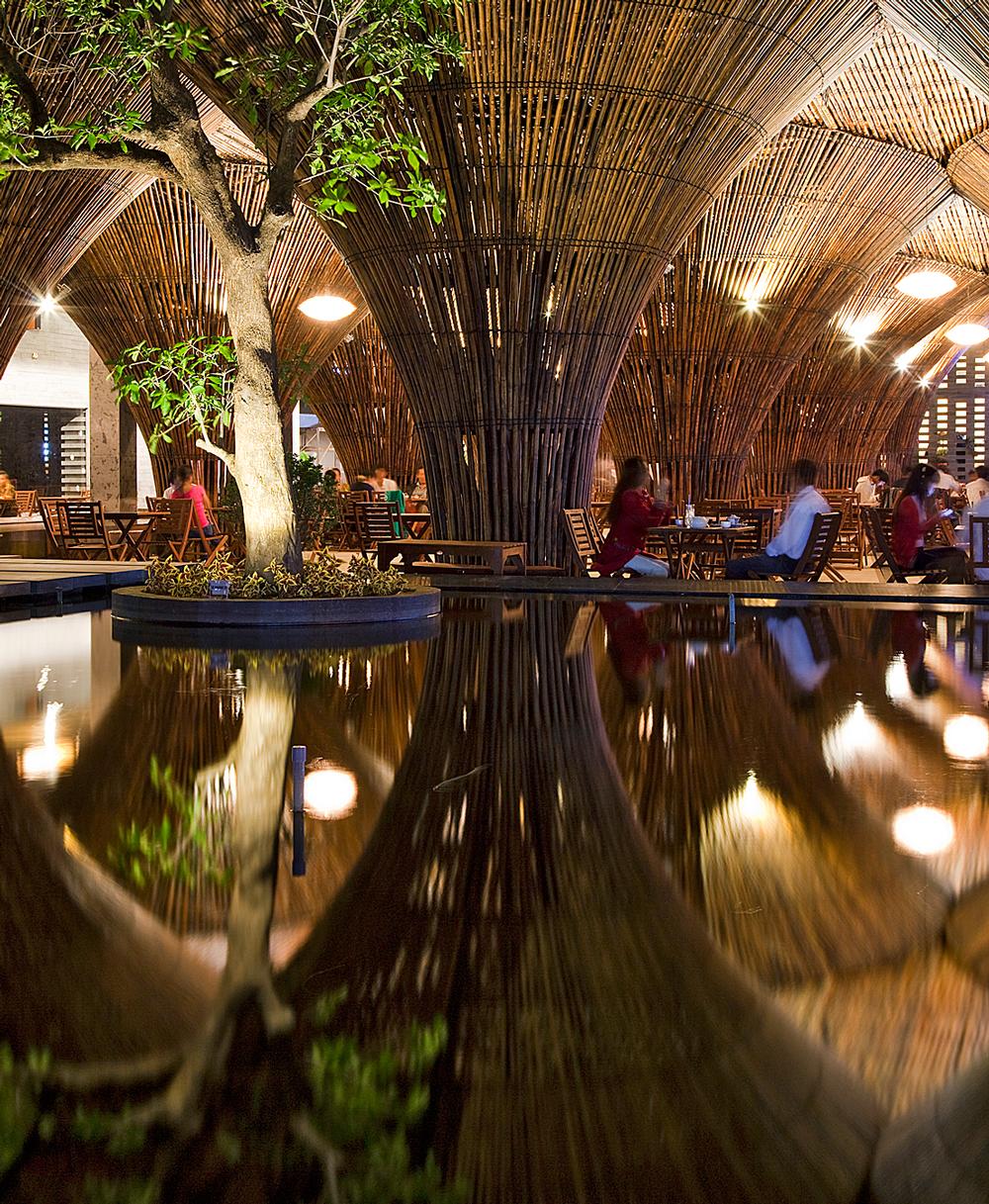
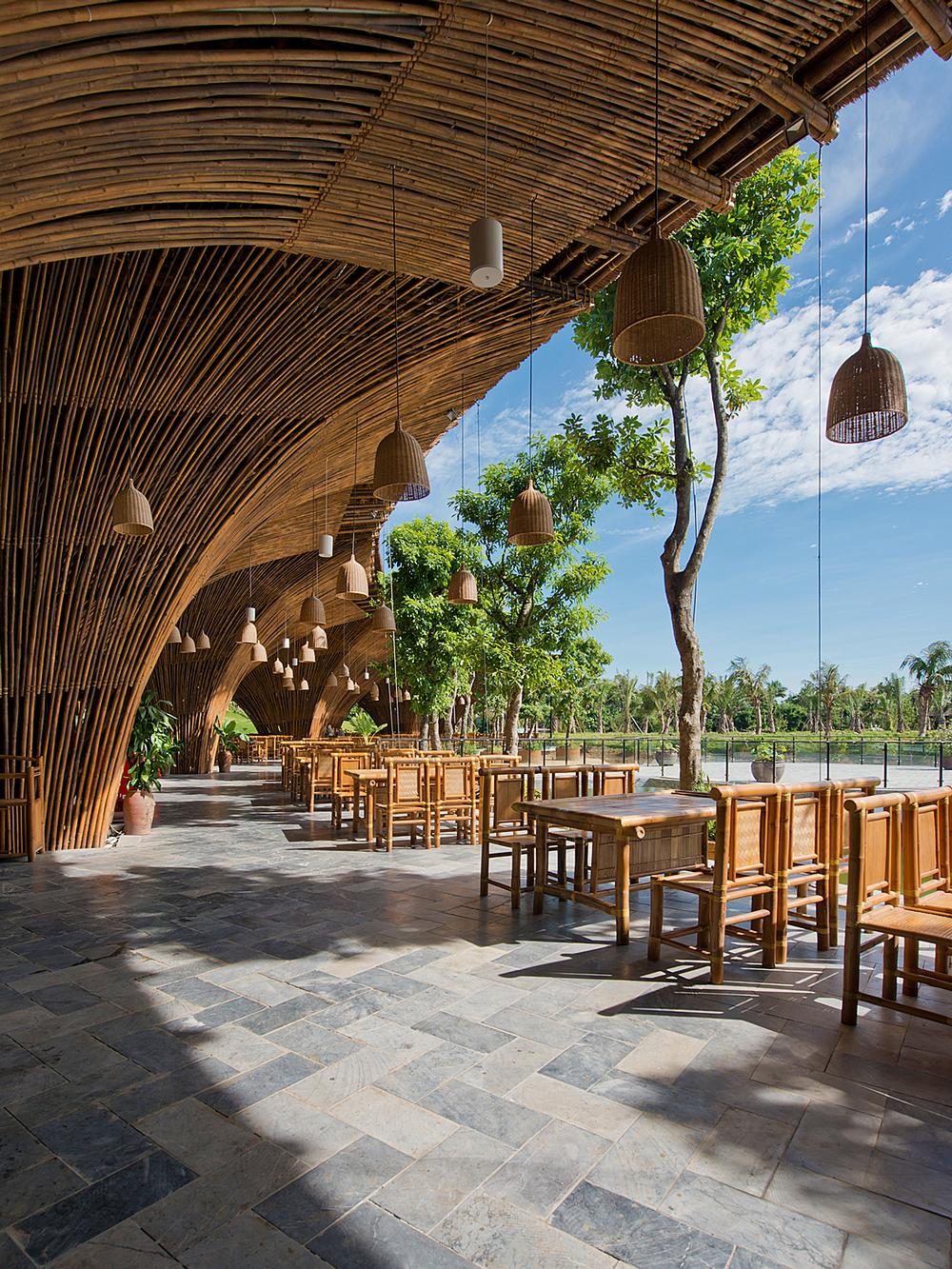
The Vo Trong Nghia-designed Roc Von restaurant opened in rural Vietnam earlier this year
Vietnamese architect Vo Trong Nghia has told CLADmag that real estate developers must push for green design practices if human beings are to survive and prosper.
Nghia – who is best known for his intricate bamboo leisure buildings – said humans have become too disconnected from nature, “causing conflict, wars and the destruction of the planet.
“Capitalism requires development, but development needs a lot of energy,” he said. “If we continue to develop at this rate, in this way, we’ll keep destroying nature and then we’re facing the end. In Asia, the problem is very serious because the population is so big. Mega cities face pollution, traffic jams, the destruction of greenery. It’s a mentality problem – developers cannot be calmed down, they always require development.
“Our challenge as architects across the world is dealing with high density, high consumption, high energy while moving closer to nature. In the very near future we have to become more green – using things like green walls and roofs and environmental materials. Otherwise, we will all die very soon because of climate change, conflict and misuse of technology.”
Nghia’s studio promote this nature friendly philosophy in their work, particularly in their leisure designs such as Naman Retreat and Roc Von restaurant in Vietnam, and their contribution to the 2016 Venice Architecture Biennale – a meditation zone surrounded by plants.
“With all our projects we look at the surrounding nature and see how we can harmonise with that,” said Nghia. “Restaurants, cafés and hotels don’t have to be concrete, especially in tropical climates. Nice design is about function and beauty, of course, but also how to make humans much more connected to nature. We hope our projects can persuade people living nearby to think this way.
“We also use our work to try and persuade clients about the benefits of our approach. The problem is maintenance – developers think it’s too expensive to maintain green buildings. In fact, it’s not as expensive as they think. We have to change people’s mindsets.”
Nghia himself arrived at his nature-conscious mindset after taking up meditation. He and his staff meditate twice a day, and he has attended five Vipanassa courses, where you spend 10 days in silence and devote your time to meditation.
He told CLADmag: “I think anyone, not only creative people, should refresh themselves this way. It changes your way of observing the world and your perspective. People think of human beings and nature as two separate things, but humans are just a small part of nature.
“It can help us to care more for the natural world. Without this philosophy, we’re finished.”
The Vo Trong Nghia-designed Roc Von restaurant opened in rural Vietnam earlier this year
Vietnamese architect Vo Trong Nghia has told CLADmag that real estate developers must push for green design practices if human beings are to survive and prosper.
Nghia – who is best known for his intricate bamboo leisure buildings – said humans have become too disconnected from nature, “causing conflict, wars and the destruction of the planet.
“Capitalism requires development, but development needs a lot of energy,” he said. “If we continue to develop at this rate, in this way, we’ll keep destroying nature and then we’re facing the end. In Asia, the problem is very serious because the population is so big. Mega cities face pollution, traffic jams, the destruction of greenery. It’s a mentality problem – developers cannot be calmed down, they always require development.
“Our challenge as architects across the world is dealing with high density, high consumption, high energy while moving closer to nature. In the very near future we have to become more green – using things like green walls and roofs and environmental materials. Otherwise, we will all die very soon because of climate change, conflict and misuse of technology.”
Nghia’s studio promote this nature friendly philosophy in their work, particularly in their leisure designs such as Naman Retreat and Roc Von restaurant in Vietnam, and their contribution to the 2016 Venice Architecture Biennale – a meditation zone surrounded by plants.
“With all our projects we look at the surrounding nature and see how we can harmonise with that,” said Nghia. “Restaurants, cafés and hotels don’t have to be concrete, especially in tropical climates. Nice design is about function and beauty, of course, but also how to make humans much more connected to nature. We hope our projects can persuade people living nearby to think this way.
“We also use our work to try and persuade clients about the benefits of our approach. The problem is maintenance – developers think it’s too expensive to maintain green buildings. In fact, it’s not as expensive as they think. We have to change people’s mindsets.”
Nghia himself arrived at his nature-conscious mindset after taking up meditation. He and his staff meditate twice a day, and he has attended five Vipanassa courses, where you spend 10 days in silence and devote your time to meditation.
He told CLADmag: “I think anyone, not only creative people, should refresh themselves this way. It changes your way of observing the world and your perspective. People think of human beings and nature as two separate things, but humans are just a small part of nature.
“It can help us to care more for the natural world. Without this philosophy, we’re finished.”
San Antonio Zoo has reported a US$283 million economic impact for 2025, following a decade-
long transformation programme that has seen almost US$200 million invested into the Texas
attraction.
Plans for the AU$180 million redevelopment of Reef HQ Aquarium in Townsville, Australia, are
progressing, with the project set to transform the attraction into a global centre for reef
education and conservation.
Abu Dhabi-based investment firm Mubadala Capital has made a binding, fully financed
€1 billion
offer to acquire Pierre and Vacances SA, the European holiday resort operator behind the
continental European Center Parcs business.
Disney has reaffirmed its commitment to investing US$30 billion in its US parks and cruise
business by 2033, using new America250 celebrations to underline the role its attractions play
in supporting jobs, tourism and economic growth.
Expo 2030 Riyadh is being planned as a permanent visitor destination, with organisers
confirming the six-million-square-metre site will become a Global Village after the event closes.
The owner of one of Australia's best-known waterparks has acquired a major competitor,
creating a new attractions business spanning two of the country's largest visitor destinations.
The Toverland theme park in the Netherlands has announced a €98m expansion programme
that will add a resort, new attractions and staff facilities as it pursues plans to become a multi-
day destination.
Hotel de France, located on the British Isle of Jersey, has created a wellness retreat package
that includes a hot yoga session that will take place in Jersey Zoo’s butterfly sanctuary.
A new immersive attraction designed to transport visitors into the final hours of ancient Pompeii
is preparing to open near the world-famous archaeological site in southern Italy.
Experience design company, BRC Imagination Arts, has completed a transition that sees founder
Bob Rogers pass ownership of the business to four long-serving senior executives, while
remaining actively involved with the company.