A big shift towards physical activity is a simplistic, but wholly accurate way of describing Sport England’s direction for the next five years.
Inspired by the Sporting Future strategy, published by the Department of Culture, Media and Sport (DCMS) last December, Sport England will plough £250m into programmes specifically designed to get sedentary people into some kind of physical activity (see page 12).
That £250m is a quarter of the organisation’s overall budget of £1.059bn – a significant investment over a four-year period and described as a “real commitment” by Sport England chief executive Jennie Price.
But what does that mean for the organisation’s overall funding operations?
Firstly, instead of the dozens of investment programmes Sport England created during its last funding cycle (2013-2017), it will now use seven criteria when making grant decisions (see box on page 38).
NGB FUNDING Of the projected investments it is expected to make between 2017 and 2021, 29 per cent (or approximately £307.1m) will be set aside for national governing bodies (NGBs). Despite this being the biggest proportion of cash, the NGB pot has diminished from the £493m that was set aside for them under Sport England’s Whole Sport Plan between 2013 and 2017.
NGBs will now have to bid for the money based on what they think they can deliver, and will no longer be handed a set amount to “be responsible for everybody” in their whole sport. In spite of the significant decrease in funds, Price tells Sports Management that NGBs were receptive to the idea when briefed during the consultation process, referencing the fact that “reaching out to every single participant” was a challenge.
The bodies will also be encouraged to bid for money outside of their “core market” fund if they believe their sport can contribute to some of the outcomes the government wants to address, such as improved mental health or social inclusion.
“What we are going to do is have an initial conversation with NGBs about their talent and their core market, and there will be other areas we will work with them on,” says Price. “But we will develop that according to their sport, their strength, what their strategy is going forward, rather than saying ‘you’re responsible for everybody who plays your sport, tell us how you’re going to discharge that responsibility’.”
To drive home the fact that “nobody will be cut off at the knee”, Price explains that NGBs will be given support to commercialise and create efficiencies so that they will not be so reliant on grant funding in the future.
LOCATION-BASED INVESTMENTS Facilities funding will make up 16 per cent of the total pot – compared to 24 per cent previously – although Sport England stresses that figure only represents capital investments. In fact, the quango is setting aside additional money through a Community Asset Facility which will provide £10,000-£150,000 grants to improve existing infrastructure.
A substantial amount of money (at least £130m) has been earmarked for projects in 10 different locations around the country where sport and physical activity can be used to address location-specific issues such as high unemployment, social fragmentation and general poor health – an investment Price thinks will make the biggest “step change” in the adoption of physical activity,
“We want to demonstrate that sport can help with really significant social issues and the place where we bring that to life is within these local projects,” says Price, adding that the programme will be rolled out nationwide if it proves to be successful.
When distributing the money, Sport England expects operators, local government and charities to work together and deliver projects geared towards improving health (mental and physical), social cohesion and increased levels of self-efficacy for participants.
In addition to funding, Sport England set out its stall in regards to workforce and coaching. Of the former, Price says the quango has “accepted” the government’s requirement and will be putting money into CIMSPA to create a new strategy to professionalise the physical activity sector. In the process, Sport England has ceased funding for alternative workforce organisation SkillsActive.
Early next year Sport England will set specific targets for the increases in engagement in sport and physical activity it expects to see by 2020 and 2025 as a result of the strategy, measuring its own performance.
“Going forward, full delivery of the government’s ambitions will require a true diversity of partners which includes – but must be wider than – the sports sector.”
Industry Reaction
Emma Boggis
Emma BoggisChief ExecutiveSport and Recreation Alliance
“There is clear indication in the strategy that Sport England have listened to the points raised by us, our members and the wider sector during their consultation.”
Sport England’s seven investment programmes 1. Tackling inactivity The “highest priority” for Sport England investment, with at least £250m (US$364.9m, €323.3m) put towards getting the inactive 28 per cent of the population active.
2. Children and young people Dedicated funding for young children as a result of Sport England’s new remit for the outside school activity for those aged 5+.
3. Volunteering Sport England will focus on what motivates volunteers, making it easier to fit sport volunteering into “modern lifestyle”.
4. Taking sport and physical activity to the mass market A focus on limiting drop off has been highlighted, and Sport England will “seek out and back ideas that can help make sport a mass market activity”.
5. Supporting sport’s core market Sport England’s strategy points to Sporting Future’s analysis that public investment has been “disproportionately focused” on NGBs, creating financial dependency.
6. Local delivery Sport England will invest in 10 specific areas – some urban, some rural – to create a “more joined up approach to getting active”.
7. Facilities A new Community Asset Fund will be created to complement Sport England’s Strategic Facilities Fund, with an emphasis on multi-sports services and co-locating.
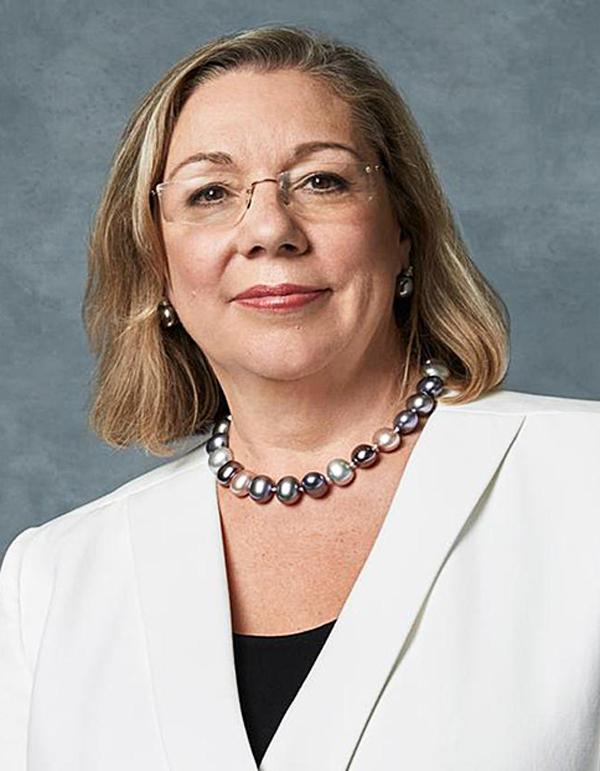
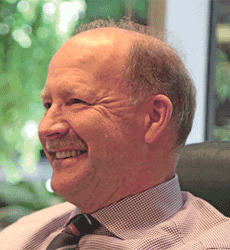
Sport England chief executive Jennie Price
Engaging hard-to-reach demographics is a key requirement for funding decisions.
Sport England will begin to build its workforce and coaching plan / Fotokostic / shutterstock
COMPANY PROFILES
Painting With Light
By combining lighting, video, scenic and architectural elements, sound and special effects we tell s [more...]
Alterface
Alterface’s Creative Division team is
seasoned in concept and ride development,
as well as storyte [more...]
A big shift towards physical activity is a simplistic, but wholly accurate way of describing Sport England’s direction for the next five years.
Inspired by the Sporting Future strategy, published by the Department of Culture, Media and Sport (DCMS) last December, Sport England will plough £250m into programmes specifically designed to get sedentary people into some kind of physical activity (see page 12).
That £250m is a quarter of the organisation’s overall budget of £1.059bn – a significant investment over a four-year period and described as a “real commitment” by Sport England chief executive Jennie Price.
But what does that mean for the organisation’s overall funding operations?
Firstly, instead of the dozens of investment programmes Sport England created during its last funding cycle (2013-2017), it will now use seven criteria when making grant decisions (see box on page 38).
NGB FUNDING Of the projected investments it is expected to make between 2017 and 2021, 29 per cent (or approximately £307.1m) will be set aside for national governing bodies (NGBs). Despite this being the biggest proportion of cash, the NGB pot has diminished from the £493m that was set aside for them under Sport England’s Whole Sport Plan between 2013 and 2017.
NGBs will now have to bid for the money based on what they think they can deliver, and will no longer be handed a set amount to “be responsible for everybody” in their whole sport. In spite of the significant decrease in funds, Price tells Sports Management that NGBs were receptive to the idea when briefed during the consultation process, referencing the fact that “reaching out to every single participant” was a challenge.
The bodies will also be encouraged to bid for money outside of their “core market” fund if they believe their sport can contribute to some of the outcomes the government wants to address, such as improved mental health or social inclusion.
“What we are going to do is have an initial conversation with NGBs about their talent and their core market, and there will be other areas we will work with them on,” says Price. “But we will develop that according to their sport, their strength, what their strategy is going forward, rather than saying ‘you’re responsible for everybody who plays your sport, tell us how you’re going to discharge that responsibility’.”
To drive home the fact that “nobody will be cut off at the knee”, Price explains that NGBs will be given support to commercialise and create efficiencies so that they will not be so reliant on grant funding in the future.
LOCATION-BASED INVESTMENTS Facilities funding will make up 16 per cent of the total pot – compared to 24 per cent previously – although Sport England stresses that figure only represents capital investments. In fact, the quango is setting aside additional money through a Community Asset Facility which will provide £10,000-£150,000 grants to improve existing infrastructure.
A substantial amount of money (at least £130m) has been earmarked for projects in 10 different locations around the country where sport and physical activity can be used to address location-specific issues such as high unemployment, social fragmentation and general poor health – an investment Price thinks will make the biggest “step change” in the adoption of physical activity,
“We want to demonstrate that sport can help with really significant social issues and the place where we bring that to life is within these local projects,” says Price, adding that the programme will be rolled out nationwide if it proves to be successful.
When distributing the money, Sport England expects operators, local government and charities to work together and deliver projects geared towards improving health (mental and physical), social cohesion and increased levels of self-efficacy for participants.
In addition to funding, Sport England set out its stall in regards to workforce and coaching. Of the former, Price says the quango has “accepted” the government’s requirement and will be putting money into CIMSPA to create a new strategy to professionalise the physical activity sector. In the process, Sport England has ceased funding for alternative workforce organisation SkillsActive.
Early next year Sport England will set specific targets for the increases in engagement in sport and physical activity it expects to see by 2020 and 2025 as a result of the strategy, measuring its own performance.
“Going forward, full delivery of the government’s ambitions will require a true diversity of partners which includes – but must be wider than – the sports sector.”
Industry Reaction
Emma Boggis
Emma BoggisChief ExecutiveSport and Recreation Alliance
“There is clear indication in the strategy that Sport England have listened to the points raised by us, our members and the wider sector during their consultation.”
Sport England’s seven investment programmes 1. Tackling inactivity The “highest priority” for Sport England investment, with at least £250m (US$364.9m, €323.3m) put towards getting the inactive 28 per cent of the population active.
2. Children and young people Dedicated funding for young children as a result of Sport England’s new remit for the outside school activity for those aged 5+.
3. Volunteering Sport England will focus on what motivates volunteers, making it easier to fit sport volunteering into “modern lifestyle”.
4. Taking sport and physical activity to the mass market A focus on limiting drop off has been highlighted, and Sport England will “seek out and back ideas that can help make sport a mass market activity”.
5. Supporting sport’s core market Sport England’s strategy points to Sporting Future’s analysis that public investment has been “disproportionately focused” on NGBs, creating financial dependency.
6. Local delivery Sport England will invest in 10 specific areas – some urban, some rural – to create a “more joined up approach to getting active”.
7. Facilities A new Community Asset Fund will be created to complement Sport England’s Strategic Facilities Fund, with an emphasis on multi-sports services and co-locating.
Sport England chief executive Jennie Price
Engaging hard-to-reach demographics is a key requirement for funding decisions.
Sport England will begin to build its workforce and coaching plan / Fotokostic / shutterstock
OMA has completed a major transformation of New York's New Museum, creating a larger
cultural campus that combines expanded exhibition spaces with learning, performance,
hospitality and public programming.
A US$50 million (£44.2 million, €51.2 million) transformation of Chicago's historic McCormick
Mansion has created a new destination that combines live magic, immersive theatre, dining and
private membership under one roof.
The Montana Historical Society has officially celebrated the opening of its new Montana
Heritage
Center, a US$107 million (£79 million, €92 million) destination that combines immersive
storytelling with cutting-edge audiovisual technology to bring the sta
San Antonio Zoo has reported a US$283 million economic impact for 2025, following a decade-
long transformation programme that has seen almost US$200 million invested into the Texas
attraction.
Plans for the AU$180 million redevelopment of Reef HQ Aquarium in Townsville, Australia, are
progressing, with the project set to transform the attraction into a global centre for reef
education and conservation.
Abu Dhabi-based investment firm Mubadala Capital has made a binding, fully financed
€1 billion
offer to acquire Pierre and Vacances SA, the European holiday resort operator behind the
continental European Center Parcs business.
Disney has reaffirmed its commitment to investing US$30 billion in its US parks and cruise
business by 2033, using new America250 celebrations to underline the role its attractions play
in supporting jobs, tourism and economic growth.
Expo 2030 Riyadh is being planned as a permanent visitor destination, with organisers
confirming the six-million-square-metre site will become a Global Village after the event closes.
The owner of one of Australia's best-known waterparks has acquired a major competitor,
creating a new attractions business spanning two of the country's largest visitor destinations.
The Toverland theme park in the Netherlands has announced a €98m expansion programme
that will add a resort, new attractions and staff facilities as it pursues plans to become a multi-
day destination.
+ More news
COMPANY PROFILES
Painting With Light By combining lighting, video, scenic and architectural elements, sound and special effects we tell s [more...]
Alterface Alterface’s Creative Division team is
seasoned in concept and ride development,
as well as storyte [more...]