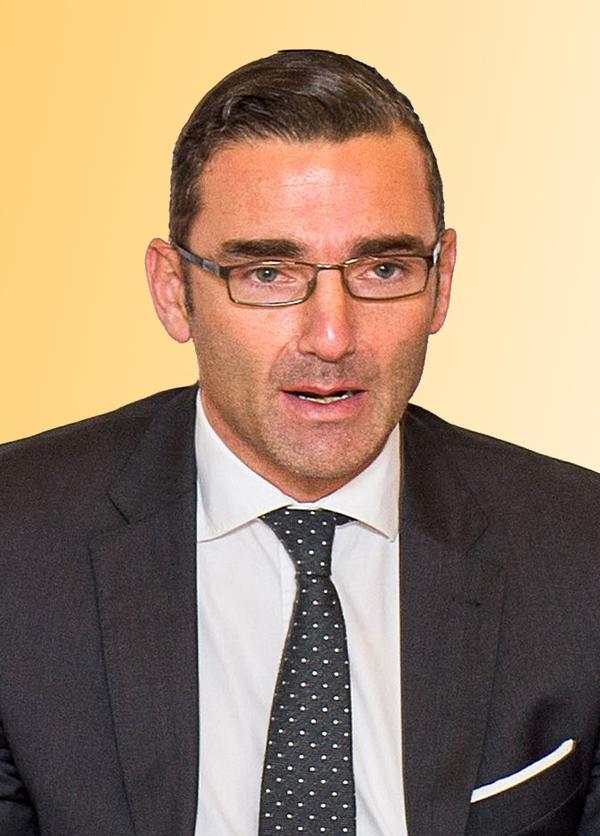
In December 2015, the Rugby League European Federation (RLEF) announced that it had been awarded its biggest-ever fund of €466,000 (£365,883, US$552,334) by the European Union’s ERASMUS+ programme.
The money, RLEF general manager Danny Kazandijan tells Sports Management, will go towards the implementation of a Training and Education Portal, which will provide a standardised set of protocols around coaching and match officiating across Europe.
Created in January 2003, the RLEF originally had eight members, three of which were full members – England, Russia and France. In the subsequent 13 years the “game has grown so quickly” says Kazandijan, pointing to a current membership of 10 full members, nine affiliated members and 13 observers.
This explosive growth and the need for devolution of responsibility was the catalyst behind the RLEF’s bid for European Union money to create the platform which “makes sure standards don’t slip” and that “bastardised versions” of rugby league are not being created within member nations.
“In the past there was a tendency, due to lack to resources, to deliver education in the field then almost just wish people ‘good luck’ and then expect them to produce rugby league teams and championships,” Kazandijan explains. “Implementing a comprehensive monitoring and assessment regime is essential, and this is what the new project gives us.”
The way the project works is that 17 partner nations have been split into five clusters, with one nation acting as a mentor, a nation below acting as a leader country and one or two nations as the learner nations.
For example, France will be a mentor nation, passing down its coaching and match officiating experience to leader nation the Netherlands, who will in turn pass that information down the learner nation Belgium. Candidates put forward by the nations will then be able to take RLEF qualifications, and will receive long-term professional development from Super League clubs Leeds Rhinos (coaching) and St Helens (match officiating).
“The first thing to say is that all of the qualifications will be standard RLEF qualifications,” say Kazandijan. “We’ve done a considerable amount of work on match officiating to make a unified approach. It’s the first time you’ll see a multilateral approach to a universal set of qualifications, which is the way the sport should be progressing on the education side.” The target is to qualify 100-250 people across both disciplines.
In receiving the ERASMUS+ grant, the RLEF training scheme can count itself as one of only 22 projects receiving funding from 330 applications. It is the third European Union grant the body has accepted after funds of €80,000 (£62,712, US$89,656) in 2011 and €298,000 (£233,585, US$333,906) over 2012-13.
Kazandijan acknowledges that the sport has benefitted greatly since the launch of the Lisbon Treaty in 2007 – which made sport a competency for the EU. “External funding from the EU has been a magnificent contributor to our operations,” he says.
“We’re not dependent on the EU grants by any means, but if we didn’t have them we wouldn’t have been able to expand to the extent we have. By far the majority of our technical education has been made possible by contributions made by the EU.”
In addition to its work overseeing and governing rugby in Europe, the RLEF looks after the sport in Canada, Lebanon and Jamaica, to name a few nations, as well as Ghana in Africa.
The general manager explains: “We had a pilot project in Ghana, which is an isolated nation for rugby league, but that’s opened the doors in Sierra Leone and Nigeria. Hopefully that will grow into a sustainable corner of the game.”
But there are challenges to face, Kazandijan concedes, particularly around the availability of facilities and the lack of government recognition of the sport in some nations.
“As non-traditional rugby league nations mature, facility provision is becoming an increasingly important part of the agenda,” he says. “Getting access to playing fields in countries like Jamaica, Serbia and Lebanon has become an important objective, as they’re spending a lot of money on hire charges and don’t have control over an expanding domestic championship. Where we can provide technical expertise we will.”
An opportunity to reimagine one of the UK’s most recognisable towers has been formally
opened by Rivington Hark, as St Johns Beacon invites operators and partners to shape its
next phase. [more...]
In December 2015, the Rugby League European Federation (RLEF) announced that it had been awarded its biggest-ever fund of €466,000 (£365,883, US$552,334) by the European Union’s ERASMUS+ programme.
The money, RLEF general manager Danny Kazandijan tells Sports Management, will go towards the implementation of a Training and Education Portal, which will provide a standardised set of protocols around coaching and match officiating across Europe.
Created in January 2003, the RLEF originally had eight members, three of which were full members – England, Russia and France. In the subsequent 13 years the “game has grown so quickly” says Kazandijan, pointing to a current membership of 10 full members, nine affiliated members and 13 observers.
This explosive growth and the need for devolution of responsibility was the catalyst behind the RLEF’s bid for European Union money to create the platform which “makes sure standards don’t slip” and that “bastardised versions” of rugby league are not being created within member nations.
“In the past there was a tendency, due to lack to resources, to deliver education in the field then almost just wish people ‘good luck’ and then expect them to produce rugby league teams and championships,” Kazandijan explains. “Implementing a comprehensive monitoring and assessment regime is essential, and this is what the new project gives us.”
The way the project works is that 17 partner nations have been split into five clusters, with one nation acting as a mentor, a nation below acting as a leader country and one or two nations as the learner nations.
For example, France will be a mentor nation, passing down its coaching and match officiating experience to leader nation the Netherlands, who will in turn pass that information down the learner nation Belgium. Candidates put forward by the nations will then be able to take RLEF qualifications, and will receive long-term professional development from Super League clubs Leeds Rhinos (coaching) and St Helens (match officiating).
“The first thing to say is that all of the qualifications will be standard RLEF qualifications,” say Kazandijan. “We’ve done a considerable amount of work on match officiating to make a unified approach. It’s the first time you’ll see a multilateral approach to a universal set of qualifications, which is the way the sport should be progressing on the education side.” The target is to qualify 100-250 people across both disciplines.
In receiving the ERASMUS+ grant, the RLEF training scheme can count itself as one of only 22 projects receiving funding from 330 applications. It is the third European Union grant the body has accepted after funds of €80,000 (£62,712, US$89,656) in 2011 and €298,000 (£233,585, US$333,906) over 2012-13.
Kazandijan acknowledges that the sport has benefitted greatly since the launch of the Lisbon Treaty in 2007 – which made sport a competency for the EU. “External funding from the EU has been a magnificent contributor to our operations,” he says.
“We’re not dependent on the EU grants by any means, but if we didn’t have them we wouldn’t have been able to expand to the extent we have. By far the majority of our technical education has been made possible by contributions made by the EU.”
In addition to its work overseeing and governing rugby in Europe, the RLEF looks after the sport in Canada, Lebanon and Jamaica, to name a few nations, as well as Ghana in Africa.
The general manager explains: “We had a pilot project in Ghana, which is an isolated nation for rugby league, but that’s opened the doors in Sierra Leone and Nigeria. Hopefully that will grow into a sustainable corner of the game.”
But there are challenges to face, Kazandijan concedes, particularly around the availability of facilities and the lack of government recognition of the sport in some nations.
“As non-traditional rugby league nations mature, facility provision is becoming an increasingly important part of the agenda,” he says. “Getting access to playing fields in countries like Jamaica, Serbia and Lebanon has become an important objective, as they’re spending a lot of money on hire charges and don’t have control over an expanding domestic championship. Where we can provide technical expertise we will.”
The Toverland theme park in the Netherlands has announced a €98m expansion programme
that will add a resort, new attractions and staff facilities as it pursues plans to become a multi-
day destination.
Hotel de France, located on the British Isle of Jersey, has created a wellness retreat package
that includes a hot yoga session that will take place in Jersey Zoo’s butterfly sanctuary.
A new immersive attraction designed to transport visitors into the final hours of ancient Pompeii
is preparing to open near the world-famous archaeological site in southern Italy.
Experience design company, BRC Imagination Arts, has completed a transition that sees founder
Bob Rogers pass ownership of the business to four long-serving senior executives, while
remaining actively involved with the company.
Movie Park Germany has opened a new Paramount Pictures-themed attraction as part of its 30th
anniversary celebrations, using immersive storytelling and adaptive reuse to reinforce the park’s
longstanding “Hollywood in Germany” positioning.
Therme Manchester’s 28-acre development, which will include interconnected glass pavilions
that measure 65,000sq m, will be the largest bathing and wellbeing attraction in the world once
complete, according to prof David Russell, CEO of Therme UK.
Efteling has opened Hooghmoed, a new family drop tower designed to broaden the appeal of its
recently launched Sirene Island themed area and introduce younger visitors to thrill attractions.
A proposed Puy du Fou development near Bicester and Universal Destinations and Experiences’
planned resort in Bedford are emerging as part of a wider transformation of the Oxford–
Cambridge Growth Corridor into a major centre for UK leisure and tourism inv
Shedd Aquarium has opened the Immersion Theater developed in partnership with SimEx-
Iwerks, as part of a wider strategy to enhance the guest experience and create additional
revenue opportunities.
The UK government has announced a temporary reduction in VAT on visitor attractions and
children’s meals as part of a summer cost-of-living support package designed to stimulate the
visitor economy and encourage family days out.
As designer Yinka Ilori prepares for his first solo gallery show in London, he speaks exclusively
to CLADmag about his mission to spread joy, the power of play, and his bold approach to using
colour (including the colours you won’t see in his work).
+ More news
COMPANY PROFILES
Taylor Made Designs Founded in 1993, Taylor Made
Designs supply corporate clothing
and brand-enhancing merchandise
to [more...]
Alterface Alterface’s Creative Division team is
seasoned in concept and ride development,
as well as storyte [more...]
DJW David & Lynn Willrich started the Company
over thirty years ago, from the Audio Visual
Department [more...]
An opportunity to reimagine one of the UK’s most recognisable towers has been formally
opened by Rivington Hark, as St Johns Beacon invites operators and partners to shape its
next phase. [more...]