Team GB returned from the Sochi 2014 Winter Olympics on a high, with Jenny Jones winning the first ever medal on snow, Lizzy Yarnold taking gold and the curling teams securing a silver and bronze. As well as Jones’ bronze, the British freestyle skiing and snowboarding team managed a record-breaking six top 10 finishes.
After finishing a respectable 19th in the medal table, Team GB is hoping for even more in South Korea at the next Olympics in 2018. Meetings are now underway with UK Sport and officials from British winter Olympic disciplines about performance targets over the next four years. The resulting spending decisions will be announced in June.
Six sports shared a fund of £13.4m over the past four years, but that’s likely to be boosted for the 2018 Games. “Following so many outstanding performances in Sochi, I anticipate that there will be an increase in our investment into winter sports,” says Liz Nicholl, UK Sport’s CEO. “The success has shown that the approach we’ve taken to athletes, supporting sports with medal prospects, is working. It gives us a huge amount of confidence in the system. We’re building on this success and will be going for more medals in 2018.”
SLOPESTYLE For years Team GB didn’t trouble the podium at the Winter Olympics much. Lack of mountains and snow were often blamed, but while our geography hasn’t changed, our performance has.
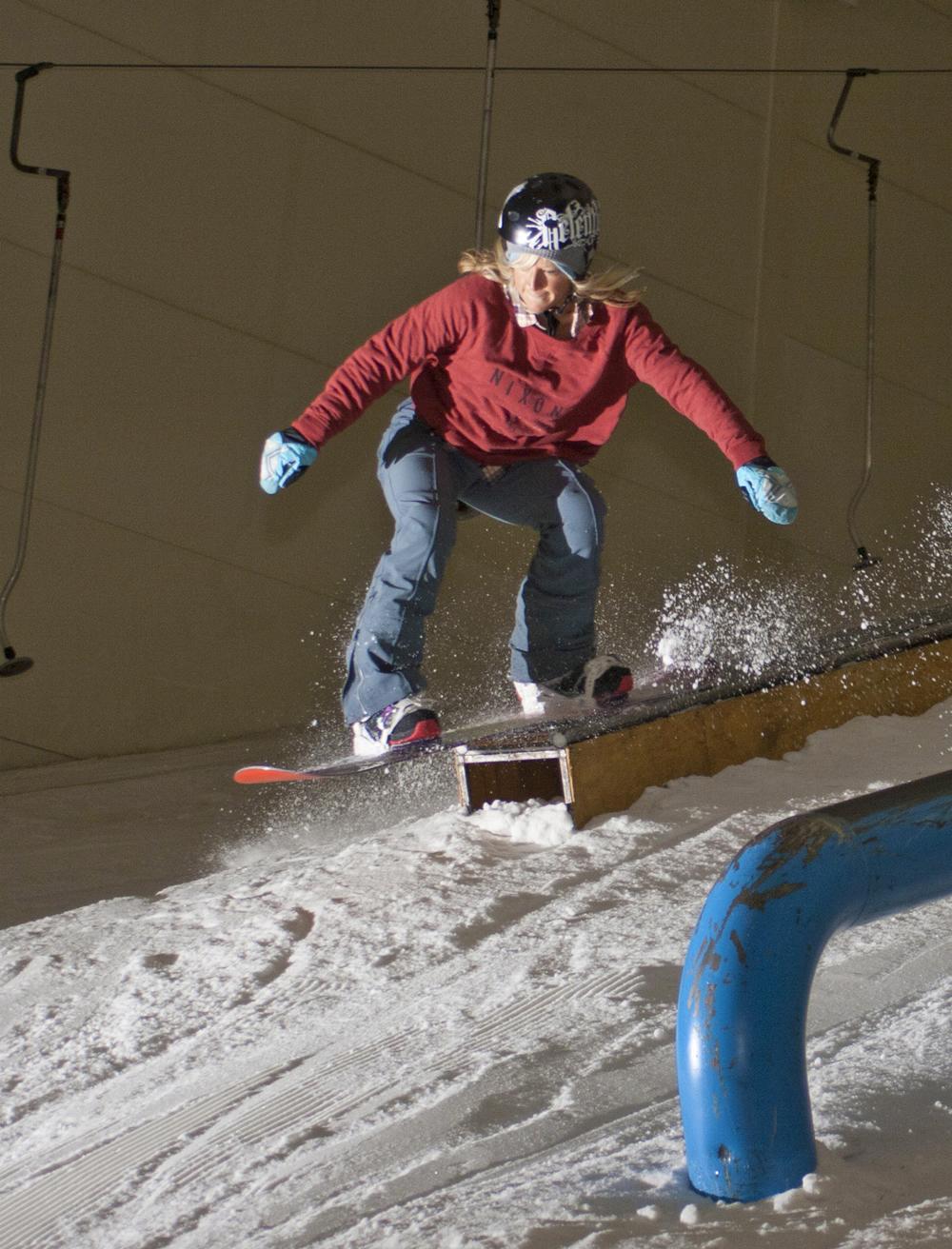
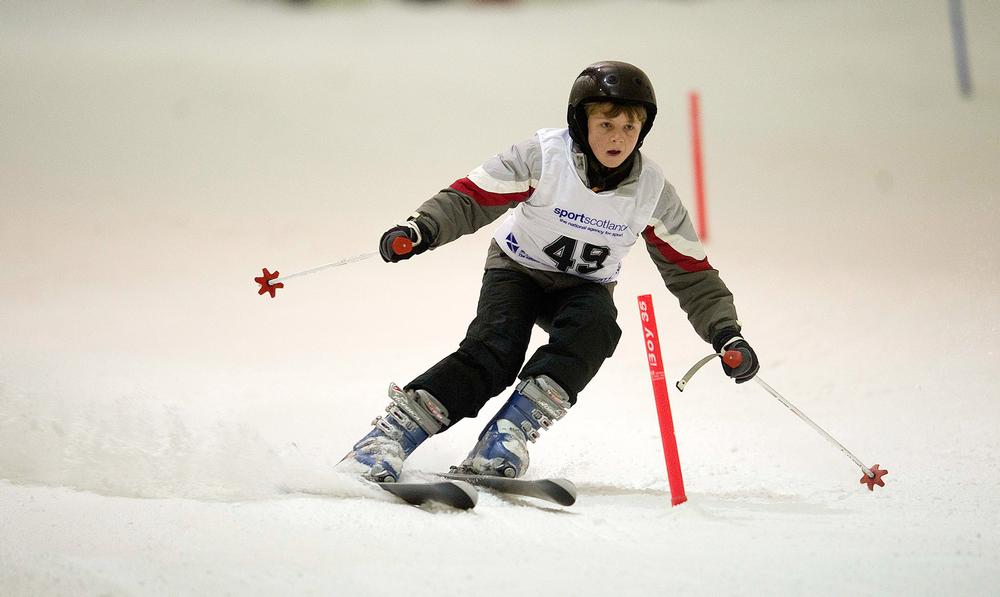
Slopestyle debuted at Sochi this year; this is a sport which doesn’t rely on mountains, as the basics can be learned and practised at indoor snow centres or on dry ski slopes. The snowboarding team – Jenny Jones, Aimee Fuller, Jamie Nicholls and Billy Morgan – all started out on their local slopes.
The growing number of indoor snow centres in the UK has helped to narrow the gulf between Britain and countries with mountains, by giving more people access to snowboarding. Many of the skills for slopestyle can also be practised in the UK. “British snowboarders tend to be very good on rails, as these can be perfected under cover. And indoor snow centres have the advantage of being available all year round,” says Snowsport England’s chief executive officer, Tim Fawkes.
Also, slopestyle is a sport where skills learned in other sports and disciplines can fast-track those who have talent. “Billy Morgan comes from a gymnastics background so improved very quickly,” says Fawkes. “Trampolining and tumbling are other good feeder sports for slopestyle, half pipe and aerial.”
FOSTERING TALENT With this in mind, British Ski and Snowboard is in talks with commercial organisation Woodward about creating an indoor environment with foam pits, sprung floors, launch areas, trampolines, tumble zones and skateboard areas. This is part of a drive to engage young people – particularly those under 16 – and to foster skills which could be transferred to snow sports.
“We’re in talks now about creating a couple of centres in the UK: one in Scotland and one in England and we’re also hoping to create one in Wales at a later date,” says Paddy Mortimer, performance director of British Ski and Snowboard. “Media and music will be part of the mix, as we want to inspire creativity and athleticism. We’re looking to engage with the psychological make up [of the young people] more than the physical. We need to create people who can self regulate and think on their feet, so they’re not led and over coached, because that means when circumstances change they can’t adapt.”
The snow medal target for South Korea hasn’t yet been set, but Mortimer isn’t anticipating any difficulties in getting more funding for snow sports from UK Sport. “Previously, they gave us a small amount of money and said prove yourselves. We have done that, not just at the Games, but getting podium positions in the run up,” he says. “UK Sport wants British sport to grow, so it’s just a case of putting forward a plausible, evidence-based plan. What we’ve achieved is incredible. Funding, as well as sponsorship from the likes of Bawbags, Delancey, Reeves and SIGB, has allowed us to take the team to elite training environments, pay the best coaches and put in place injury management processes.”
ON THE ICE Technological developments led to improved performances by the British bobsleigh team. The men’s bobsleigh team came an impressive fifth in Sochi, missing the podium by just 0.11 seconds. GB Bobsleigh performance director Gary Anderson says bobsleigh is one to watch, stressing that they are only halfway through an eight-year programme and expect to challenge for medals in all three events – men’s two and four man bob and women’s two man bob – in South Korea.
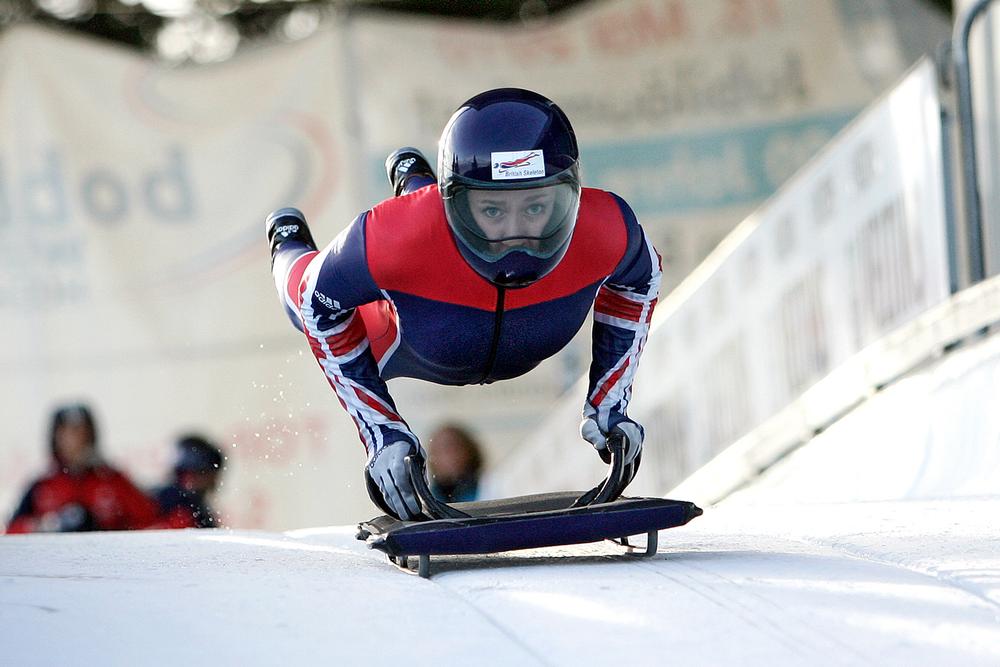
Skeleton is Team GB’s most successful winter sport in recent years: Britain is the only nation to have won a medal every time skeleton has been on the programme at the Winter Games, including two golds at the previous two Winter Olympics.
Keen to build on this momentum, UK Sport, the English Institute of Sport and British Skeleton have already launched a talent spotting initiative, targeting 17- to 25-year-olds who might show aptitude for skeleton. Golden girl Lizzy Yarnold, who was herself a product of a similar initiative five years ago, helped launch Power2Podium: Skeleton, in March. The aim is to discover athletes who have what it takes to compete at the 2022 Winter Games.
British Skeleton performance director Nigel Laughton says developing the pipeline is crucial: “British Skeleton’s continued success on the world stage has, in part, been down to the systematic approach we apply to developing young athletes for the future,” he says.
THE PIPELINE Tim Fawkes is hoping the recent Olympic success might also persuade Sport England to give Snowsport England more funding to support the pathway further down. “This would enable us to progress our programme quicker, getting regional hubs up and running, offering more coaching support, identifying talent better, offering more structured programmes at local level and bringing talent on,” he says. “The pipeline is looking good. Most of the British athletes are young and there’s another wave of potential athletes coming through who didn’t quite qualify for this Olympics.”
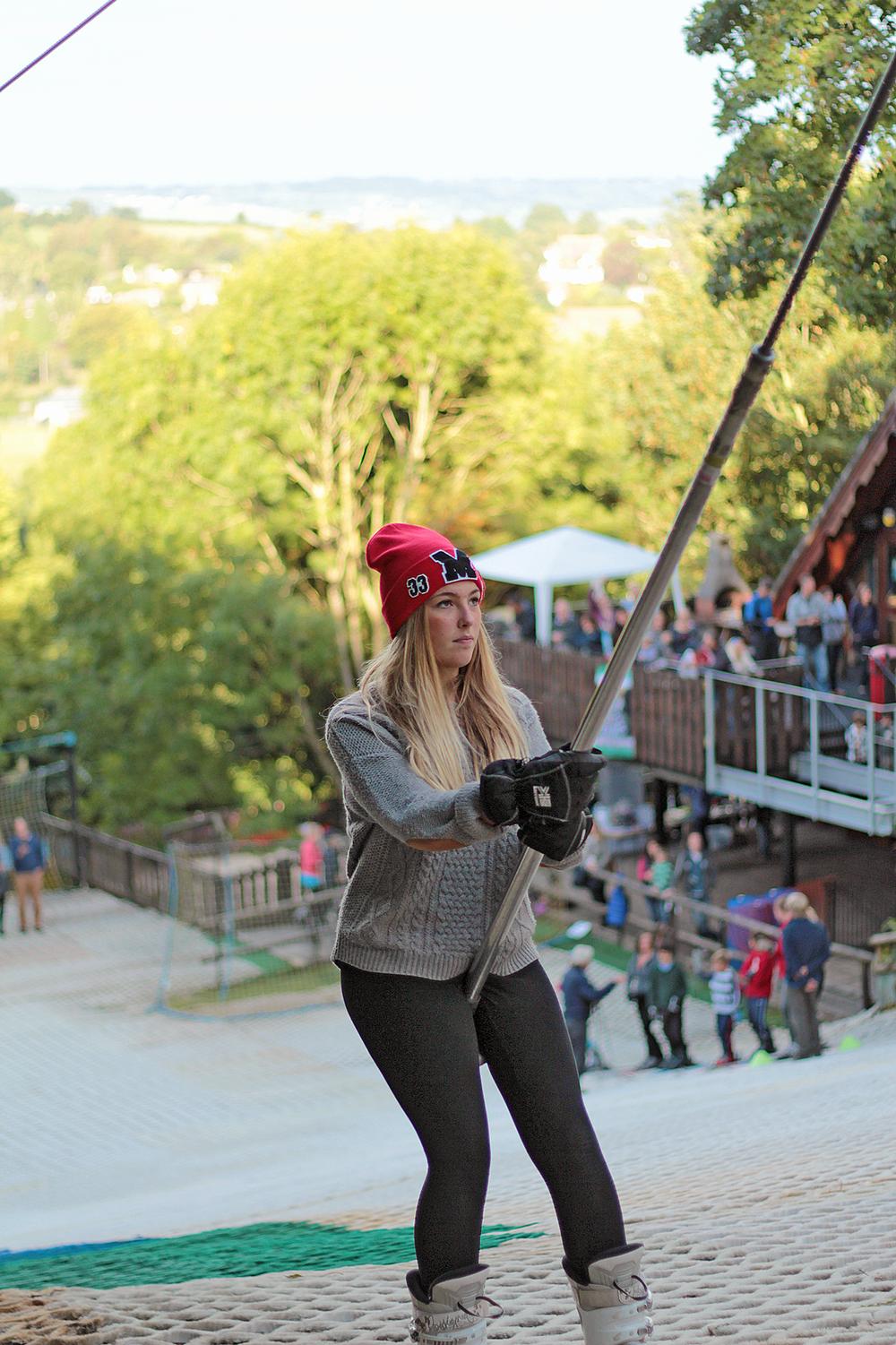
It certainly looks like the Olympic success has inspired lots of people to head down to their local ski slopes. Jamie Smith, owner of Snow Factor International, which includes Snow Factor at Intu Braehead near Glasgow – where the British Slopestyle and Freestyle team did some pre-Games training – says the Jones effect has boosted business. “Within 24 hours of her bronze medal, our phones at Snow Factor were constantly ringing as people called to book lessons and slope time,” he says.
Smith argues that skiing is no longer an expensive, elitist sport and that centres such as his have brought snow sports within reach of a wider demographic, offering adult lessons for £29, including equipment, and slope passes from £14. Discounted sessions, freestyle sessions, racing and coaching sessions are all run on a weekly basis. Going forward, there’s definitely cause for optimism regarding winter sports. Although the UK has an infrastructure disadvantage compared to a lot of the competition, targeted funding and investment in technology and good coaching seems to be paying off.
As Lizzy Yarnold says, “What we do is focus on the things we can do well and improve on, whether it’s nutrition or training. To get the best athletes, we need to have the best coaches, know what we’re good at and just focus on that.”
SOCHI 2014 PARALYMPICS The paralympic team put in a stellar performance, and broke records. The team brought home the first ever gold from the event and Jade Etherington became the most successful British woman in Winter Paralympic history.
Etherington, a visually impaired skier, with her guide, Caroline Powell, were the downhill stars of the Games, winning three silvers and a bronze.
After narrowly missing a medal at the last Winter Olympics, Northern Ireland’s Kelly Gallagher and her guide Charlotte Evans took Britain’s first ever gold at a Winter Games in the visually impaired super-G skiing.
The curling team also won a bronze, bringing the medal tally to six, compared to none in Vancouver 2010.
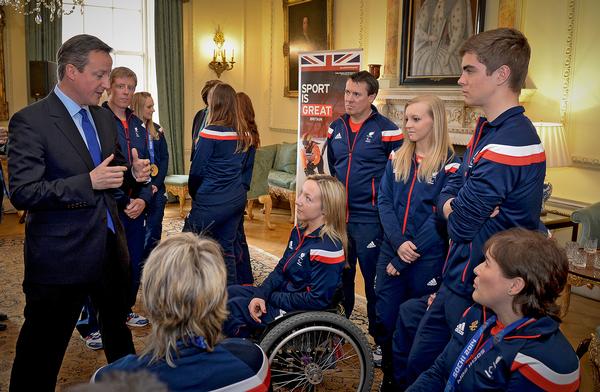
Team GB’s winter paralympians met Prime Minister David Cameron following their success in Sochi
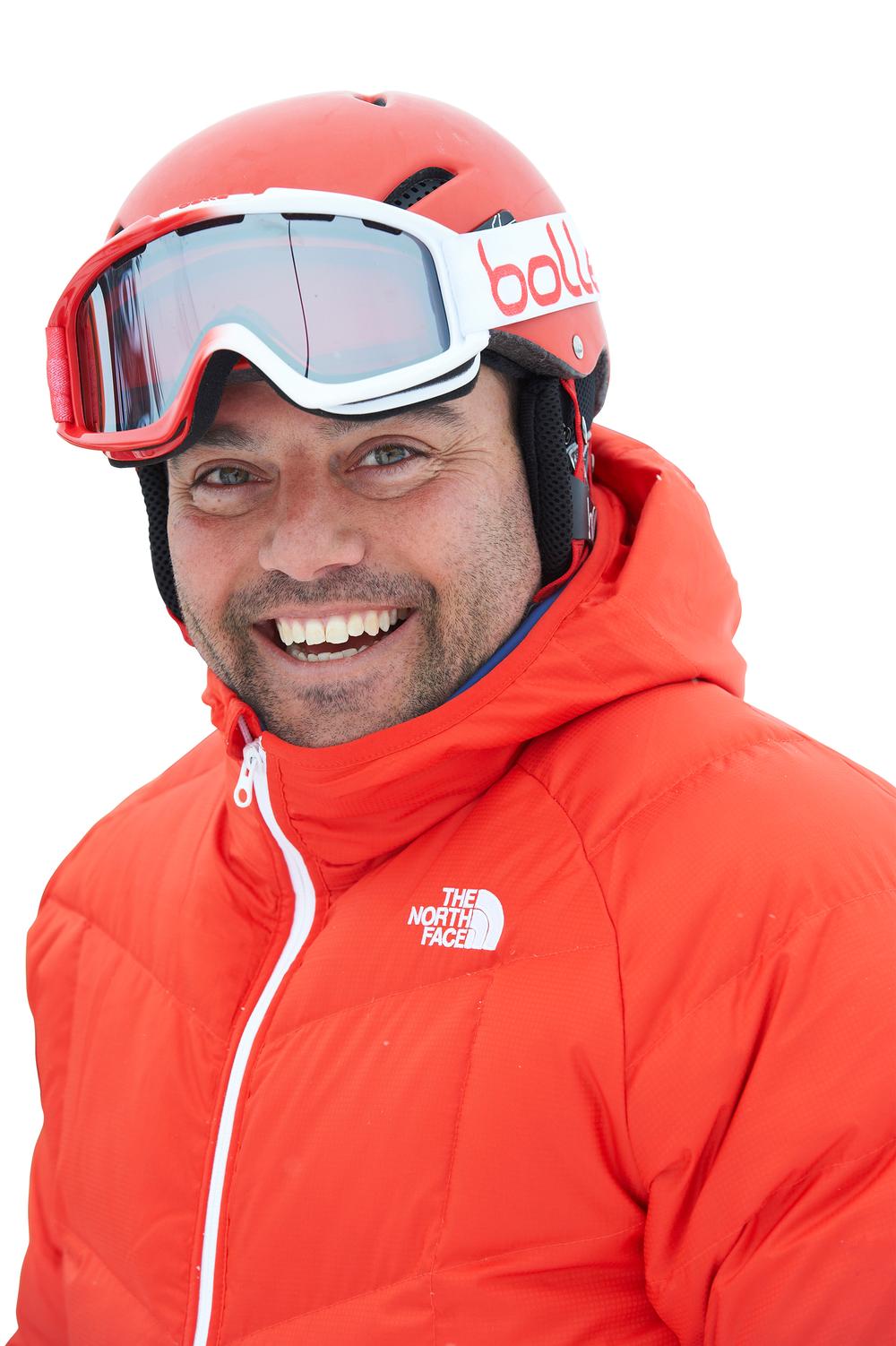
Tim Fawkes
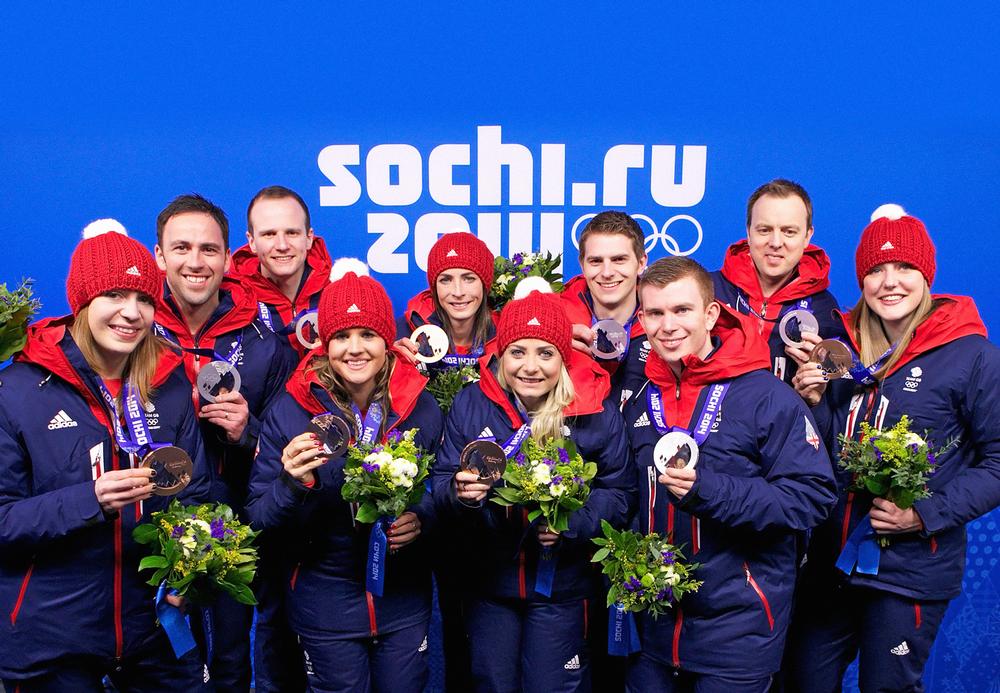
Team GB’s men and women’s curling teams at Sochi 2014
Lizzy Yarnold’s gold medal winning run at the 2014 Sochi Olympics
Learning to ski and snowboard at Snow Factor
Mendip Snowsport Centre
COMPANY PROFILES
Simworx Ltd
The company was initially established
in 1997. Terry Monkton and Andrew
Roberts are the key stakeh [more...]
RMA Ltd
RMA Ltd is a one-stop global company
that can design, build and produce from a
greenfield site upw [more...]
instantprint
We’re a Yorkshire-based online printer, founded
in 2009 by Adam Carnell and James Kinsella. [more...]
Polin Waterparks
Polin was founded in Istanbul in 1976. Polin
has since grown into a leading company in
the waterpa [more...]
Team GB returned from the Sochi 2014 Winter Olympics on a high, with Jenny Jones winning the first ever medal on snow, Lizzy Yarnold taking gold and the curling teams securing a silver and bronze. As well as Jones’ bronze, the British freestyle skiing and snowboarding team managed a record-breaking six top 10 finishes.
After finishing a respectable 19th in the medal table, Team GB is hoping for even more in South Korea at the next Olympics in 2018. Meetings are now underway with UK Sport and officials from British winter Olympic disciplines about performance targets over the next four years. The resulting spending decisions will be announced in June.
Six sports shared a fund of £13.4m over the past four years, but that’s likely to be boosted for the 2018 Games. “Following so many outstanding performances in Sochi, I anticipate that there will be an increase in our investment into winter sports,” says Liz Nicholl, UK Sport’s CEO. “The success has shown that the approach we’ve taken to athletes, supporting sports with medal prospects, is working. It gives us a huge amount of confidence in the system. We’re building on this success and will be going for more medals in 2018.”
SLOPESTYLE For years Team GB didn’t trouble the podium at the Winter Olympics much. Lack of mountains and snow were often blamed, but while our geography hasn’t changed, our performance has.
Slopestyle debuted at Sochi this year; this is a sport which doesn’t rely on mountains, as the basics can be learned and practised at indoor snow centres or on dry ski slopes. The snowboarding team – Jenny Jones, Aimee Fuller, Jamie Nicholls and Billy Morgan – all started out on their local slopes.
The growing number of indoor snow centres in the UK has helped to narrow the gulf between Britain and countries with mountains, by giving more people access to snowboarding. Many of the skills for slopestyle can also be practised in the UK. “British snowboarders tend to be very good on rails, as these can be perfected under cover. And indoor snow centres have the advantage of being available all year round,” says Snowsport England’s chief executive officer, Tim Fawkes.
Also, slopestyle is a sport where skills learned in other sports and disciplines can fast-track those who have talent. “Billy Morgan comes from a gymnastics background so improved very quickly,” says Fawkes. “Trampolining and tumbling are other good feeder sports for slopestyle, half pipe and aerial.”
FOSTERING TALENT With this in mind, British Ski and Snowboard is in talks with commercial organisation Woodward about creating an indoor environment with foam pits, sprung floors, launch areas, trampolines, tumble zones and skateboard areas. This is part of a drive to engage young people – particularly those under 16 – and to foster skills which could be transferred to snow sports.
“We’re in talks now about creating a couple of centres in the UK: one in Scotland and one in England and we’re also hoping to create one in Wales at a later date,” says Paddy Mortimer, performance director of British Ski and Snowboard. “Media and music will be part of the mix, as we want to inspire creativity and athleticism. We’re looking to engage with the psychological make up [of the young people] more than the physical. We need to create people who can self regulate and think on their feet, so they’re not led and over coached, because that means when circumstances change they can’t adapt.”
The snow medal target for South Korea hasn’t yet been set, but Mortimer isn’t anticipating any difficulties in getting more funding for snow sports from UK Sport. “Previously, they gave us a small amount of money and said prove yourselves. We have done that, not just at the Games, but getting podium positions in the run up,” he says. “UK Sport wants British sport to grow, so it’s just a case of putting forward a plausible, evidence-based plan. What we’ve achieved is incredible. Funding, as well as sponsorship from the likes of Bawbags, Delancey, Reeves and SIGB, has allowed us to take the team to elite training environments, pay the best coaches and put in place injury management processes.”
ON THE ICE Technological developments led to improved performances by the British bobsleigh team. The men’s bobsleigh team came an impressive fifth in Sochi, missing the podium by just 0.11 seconds. GB Bobsleigh performance director Gary Anderson says bobsleigh is one to watch, stressing that they are only halfway through an eight-year programme and expect to challenge for medals in all three events – men’s two and four man bob and women’s two man bob – in South Korea.
Skeleton is Team GB’s most successful winter sport in recent years: Britain is the only nation to have won a medal every time skeleton has been on the programme at the Winter Games, including two golds at the previous two Winter Olympics.
Keen to build on this momentum, UK Sport, the English Institute of Sport and British Skeleton have already launched a talent spotting initiative, targeting 17- to 25-year-olds who might show aptitude for skeleton. Golden girl Lizzy Yarnold, who was herself a product of a similar initiative five years ago, helped launch Power2Podium: Skeleton, in March. The aim is to discover athletes who have what it takes to compete at the 2022 Winter Games.
British Skeleton performance director Nigel Laughton says developing the pipeline is crucial: “British Skeleton’s continued success on the world stage has, in part, been down to the systematic approach we apply to developing young athletes for the future,” he says.
THE PIPELINE Tim Fawkes is hoping the recent Olympic success might also persuade Sport England to give Snowsport England more funding to support the pathway further down. “This would enable us to progress our programme quicker, getting regional hubs up and running, offering more coaching support, identifying talent better, offering more structured programmes at local level and bringing talent on,” he says. “The pipeline is looking good. Most of the British athletes are young and there’s another wave of potential athletes coming through who didn’t quite qualify for this Olympics.”
It certainly looks like the Olympic success has inspired lots of people to head down to their local ski slopes. Jamie Smith, owner of Snow Factor International, which includes Snow Factor at Intu Braehead near Glasgow – where the British Slopestyle and Freestyle team did some pre-Games training – says the Jones effect has boosted business. “Within 24 hours of her bronze medal, our phones at Snow Factor were constantly ringing as people called to book lessons and slope time,” he says.
Smith argues that skiing is no longer an expensive, elitist sport and that centres such as his have brought snow sports within reach of a wider demographic, offering adult lessons for £29, including equipment, and slope passes from £14. Discounted sessions, freestyle sessions, racing and coaching sessions are all run on a weekly basis. Going forward, there’s definitely cause for optimism regarding winter sports. Although the UK has an infrastructure disadvantage compared to a lot of the competition, targeted funding and investment in technology and good coaching seems to be paying off.
As Lizzy Yarnold says, “What we do is focus on the things we can do well and improve on, whether it’s nutrition or training. To get the best athletes, we need to have the best coaches, know what we’re good at and just focus on that.”
SOCHI 2014 PARALYMPICS The paralympic team put in a stellar performance, and broke records. The team brought home the first ever gold from the event and Jade Etherington became the most successful British woman in Winter Paralympic history.
Etherington, a visually impaired skier, with her guide, Caroline Powell, were the downhill stars of the Games, winning three silvers and a bronze.
After narrowly missing a medal at the last Winter Olympics, Northern Ireland’s Kelly Gallagher and her guide Charlotte Evans took Britain’s first ever gold at a Winter Games in the visually impaired super-G skiing.
The curling team also won a bronze, bringing the medal tally to six, compared to none in Vancouver 2010.
Team GB’s winter paralympians met Prime Minister David Cameron following their success in Sochi
Tim Fawkes
Team GB’s men and women’s curling teams at Sochi 2014
Lizzy Yarnold’s gold medal winning run at the 2014 Sochi Olympics
Abu Dhabi-based investment firm Mubadala Capital has made a binding, fully financed
€1 billion
offer to acquire Pierre and Vacances SA, the European holiday resort operator behind the
continental European Center Parcs business.
Expo 2030 Riyadh is being planned as a permanent visitor destination, with organisers
confirming the six-million-square-metre site will become a Global Village after the event closes.
The owner of one of Australia's best-known waterparks has acquired a major competitor,
creating a new attractions business spanning two of the country's largest visitor destinations.
The Toverland theme park in the Netherlands has announced a €98m expansion programme
that will add a resort, new attractions and staff facilities as it pursues plans to become a multi-
day destination.
Hotel de France, located on the British Isle of Jersey, has created a wellness retreat package
that includes a hot yoga session that will take place in Jersey Zoo’s butterfly sanctuary.
A new immersive attraction designed to transport visitors into the final hours of ancient Pompeii
is preparing to open near the world-famous archaeological site in southern Italy.
Experience design company, BRC Imagination Arts, has completed a transition that sees founder
Bob Rogers pass ownership of the business to four long-serving senior executives, while
remaining actively involved with the company.
Movie Park Germany has opened a new Paramount Pictures-themed attraction as part of its 30th
anniversary celebrations, using immersive storytelling and adaptive reuse to reinforce the park’s
longstanding “Hollywood in Germany” positioning.
Therme Manchester’s 28-acre development, which will include interconnected glass pavilions
that measure 65,000sq m, will be the largest bathing and wellbeing attraction in the world once
complete, according to prof David Russell, CEO of Therme UK.
Efteling has opened Hooghmoed, a new family drop tower designed to broaden the appeal of its
recently launched Sirene Island themed area and introduce younger visitors to thrill attractions.
+ More news
COMPANY PROFILES
Simworx Ltd The company was initially established
in 1997. Terry Monkton and Andrew
Roberts are the key stakeh [more...]
RMA Ltd RMA Ltd is a one-stop global company
that can design, build and produce from a
greenfield site upw [more...]
instantprint We’re a Yorkshire-based online printer, founded
in 2009 by Adam Carnell and James Kinsella. [more...]
Polin Waterparks Polin was founded in Istanbul in 1976. Polin
has since grown into a leading company in
the waterpa [more...]