The High Line represents a modern epic tale of how two men battled to save a disused 1930s rail structure and turn it into an eco-friendly park and community space that winds through the high rises of New York City. Co-founder Robert Hammond tells Julie Cramer about how the grand vision became a reality
By Julie Cramer | Published in Leisure Handbook 2014 issue 1
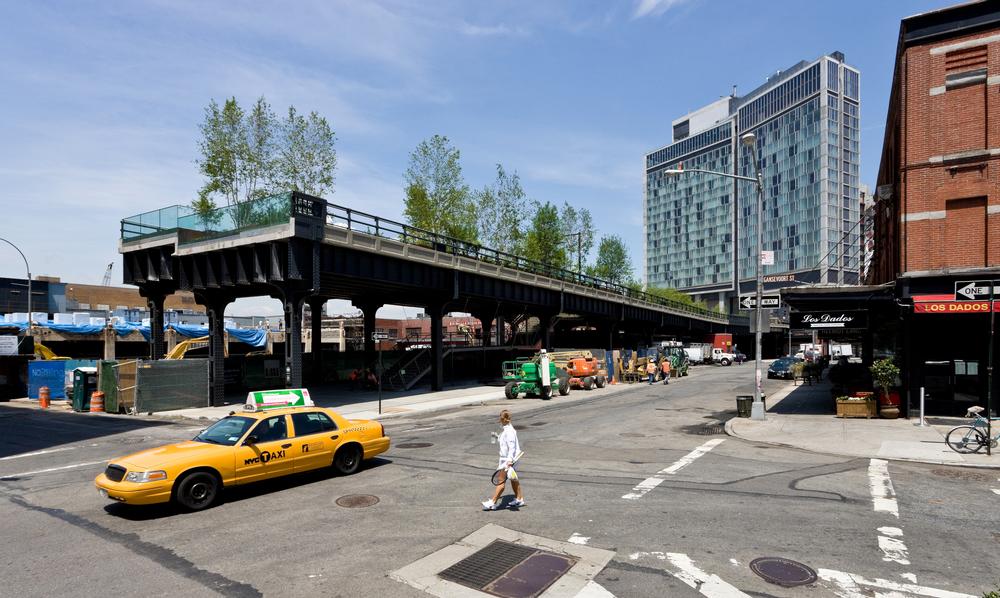
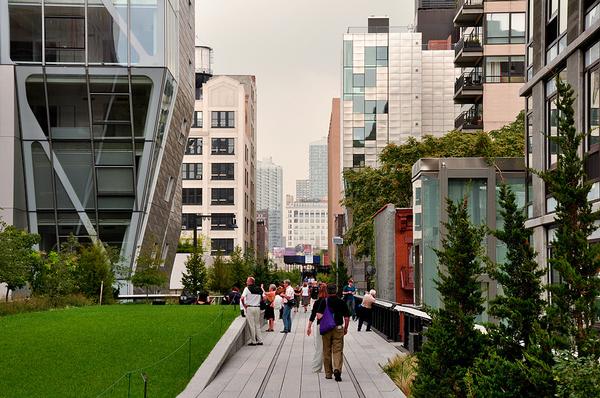
The High Line runs underneath the Standard Hotel in New York’s Meatpacking District
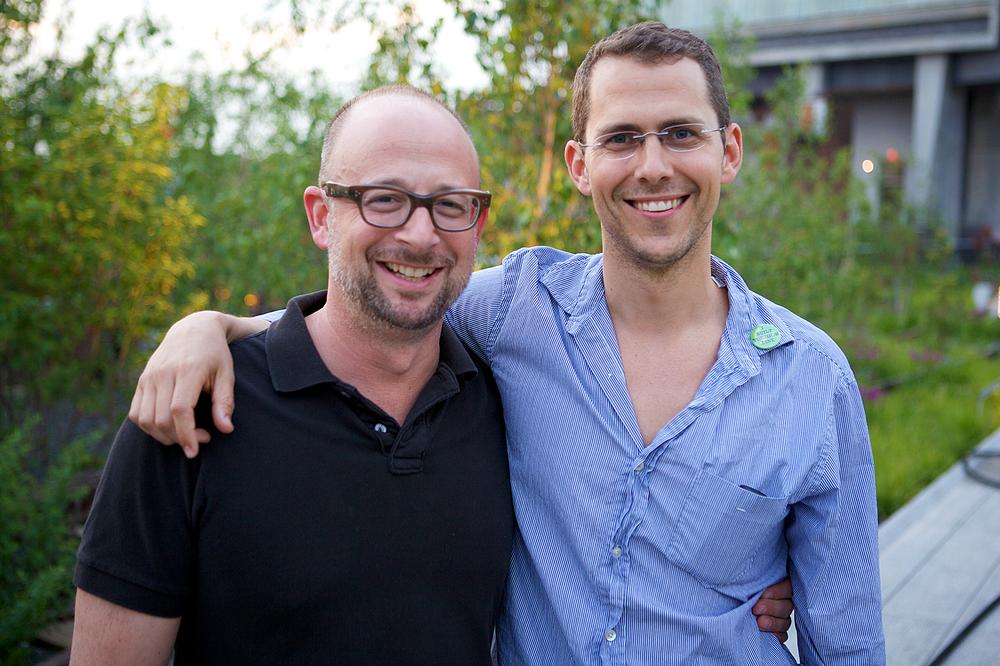
How did you first become involved with the High Line project? After both reading a New York Times article about the proposed demolition of the High Line, Josh and I connected at a community board meeting in 1999, where we were the only two people in the room interested in saving the High Line. We exchanged cards and within months the Friends of the High Line was more formally created, with the goal of preserving the entire historic structure.
What was your vision for it in the early days? Has it changed significantly over the years? At that first meeting, during a presentation by CSX Transportation (the rail company that owned the High Line), they breezed through all the possible uses for the High Line other than demolition; a park was one of them. That idea was very abstract at first and took shape as we spoke to more people in the community and others undertaking similar projects, and eventually became concrete through the design competition and work with the design team.
What response did you get when you first launched an ideas competition? We received over 750 proposals from 32 countries from a diverse audience: schoolchildren, architects, designers, and members of the public. Some of the most unusual included a mile-long pool and a twisting roller coaster.
Why did you choose the designers/architects that you did? The design team of James Corner Field Operations, Diller Scofidio + Renfro, and Piet Oudolf really understood how to keep the magic of the High Line alive with their design. I remember Ric Scofidio said in a presentation of the project: “My main job as an architect is to save the High Line from architecture.”
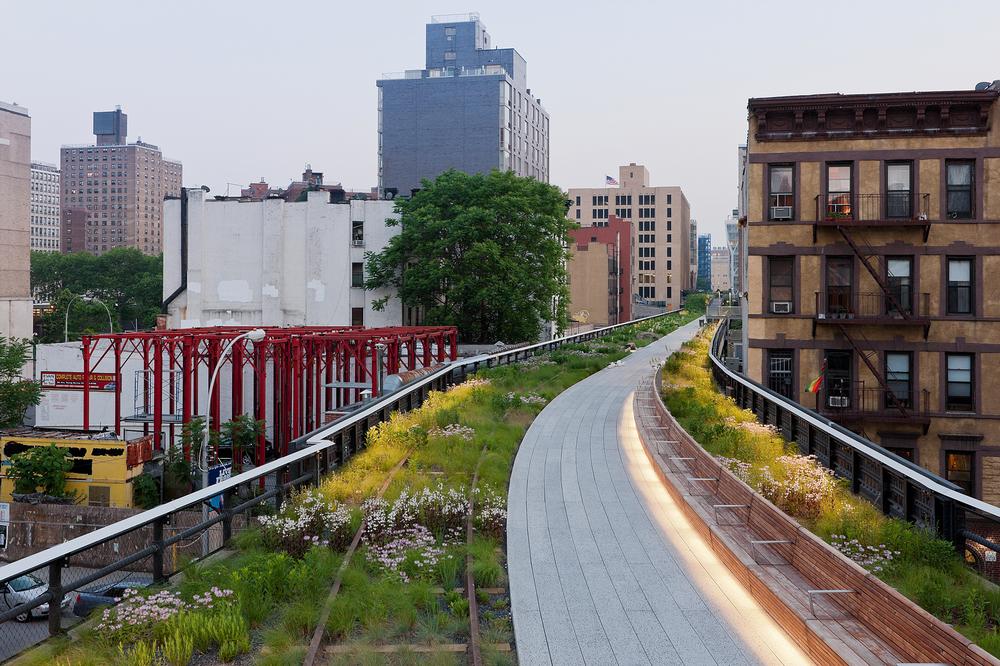
It was compelling that their proposal focused on stripping away and exposing the structure instead of adding to it. Also Piet Oudolf’s vision for the plantings evoked the self-seeded landscape of the High Line we’d all come to love.
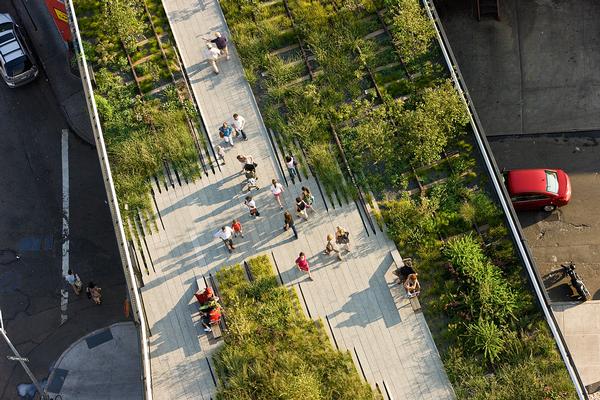
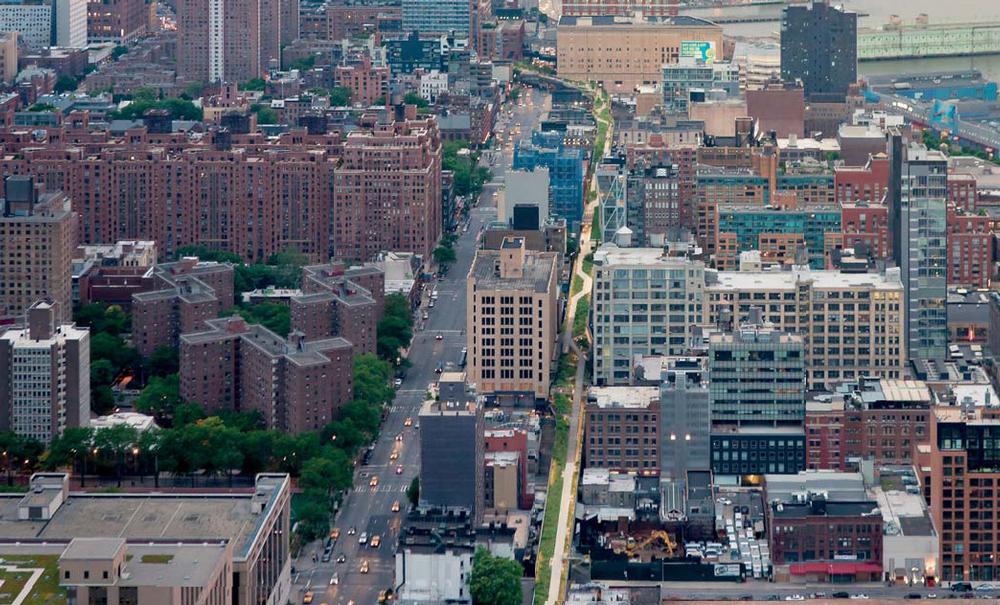
What are the main project elements? The High Line is a mile-long, soon to be mile-and-a-half-long elevated park [with the development of the High Line at the rail yards opening in 2014]. The best part is that it gives you a new way of seeing and experiencing New York City. It’s more than a park – it’s also a cultural centre for the community that includes public programmes, school programmes, art installations, performance art, and most recently, food offerings that are as unique as the High Line itself.
Where has the main funding come from for the different stages? The first two sections cost US$153m (£98m). The City of New York contributed $112.2m (£72m); the Federal government gave $20.7m (£13.2m); the State of New York contributed $700,000 (£448,000); and $19.4m (£12.4m) was raised by Friends of the High Line and developers.
What does it cost to keep the High Line running? The operating budget of the High Line is $3m per year, and that’s all paid for with private funding. Custodians, gardeners, greeters, docents, programme staffers, bathroom attendants – every employee you see on the High Line is employed by Friends of the High Line. The City of New York provides for security, while the rest of the park’s operations budget is supported entirely by private donations.
What contribution do you get from the public? The park is free to the public. We raise funding to support more than 90 per cent of the operating budget of the park. The majority of the funding comes from generous grants and gifts made by individuals and foundations. We’re building our membership programme, which starts at a pledge of $40 per year, and working on developing other ways to generate revenue.
How did you set about creating an events schedule for the High Line? Public programmes draw inspiration from our community, the design of the park, and the industrial history of the High Line. The Friends of the High Line director of public programs, education & community engagement works with arts and community organisations, public schools, and other groups to curate the schedule.
What are some of the more unusual events/offerings on the High Line? A few notable programmes this year include Step to the High Line, a step performance by area youth and the Halloween Parade, where local school kids created “haunted” train cars in the classroom which were then paraded down the High Line. Other initiatives have included a Social Soup Experiment – a community meal organised by High Line Food; a Ladybug Release as part of “Wild Wednesdays” for kids; Play with Your Food, a hands-on programme where kids learned to prepare simple healthy snacks; and public art installations by Sarah Sze and Darren Almond.
Can you describe a few of your main outreach programmes? The High Line stands today because the community rallied to save it from demolition and transform it into public open space. It is important that the park continues to be a special place for New Yorkers. We have several programmes to strengthen connections with our neighbours, including a youth corps from the local housing projects and education partnerships with nearby schools.
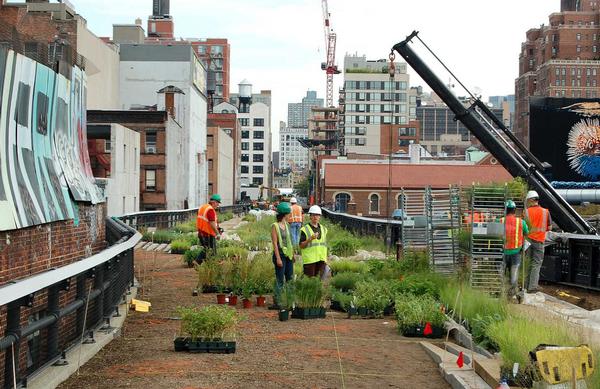
What about environmental projects? The High Line is a mile-long green roof which is designed to retain as much water as possible. This year we started our first composting programme. We’re sending our plant clippings to Fresh Kills Landfill on Staten Island to be recycled and turned into compost, and we’re working with High Line food vendors to minimise waste by using compostable cups, plates, and utensils and compost some of their scraps.
How did you choose your vendors? We selected food vendors through an open, competitive process. When selecting, it was important their food and beverage offerings were unique, interesting, and made with sustainable local ingredients.
How have the public responded? It’s been overwhelming and has far exceeded our expectations. Before the park opened, we estimated around 300,000 people would visit the park year. We’ve had about two million people a year and we’re on track to have around three million this year.
How does this compare to other attractions in the city? We’re one of the most-visited parks per square foot in the whole of New York City. On a yearly basis, our visitor numbers sit somewhere between the MoMA (2.5 million visitors) and the Statue of Liberty (5 million visitors per year).
What future plans do you have for the High Line? Many people think the High Line is finished, but Section 3 of the rail yards represents one-third of the entire historic structure and it’s currently closed to the public. We’re working to bring all of the stakeholders together to begin the design and construction process so that we can open as quickly as possible – we’re aiming to open it in 2014. Building an endowment for long-term maintenance and operations are also top priorities.
What have been the main challenges you’ve overcome? Since the High Line opened it’s been celebrated worldwide and called a model for adaptive reuse projects. With all the hype, it’s easy to forget that there were challenges in getting the project off the ground. It took time to get all the stakeholders invested and to get the capital funding raised to complete the construction. We’ve been lucky to have visionaries in the political and private sectors who’ve helped make it possible.
What’s your favourite story that relates to the High Line? The High Line runs between residential buildings, sometimes very close. Before the park was developed, some neighbours were even able to climb out of their windows onto it. Soon after the opening, one neighbour took advantage of the passing crowds to start Renegade Cabaret. On summer evenings, soon after the High Line’s opening in 2009, visitors were treated to live jazz tunes that floated across from the neighbouring fire escape.
How would you sum up the success of the High Line? I still have to pinch myself. It seems too good to be true.
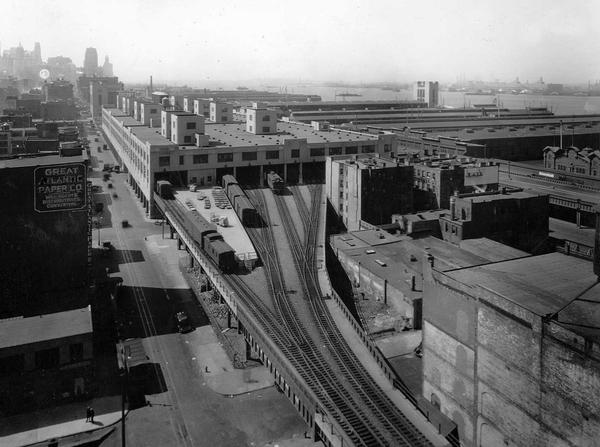
HIGH LINE HISTORY The New York High Line was built in the 1930s, as part of a major public-private infrastructure project called the West Side Improvement. It lifted freight traffic 30 feet in the air, removing dangerous trains from the streets of Manhattan’s largest industrial district.
1934 - 1950's
1934 The High Line opens to trains. It runs from 34th Street to St. John’s Park Terminal, at Spring Street.
1950's Growth of interstate trucking leads to a drop in rail traffic, nationally and on the High Line.
1960's - 1980
1960's The southernmost section of the High Line is demolished.
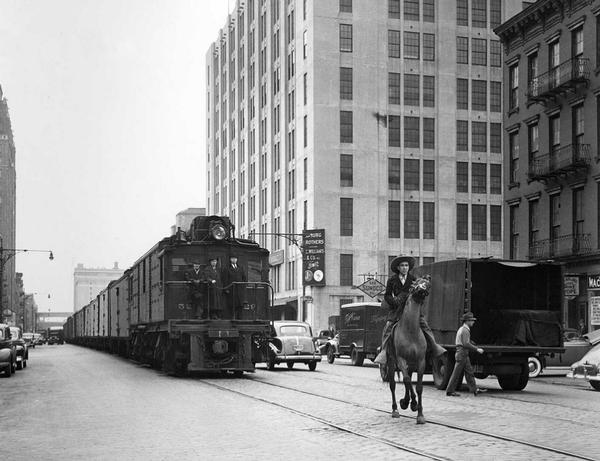
1980 The last train runs on the High Line, pulling three carloads of frozen turkeys.
1999 - Jan- July 2003
1999 Friends of the High Line is founded by Joshua David and Robert Hammond.
Jan - July 2003 A competition, ‘Designing the High Line’, solicits proposals for the High Line’s reuse.
2008 - 2009
June 2008 Final designs are released for the High Line’s transformation into a public park.
June2009 Section 1 (Gansevoort Street to West 20th Street) opens to the public.
2011
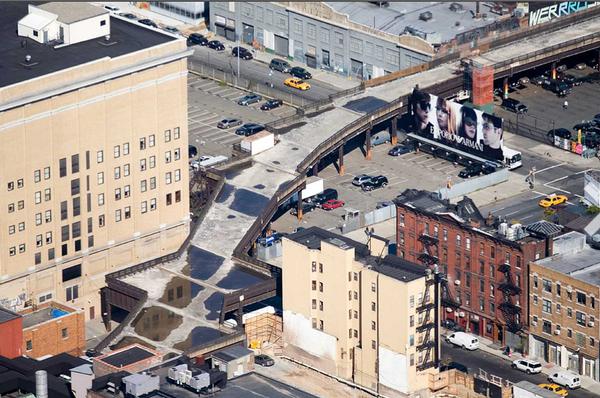
Images highlight the changing story of the High Line through the decades
June 2011 Section 2 (West 20th Street to West 30th Street) opens to the public.
Tales from the High Line High Line: The Inside Story of New York City’s Park in the Sky was published in October 2011.
The book features more than 200 beautiful historic and contemporary photographs of the High Line, and a narrative by creators Joshua David and Robert Hammond.
US journalist Robert A. Caro says of the book: “This is a fundamentally uplifting story of two young men with a dream who scythed through red tape and skepticism, summoning a village to help re-imagine what a park could be in the twenty-first century. Thanks to their vision, and to the dedication, enthusiasm, and brilliance of their collaborators, a walk in the park has been transformed into an exhilarating urban experience that helps all of us to see our extraordinary city with new eyes.”
And US author Edmund White comments: “There is no more miraculous and important and gratifying piece of new American urban design than the High Line. What’s more, how it was conjured into existence is a compelling story, and here’s that story…told lucidly and charmingly by the two extraordinary ordinary guys who pulled it off.”
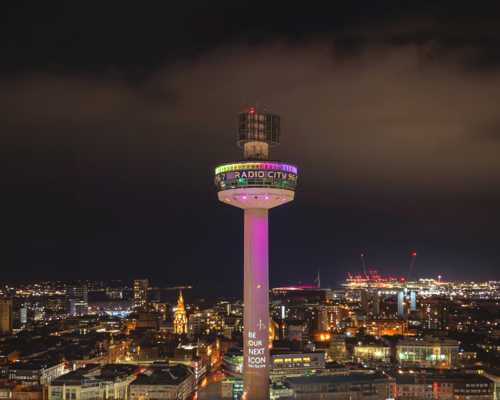
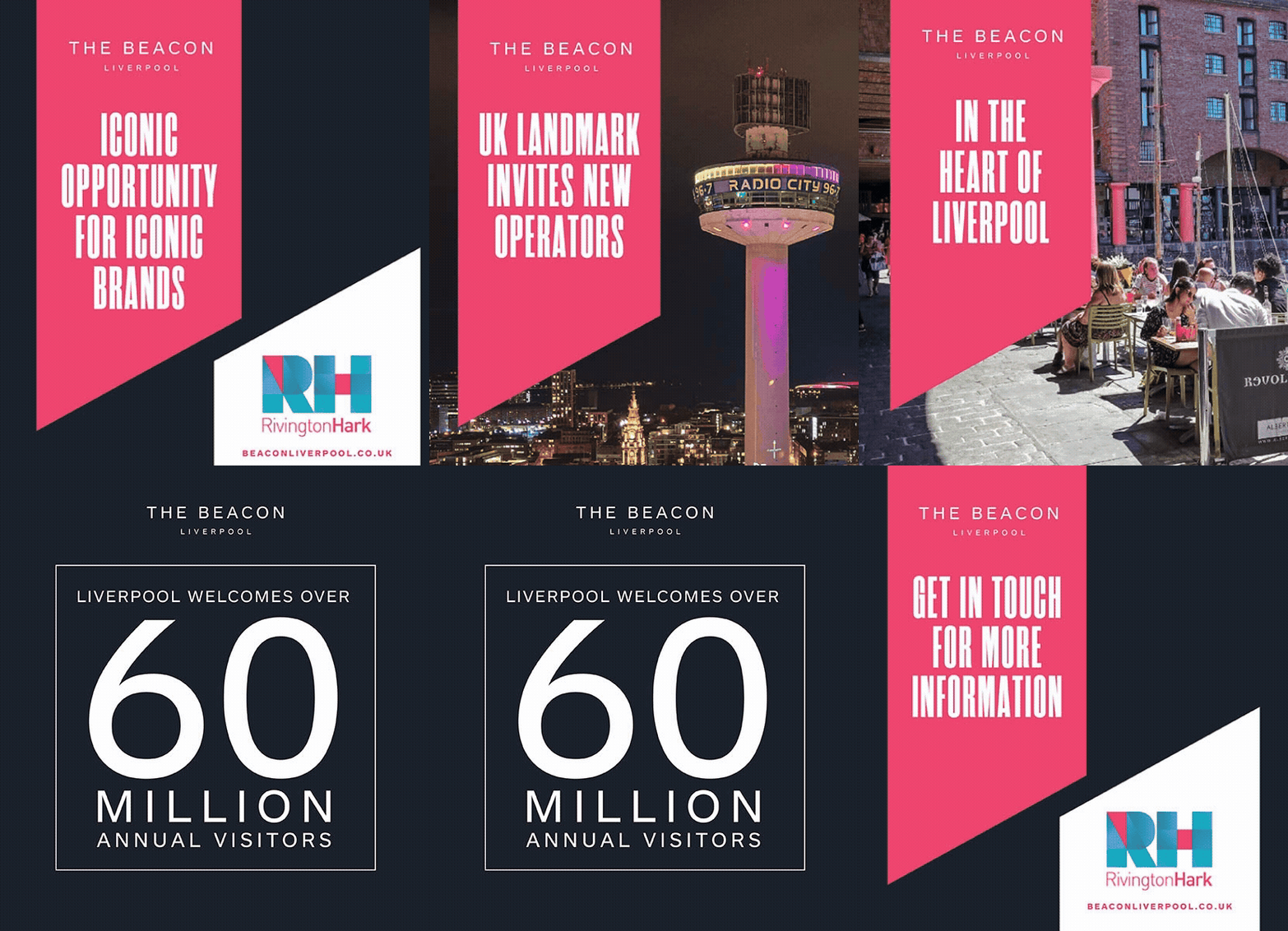
An opportunity to reimagine one of the UK’s most recognisable towers has been formally
opened by Rivington Hark, as St Johns Beacon invites operators and partners to shape its
next phase. [more...]
The High Line represents a modern epic tale of how two men battled to save a disused 1930s rail structure and turn it into an eco-friendly park and community space that winds through the high rises of New York City. Co-founder Robert Hammond tells Julie Cramer about how the grand vision became a reality
By Julie Cramer | Published in Leisure Handbook 2014 issue 1
The High Line runs underneath the Standard Hotel in New York’s Meatpacking District
How did you first become involved with the High Line project? After both reading a New York Times article about the proposed demolition of the High Line, Josh and I connected at a community board meeting in 1999, where we were the only two people in the room interested in saving the High Line. We exchanged cards and within months the Friends of the High Line was more formally created, with the goal of preserving the entire historic structure.
What was your vision for it in the early days? Has it changed significantly over the years? At that first meeting, during a presentation by CSX Transportation (the rail company that owned the High Line), they breezed through all the possible uses for the High Line other than demolition; a park was one of them. That idea was very abstract at first and took shape as we spoke to more people in the community and others undertaking similar projects, and eventually became concrete through the design competition and work with the design team.
What response did you get when you first launched an ideas competition? We received over 750 proposals from 32 countries from a diverse audience: schoolchildren, architects, designers, and members of the public. Some of the most unusual included a mile-long pool and a twisting roller coaster.
Why did you choose the designers/architects that you did? The design team of James Corner Field Operations, Diller Scofidio + Renfro, and Piet Oudolf really understood how to keep the magic of the High Line alive with their design. I remember Ric Scofidio said in a presentation of the project: “My main job as an architect is to save the High Line from architecture.”
It was compelling that their proposal focused on stripping away and exposing the structure instead of adding to it. Also Piet Oudolf’s vision for the plantings evoked the self-seeded landscape of the High Line we’d all come to love.
What are the main project elements? The High Line is a mile-long, soon to be mile-and-a-half-long elevated park [with the development of the High Line at the rail yards opening in 2014]. The best part is that it gives you a new way of seeing and experiencing New York City. It’s more than a park – it’s also a cultural centre for the community that includes public programmes, school programmes, art installations, performance art, and most recently, food offerings that are as unique as the High Line itself.
Where has the main funding come from for the different stages? The first two sections cost US$153m (£98m). The City of New York contributed $112.2m (£72m); the Federal government gave $20.7m (£13.2m); the State of New York contributed $700,000 (£448,000); and $19.4m (£12.4m) was raised by Friends of the High Line and developers.
What does it cost to keep the High Line running? The operating budget of the High Line is $3m per year, and that’s all paid for with private funding. Custodians, gardeners, greeters, docents, programme staffers, bathroom attendants – every employee you see on the High Line is employed by Friends of the High Line. The City of New York provides for security, while the rest of the park’s operations budget is supported entirely by private donations.
What contribution do you get from the public? The park is free to the public. We raise funding to support more than 90 per cent of the operating budget of the park. The majority of the funding comes from generous grants and gifts made by individuals and foundations. We’re building our membership programme, which starts at a pledge of $40 per year, and working on developing other ways to generate revenue.
How did you set about creating an events schedule for the High Line? Public programmes draw inspiration from our community, the design of the park, and the industrial history of the High Line. The Friends of the High Line director of public programs, education & community engagement works with arts and community organisations, public schools, and other groups to curate the schedule.
What are some of the more unusual events/offerings on the High Line? A few notable programmes this year include Step to the High Line, a step performance by area youth and the Halloween Parade, where local school kids created “haunted” train cars in the classroom which were then paraded down the High Line. Other initiatives have included a Social Soup Experiment – a community meal organised by High Line Food; a Ladybug Release as part of “Wild Wednesdays” for kids; Play with Your Food, a hands-on programme where kids learned to prepare simple healthy snacks; and public art installations by Sarah Sze and Darren Almond.
Can you describe a few of your main outreach programmes? The High Line stands today because the community rallied to save it from demolition and transform it into public open space. It is important that the park continues to be a special place for New Yorkers. We have several programmes to strengthen connections with our neighbours, including a youth corps from the local housing projects and education partnerships with nearby schools.
What about environmental projects? The High Line is a mile-long green roof which is designed to retain as much water as possible. This year we started our first composting programme. We’re sending our plant clippings to Fresh Kills Landfill on Staten Island to be recycled and turned into compost, and we’re working with High Line food vendors to minimise waste by using compostable cups, plates, and utensils and compost some of their scraps.
How did you choose your vendors? We selected food vendors through an open, competitive process. When selecting, it was important their food and beverage offerings were unique, interesting, and made with sustainable local ingredients.
How have the public responded? It’s been overwhelming and has far exceeded our expectations. Before the park opened, we estimated around 300,000 people would visit the park year. We’ve had about two million people a year and we’re on track to have around three million this year.
How does this compare to other attractions in the city? We’re one of the most-visited parks per square foot in the whole of New York City. On a yearly basis, our visitor numbers sit somewhere between the MoMA (2.5 million visitors) and the Statue of Liberty (5 million visitors per year).
What future plans do you have for the High Line? Many people think the High Line is finished, but Section 3 of the rail yards represents one-third of the entire historic structure and it’s currently closed to the public. We’re working to bring all of the stakeholders together to begin the design and construction process so that we can open as quickly as possible – we’re aiming to open it in 2014. Building an endowment for long-term maintenance and operations are also top priorities.
What have been the main challenges you’ve overcome? Since the High Line opened it’s been celebrated worldwide and called a model for adaptive reuse projects. With all the hype, it’s easy to forget that there were challenges in getting the project off the ground. It took time to get all the stakeholders invested and to get the capital funding raised to complete the construction. We’ve been lucky to have visionaries in the political and private sectors who’ve helped make it possible.
What’s your favourite story that relates to the High Line? The High Line runs between residential buildings, sometimes very close. Before the park was developed, some neighbours were even able to climb out of their windows onto it. Soon after the opening, one neighbour took advantage of the passing crowds to start Renegade Cabaret. On summer evenings, soon after the High Line’s opening in 2009, visitors were treated to live jazz tunes that floated across from the neighbouring fire escape.
How would you sum up the success of the High Line? I still have to pinch myself. It seems too good to be true.
HIGH LINE HISTORY The New York High Line was built in the 1930s, as part of a major public-private infrastructure project called the West Side Improvement. It lifted freight traffic 30 feet in the air, removing dangerous trains from the streets of Manhattan’s largest industrial district.
1934 - 1950's
1934 The High Line opens to trains. It runs from 34th Street to St. John’s Park Terminal, at Spring Street.
1950's Growth of interstate trucking leads to a drop in rail traffic, nationally and on the High Line.
1960's - 1980
1960's The southernmost section of the High Line is demolished.
1980 The last train runs on the High Line, pulling three carloads of frozen turkeys.
1999 - Jan- July 2003
1999 Friends of the High Line is founded by Joshua David and Robert Hammond.
Jan - July 2003 A competition, ‘Designing the High Line’, solicits proposals for the High Line’s reuse.
2008 - 2009
June 2008 Final designs are released for the High Line’s transformation into a public park.
June2009 Section 1 (Gansevoort Street to West 20th Street) opens to the public.
2011
Images highlight the changing story of the High Line through the decades
June 2011 Section 2 (West 20th Street to West 30th Street) opens to the public.
Tales from the High Line High Line: The Inside Story of New York City’s Park in the Sky was published in October 2011.
The book features more than 200 beautiful historic and contemporary photographs of the High Line, and a narrative by creators Joshua David and Robert Hammond.
US journalist Robert A. Caro says of the book: “This is a fundamentally uplifting story of two young men with a dream who scythed through red tape and skepticism, summoning a village to help re-imagine what a park could be in the twenty-first century. Thanks to their vision, and to the dedication, enthusiasm, and brilliance of their collaborators, a walk in the park has been transformed into an exhilarating urban experience that helps all of us to see our extraordinary city with new eyes.”
And US author Edmund White comments: “There is no more miraculous and important and gratifying piece of new American urban design than the High Line. What’s more, how it was conjured into existence is a compelling story, and here’s that story…told lucidly and charmingly by the two extraordinary ordinary guys who pulled it off.”
A new immersive attraction designed to transport visitors into the final hours of ancient Pompeii
is preparing to open near the world-famous archaeological site in southern Italy.
Experience design company, BRC Imagination Arts, has completed a transition that sees founder
Bob Rogers pass ownership of the business to four long-serving senior executives, while
remaining actively involved with the company.
Movie Park Germany has opened a new Paramount Pictures-themed attraction as part of its 30th
anniversary celebrations, using immersive storytelling and adaptive reuse to reinforce the park’s
longstanding “Hollywood in Germany” positioning.
Therme Manchester’s 28-acre development, which will include interconnected glass pavilions
that measure 65,000sq m, will be the largest bathing and wellbeing attraction in the world once
complete, according to prof David Russell, CEO of Therme UK.
Efteling has opened Hooghmoed, a new family drop tower designed to broaden the appeal of its
recently launched Sirene Island themed area and introduce younger visitors to thrill attractions.
A proposed Puy du Fou development near Bicester and Universal Destinations and Experiences’
planned resort in Bedford are emerging as part of a wider transformation of the Oxford–
Cambridge Growth Corridor into a major centre for UK leisure and tourism inv
Shedd Aquarium has opened the Immersion Theater developed in partnership with SimEx-
Iwerks, as part of a wider strategy to enhance the guest experience and create additional
revenue opportunities.
The UK government has announced a temporary reduction in VAT on visitor attractions and
children’s meals as part of a summer cost-of-living support package designed to stimulate the
visitor economy and encourage family days out.
As designer Yinka Ilori prepares for his first solo gallery show in London, he speaks exclusively
to CLADmag about his mission to spread joy, the power of play, and his bold approach to using
colour (including the colours you won’t see in his work).
The government of Thailand is exploring plans for a THB300bn (£6.3bn, US$8.3bn)
entertainment complex in the country’s Eastern Economic Corridor (EEC), with officials
proposing a large-scale theme park and sports destination as part of a broader tourism and
economic development strategy.
An opportunity to reimagine one of the UK’s most recognisable towers has been formally
opened by Rivington Hark, as St Johns Beacon invites operators and partners to shape its
next phase. [more...]