Florence Nightingale played an important role in the fitness industry and
if she were still with us, she’d certainly be campaigning for fitness trainers
to be fully involved in combating the effects of lockdown, says Muir Gray
The NHS needs 55,000 PTs to help people with long-term conditions / photo: wavebreak media - shutterstock
Florence was horrified at the state of health of British soldiers in Crimea, where more died of the effects of their poor conditioning than from bullets. After the war she took action and 12 “instructors” – at that time primarily focused on how to shoot and fight – were sent to Oxford.
They were sent for two reasons, the first was that Regius Professor of Medicine, Sir Henry Acland, had made it clear he was very willing to help the army improve the health and wellbeing of the soldiers. The second, more important reason, was that one of the world’s first gymnasiums of the modern era was based in Oxford.
This gymnasium was run by a Scotsman called Robert McLaren, who himself had studied physical training in Paris and brought fencing and a range of gymnastic opportunities such as rings to the Oxford undergraduates. The building can still be seen today at the corner of Blue Boar Street and Alfred Street and is quite reminiscent of the German Gymnasium in London’s Kings Cross, with its solid brick construction.
McLaren went on to fund one of Oxford’s best known schools – Summerfields – as well as developing the fitness industry in Oxford in the 1860s.
The 12 instructors, renamed the 12 Apostles, went back to the army after their training and embarked on a mission to improve the health, wellbeing and conditioning of British soldiers.
The rise of the PTI Physical training instructors – or PTIs as they were also called – found a place outside the army when their days in service were over and physical training became a key part of healthcare in the 19th century, in part because there were so few effective medical interventions available.
In the 20th and 21st centuries the number of effective medical interventions available has increased astonishingly – in the last 50 years alone we’ve seen transplantation, hip replacement and chemotherapy, to name but three.
However, important though these are, there’s an increasing recognition that everyone with a long-term condition needs to receive activity therapy as well as drug, operative or psychological therapy – a recognition epitomised in the 2015 report from the Academy of the Medical Royal Colleges called Exercise, The Miracle Cure.
But today, the ties that existed between physical training and healthcare have been cut and healthcare and fitness have become separate industries – at least in the UK – although the pattern is different in other countries, notably Germany, where there remains greater integration.
Today the NHS desperately needs 55,000 trainers to help people deal with the effects of long-term conditions – particularly those who don’t reach the specialist NHS rehabilitation services – probably about 12 million people in all. There just aren’t enough physiotherapists and health professionals in the NHS to reach out with support.
The Living Longer Better Programme is now working with 20 branches of Sport England via activity partnerships and the experience of people from the health service when meeting trainers or people with Sport Science degrees is often one of surprise, because their culture is so close to that of clinicians. A simple and wide definition of coaching is, “to close the gap between performance and potential” – exactly the same as the mission of rehabilitation.
What’s needed now is to mobilise 55,000 trainers and deploy their commitment, skills and experience to resolve individual long-term conditions, including Long-COVID and the increasing challenge of multi-morbidity, but how is this to be done?
Recruiting trainers One of the lessons of the pandemic has been that when we use the term ‘resources’ we need to think of more than money. Furthermore, lack of money is not the principal constraint and the health service is now clear that a much more important constraint is the time available to the workforce, as there are not thousands or even hundreds of physiotherapists, occupational therapists, exercise physiologists and sports and exercise medicine doctors waiting to be employed.
A second constraint is space and although much attention has been paid to the lack of space in intensive care, Helen Salisbury, a highly respected GP who writes weekly in the British Medical Journal, pointed out that even without social distancing the amount of space in health centres is also very limited.
For physical trainers, however, this is not a major issue. They’re used to finding a village hall, church hall or some other space to work in and are increasingly confident about managing digital sessions in groups, as well as delivering face-to-face interactions with individuals who could benefit from closing the gap between potential and performance.
Money sometimes remains an issue, but there’s a potential solution to this in England in the form of the Additional Roles Reimbursement Scheme (ARRS), under which NHS England is providing funding for 26,000 new roles to create bespoke multi-disciplinary teams.
Reducing the pressure Hospital services will be under intense pressure in the next few years, not only meeting new needs but also coping with a backlog of cancer treatment and elective surgery.
This, in turn, will increase pressure on primary care services, where health professionals are already coping with the implications of social distancing, the loss of staff who are self-isolating and the increasing tension of people seeking help who tend to take their frustration out on primary care staff, rather than on those who are responsible.
ARRS was introduced to help primary care teams recruit key staff such as physiotherapists, nurses and podiatrists, but although health and wellbeing coaches are on the list, there’s no mention of trainers, in spite of the fact that they could make a contribution by supporting people whose problems have been increased by the pandemic.
There are many trainers who have additional qualifications in supporting people with things such as Type 2 Diabetes, heart disease, respiratory disease and other common causes and consequences of both disease and inactivity.
ARRS funding will be administered by The Primary Care Networks, of which around 1,200 are already in place. They’re well organised because they relate to local communities and of course understand the social prescribing opportunities that are available in local gyms and fitness centres, which is all hopeful.
We must ensure they understand the terrific contributions trainers could make and we also need NHS England to understand that most trainers are not fully focused on ‘young people in lycra’, with many having a longstanding commitment to supporting people with their health improvement and the skills and competence required to make a difference.
We need to ask the Department of Health and Social Care to meet with the Department of Culture, Media and Sport – perhaps somewhere near the statue of Florence Nightingale on Pall Mall – and reach agreement that the time is absolutely right for the rebirth of the physical trainer as a health worker, just as Florence Nightingale planned, predicted and produced.
"We need to ask the Department of Health and Social Care to meet with the Department of Culture, Media and Sport – perhaps somewhere near the statue of Florence Nightingale on Pall Mall – and reach agreement that the time is absolutely right for the rebirth of the physical trainer as a health worker, just as Florence Nightingale planned, predicted and produced," – Muir Gray
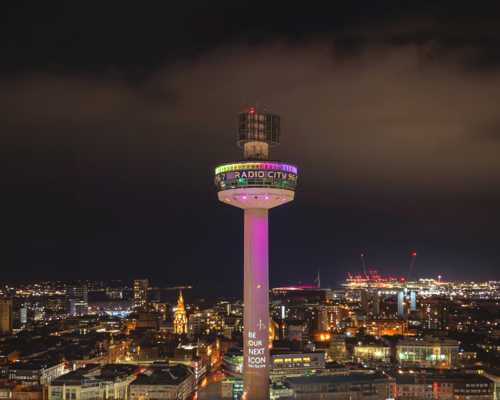
An opportunity to reimagine one of the UK’s most recognisable towers has been formally
opened by Rivington Hark, as St Johns Beacon invites operators and partners to shape its
next phase. [more...]
Florence Nightingale played an important role in the fitness industry and
if she were still with us, she’d certainly be campaigning for fitness trainers
to be fully involved in combating the effects of lockdown, says Muir Gray
The NHS needs 55,000 PTs to help people with long-term conditions / photo: wavebreak media - shutterstock
Florence was horrified at the state of health of British soldiers in Crimea, where more died of the effects of their poor conditioning than from bullets. After the war she took action and 12 “instructors” – at that time primarily focused on how to shoot and fight – were sent to Oxford.
They were sent for two reasons, the first was that Regius Professor of Medicine, Sir Henry Acland, had made it clear he was very willing to help the army improve the health and wellbeing of the soldiers. The second, more important reason, was that one of the world’s first gymnasiums of the modern era was based in Oxford.
This gymnasium was run by a Scotsman called Robert McLaren, who himself had studied physical training in Paris and brought fencing and a range of gymnastic opportunities such as rings to the Oxford undergraduates. The building can still be seen today at the corner of Blue Boar Street and Alfred Street and is quite reminiscent of the German Gymnasium in London’s Kings Cross, with its solid brick construction.
McLaren went on to fund one of Oxford’s best known schools – Summerfields – as well as developing the fitness industry in Oxford in the 1860s.
The 12 instructors, renamed the 12 Apostles, went back to the army after their training and embarked on a mission to improve the health, wellbeing and conditioning of British soldiers.
The rise of the PTI Physical training instructors – or PTIs as they were also called – found a place outside the army when their days in service were over and physical training became a key part of healthcare in the 19th century, in part because there were so few effective medical interventions available.
In the 20th and 21st centuries the number of effective medical interventions available has increased astonishingly – in the last 50 years alone we’ve seen transplantation, hip replacement and chemotherapy, to name but three.
However, important though these are, there’s an increasing recognition that everyone with a long-term condition needs to receive activity therapy as well as drug, operative or psychological therapy – a recognition epitomised in the 2015 report from the Academy of the Medical Royal Colleges called Exercise, The Miracle Cure.
But today, the ties that existed between physical training and healthcare have been cut and healthcare and fitness have become separate industries – at least in the UK – although the pattern is different in other countries, notably Germany, where there remains greater integration.
Today the NHS desperately needs 55,000 trainers to help people deal with the effects of long-term conditions – particularly those who don’t reach the specialist NHS rehabilitation services – probably about 12 million people in all. There just aren’t enough physiotherapists and health professionals in the NHS to reach out with support.
The Living Longer Better Programme is now working with 20 branches of Sport England via activity partnerships and the experience of people from the health service when meeting trainers or people with Sport Science degrees is often one of surprise, because their culture is so close to that of clinicians. A simple and wide definition of coaching is, “to close the gap between performance and potential” – exactly the same as the mission of rehabilitation.
What’s needed now is to mobilise 55,000 trainers and deploy their commitment, skills and experience to resolve individual long-term conditions, including Long-COVID and the increasing challenge of multi-morbidity, but how is this to be done?
Recruiting trainers One of the lessons of the pandemic has been that when we use the term ‘resources’ we need to think of more than money. Furthermore, lack of money is not the principal constraint and the health service is now clear that a much more important constraint is the time available to the workforce, as there are not thousands or even hundreds of physiotherapists, occupational therapists, exercise physiologists and sports and exercise medicine doctors waiting to be employed.
A second constraint is space and although much attention has been paid to the lack of space in intensive care, Helen Salisbury, a highly respected GP who writes weekly in the British Medical Journal, pointed out that even without social distancing the amount of space in health centres is also very limited.
For physical trainers, however, this is not a major issue. They’re used to finding a village hall, church hall or some other space to work in and are increasingly confident about managing digital sessions in groups, as well as delivering face-to-face interactions with individuals who could benefit from closing the gap between potential and performance.
Money sometimes remains an issue, but there’s a potential solution to this in England in the form of the Additional Roles Reimbursement Scheme (ARRS), under which NHS England is providing funding for 26,000 new roles to create bespoke multi-disciplinary teams.
Reducing the pressure Hospital services will be under intense pressure in the next few years, not only meeting new needs but also coping with a backlog of cancer treatment and elective surgery.
This, in turn, will increase pressure on primary care services, where health professionals are already coping with the implications of social distancing, the loss of staff who are self-isolating and the increasing tension of people seeking help who tend to take their frustration out on primary care staff, rather than on those who are responsible.
ARRS was introduced to help primary care teams recruit key staff such as physiotherapists, nurses and podiatrists, but although health and wellbeing coaches are on the list, there’s no mention of trainers, in spite of the fact that they could make a contribution by supporting people whose problems have been increased by the pandemic.
There are many trainers who have additional qualifications in supporting people with things such as Type 2 Diabetes, heart disease, respiratory disease and other common causes and consequences of both disease and inactivity.
ARRS funding will be administered by The Primary Care Networks, of which around 1,200 are already in place. They’re well organised because they relate to local communities and of course understand the social prescribing opportunities that are available in local gyms and fitness centres, which is all hopeful.
We must ensure they understand the terrific contributions trainers could make and we also need NHS England to understand that most trainers are not fully focused on ‘young people in lycra’, with many having a longstanding commitment to supporting people with their health improvement and the skills and competence required to make a difference.
We need to ask the Department of Health and Social Care to meet with the Department of Culture, Media and Sport – perhaps somewhere near the statue of Florence Nightingale on Pall Mall – and reach agreement that the time is absolutely right for the rebirth of the physical trainer as a health worker, just as Florence Nightingale planned, predicted and produced.
"We need to ask the Department of Health and Social Care to meet with the Department of Culture, Media and Sport – perhaps somewhere near the statue of Florence Nightingale on Pall Mall – and reach agreement that the time is absolutely right for the rebirth of the physical trainer as a health worker, just as Florence Nightingale planned, predicted and produced," – Muir Gray
Hotel de France, located on the British Isle of Jersey, has created a wellness retreat package
that includes a hot yoga session that will take place in Jersey Zoo’s butterfly sanctuary.
A new immersive attraction designed to transport visitors into the final hours of ancient Pompeii
is preparing to open near the world-famous archaeological site in southern Italy.
Experience design company, BRC Imagination Arts, has completed a transition that sees founder
Bob Rogers pass ownership of the business to four long-serving senior executives, while
remaining actively involved with the company.
Movie Park Germany has opened a new Paramount Pictures-themed attraction as part of its 30th
anniversary celebrations, using immersive storytelling and adaptive reuse to reinforce the park’s
longstanding “Hollywood in Germany” positioning.
Therme Manchester’s 28-acre development, which will include interconnected glass pavilions
that measure 65,000sq m, will be the largest bathing and wellbeing attraction in the world once
complete, according to prof David Russell, CEO of Therme UK.
Efteling has opened Hooghmoed, a new family drop tower designed to broaden the appeal of its
recently launched Sirene Island themed area and introduce younger visitors to thrill attractions.
A proposed Puy du Fou development near Bicester and Universal Destinations and Experiences’
planned resort in Bedford are emerging as part of a wider transformation of the Oxford–
Cambridge Growth Corridor into a major centre for UK leisure and tourism inv
Shedd Aquarium has opened the Immersion Theater developed in partnership with SimEx-
Iwerks, as part of a wider strategy to enhance the guest experience and create additional
revenue opportunities.
The UK government has announced a temporary reduction in VAT on visitor attractions and
children’s meals as part of a summer cost-of-living support package designed to stimulate the
visitor economy and encourage family days out.
As designer Yinka Ilori prepares for his first solo gallery show in London, he speaks exclusively
to CLADmag about his mission to spread joy, the power of play, and his bold approach to using
colour (including the colours you won’t see in his work).
The government of Thailand is exploring plans for a THB300bn (£6.3bn, US$8.3bn)
entertainment complex in the country’s Eastern Economic Corridor (EEC), with officials
proposing a large-scale theme park and sports destination as part of a broader tourism and
economic development strategy.
An opportunity to reimagine one of the UK’s most recognisable towers has been formally
opened by Rivington Hark, as St Johns Beacon invites operators and partners to shape its
next phase. [more...]