The data generated by tech platforms such as Funxtion, gives us insights into how people exercised during lockdown and the likely shape of consumer digital engagement going forward, as Karen Euser reports
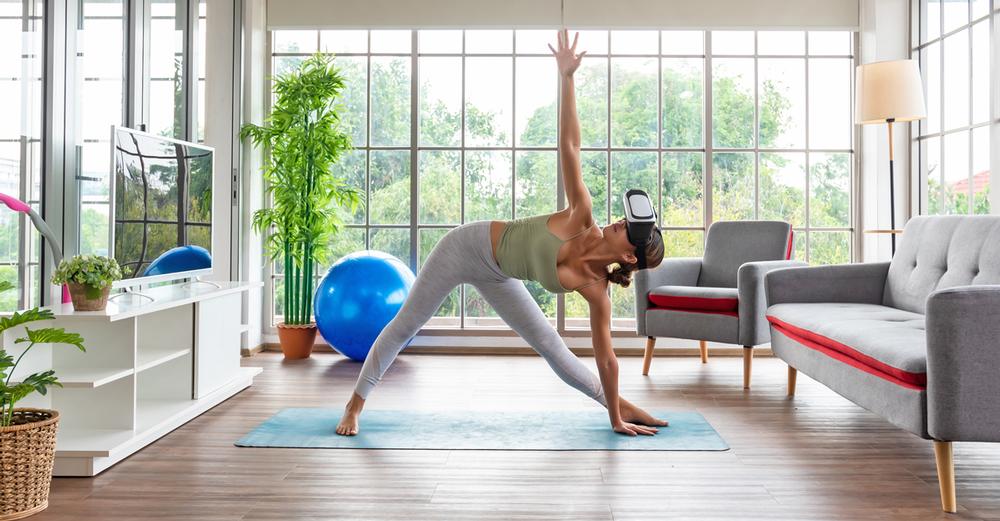
Digital workout preferences changed as lockdown progressed and gyms reopened / Vasin Lee/shutterstock
The fitness industry was driven digital pretty much overnight in order to survive lockdown and as a result, the number of online workouts available rocketed to an all-time high.
Since March, we’ve analysed over 300,000 workout ‘plays’ through our platform and as the weeks have rolled by, digital fitness trends and changes in consumer behaviour have begun to emerge and change.
The findings We track 100 different workouts, varying in length from four-minutes, right through to 30-minutes.
Immediately after lockdown, there was strong demand for shorter, higher intensity bodyweight workouts – in particular four- or seven-minute HIIT workouts.
It came as no surprise that the initial interest was in shorter workouts using bodyweight resistance, as people adjusted to working out at home rather than in the gym and to being without any gym equipment.
But, as time went on, the statistics showed a growing interest in longer workouts, as people got fitter, gained confidence in their ability, got more used to working out at home and searched for more ambitious sessions. At this point, we noticed a shift towards workouts lasting between 15- and 30-minutes – a big increase on the 4-7 minutes.
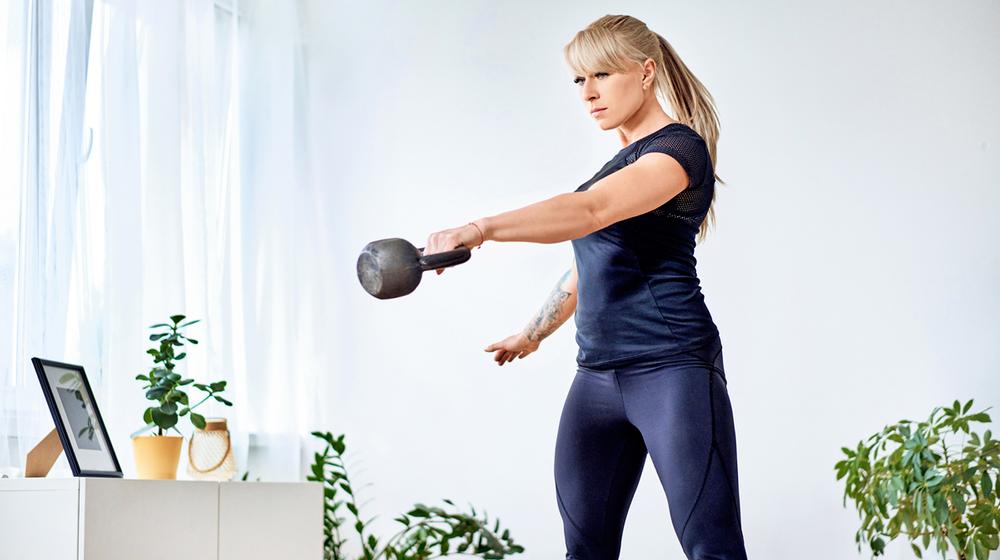
There were also noticeable spikes in downloads of equipment-led workouts, as consumers equipped themselves with kit, such as dumbbells and kettlebells.
Interestingly, kettlebell and dumbbell workouts have seen the highest percentage of returning users.
We also saw a rise in demand for more holistic classes, such as meditation. The longer people were required to stay at home during lockdown, it seemed that the more mental health support was needed, so we ramped up the provision of content in this holistic category.
These classes saw a sharp rise in popularity and we can see from the analytics that this demand continues to rise.
In terms of timings, we find most people – around 80 per cent on our platform – prefer to exercise in the late afternoon, or early evening.
When it comes to gender split, 66.7 per cent of the audience is female and 33.3 per cent male but when it comes to completing workouts, women lead, with a workout completion rate of 66 per cent, compared to men, who complete 40 per cent of workouts, on average.
Quality or quantity? Despite the initial drive to just get digital content up as quickly as possible, the more competitive this market becomes, the more consumers are attracted to quality.
In the early days of lockdown, there was an understanding that the quality of sound, picture and setting may not be perfect, but as time went on behaviours showed demand for quality over quantity.
This indicates that clubs need to invest in their digital offerings in order to establish strong and long-lasting relationships with members.
Around 50 per cent of users we track view content on non-mobile devices, so quality does need to be high.
Enticing new audiences With a health-focused crisis such as COVID-19 comes an increased awareness among the public of the importance of staying active for physical and mental wellbeing. This is driving fitness regulars to continue their routines from home, but also attracting a new, relatively sedentary population to explore what the whole fitness industry has to offer from the comfort of their own homes.
They appreciate the fact that barriers, such as gymtimidation, embarrassment or low self-esteem, don’t factor when it comes to getting access to exercise.
This indicates that at-home fitness could be the ‘soft’ introduction the fitness industry needs in order to engage with more sedentary populations. If this is the case, how can we utilise this engagement to keep people motivated during the transition to club membership?
We notice that 21.5 per cent of users are over 55, indicating that this age demographic is utilising technology as well as younger populations and that people in this bracket are willing to work out from home.
This is useful insight for health clubs when it comes to programming exercise for specific age groups.
The biggest user group is the 25-34-year-olds at 30.8 per cent, however, the combined force of the other age groups means 69.20 per cent of all users are in younger (18-24 > 17.4 per cent) or older age groups (35-44 > 14.1 per cent; 45-54 > 16.2 per cent; 55-64 > 11.2 per cent and; 65+ > 10.3 per cent), so programming needs to optimise these opportunities.
Impact of COVID-19 on training patterns Pre-COVID-19, the digital fitness category was expected to be worth $27.4bn by 2022, growing at a rate of 32.6 per cent year-on-year, however, the impact of the pandemic is expected to speed up this growth rate.
The increase in both demand and supply has meant thousands of people across the globe are now experiencing working out at home and this will permanently change the way many consumers exercise.
Instagram has become the number one gym in the world, with influencers and celebrities as its lead coaches. It already owns this space and gym brands are playing catch-up by producing their own content, to ensure members don’t look elsewhere for their home fitness.
Now people are returning to the gym, there’s an emerging demand for a wraparound service to merge digital and physical and create a hybrid model.
● Karen Euser is with digital fitness company, Funxtion
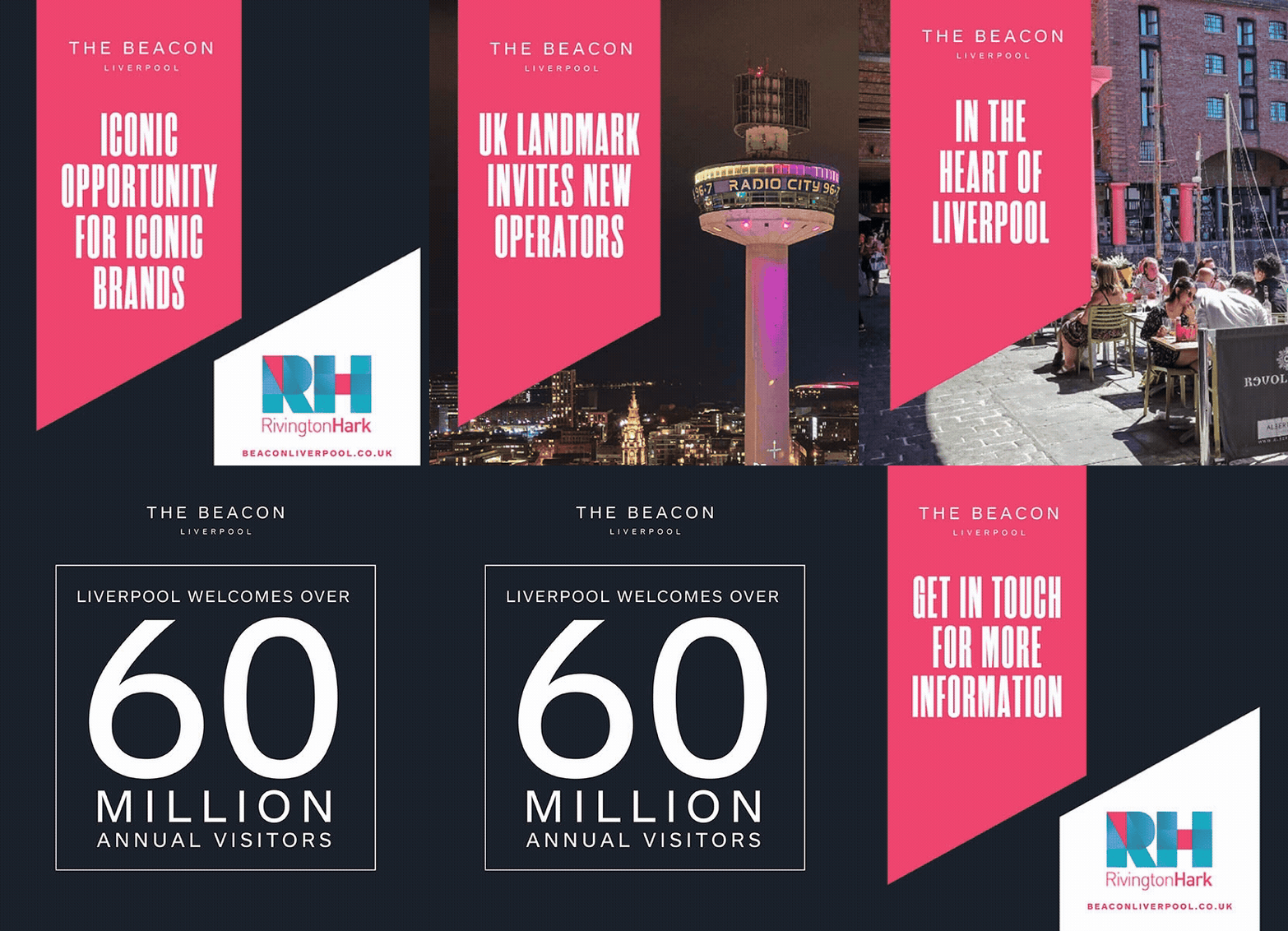
An opportunity to reimagine one of the UK’s most recognisable towers has been formally
opened by Rivington Hark, as St Johns Beacon invites operators and partners to shape its
next phase. [more...]
The data generated by tech platforms such as Funxtion, gives us insights into how people exercised during lockdown and the likely shape of consumer digital engagement going forward, as Karen Euser reports
Digital workout preferences changed as lockdown progressed and gyms reopened / Vasin Lee/shutterstock
The fitness industry was driven digital pretty much overnight in order to survive lockdown and as a result, the number of online workouts available rocketed to an all-time high.
Since March, we’ve analysed over 300,000 workout ‘plays’ through our platform and as the weeks have rolled by, digital fitness trends and changes in consumer behaviour have begun to emerge and change.
The findings We track 100 different workouts, varying in length from four-minutes, right through to 30-minutes.
Immediately after lockdown, there was strong demand for shorter, higher intensity bodyweight workouts – in particular four- or seven-minute HIIT workouts.
It came as no surprise that the initial interest was in shorter workouts using bodyweight resistance, as people adjusted to working out at home rather than in the gym and to being without any gym equipment.
But, as time went on, the statistics showed a growing interest in longer workouts, as people got fitter, gained confidence in their ability, got more used to working out at home and searched for more ambitious sessions. At this point, we noticed a shift towards workouts lasting between 15- and 30-minutes – a big increase on the 4-7 minutes.
There were also noticeable spikes in downloads of equipment-led workouts, as consumers equipped themselves with kit, such as dumbbells and kettlebells.
Interestingly, kettlebell and dumbbell workouts have seen the highest percentage of returning users.
We also saw a rise in demand for more holistic classes, such as meditation. The longer people were required to stay at home during lockdown, it seemed that the more mental health support was needed, so we ramped up the provision of content in this holistic category.
These classes saw a sharp rise in popularity and we can see from the analytics that this demand continues to rise.
In terms of timings, we find most people – around 80 per cent on our platform – prefer to exercise in the late afternoon, or early evening.
When it comes to gender split, 66.7 per cent of the audience is female and 33.3 per cent male but when it comes to completing workouts, women lead, with a workout completion rate of 66 per cent, compared to men, who complete 40 per cent of workouts, on average.
Quality or quantity? Despite the initial drive to just get digital content up as quickly as possible, the more competitive this market becomes, the more consumers are attracted to quality.
In the early days of lockdown, there was an understanding that the quality of sound, picture and setting may not be perfect, but as time went on behaviours showed demand for quality over quantity.
This indicates that clubs need to invest in their digital offerings in order to establish strong and long-lasting relationships with members.
Around 50 per cent of users we track view content on non-mobile devices, so quality does need to be high.
Enticing new audiences With a health-focused crisis such as COVID-19 comes an increased awareness among the public of the importance of staying active for physical and mental wellbeing. This is driving fitness regulars to continue their routines from home, but also attracting a new, relatively sedentary population to explore what the whole fitness industry has to offer from the comfort of their own homes.
They appreciate the fact that barriers, such as gymtimidation, embarrassment or low self-esteem, don’t factor when it comes to getting access to exercise.
This indicates that at-home fitness could be the ‘soft’ introduction the fitness industry needs in order to engage with more sedentary populations. If this is the case, how can we utilise this engagement to keep people motivated during the transition to club membership?
We notice that 21.5 per cent of users are over 55, indicating that this age demographic is utilising technology as well as younger populations and that people in this bracket are willing to work out from home.
This is useful insight for health clubs when it comes to programming exercise for specific age groups.
The biggest user group is the 25-34-year-olds at 30.8 per cent, however, the combined force of the other age groups means 69.20 per cent of all users are in younger (18-24 > 17.4 per cent) or older age groups (35-44 > 14.1 per cent; 45-54 > 16.2 per cent; 55-64 > 11.2 per cent and; 65+ > 10.3 per cent), so programming needs to optimise these opportunities.
Impact of COVID-19 on training patterns Pre-COVID-19, the digital fitness category was expected to be worth $27.4bn by 2022, growing at a rate of 32.6 per cent year-on-year, however, the impact of the pandemic is expected to speed up this growth rate.
The increase in both demand and supply has meant thousands of people across the globe are now experiencing working out at home and this will permanently change the way many consumers exercise.
Instagram has become the number one gym in the world, with influencers and celebrities as its lead coaches. It already owns this space and gym brands are playing catch-up by producing their own content, to ensure members don’t look elsewhere for their home fitness.
Now people are returning to the gym, there’s an emerging demand for a wraparound service to merge digital and physical and create a hybrid model.
● Karen Euser is with digital fitness company, Funxtion
Hotel de France, located on the British Isle of Jersey, has created a wellness retreat package
that includes a hot yoga session that will take place in Jersey Zoo’s butterfly sanctuary.
A new immersive attraction designed to transport visitors into the final hours of ancient Pompeii
is preparing to open near the world-famous archaeological site in southern Italy.
Experience design company, BRC Imagination Arts, has completed a transition that sees founder
Bob Rogers pass ownership of the business to four long-serving senior executives, while
remaining actively involved with the company.
Movie Park Germany has opened a new Paramount Pictures-themed attraction as part of its 30th
anniversary celebrations, using immersive storytelling and adaptive reuse to reinforce the park’s
longstanding “Hollywood in Germany” positioning.
Therme Manchester’s 28-acre development, which will include interconnected glass pavilions
that measure 65,000sq m, will be the largest bathing and wellbeing attraction in the world once
complete, according to prof David Russell, CEO of Therme UK.
Efteling has opened Hooghmoed, a new family drop tower designed to broaden the appeal of its
recently launched Sirene Island themed area and introduce younger visitors to thrill attractions.
A proposed Puy du Fou development near Bicester and Universal Destinations and Experiences’
planned resort in Bedford are emerging as part of a wider transformation of the Oxford–
Cambridge Growth Corridor into a major centre for UK leisure and tourism inv
Shedd Aquarium has opened the Immersion Theater developed in partnership with SimEx-
Iwerks, as part of a wider strategy to enhance the guest experience and create additional
revenue opportunities.
The UK government has announced a temporary reduction in VAT on visitor attractions and
children’s meals as part of a summer cost-of-living support package designed to stimulate the
visitor economy and encourage family days out.
As designer Yinka Ilori prepares for his first solo gallery show in London, he speaks exclusively
to CLADmag about his mission to spread joy, the power of play, and his bold approach to using
colour (including the colours you won’t see in his work).
The government of Thailand is exploring plans for a THB300bn (£6.3bn, US$8.3bn)
entertainment complex in the country’s Eastern Economic Corridor (EEC), with officials
proposing a large-scale theme park and sports destination as part of a broader tourism and
economic development strategy.
+ More news
COMPANY PROFILES
Alterface Alterface’s Creative Division team is
seasoned in concept and ride development,
as well as storyte [more...]
RMA Ltd RMA Ltd is a one-stop global company
that can design, build and produce from a
greenfield site upw [more...]
Taylor Made Designs Founded in 1993, Taylor Made
Designs supply corporate clothing
and brand-enhancing merchandise
to [more...]
DJW David & Lynn Willrich started the Company
over thirty years ago, from the Audio Visual
Department [more...]
An opportunity to reimagine one of the UK’s most recognisable towers has been formally
opened by Rivington Hark, as St Johns Beacon invites operators and partners to shape its
next phase. [more...]