The over-70s were treated as one homogenous group during
the lockdown and advised to shield. Colin Milner, founder and CEO
of the International Council on Active Aging says this is leading to
an increase in ageism that the industry must fight to overcome
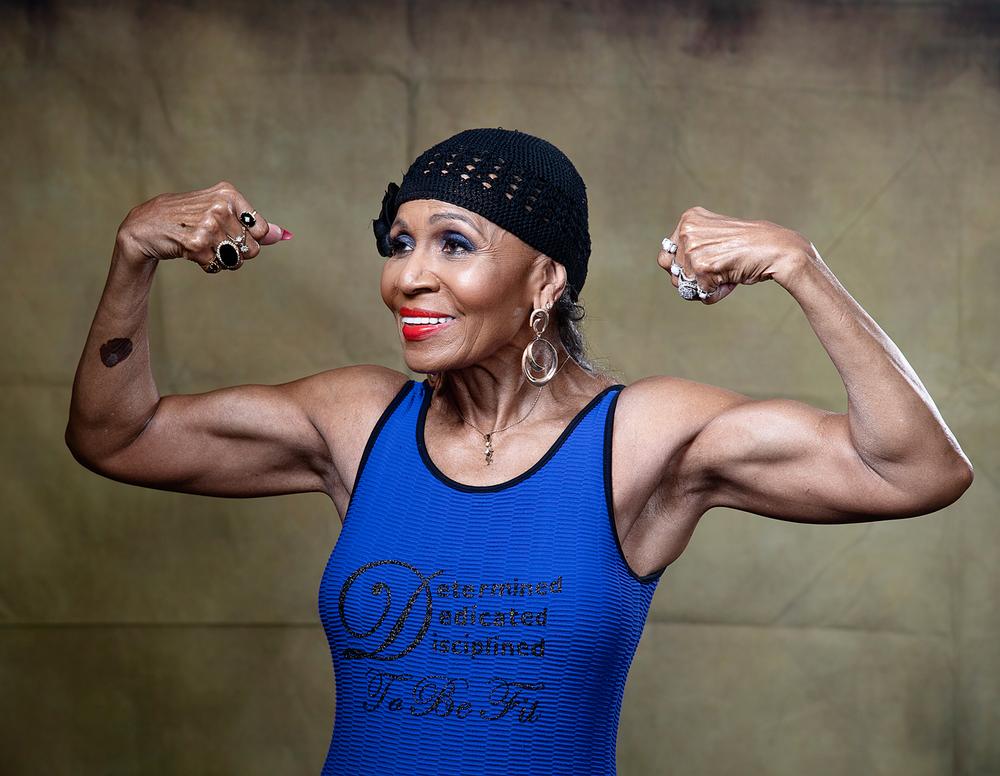
Ernestine Shepherd – born in 1936 – is a PT and bodybuilder / Washington Post/GETTY
Is the pandemic increasing issues around ageism? If so, what can be done to prevent this? Yes – what we see is all older adults being viewed as being most at risk. Why? Because of their age!
Ageism has been shown to reduce the ability of older people to gain employment, get medical treatment, or find products that meet their needs. This ambivalence towards this demographic comes with a price – lower quality of life. COVID-19 has taken this to new heights.
Headlines highlight the issue. In April the Guardian brought this home with an article entitled ‘Favouring young over old in COVID-19 treatment is justifiable, says ethicist.’
Not long after this article, the American Geriatric Society came out with a position statement that highlighted ‘Age should never be used as a means for categorically excluding someone from what is ordinarily the standard of care, nor should age ‘cut-offs’ be used in allocation strategies.’
This is just one example of how ageism is rearing its ugly head during the pandemic.
There’s a danger over 70s will be encouraged to stay at home, impacting on their fitness and mental health. How can the activity sector enable older people to exercise safely? The simple answer is, understand the facts and not the fear and guard against putting all older people into the category of ‘vulnerable’.
The facts: most older adults impacted by COVID-19 live in care communities and some have a compromised immune system. These individuals are not typical members of gyms. They are only five per cent of this cohort and when you remove them from the equation, the death rate from COVID-19 is the same for all age groups over 44.
The facts: As we age, our immune system diminishes. However, our lifestyle has a significant impact on this. If you’re young but also inactive, you smoke, drink alcohol, have poor sleeping habits, are stressed, eat a poor diet, have health issues, don’t exercise, and use drugs, your immune system will be more compromised than someone older and healthy.
How should the fitness industry respond? The fitness and leisure industries should learn from the above. They should seek out ways to become advocates for the health and wellbeing of older adults.
Where people are genuinely vulnerable, we must ask what can be done by operators of gyms and fitness centres to enable them to exercise at home and still have social contact.
We’ve seen a massive uptick in online classes that range from exercise to cooking. This is an incredible opportunity to provide your services and more to those who are at risk. Hire specialists to offer fitness classes online to serve the interests of those in need.
As social isolation is such a key factor, you may seek to do this for small groups of the truly vulnerable to build their health and social network.
What other advice do you have for the fitness industry at this time? Focus on capabilities, health, attitude, positive social connections and families, not age.
Older adults, who possess over 70 per cent of the disposable income in the UK, are starting to reach back into their wallets to find ways to reconnect and get fit again after being addicted to TV, food, alcohol, sweets and inactivity, during the lockdown.
Their strength, cardio capacity, balance, power, muscle mass and mental and emotional health has – as for many of the rest of us – been impacted. They want to regain control over their lives.
You as a facility owner or staff member can play a key role in this. As you can also play a key role in helping them maintain, build, or re-build their immune system, so do not take your responsibility lightly.
Do you have evidence of age-related issues arising in relation to wellbeing in the over 70s? Most of the age-related issues we talk about are really lifestyle issues.
When someone is unable to achieve a physically active, engaged lifestyle filled with social connections this comes with a cost. An example of this can be found in a research paper published in The Lancet on 19 March 2020, entitled COVID-19 and the consequences of isolating the elderly (read more: http://lei.sr/x7d2T), which said: “Self-isolation will disproportionately affect elderly individuals whose only social contact is out of the home... [They] could be placed at additional risk, along with those who are already lonely, isolated, or secluded.”
My fear is for the mental health of people moving forward. The fitness industry can play a vital role in creating a better future for older people.
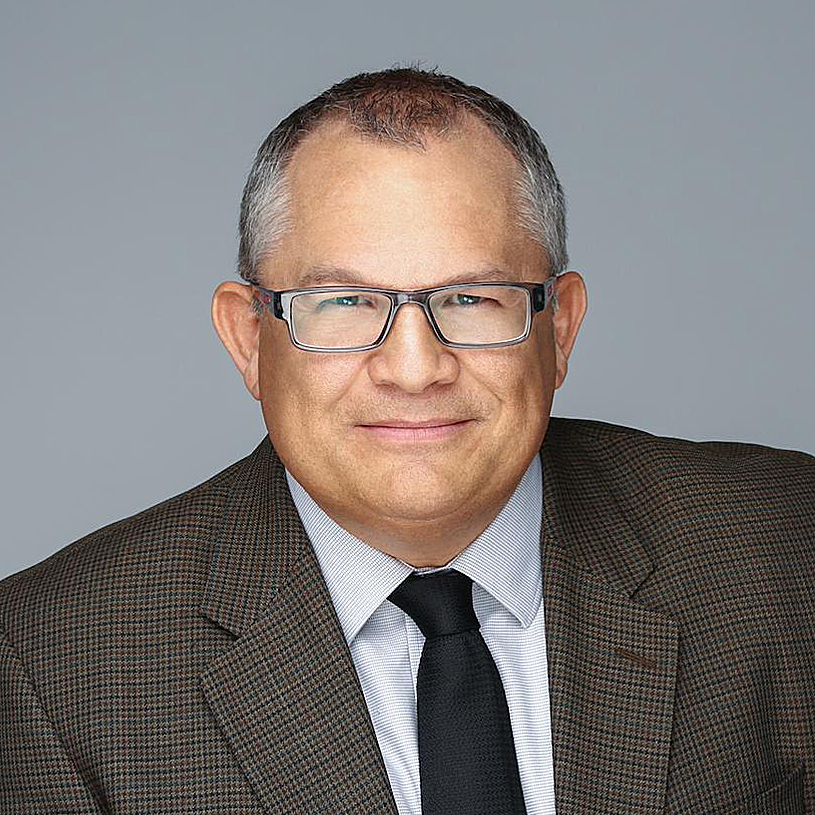
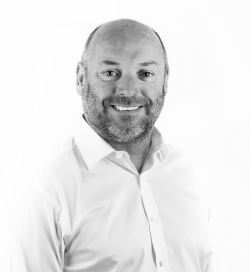
ICAA’s Colin Milner: “Do not take your responsibilities lightly”
An opportunity to reimagine one of the UK’s most recognisable towers has been formally
opened by Rivington Hark, as St Johns Beacon invites operators and partners to shape its
next phase. [more...]
The over-70s were treated as one homogenous group during
the lockdown and advised to shield. Colin Milner, founder and CEO
of the International Council on Active Aging says this is leading to
an increase in ageism that the industry must fight to overcome
Ernestine Shepherd – born in 1936 – is a PT and bodybuilder / Washington Post/GETTY
Is the pandemic increasing issues around ageism? If so, what can be done to prevent this? Yes – what we see is all older adults being viewed as being most at risk. Why? Because of their age!
Ageism has been shown to reduce the ability of older people to gain employment, get medical treatment, or find products that meet their needs. This ambivalence towards this demographic comes with a price – lower quality of life. COVID-19 has taken this to new heights.
Headlines highlight the issue. In April the Guardian brought this home with an article entitled ‘Favouring young over old in COVID-19 treatment is justifiable, says ethicist.’
Not long after this article, the American Geriatric Society came out with a position statement that highlighted ‘Age should never be used as a means for categorically excluding someone from what is ordinarily the standard of care, nor should age ‘cut-offs’ be used in allocation strategies.’
This is just one example of how ageism is rearing its ugly head during the pandemic.
There’s a danger over 70s will be encouraged to stay at home, impacting on their fitness and mental health. How can the activity sector enable older people to exercise safely? The simple answer is, understand the facts and not the fear and guard against putting all older people into the category of ‘vulnerable’.
The facts: most older adults impacted by COVID-19 live in care communities and some have a compromised immune system. These individuals are not typical members of gyms. They are only five per cent of this cohort and when you remove them from the equation, the death rate from COVID-19 is the same for all age groups over 44.
The facts: As we age, our immune system diminishes. However, our lifestyle has a significant impact on this. If you’re young but also inactive, you smoke, drink alcohol, have poor sleeping habits, are stressed, eat a poor diet, have health issues, don’t exercise, and use drugs, your immune system will be more compromised than someone older and healthy.
How should the fitness industry respond? The fitness and leisure industries should learn from the above. They should seek out ways to become advocates for the health and wellbeing of older adults.
Where people are genuinely vulnerable, we must ask what can be done by operators of gyms and fitness centres to enable them to exercise at home and still have social contact.
We’ve seen a massive uptick in online classes that range from exercise to cooking. This is an incredible opportunity to provide your services and more to those who are at risk. Hire specialists to offer fitness classes online to serve the interests of those in need.
As social isolation is such a key factor, you may seek to do this for small groups of the truly vulnerable to build their health and social network.
What other advice do you have for the fitness industry at this time? Focus on capabilities, health, attitude, positive social connections and families, not age.
Older adults, who possess over 70 per cent of the disposable income in the UK, are starting to reach back into their wallets to find ways to reconnect and get fit again after being addicted to TV, food, alcohol, sweets and inactivity, during the lockdown.
Their strength, cardio capacity, balance, power, muscle mass and mental and emotional health has – as for many of the rest of us – been impacted. They want to regain control over their lives.
You as a facility owner or staff member can play a key role in this. As you can also play a key role in helping them maintain, build, or re-build their immune system, so do not take your responsibility lightly.
Do you have evidence of age-related issues arising in relation to wellbeing in the over 70s? Most of the age-related issues we talk about are really lifestyle issues.
When someone is unable to achieve a physically active, engaged lifestyle filled with social connections this comes with a cost. An example of this can be found in a research paper published in The Lancet on 19 March 2020, entitled COVID-19 and the consequences of isolating the elderly (read more: http://lei.sr/x7d2T), which said: “Self-isolation will disproportionately affect elderly individuals whose only social contact is out of the home... [They] could be placed at additional risk, along with those who are already lonely, isolated, or secluded.”
My fear is for the mental health of people moving forward. The fitness industry can play a vital role in creating a better future for older people.
ICAA’s Colin Milner: “Do not take your responsibilities lightly”
Hotel de France, located on the British Isle of Jersey, has created a wellness retreat package
that includes a hot yoga session that will take place in Jersey Zoo’s butterfly sanctuary.
A new immersive attraction designed to transport visitors into the final hours of ancient Pompeii
is preparing to open near the world-famous archaeological site in southern Italy.
Experience design company, BRC Imagination Arts, has completed a transition that sees founder
Bob Rogers pass ownership of the business to four long-serving senior executives, while
remaining actively involved with the company.
Movie Park Germany has opened a new Paramount Pictures-themed attraction as part of its 30th
anniversary celebrations, using immersive storytelling and adaptive reuse to reinforce the park’s
longstanding “Hollywood in Germany” positioning.
Therme Manchester’s 28-acre development, which will include interconnected glass pavilions
that measure 65,000sq m, will be the largest bathing and wellbeing attraction in the world once
complete, according to prof David Russell, CEO of Therme UK.
Efteling has opened Hooghmoed, a new family drop tower designed to broaden the appeal of its
recently launched Sirene Island themed area and introduce younger visitors to thrill attractions.
A proposed Puy du Fou development near Bicester and Universal Destinations and Experiences’
planned resort in Bedford are emerging as part of a wider transformation of the Oxford–
Cambridge Growth Corridor into a major centre for UK leisure and tourism inv
Shedd Aquarium has opened the Immersion Theater developed in partnership with SimEx-
Iwerks, as part of a wider strategy to enhance the guest experience and create additional
revenue opportunities.
The UK government has announced a temporary reduction in VAT on visitor attractions and
children’s meals as part of a summer cost-of-living support package designed to stimulate the
visitor economy and encourage family days out.
As designer Yinka Ilori prepares for his first solo gallery show in London, he speaks exclusively
to CLADmag about his mission to spread joy, the power of play, and his bold approach to using
colour (including the colours you won’t see in his work).
The government of Thailand is exploring plans for a THB300bn (£6.3bn, US$8.3bn)
entertainment complex in the country’s Eastern Economic Corridor (EEC), with officials
proposing a large-scale theme park and sports destination as part of a broader tourism and
economic development strategy.
+ More news
COMPANY PROFILES
RMA Ltd RMA Ltd is a one-stop global company
that can design, build and produce from a
greenfield site upw [more...]
instantprint We’re a Yorkshire-based online printer, founded
in 2009 by Adam Carnell and James Kinsella. [more...]
An opportunity to reimagine one of the UK’s most recognisable towers has been formally
opened by Rivington Hark, as St Johns Beacon invites operators and partners to shape its
next phase. [more...]