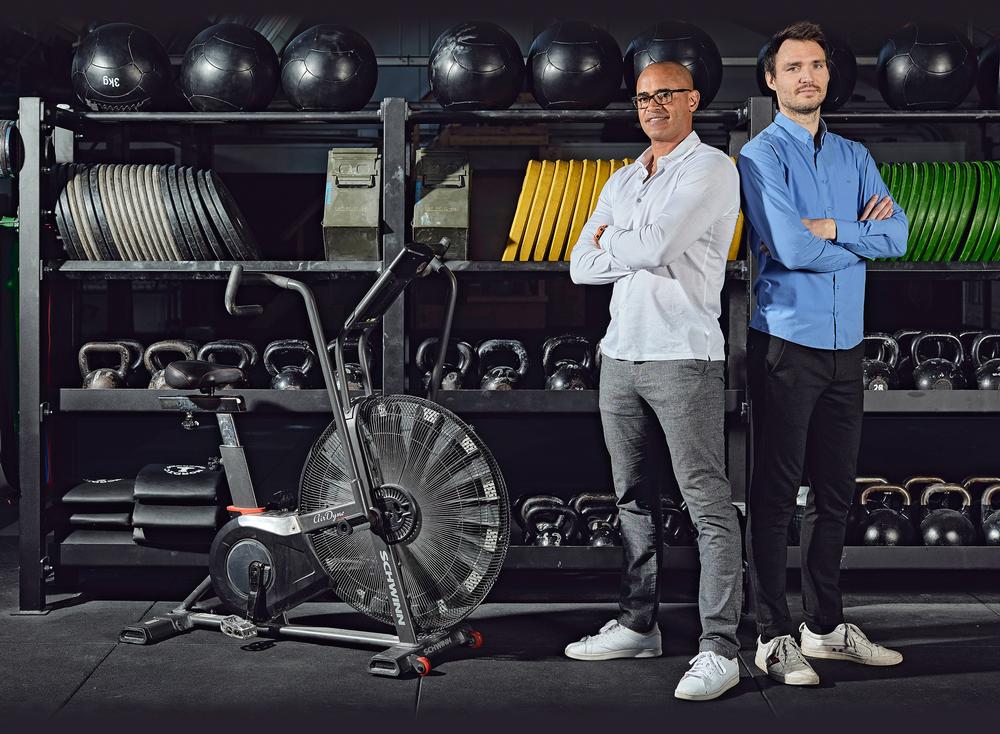
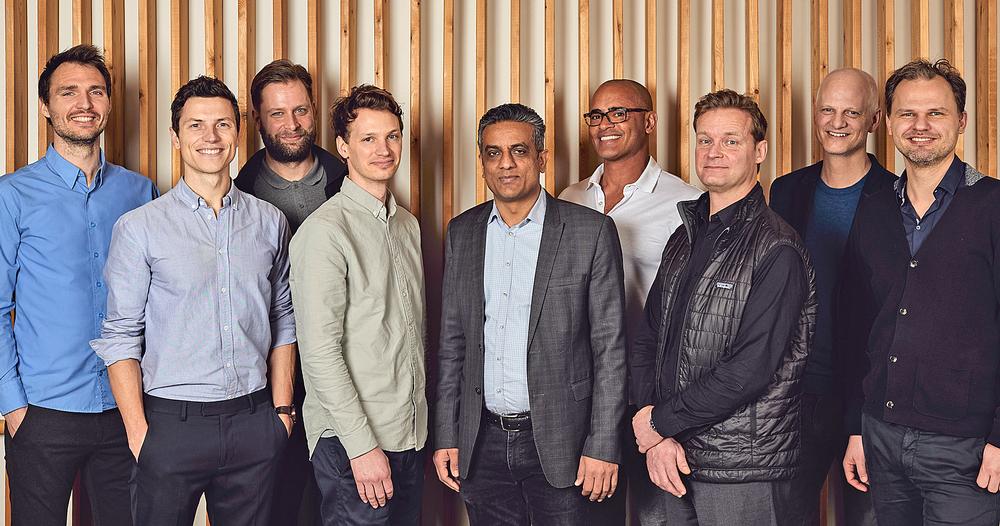
Kresten Juel Jensen, CEO and co-founder and Nick Coutts, incoming chair
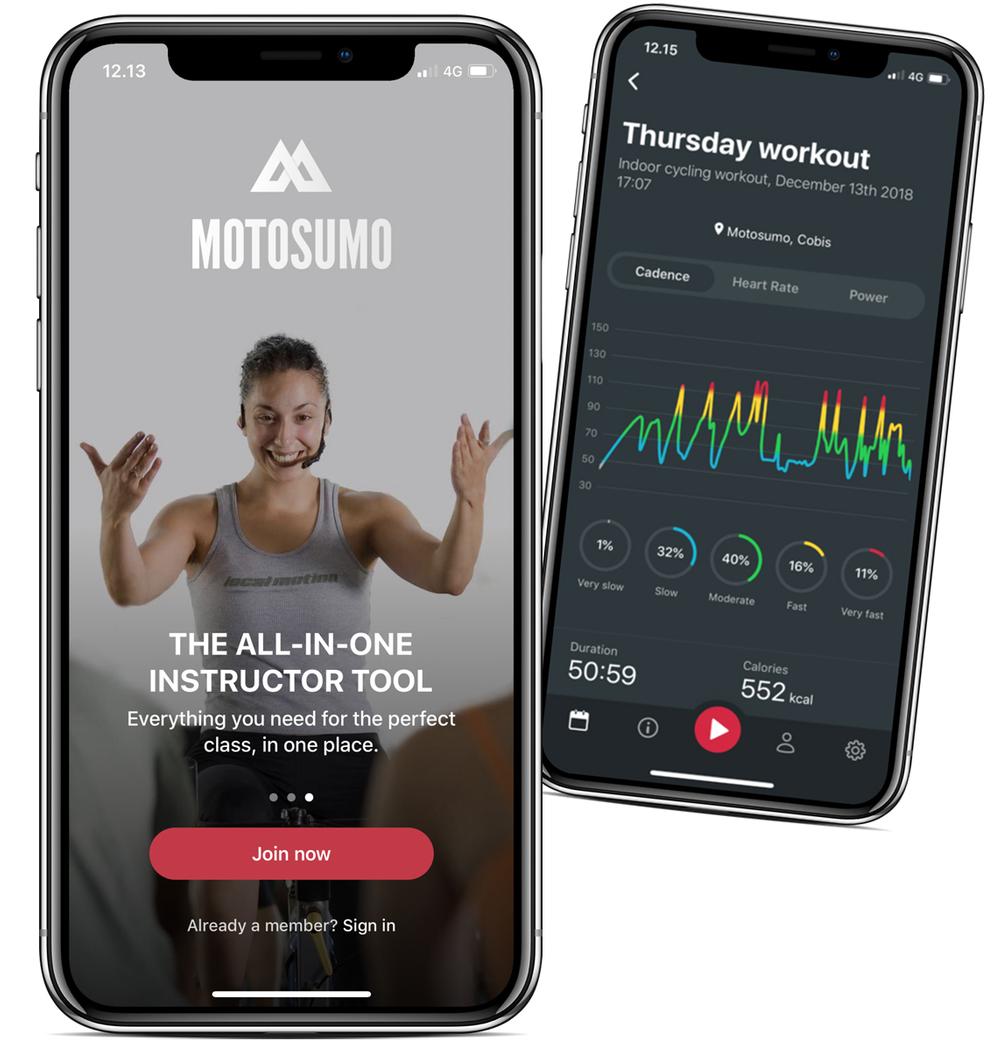
What is Motosumo? Kresten: It’s a fitness tracking system using the motion sensors in a smartphone. We believe we’re the only tech company in the world that can track how you ride a bike without putting a sensor on it and without a heart rate monitor.
Nick: A major advantage of Motosumo is that it’s agnostic. Clubs don’t have to buy a new range of software, hardware or any equipment. It works with all equipment and just involves downloading an app, so it is really easy to install.
How did it come about? Kresten: It originated from a very nerdy group of people, out for a pizza one night in 2012, who got talking about how we would like to design a powerful system for tracking and analysing fitness data, with just one small sensor.
We successfully went on to do this, but then became ambitious about making it more universal, and capable of taking on the bigger players in fitness. So, with the former Endomondo investors on board, we set about designing a way to measure the same metrics that normally require a $1,000 USD gadget but instead using only a smartphone.
Nick: Kresten is being a bit self deprecating when he says they are just a group of nerds! It’s true that they have degrees in engineering, astrophysics and modelling human physiology, but they are also elite athletes who have spent time sweating in the saddle and understand the technical aspects of training. They have a good understanding of what data is interesting and valuable, which is evident in the product.
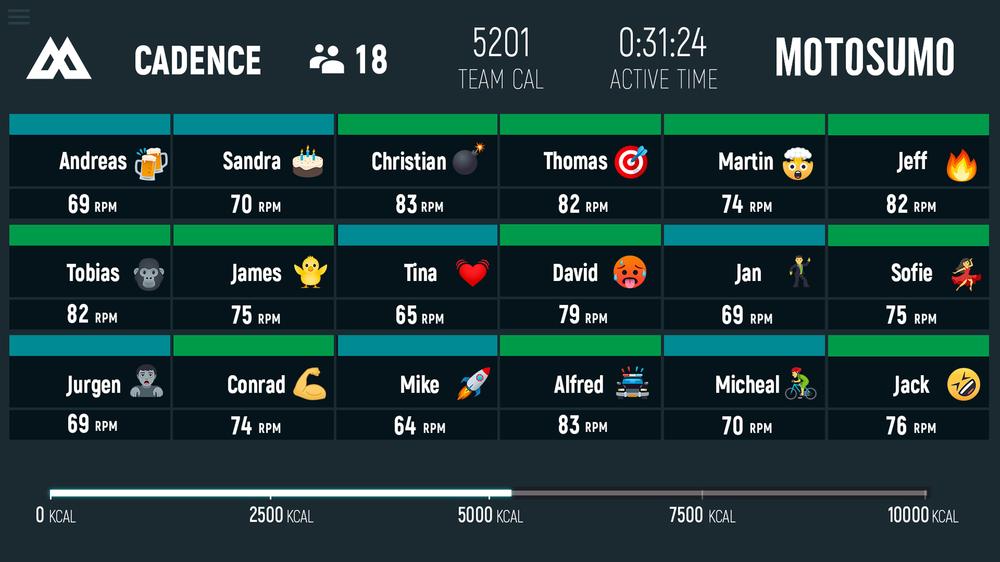
Why did you decide to focus on group fitness? Kresten: Everyone is on their smartphones, so we saw this as a massive opportunity to develop a gamification aspect that would drive up engagement in group fitness classes, using the mobile network to create a community.
The gaming can work on many levels – trying to beat previous records or goals, or being in teams to reach your goal together. Or it can be for charity: we just had an event where people all over the world were burning calories to donate trees.
Who is the target market? Kresten: We want to appeal to the average punter, not the elite guys, but the 80 or 90 per cent of club users who aren’t super competitive.
We have a full range of clubs using Motosumo, but our main target market is the non-elite, although several boutiques have taken us on. Currently, 25 per cent are in Europe, 25 per cent in the US, 25 per cent in Latin America and 25 per cent in the rest of the world.
What have been the main challenges with getting Motosumo up and running? Kresten: An initial challenge was to gain a foothold, as the industry can be slow to adopt new technology and initially no one wanted to buy into a subscription – which was interesting for an industry built on subscriptions! But that has changed now that wearables and services like Spotify are on everyone’s radar.
Nick: One reason the industry may have taken a while to adopt technology was that the first generation consisted of closed proprietary systems, where nothing was integrated, making it complicated to choose a system. Now we’re seeing a new generation of open platforms, so clubs no longer have to change all hardware and software in order to introduce new technology.
What’s involved if a club wants to sign up? Kresten: It’s just a case of downloading an app. We run a 45 minute webinar for instructors and then the clubs promote it to members via their usual channels. It’s up to gyms to decide how pro-active they are, most just activate with the webinar and a Facebook announcement.
How long does it take to engage members? Kresten: People tend to get on board very quickly – we recently launched gyms in Columbia, which had more than 200 users in the first week and we keep them engaged with bi-weekly updates.
Nick: The short training period means it’s unlikely anyone will get lost in the complexities of it, which I think is why it works so well in the initial phase of getting members on board.
Do you have any figures to show how Motosumo can benefit operators? Across all of our users, we have figures to show that from late 2017 to late 2019, the engage per gym, using Motosumo, increased by 150 per cent.
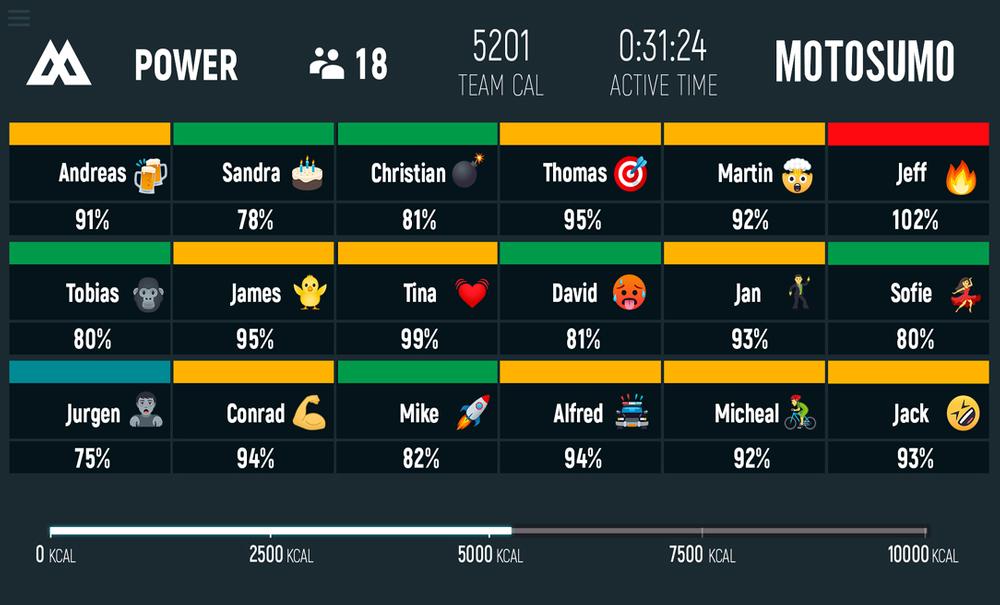
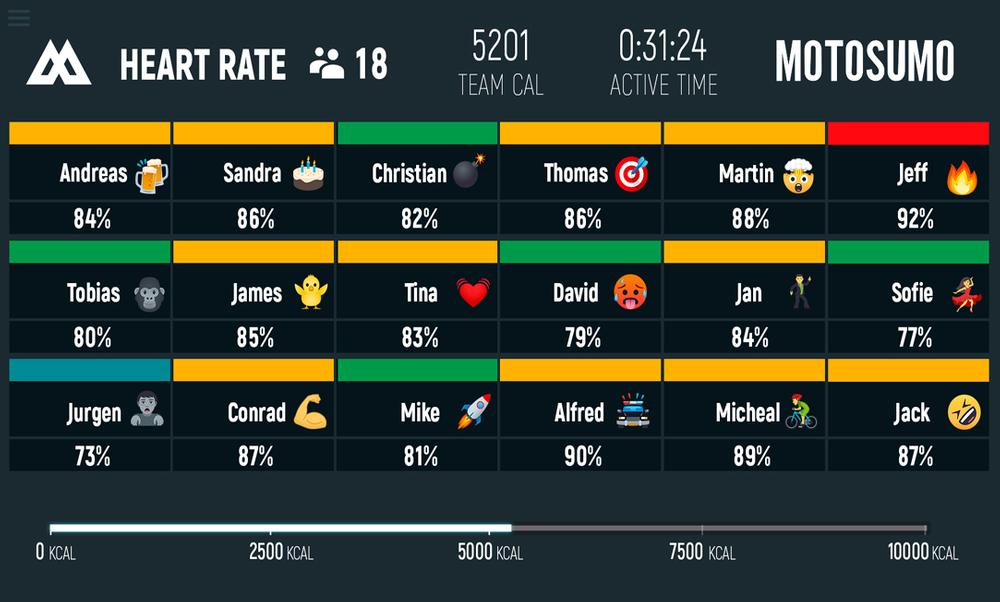
Another benefit we can give to operators is the data we have about their group fitness classes. We can see exactly what happens in every class. If it’s a HIIT class, did everyone go to the red zone at the same time? Do ratings go up or down when you launch a new concept? Useful information when doing talent and concept management.
Nick – having come on board in December, what will your role be? Even though I’ve only worked at two companies – Holmes Place and Fitness Hut – something I like to do is spend time looking at other companies and clubs, and so I have an informed perspective on the industry and I can see how Motosumo could integrate into different clubs. I can bring my 25 years’ of operating experience to the company and help nuance the app for the non-elite user.
What are your future ambitions? Our ambition is to become the gold standard for group fitness experiences. Fifty per cent of members go there and the potential for retaining them for longer is huge. We want to deliver it in a form which is for the masses. Since we already have a platform for home training, I also see this taking off within the next year.
Members from 1,000 gyms used Motosumo in 2019 and our revenues tripled. We’ll do that in 2020 too, at least. We aim to make group fitness in your gym something users will come back to for 10 straight years, not for a few months.
Pandemic prompts home market launch
Motosumo has launched HomeTeam, a new service that enables gym operators to deliver HIIT group workouts and indoor cycling classes to their members' living rooms.
Designed as a low-cost feature for operators, HomeTeam can be set up in five minutes and is capable of delivering a connected at-home fitness experience.
Users can tune in to a live video stream and join in with a smartphone and a heart rate monitor – or, if they have one, a stationary bike.
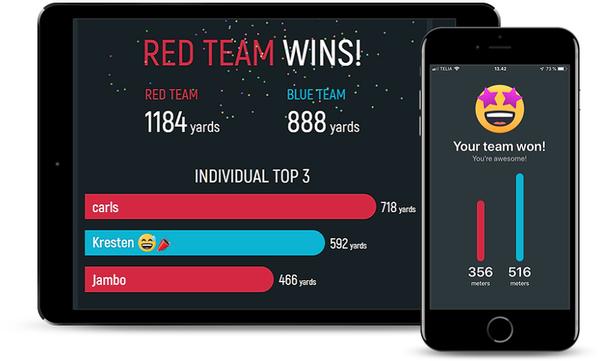
Participants are then connected through the app, which offers a range of fitness data as well as games, races, countdowns, music, emojis and more.
According to Kresten Juel Jensen, CEO of Motosumo, HomeTeam was created in response to the challenges fitness clubs and gyms are facing during the coronavirus pandemic, as they are forced to keep their doors closed.
HomeTeam is offered on a monthly subscription to gym operators at US$124 (€115, £106) per gym – or $208 (€192, £177) for indoor cycling, with no binding contract.
An opportunity to reimagine one of the UK’s most recognisable towers has been formally
opened by Rivington Hark, as St Johns Beacon invites operators and partners to shape its
next phase. [more...]
Kresten Juel Jensen, CEO and co-founder and Nick Coutts, incoming chair
What is Motosumo? Kresten: It’s a fitness tracking system using the motion sensors in a smartphone. We believe we’re the only tech company in the world that can track how you ride a bike without putting a sensor on it and without a heart rate monitor.
Nick: A major advantage of Motosumo is that it’s agnostic. Clubs don’t have to buy a new range of software, hardware or any equipment. It works with all equipment and just involves downloading an app, so it is really easy to install.
How did it come about? Kresten: It originated from a very nerdy group of people, out for a pizza one night in 2012, who got talking about how we would like to design a powerful system for tracking and analysing fitness data, with just one small sensor.
We successfully went on to do this, but then became ambitious about making it more universal, and capable of taking on the bigger players in fitness. So, with the former Endomondo investors on board, we set about designing a way to measure the same metrics that normally require a $1,000 USD gadget but instead using only a smartphone.
Nick: Kresten is being a bit self deprecating when he says they are just a group of nerds! It’s true that they have degrees in engineering, astrophysics and modelling human physiology, but they are also elite athletes who have spent time sweating in the saddle and understand the technical aspects of training. They have a good understanding of what data is interesting and valuable, which is evident in the product.
Why did you decide to focus on group fitness? Kresten: Everyone is on their smartphones, so we saw this as a massive opportunity to develop a gamification aspect that would drive up engagement in group fitness classes, using the mobile network to create a community.
The gaming can work on many levels – trying to beat previous records or goals, or being in teams to reach your goal together. Or it can be for charity: we just had an event where people all over the world were burning calories to donate trees.
Who is the target market? Kresten: We want to appeal to the average punter, not the elite guys, but the 80 or 90 per cent of club users who aren’t super competitive.
We have a full range of clubs using Motosumo, but our main target market is the non-elite, although several boutiques have taken us on. Currently, 25 per cent are in Europe, 25 per cent in the US, 25 per cent in Latin America and 25 per cent in the rest of the world.
What have been the main challenges with getting Motosumo up and running? Kresten: An initial challenge was to gain a foothold, as the industry can be slow to adopt new technology and initially no one wanted to buy into a subscription – which was interesting for an industry built on subscriptions! But that has changed now that wearables and services like Spotify are on everyone’s radar.
Nick: One reason the industry may have taken a while to adopt technology was that the first generation consisted of closed proprietary systems, where nothing was integrated, making it complicated to choose a system. Now we’re seeing a new generation of open platforms, so clubs no longer have to change all hardware and software in order to introduce new technology.
What’s involved if a club wants to sign up? Kresten: It’s just a case of downloading an app. We run a 45 minute webinar for instructors and then the clubs promote it to members via their usual channels. It’s up to gyms to decide how pro-active they are, most just activate with the webinar and a Facebook announcement.
How long does it take to engage members? Kresten: People tend to get on board very quickly – we recently launched gyms in Columbia, which had more than 200 users in the first week and we keep them engaged with bi-weekly updates.
Nick: The short training period means it’s unlikely anyone will get lost in the complexities of it, which I think is why it works so well in the initial phase of getting members on board.
Do you have any figures to show how Motosumo can benefit operators? Across all of our users, we have figures to show that from late 2017 to late 2019, the engage per gym, using Motosumo, increased by 150 per cent.
Another benefit we can give to operators is the data we have about their group fitness classes. We can see exactly what happens in every class. If it’s a HIIT class, did everyone go to the red zone at the same time? Do ratings go up or down when you launch a new concept? Useful information when doing talent and concept management.
Nick – having come on board in December, what will your role be? Even though I’ve only worked at two companies – Holmes Place and Fitness Hut – something I like to do is spend time looking at other companies and clubs, and so I have an informed perspective on the industry and I can see how Motosumo could integrate into different clubs. I can bring my 25 years’ of operating experience to the company and help nuance the app for the non-elite user.
What are your future ambitions? Our ambition is to become the gold standard for group fitness experiences. Fifty per cent of members go there and the potential for retaining them for longer is huge. We want to deliver it in a form which is for the masses. Since we already have a platform for home training, I also see this taking off within the next year.
Members from 1,000 gyms used Motosumo in 2019 and our revenues tripled. We’ll do that in 2020 too, at least. We aim to make group fitness in your gym something users will come back to for 10 straight years, not for a few months.
Pandemic prompts home market launch
Motosumo has launched HomeTeam, a new service that enables gym operators to deliver HIIT group workouts and indoor cycling classes to their members' living rooms.
Designed as a low-cost feature for operators, HomeTeam can be set up in five minutes and is capable of delivering a connected at-home fitness experience.
Users can tune in to a live video stream and join in with a smartphone and a heart rate monitor – or, if they have one, a stationary bike.
Participants are then connected through the app, which offers a range of fitness data as well as games, races, countdowns, music, emojis and more.
According to Kresten Juel Jensen, CEO of Motosumo, HomeTeam was created in response to the challenges fitness clubs and gyms are facing during the coronavirus pandemic, as they are forced to keep their doors closed.
HomeTeam is offered on a monthly subscription to gym operators at US$124 (€115, £106) per gym – or $208 (€192, £177) for indoor cycling, with no binding contract.
Hotel de France, located on the British Isle of Jersey, has created a wellness retreat package
that includes a hot yoga session that will take place in Jersey Zoo’s butterfly sanctuary.
A new immersive attraction designed to transport visitors into the final hours of ancient Pompeii
is preparing to open near the world-famous archaeological site in southern Italy.
Experience design company, BRC Imagination Arts, has completed a transition that sees founder
Bob Rogers pass ownership of the business to four long-serving senior executives, while
remaining actively involved with the company.
Movie Park Germany has opened a new Paramount Pictures-themed attraction as part of its 30th
anniversary celebrations, using immersive storytelling and adaptive reuse to reinforce the park’s
longstanding “Hollywood in Germany” positioning.
Therme Manchester’s 28-acre development, which will include interconnected glass pavilions
that measure 65,000sq m, will be the largest bathing and wellbeing attraction in the world once
complete, according to prof David Russell, CEO of Therme UK.
Efteling has opened Hooghmoed, a new family drop tower designed to broaden the appeal of its
recently launched Sirene Island themed area and introduce younger visitors to thrill attractions.
A proposed Puy du Fou development near Bicester and Universal Destinations and Experiences’
planned resort in Bedford are emerging as part of a wider transformation of the Oxford–
Cambridge Growth Corridor into a major centre for UK leisure and tourism inv
Shedd Aquarium has opened the Immersion Theater developed in partnership with SimEx-
Iwerks, as part of a wider strategy to enhance the guest experience and create additional
revenue opportunities.
The UK government has announced a temporary reduction in VAT on visitor attractions and
children’s meals as part of a summer cost-of-living support package designed to stimulate the
visitor economy and encourage family days out.
As designer Yinka Ilori prepares for his first solo gallery show in London, he speaks exclusively
to CLADmag about his mission to spread joy, the power of play, and his bold approach to using
colour (including the colours you won’t see in his work).
The government of Thailand is exploring plans for a THB300bn (£6.3bn, US$8.3bn)
entertainment complex in the country’s Eastern Economic Corridor (EEC), with officials
proposing a large-scale theme park and sports destination as part of a broader tourism and
economic development strategy.
An opportunity to reimagine one of the UK’s most recognisable towers has been formally
opened by Rivington Hark, as St Johns Beacon invites operators and partners to shape its
next phase. [more...]