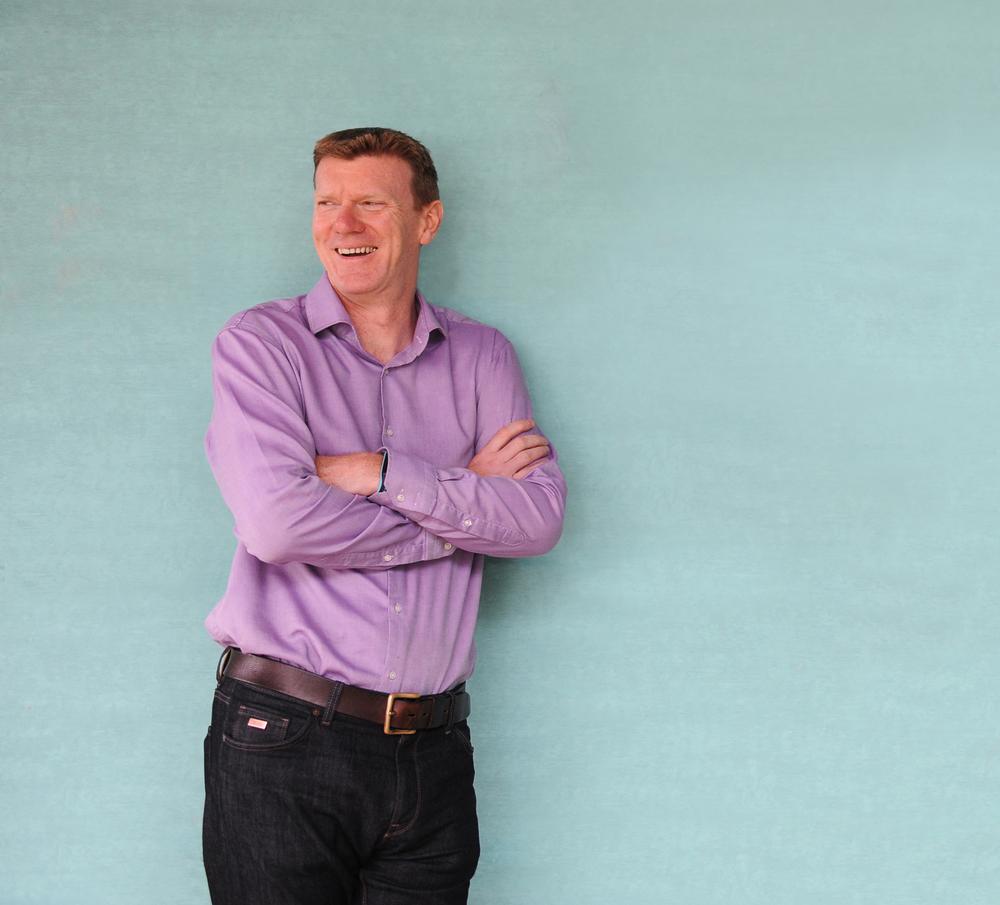
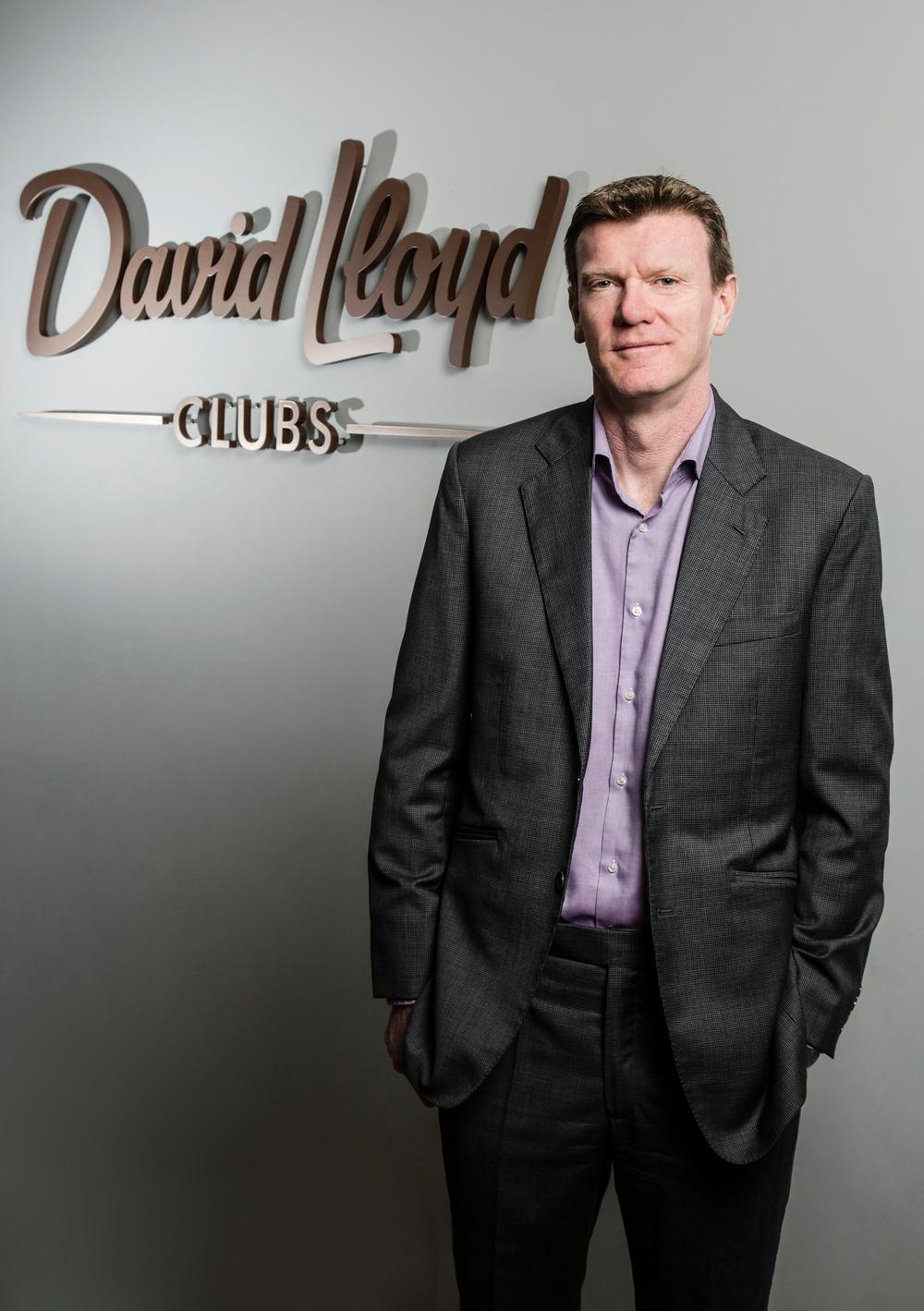
Earlam has led the David Lloyd Leisure business since 2015
When HCM last interviewed David Lloyd Leisure CEO, Glenn Earlam, towards the end of 2016, he was fairly new to the post, having joined the company in 2015.
At that stage, David Lloyd was about to open its 83rd UK club and ran 11, soon to be 12, clubs in Europe. All operated within a broadly similar large format, full-service model.
But things have moved on rapidly for the company, with a series of exciting new initiatives over recent years – not least the launch of the Blaze boutique model and the introduction of a more extensive, premium spa offering.
Here, Earlam offers an insight into the new formats being developed and an overview of estate growth, including hot-off-the-press details of two new European acquisitions.
What’s been happening since you last spoke to HCM? Between 2015 and 2019, we more than doubled our EBITDA. We’ve also grown our membership numbers by around 43 per cent, from 439,000 members in 2015 to 629,000 members as at December 2019. Some of that has been organic growth and some of it new business.
Probably a little more than 50 per cent is down to new businesses: from 2015 to end of 2019, we grew from 90 clubs to 116, of which 100 are in the UK. However, a good chunk of it is down to enhanced profitability in the existing estate. We’ve listened carefully to our members and invested heavily – around £125m over the last four years – and we’ve grown volume and yield as a result.
The two sides of the coin are very interrelated: if the core business grows well, that gives us more opportunity to go and buy other businesses. Our owner, TDR, has confidence we’re doing the right thing, but also, in simple terms, we have more cash to make those acquisitions. So the foundation of the success we’ve enjoyed is the existing business.
Tell us more about the £125m investment in your existing clubs. Whenever a club has been due a refurbishment, we haven’t only replaced the product. We’ve also added quite a lot in the way of new product.
We’ve spent about £17m on Blaze, for example, our in-house HIIT boutique concept (see HCM Nov/Dec 18, p80).
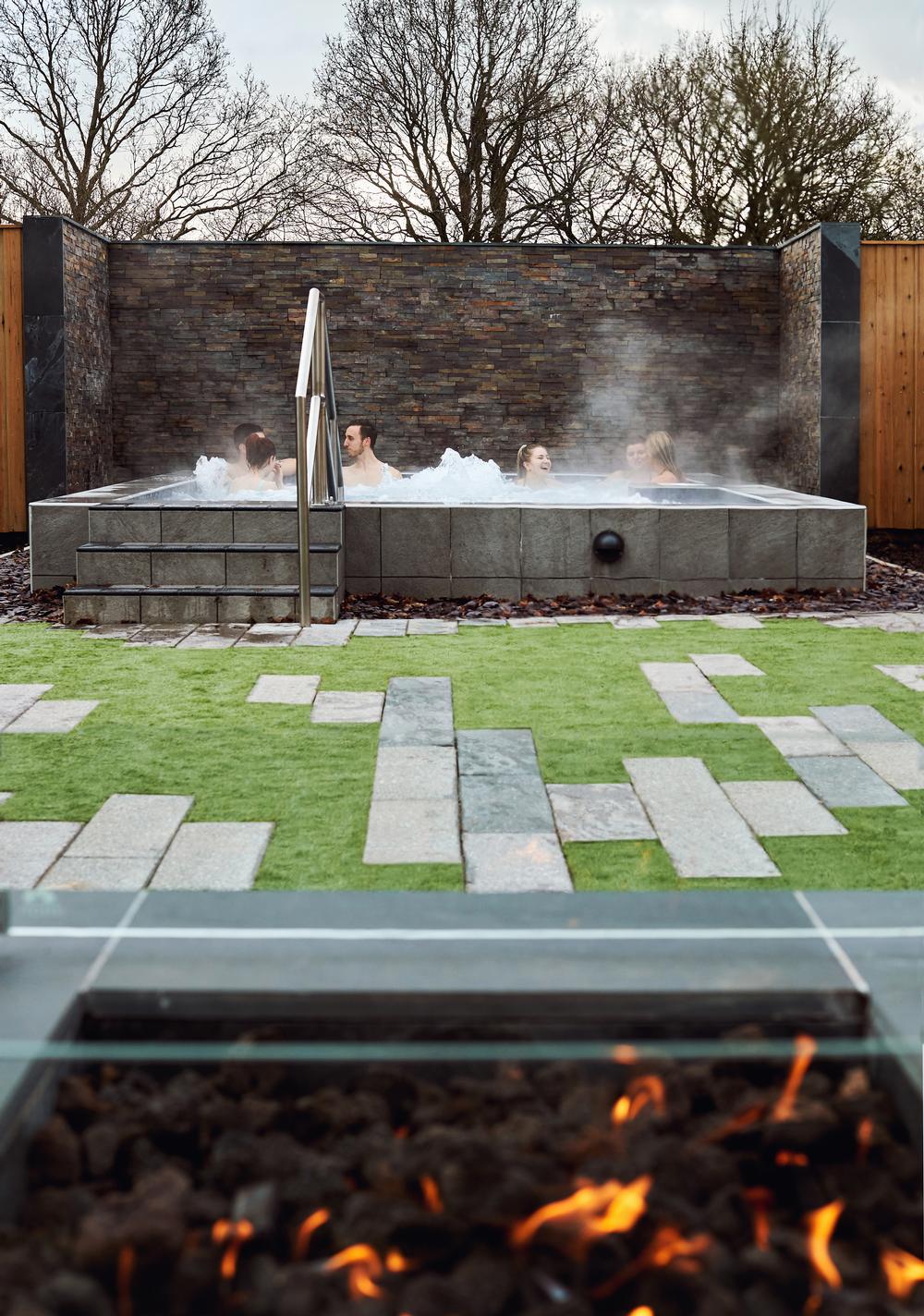
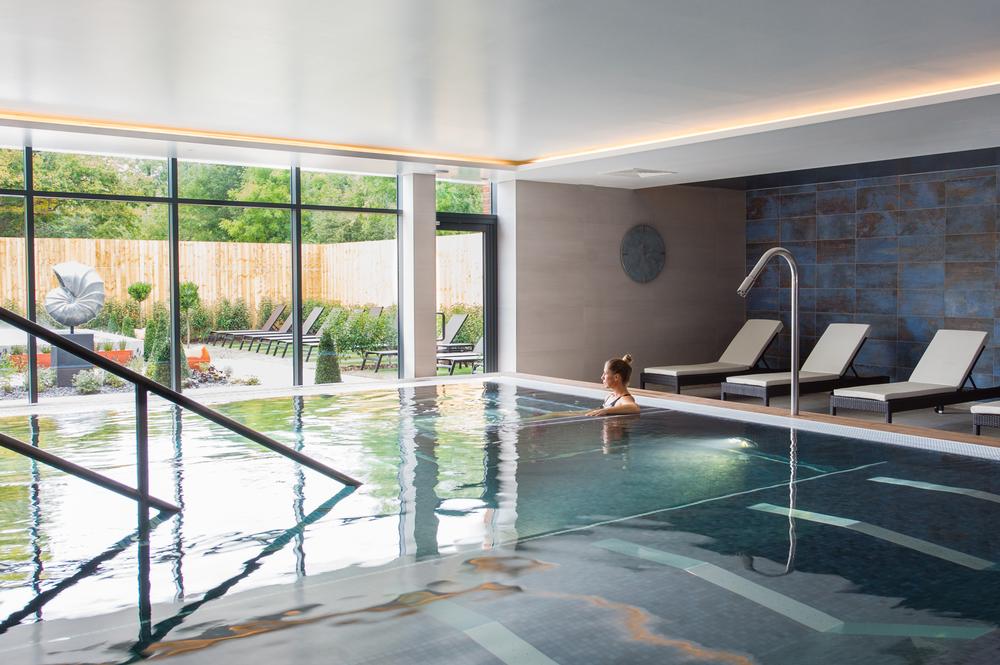
We’ve also spent around £20m on five luxury Spa Retreats – at Farnham, Purley, Royal Berkshire, Chigwell and Cambridge – with the first having opened in spring 2019. We now plan to invest a further £40-45m to roll this spa offering across the rest of our top 20 clubs.
These spas cost around £3m each, which is a significant capital investment, given we can build a new David Lloyd Club for somewhere in the order of £12m. But they’re really worthy of their ‘luxury’ descriptor. I would put them up against any of the best spas in the finest five-star hotels in the country.
Do the spas offer wellness options? Not within the spas as things stand, but we’re testing a broader wellness proposition in our luxury spa clubs.
Test is absolutely the right word – we’re not definitive about what’s working and what’s not working at this stage – but we’re exploring the extent to which members are interested in a wide range of wellness options: talks on nutrition or sleep; access to information online; meditation classes; a very different approach to yoga, which we’ve already trialled in a few clubs in collaboration with SARVA yoga.
In some clubs, we’ve started trialling classes where you put on headphones and take part in sound wave meditation on an individual basis. It’s excellent – far better than my ability to describe it!
We don’t know all the answers yet. What we do know is, in these top-end clubs where we have a more extensive spa and charge a premium, we want to provide a broader wellness offering. We just need to test the extent to which that’s of interest to our members.
We’re pleased with the response so far and I suspect we’ll do more of this in the future. We just have to take it one step at a time, because some of this is quite expensive to deliver; we need to work out what’s most valued by our members, and most effective for their wellbeing.
What’s your potential in the UK? There are more opportunities in the UK than we previously thought. We have no clubs in Sheffield, for example, the fifth largest city. We have one club in Leeds. Yet we have five in and around Glasgow.
If Glasgow can support five clubs, why shouldn’t we have three in Leeds, three in Sheffield? That’s a simplistic way of putting it, but we’ve found cannibalisation between clubs in a city has been minimal.
We’re also beginning to experiment with different sized clubs – we now have a slightly bigger model, a standard-sized model, and we’re working on a slightly smaller model – which will give us the opportunity to go into different markets.
It’s not dissimilar to what the likes of PureGym and The Gym Group are doing at the budget end of the market.
The larger model, following on from the early success of our luxury spas, will have a luxury spa included from the start. That’s the main difference in this model.
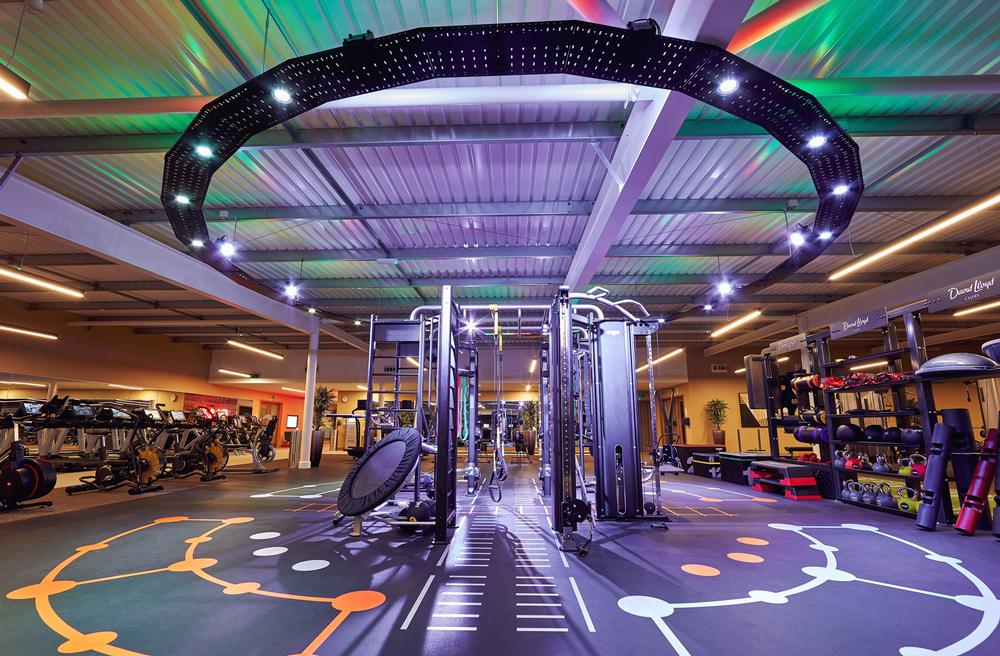
It will also have Blaze as standard, so there will be four group exercise locations rather than the usual three, and generally the club will be of a higher spec.
The standard size is pretty much what we’ve operated thus far, albeit with refinements. We’ve just opened a club in Bristol that’s the blueprint for our standard model, with local photography, art on the walls and slightly more luxurious changing rooms and clubrooms.
While most of the product is similar, we’ve moved the model on to position ourselves as a more luxurious brand.
And then the smaller version – we haven’t opened one yet, but we’ve been playing around with a model that would involve a luxurious spa, a smaller gym and very strong, cutting-edge group exercise spaces, as well as a smaller kids’ area. This would be the model where the demographic is strong but the population isn’t large enough to support a bigger club.
I believe a combination of these two factors – that we can have multiple clubs that are quite close to each other, as well as introducing new formats that open up new markets – spells out a lot more opportunity in the UK. I see potential for another 30 or so David Lloyd Clubs in the UK, and that’s before we even start on standalone Blaze studios.
You’re planning standalone studios? Blaze has grown group exercise penetration for us in our clubs, which is something we pretty obsessively try to achieve because we know it drives retention. Blaze has also driven a higher take-up of our Platinum membership because new members have to be Platinum to access these classes.
Blaze has been our biggest capital investment in terms of group exercise, and it’s been very successful. So, we started asking ourselves whether Blaze could work as a standalone boutique.
The economics of boutiques are challenging. Not impossible – there are some great boutiques out there – but it’s certainly challenging. When I look at what’s paid in rent, particularly in London, and then at the turnover some boutiques achieve, half of their income is going to the landlord, then they need to cover their own operating costs.
They need to be three-quarters full just to cover all that, and only then – in the last quarter of the year – they might actually make some money.
We, therefore, wanted to come at it from a slightly different angle. And that slightly different angle was: how would a standalone Blaze boutique dovetail with the existing David Lloyd estate?
It’s certainly not by accident that our first Blaze studio – which fully opened at the beginning of January this year – is in the centre of Birmingham, which has another six David Lloyd clubs.
If this studio is a success, we think that success will be borne out of three different dynamics, the first being people who buy either a single class or a multi-class pack of standalone Blaze sessions. That’s category one, and these individuals will pay £19 for a single session or £79 for a five-class pack.
Category two are the existing David Lloyd members, who are able to use Blaze in the city centre of Birmingham for free provided they’re Platinum members.
Over time, that will drive even more Platinum membership and with it better yields – plus if you have more usage, you have lower attrition as well.
And then the third category in a way ties the first two categories together. It’s the people who start off just using Blaze in the city centre, near their office, but who then realise they live near a David Lloyd Club and who decide to join – because if they go to the Blaze twice a week, they might as well join their local David Lloyd and be able to use the spa, the pool and chill out there at weekends.
And that’s how we think we can potentially unblock what’s generally a challenging economic model for boutiques.
If it works, we might roll out more Blaze studios, but we’re not committing to doing this until we see how this first one goes and we can analyse the results.
What new for DLL internationally? We’ve completed the acquisition of Hamburg Meridian Group, which operates five clubs in Hamburg, plus clubs in Berlin, Kiel and Frankfurt. We’ve also bought a single site – Country Club Geneva.
The Meridian Group is a strong and well-respected name in the German health and fitness industry and a key strategic acquisition for us. We have ambitious plans to further invest in and develop the clubs, as well as looking for further opportunities to expand the David Lloyd concept across Germany.
Country Club Geneva is a premium wellness facility on the outskirts of the Swiss city that’s currently owned by Dona Bertarelli. The deal makes the club the 124th in DLL’s European portfolio.
We now have 24 overseas clubs: nine in Germany, seven in the Netherlands, two in Belgium, two in Spain, one on the French/Swiss border, one in Switzerland, one in Italy and one in Ireland.
We also have a club in India, which we launched in mid-2019 in partnership with local operator, Talwalkars (see HCM August 2019, p58). The product looks absolutely superb, with a lot more emphasis on the social aspect, including the food and beverage. The rooftop restaurant is huge and fabulous. It’s almost a social club first and a health and fitness club second. However, we have fewer members than we anticipated so far, and India is certainly not an easy place for a company like David Lloyd to do business. We’re yet to make a decision on our future plans for that market.
And your European growth plans? We’re aiming to open four clubs a year in Europe, which for the most part will be created through acquisition.
Alongside the recent Meridian deal, we’re working on a few single-site acquisitions. Most deals tend to be single-site, which is why we’re setting a realistic goal of four new clubs a year.
Even where we opt for a new-build, we’ll generally buy an old tennis club or similar – something that, in planning terms, has already been zoned for sporting activities. It makes the whole process quicker and simpler: a one-year planning process, rather than the three years it would take if we needed to change the zoning for a new-build.
We then either knock it down and rebuild it, or else build a full David Lloyd Club around the existing facilities.
Which European countries have the most potential for growth? In terms of the markets we want to focus on, Germany is very interesting for us. It’s the biggest, most affluent country in Europe, with a well-established health and fitness industry and a high demand for premium spa and fitness clubs.
We believe our breadth of offering, and our premium family focus, is as relevant there as it is in the UK – yet we have 100 clubs in the UK and just one in Germany. So, we think Germany represents a great opportunity.
We’re also definitely interested in developing more clubs in Spain: we already do well in Barcelona and Madrid.
Although it’s a small market, we’d also be interested in the Netherlands, if the opportunity were to arise.
In Italy, everyone’s starting point is Milan and we’re no different, but our longer-term growth plans for that market reach across several parts of northern Italy.
Our focus will be on the markets where we already have a presence, with a strategy that’s focused on cities rather than countries. You have to be pragmatic.
It’s a lot easier to open a second, third, fourth club within a city than it is to operate a network of clubs spread widely across a country, not only for brand awareness but also for culture, logistics and staffing – the ability to get staff who already know the business to take their expertise and spearhead new openings.
Even with that city-based approach, though, I don’t see any reason why we couldn’t double the size of our European portfolio over the next four years.
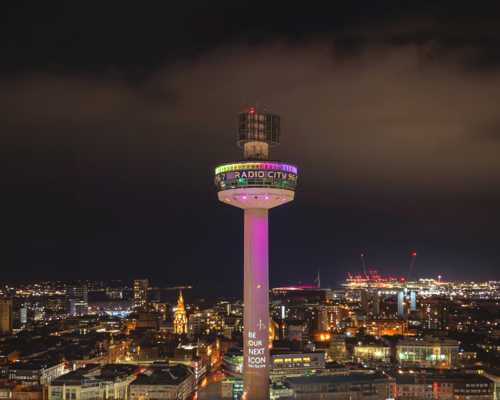
An opportunity to reimagine one of the UK’s most recognisable towers has been formally
opened by Rivington Hark, as St Johns Beacon invites operators and partners to shape its
next phase. [more...]
Earlam has led the David Lloyd Leisure business since 2015
When HCM last interviewed David Lloyd Leisure CEO, Glenn Earlam, towards the end of 2016, he was fairly new to the post, having joined the company in 2015.
At that stage, David Lloyd was about to open its 83rd UK club and ran 11, soon to be 12, clubs in Europe. All operated within a broadly similar large format, full-service model.
But things have moved on rapidly for the company, with a series of exciting new initiatives over recent years – not least the launch of the Blaze boutique model and the introduction of a more extensive, premium spa offering.
Here, Earlam offers an insight into the new formats being developed and an overview of estate growth, including hot-off-the-press details of two new European acquisitions.
What’s been happening since you last spoke to HCM? Between 2015 and 2019, we more than doubled our EBITDA. We’ve also grown our membership numbers by around 43 per cent, from 439,000 members in 2015 to 629,000 members as at December 2019. Some of that has been organic growth and some of it new business.
Probably a little more than 50 per cent is down to new businesses: from 2015 to end of 2019, we grew from 90 clubs to 116, of which 100 are in the UK. However, a good chunk of it is down to enhanced profitability in the existing estate. We’ve listened carefully to our members and invested heavily – around £125m over the last four years – and we’ve grown volume and yield as a result.
The two sides of the coin are very interrelated: if the core business grows well, that gives us more opportunity to go and buy other businesses. Our owner, TDR, has confidence we’re doing the right thing, but also, in simple terms, we have more cash to make those acquisitions. So the foundation of the success we’ve enjoyed is the existing business.
Tell us more about the £125m investment in your existing clubs. Whenever a club has been due a refurbishment, we haven’t only replaced the product. We’ve also added quite a lot in the way of new product.
We’ve spent about £17m on Blaze, for example, our in-house HIIT boutique concept (see HCM Nov/Dec 18, p80).
We’ve also spent around £20m on five luxury Spa Retreats – at Farnham, Purley, Royal Berkshire, Chigwell and Cambridge – with the first having opened in spring 2019. We now plan to invest a further £40-45m to roll this spa offering across the rest of our top 20 clubs.
These spas cost around £3m each, which is a significant capital investment, given we can build a new David Lloyd Club for somewhere in the order of £12m. But they’re really worthy of their ‘luxury’ descriptor. I would put them up against any of the best spas in the finest five-star hotels in the country.
Do the spas offer wellness options? Not within the spas as things stand, but we’re testing a broader wellness proposition in our luxury spa clubs.
Test is absolutely the right word – we’re not definitive about what’s working and what’s not working at this stage – but we’re exploring the extent to which members are interested in a wide range of wellness options: talks on nutrition or sleep; access to information online; meditation classes; a very different approach to yoga, which we’ve already trialled in a few clubs in collaboration with SARVA yoga.
In some clubs, we’ve started trialling classes where you put on headphones and take part in sound wave meditation on an individual basis. It’s excellent – far better than my ability to describe it!
We don’t know all the answers yet. What we do know is, in these top-end clubs where we have a more extensive spa and charge a premium, we want to provide a broader wellness offering. We just need to test the extent to which that’s of interest to our members.
We’re pleased with the response so far and I suspect we’ll do more of this in the future. We just have to take it one step at a time, because some of this is quite expensive to deliver; we need to work out what’s most valued by our members, and most effective for their wellbeing.
What’s your potential in the UK? There are more opportunities in the UK than we previously thought. We have no clubs in Sheffield, for example, the fifth largest city. We have one club in Leeds. Yet we have five in and around Glasgow.
If Glasgow can support five clubs, why shouldn’t we have three in Leeds, three in Sheffield? That’s a simplistic way of putting it, but we’ve found cannibalisation between clubs in a city has been minimal.
We’re also beginning to experiment with different sized clubs – we now have a slightly bigger model, a standard-sized model, and we’re working on a slightly smaller model – which will give us the opportunity to go into different markets.
It’s not dissimilar to what the likes of PureGym and The Gym Group are doing at the budget end of the market.
The larger model, following on from the early success of our luxury spas, will have a luxury spa included from the start. That’s the main difference in this model.
It will also have Blaze as standard, so there will be four group exercise locations rather than the usual three, and generally the club will be of a higher spec.
The standard size is pretty much what we’ve operated thus far, albeit with refinements. We’ve just opened a club in Bristol that’s the blueprint for our standard model, with local photography, art on the walls and slightly more luxurious changing rooms and clubrooms.
While most of the product is similar, we’ve moved the model on to position ourselves as a more luxurious brand.
And then the smaller version – we haven’t opened one yet, but we’ve been playing around with a model that would involve a luxurious spa, a smaller gym and very strong, cutting-edge group exercise spaces, as well as a smaller kids’ area. This would be the model where the demographic is strong but the population isn’t large enough to support a bigger club.
I believe a combination of these two factors – that we can have multiple clubs that are quite close to each other, as well as introducing new formats that open up new markets – spells out a lot more opportunity in the UK. I see potential for another 30 or so David Lloyd Clubs in the UK, and that’s before we even start on standalone Blaze studios.
You’re planning standalone studios? Blaze has grown group exercise penetration for us in our clubs, which is something we pretty obsessively try to achieve because we know it drives retention. Blaze has also driven a higher take-up of our Platinum membership because new members have to be Platinum to access these classes.
Blaze has been our biggest capital investment in terms of group exercise, and it’s been very successful. So, we started asking ourselves whether Blaze could work as a standalone boutique.
The economics of boutiques are challenging. Not impossible – there are some great boutiques out there – but it’s certainly challenging. When I look at what’s paid in rent, particularly in London, and then at the turnover some boutiques achieve, half of their income is going to the landlord, then they need to cover their own operating costs.
They need to be three-quarters full just to cover all that, and only then – in the last quarter of the year – they might actually make some money.
We, therefore, wanted to come at it from a slightly different angle. And that slightly different angle was: how would a standalone Blaze boutique dovetail with the existing David Lloyd estate?
It’s certainly not by accident that our first Blaze studio – which fully opened at the beginning of January this year – is in the centre of Birmingham, which has another six David Lloyd clubs.
If this studio is a success, we think that success will be borne out of three different dynamics, the first being people who buy either a single class or a multi-class pack of standalone Blaze sessions. That’s category one, and these individuals will pay £19 for a single session or £79 for a five-class pack.
Category two are the existing David Lloyd members, who are able to use Blaze in the city centre of Birmingham for free provided they’re Platinum members.
Over time, that will drive even more Platinum membership and with it better yields – plus if you have more usage, you have lower attrition as well.
And then the third category in a way ties the first two categories together. It’s the people who start off just using Blaze in the city centre, near their office, but who then realise they live near a David Lloyd Club and who decide to join – because if they go to the Blaze twice a week, they might as well join their local David Lloyd and be able to use the spa, the pool and chill out there at weekends.
And that’s how we think we can potentially unblock what’s generally a challenging economic model for boutiques.
If it works, we might roll out more Blaze studios, but we’re not committing to doing this until we see how this first one goes and we can analyse the results.
What new for DLL internationally? We’ve completed the acquisition of Hamburg Meridian Group, which operates five clubs in Hamburg, plus clubs in Berlin, Kiel and Frankfurt. We’ve also bought a single site – Country Club Geneva.
The Meridian Group is a strong and well-respected name in the German health and fitness industry and a key strategic acquisition for us. We have ambitious plans to further invest in and develop the clubs, as well as looking for further opportunities to expand the David Lloyd concept across Germany.
Country Club Geneva is a premium wellness facility on the outskirts of the Swiss city that’s currently owned by Dona Bertarelli. The deal makes the club the 124th in DLL’s European portfolio.
We now have 24 overseas clubs: nine in Germany, seven in the Netherlands, two in Belgium, two in Spain, one on the French/Swiss border, one in Switzerland, one in Italy and one in Ireland.
We also have a club in India, which we launched in mid-2019 in partnership with local operator, Talwalkars (see HCM August 2019, p58). The product looks absolutely superb, with a lot more emphasis on the social aspect, including the food and beverage. The rooftop restaurant is huge and fabulous. It’s almost a social club first and a health and fitness club second. However, we have fewer members than we anticipated so far, and India is certainly not an easy place for a company like David Lloyd to do business. We’re yet to make a decision on our future plans for that market.
And your European growth plans? We’re aiming to open four clubs a year in Europe, which for the most part will be created through acquisition.
Alongside the recent Meridian deal, we’re working on a few single-site acquisitions. Most deals tend to be single-site, which is why we’re setting a realistic goal of four new clubs a year.
Even where we opt for a new-build, we’ll generally buy an old tennis club or similar – something that, in planning terms, has already been zoned for sporting activities. It makes the whole process quicker and simpler: a one-year planning process, rather than the three years it would take if we needed to change the zoning for a new-build.
We then either knock it down and rebuild it, or else build a full David Lloyd Club around the existing facilities.
Which European countries have the most potential for growth? In terms of the markets we want to focus on, Germany is very interesting for us. It’s the biggest, most affluent country in Europe, with a well-established health and fitness industry and a high demand for premium spa and fitness clubs.
We believe our breadth of offering, and our premium family focus, is as relevant there as it is in the UK – yet we have 100 clubs in the UK and just one in Germany. So, we think Germany represents a great opportunity.
We’re also definitely interested in developing more clubs in Spain: we already do well in Barcelona and Madrid.
Although it’s a small market, we’d also be interested in the Netherlands, if the opportunity were to arise.
In Italy, everyone’s starting point is Milan and we’re no different, but our longer-term growth plans for that market reach across several parts of northern Italy.
Our focus will be on the markets where we already have a presence, with a strategy that’s focused on cities rather than countries. You have to be pragmatic.
It’s a lot easier to open a second, third, fourth club within a city than it is to operate a network of clubs spread widely across a country, not only for brand awareness but also for culture, logistics and staffing – the ability to get staff who already know the business to take their expertise and spearhead new openings.
Even with that city-based approach, though, I don’t see any reason why we couldn’t double the size of our European portfolio over the next four years.
Experience design company, BRC Imagination Arts, has completed a transition that sees founder
Bob Rogers pass ownership of the business to four long-serving senior executives, while
remaining actively involved with the company.
Movie Park Germany has opened a new Paramount Pictures-themed attraction as part of its 30th
anniversary celebrations, using immersive storytelling and adaptive reuse to reinforce the park’s
longstanding “Hollywood in Germany” positioning.
Therme Manchester’s 28-acre development, which will include interconnected glass pavilions
that measure 65,000sq m, will be the largest bathing and wellbeing attraction in the world once
complete, according to prof David Russell, CEO of Therme UK.
Efteling has opened Hooghmoed, a new family drop tower designed to broaden the appeal of its
recently launched Sirene Island themed area and introduce younger visitors to thrill attractions.
A proposed Puy du Fou development near Bicester and Universal Destinations and Experiences’
planned resort in Bedford are emerging as part of a wider transformation of the Oxford–
Cambridge Growth Corridor into a major centre for UK leisure and tourism inv
Shedd Aquarium has opened the Immersion Theater developed in partnership with SimEx-
Iwerks, as part of a wider strategy to enhance the guest experience and create additional
revenue opportunities.
The UK government has announced a temporary reduction in VAT on visitor attractions and
children’s meals as part of a summer cost-of-living support package designed to stimulate the
visitor economy and encourage family days out.
As designer Yinka Ilori prepares for his first solo gallery show in London, he speaks exclusively
to CLADmag about his mission to spread joy, the power of play, and his bold approach to using
colour (including the colours you won’t see in his work).
The government of Thailand is exploring plans for a THB300bn (£6.3bn, US$8.3bn)
entertainment complex in the country’s Eastern Economic Corridor (EEC), with officials
proposing a large-scale theme park and sports destination as part of a broader tourism and
economic development strategy.
Royal Caribbean has revealed its Hero of the Seas cruise ship, home to the most pools at sea
(nine), and a record-breaking 28 dining venues, as well as attractions including a waterpark
with two new family raft slides.
+ More news
COMPANY PROFILES
IAAPA EMEA IAAPA Expo Europe was established in 2006 and has grown to the largest international conference and [more...]
instantprint We’re a Yorkshire-based online printer, founded
in 2009 by Adam Carnell and James Kinsella. [more...]
Simworx Ltd The company was initially established
in 1997. Terry Monkton and Andrew
Roberts are the key stakeh [more...]
Alterface Alterface’s Creative Division team is
seasoned in concept and ride development,
as well as storyte [more...]
An opportunity to reimagine one of the UK’s most recognisable towers has been formally
opened by Rivington Hark, as St Johns Beacon invites operators and partners to shape its
next phase. [more...]