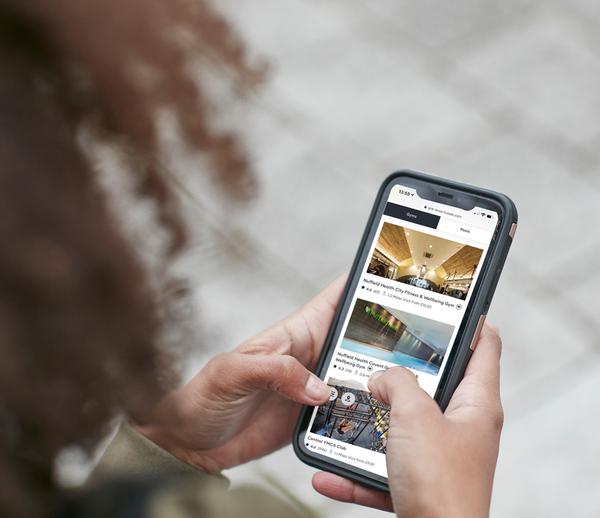
Hussle founders Jamie Ward (left) and Neil Harmsworth
You might not be familiar with the name Hussle, but if you’re involved in the fitness industry, you’ll know the company.
Until recently, they’ve been known as PayAsUGym, the original gym fitness marketplace. Their website brings thousands of gyms from all over the UK to one place, providing operators with access to hundreds of thousands of customers who want a national reciprocal membership system.
The Hussle website is already approaching 700,000 individual members, and features thousands of the country’s best gyms. With copycat services constantly popping up across the globe, the company has decided to change its name. So it’s goodbye to PayAsUGym, and hello to Hussle.
Neil, can you explain how the decision came about? There are a number of factors driving the rebrand. The first is that PayAsUGym doesn’t really describe what we do any more: we’re no longer just a pay-as-you-go service, so that was causing confusion.
The second thing relates to audience: the move to Hussle is designed to appeal to a millennial audience, a customer group that’s very aesthetically conscious, active on Instagram, and quite careful about the kinds of brands they use.
PayAsUGym wasn’t a premium name – it didn’t really reflect the quality of our service. Significantly it also really doesn’t represent the service our premium and mid-market operator partners provide to customers. We’re working with the best gyms in the country: our brand needed to reflect that.
What kind of people use Hussle? We’re very much talking to the 18-35 market. They’re pretty well-known for being hard to reach: they don’t consume traditional media, they’re less trusting of advertising than previous generations, and actually at the moment, they’re not taking up traditional gym memberships. It’s why the average age of a gym member in the UK has been creeping up every year.
So how do you reach them? This audience has really grown up with digital media. That’s where our core expertise lies: we’ve got a lot of experience in digital marketing, and we know our audience really well. So we’re helping gyms all over the UK leverage that expertise in a way that they haven’t really been able to before.
On top of this, the geographic coverage we provide through our operator network makes our service extremely appealing to commercial partners, who want to use fitness as a reward or benefit for their customers.
Traditionally, individual gym operators haven’t been able to provide the scale to function as a truly national marketing partner, which is why we haven’t seen a deal comparable to something like the Meerkat Movies campaign, which drove 4.3 million UK cinema visits last year alone.
Those people sitting in cinemas could just as easily have been visiting the gym. We want to enable this and grow the fitness market at the same time.
Why will consumers use Hussle? Well, first and foremost, this is about convenience for an audience who are busy, with different aspects of their life constantly competing for attention. Work, family, travel, friends, chores – the list goes on.
When people are busy it can be very easy to sacrifice health and fitness and we exist to help them make life work out. Having a gym wherever they need – whether that’s at home, work, or wherever – is a key benefit. And of course, this is an audience that really values variety, so the ability to mix it up and try something new every time they work out is also hugely appealing to a millennial audience.
Service is important to them too. By letting them use the best clubs all over the country on a flexible basis, they can start to appreciate the benefits of a service-led fitness experience, rather than the no-staff budget option they might get as an alternative to a Hussle partner club.
How does it work for operators? We’re working with 2,500 gyms all over the UK – and that’s growing all the time. We’ve got a complete mix of operators: you can find premium chains like Nuffield Health & Wellbeing and Bannatyne Health Clubs on Hussle, and you can also access public sector providers like Places for People Leisure and Everyone Active. There are hotel brands like Hilton Livingwell and Village Gym on our site, as well as thousands of the UK’s best quality independent clubs.
The reason so many operators work with us is that we help them reach new customers, specifically the 18-35, pre-family age group. With almost 700,000 registered customers – of which our data shows 92 per cent are new to the gym they visit – we already have huge reach. What’s more, 14 per cent of these customers go on to become members of the gym directly once they reach a phase of life which doesn’t require the same level of convenience that we provide. It’s always been free to become a listed fitness partner, and we typically have clubs up on the website and receiving customers within a week.
There’s been a lot of debate about fitness marketplaces over the last 12 months. What’s your view? The fact is that consumer behaviour has changed. Brands need to be present in every sales channel the customer chooses to shop through. That’s a customer-led, macro-trend which extends far beyond fitness and is widely acknowledged by pretty much every operator I meet.
In other market sectors this approach is called omni-channel marketing – it just recognises the fact that in order to be paid by the customer you need be seen by the customer!
Fitness marketplace are simply a new way to do that in fitness, making sure your business is present in every channel the customer shops through.
What would you say to your critics about aggregators? People that fear change are those that benefit most from the status quo. Formula One racing is a good comparison: if your car has the fastest engine and you’re winning every race then naturally, you do everything you can to stop the engine regulations changing. It’s pure self-interest to maintain competitive advantage.
Over the last ten years, budget gym chains have established market-leading positions by cannibalising the mid-market with aggressive price disruption in the 18-35 age group, and by dominating search engines online. This explains why budget gym chains continue to be the most vocal detractors of aggregators and it’s not hard to understand their motivations– they don’t want things to change!
However, the mid and premium markets are now fighting back by using aggregators like Hussle to regain market share from budget gyms. They’re using services like ours to make sure they are exposed to a wider online audience and benefitting from the national marketing deals we can strike. The result will be that consumer narrative will soon shift away from ‘lowest cost’ to focus more on service, facilities and convenience – which can only be a positive development for any operator that wants to do more than compete on price alone.
What's the future for Hussle? The core of our service will remain ‘gym-first’ for the foreseeable future, and we’ll continue focusing on B2C channels, rather than the highly contested corporate membership market. In terms of geography, our focus remains on the UK, but we have our eye on a number of other territories for when the time's right.
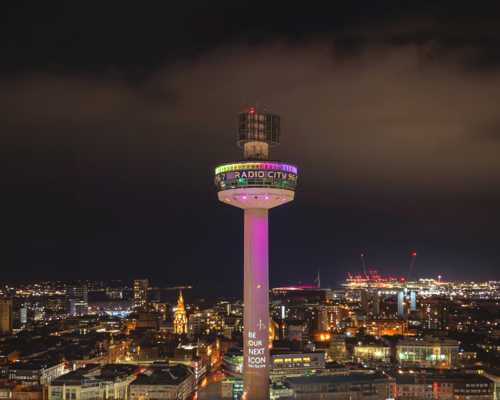
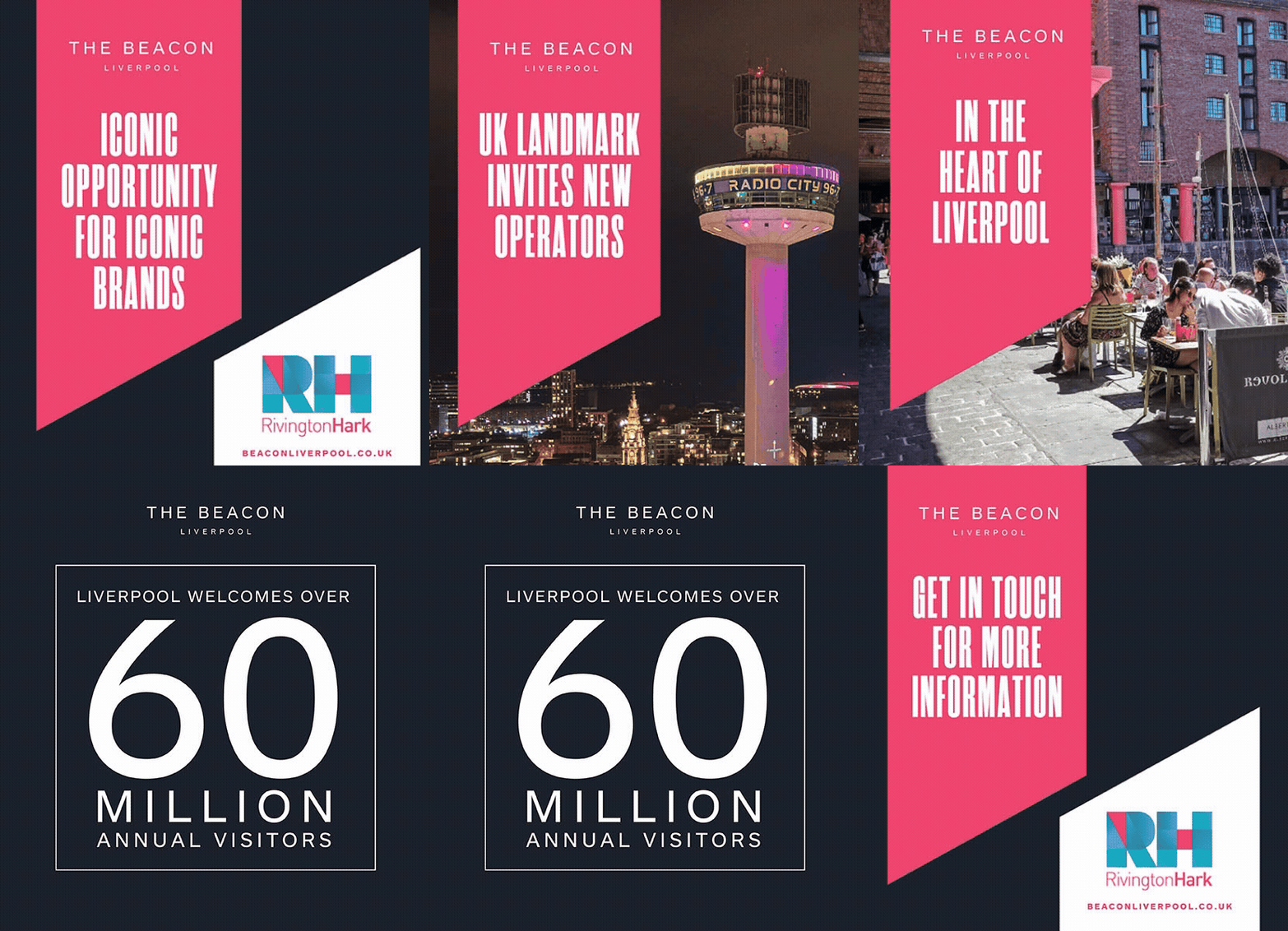
An opportunity to reimagine one of the UK’s most recognisable towers has been formally
opened by Rivington Hark, as St Johns Beacon invites operators and partners to shape its
next phase. [more...]
Hussle founders Jamie Ward (left) and Neil Harmsworth
You might not be familiar with the name Hussle, but if you’re involved in the fitness industry, you’ll know the company.
Until recently, they’ve been known as PayAsUGym, the original gym fitness marketplace. Their website brings thousands of gyms from all over the UK to one place, providing operators with access to hundreds of thousands of customers who want a national reciprocal membership system.
The Hussle website is already approaching 700,000 individual members, and features thousands of the country’s best gyms. With copycat services constantly popping up across the globe, the company has decided to change its name. So it’s goodbye to PayAsUGym, and hello to Hussle.
Neil, can you explain how the decision came about? There are a number of factors driving the rebrand. The first is that PayAsUGym doesn’t really describe what we do any more: we’re no longer just a pay-as-you-go service, so that was causing confusion.
The second thing relates to audience: the move to Hussle is designed to appeal to a millennial audience, a customer group that’s very aesthetically conscious, active on Instagram, and quite careful about the kinds of brands they use.
PayAsUGym wasn’t a premium name – it didn’t really reflect the quality of our service. Significantly it also really doesn’t represent the service our premium and mid-market operator partners provide to customers. We’re working with the best gyms in the country: our brand needed to reflect that.
What kind of people use Hussle? We’re very much talking to the 18-35 market. They’re pretty well-known for being hard to reach: they don’t consume traditional media, they’re less trusting of advertising than previous generations, and actually at the moment, they’re not taking up traditional gym memberships. It’s why the average age of a gym member in the UK has been creeping up every year.
So how do you reach them? This audience has really grown up with digital media. That’s where our core expertise lies: we’ve got a lot of experience in digital marketing, and we know our audience really well. So we’re helping gyms all over the UK leverage that expertise in a way that they haven’t really been able to before.
On top of this, the geographic coverage we provide through our operator network makes our service extremely appealing to commercial partners, who want to use fitness as a reward or benefit for their customers.
Traditionally, individual gym operators haven’t been able to provide the scale to function as a truly national marketing partner, which is why we haven’t seen a deal comparable to something like the Meerkat Movies campaign, which drove 4.3 million UK cinema visits last year alone.
Those people sitting in cinemas could just as easily have been visiting the gym. We want to enable this and grow the fitness market at the same time.
Why will consumers use Hussle? Well, first and foremost, this is about convenience for an audience who are busy, with different aspects of their life constantly competing for attention. Work, family, travel, friends, chores – the list goes on.
When people are busy it can be very easy to sacrifice health and fitness and we exist to help them make life work out. Having a gym wherever they need – whether that’s at home, work, or wherever – is a key benefit. And of course, this is an audience that really values variety, so the ability to mix it up and try something new every time they work out is also hugely appealing to a millennial audience.
Service is important to them too. By letting them use the best clubs all over the country on a flexible basis, they can start to appreciate the benefits of a service-led fitness experience, rather than the no-staff budget option they might get as an alternative to a Hussle partner club.
How does it work for operators? We’re working with 2,500 gyms all over the UK – and that’s growing all the time. We’ve got a complete mix of operators: you can find premium chains like Nuffield Health & Wellbeing and Bannatyne Health Clubs on Hussle, and you can also access public sector providers like Places for People Leisure and Everyone Active. There are hotel brands like Hilton Livingwell and Village Gym on our site, as well as thousands of the UK’s best quality independent clubs.
The reason so many operators work with us is that we help them reach new customers, specifically the 18-35, pre-family age group. With almost 700,000 registered customers – of which our data shows 92 per cent are new to the gym they visit – we already have huge reach. What’s more, 14 per cent of these customers go on to become members of the gym directly once they reach a phase of life which doesn’t require the same level of convenience that we provide. It’s always been free to become a listed fitness partner, and we typically have clubs up on the website and receiving customers within a week.
There’s been a lot of debate about fitness marketplaces over the last 12 months. What’s your view? The fact is that consumer behaviour has changed. Brands need to be present in every sales channel the customer chooses to shop through. That’s a customer-led, macro-trend which extends far beyond fitness and is widely acknowledged by pretty much every operator I meet.
In other market sectors this approach is called omni-channel marketing – it just recognises the fact that in order to be paid by the customer you need be seen by the customer!
Fitness marketplace are simply a new way to do that in fitness, making sure your business is present in every channel the customer shops through.
What would you say to your critics about aggregators? People that fear change are those that benefit most from the status quo. Formula One racing is a good comparison: if your car has the fastest engine and you’re winning every race then naturally, you do everything you can to stop the engine regulations changing. It’s pure self-interest to maintain competitive advantage.
Over the last ten years, budget gym chains have established market-leading positions by cannibalising the mid-market with aggressive price disruption in the 18-35 age group, and by dominating search engines online. This explains why budget gym chains continue to be the most vocal detractors of aggregators and it’s not hard to understand their motivations– they don’t want things to change!
However, the mid and premium markets are now fighting back by using aggregators like Hussle to regain market share from budget gyms. They’re using services like ours to make sure they are exposed to a wider online audience and benefitting from the national marketing deals we can strike. The result will be that consumer narrative will soon shift away from ‘lowest cost’ to focus more on service, facilities and convenience – which can only be a positive development for any operator that wants to do more than compete on price alone.
What's the future for Hussle? The core of our service will remain ‘gym-first’ for the foreseeable future, and we’ll continue focusing on B2C channels, rather than the highly contested corporate membership market. In terms of geography, our focus remains on the UK, but we have our eye on a number of other territories for when the time's right.
Hotel de France, located on the British Isle of Jersey, has created a wellness retreat package
that includes a hot yoga session that will take place in Jersey Zoo’s butterfly sanctuary.
A new immersive attraction designed to transport visitors into the final hours of ancient Pompeii
is preparing to open near the world-famous archaeological site in southern Italy.
Experience design company, BRC Imagination Arts, has completed a transition that sees founder
Bob Rogers pass ownership of the business to four long-serving senior executives, while
remaining actively involved with the company.
Movie Park Germany has opened a new Paramount Pictures-themed attraction as part of its 30th
anniversary celebrations, using immersive storytelling and adaptive reuse to reinforce the park’s
longstanding “Hollywood in Germany” positioning.
Therme Manchester’s 28-acre development, which will include interconnected glass pavilions
that measure 65,000sq m, will be the largest bathing and wellbeing attraction in the world once
complete, according to prof David Russell, CEO of Therme UK.
Efteling has opened Hooghmoed, a new family drop tower designed to broaden the appeal of its
recently launched Sirene Island themed area and introduce younger visitors to thrill attractions.
A proposed Puy du Fou development near Bicester and Universal Destinations and Experiences’
planned resort in Bedford are emerging as part of a wider transformation of the Oxford–
Cambridge Growth Corridor into a major centre for UK leisure and tourism inv
Shedd Aquarium has opened the Immersion Theater developed in partnership with SimEx-
Iwerks, as part of a wider strategy to enhance the guest experience and create additional
revenue opportunities.
The UK government has announced a temporary reduction in VAT on visitor attractions and
children’s meals as part of a summer cost-of-living support package designed to stimulate the
visitor economy and encourage family days out.
As designer Yinka Ilori prepares for his first solo gallery show in London, he speaks exclusively
to CLADmag about his mission to spread joy, the power of play, and his bold approach to using
colour (including the colours you won’t see in his work).
The government of Thailand is exploring plans for a THB300bn (£6.3bn, US$8.3bn)
entertainment complex in the country’s Eastern Economic Corridor (EEC), with officials
proposing a large-scale theme park and sports destination as part of a broader tourism and
economic development strategy.
+ More news
COMPANY PROFILES
Alterface Alterface’s Creative Division team is
seasoned in concept and ride development,
as well as storyte [more...]
Painting With Light By combining lighting, video, scenic and architectural elements, sound and special effects we tell s [more...]
DJW David & Lynn Willrich started the Company
over thirty years ago, from the Audio Visual
Department [more...]
Polin Waterparks Polin was founded in Istanbul in 1976. Polin
has since grown into a leading company in
the waterpa [more...]
An opportunity to reimagine one of the UK’s most recognisable towers has been formally
opened by Rivington Hark, as St Johns Beacon invites operators and partners to shape its
next phase. [more...]