We know that where we live affects how healthy we are, but never before have they been prescribed quite like this. Stu Robarts walks the streets of the Healthy New Towns initiative to find out more about its prognosis
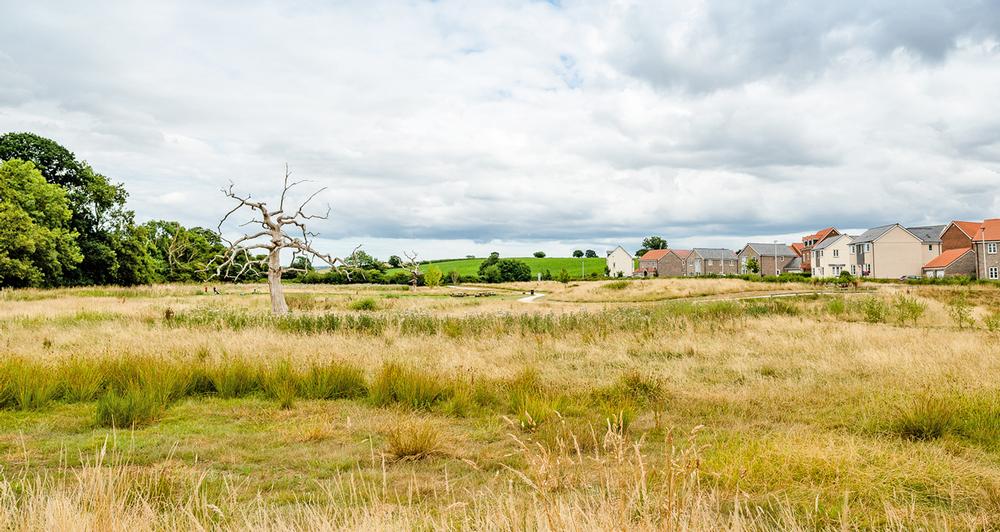
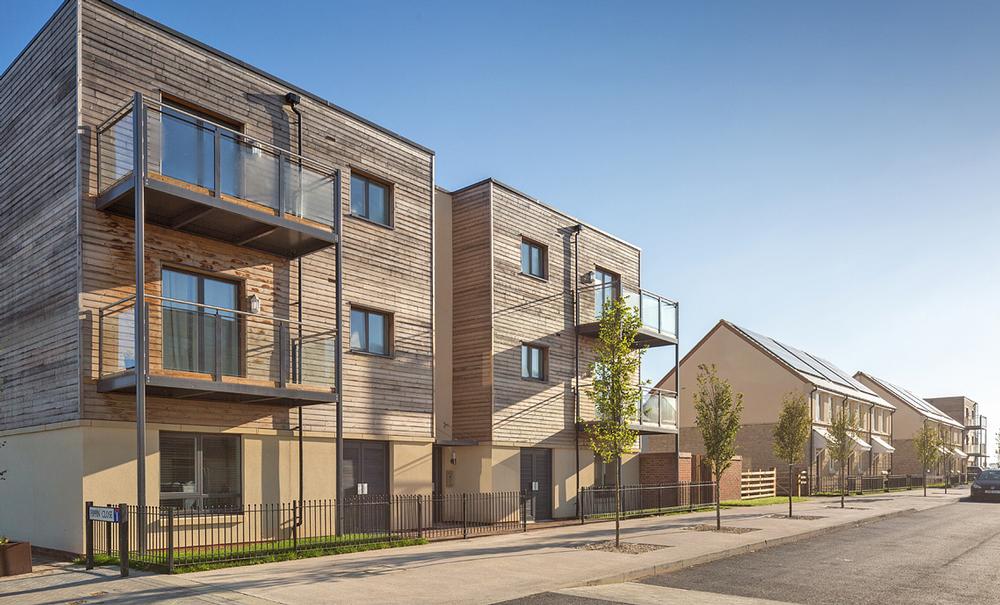
Cranbrook in Devon is one of the 10 Healthy New Town sites
It’s perhaps unsurprising that the National Health Service (NHS) has never got involved with building a town before. Coughs and colds have naturally taken precedence over homes and roads.
But there’s an increasing recognition that fixing people can only go so far in progressing public health. Instead, the NHS is seeking a more proactive, preventative approach to healthcare. The thinking goes that fewer people will need fixing if health is embedded more fundamentally into our lifestyles. And where better to embed it than the places we live? The Healthy New Towns initiative, which is being driven by the NHS, seeks to do just that. It will see 10 new towns designed around the healthy lifestyles of residents.
Making health a local business The Healthy New Towns scheme was launched in March 2016, with NHS chief executive Simon Stevens talking of an opportunity to ‘design out’ obesogenic environments, and ‘design in’ health and wellbeing. Expressions of interest had been sought the previous summer, resulting in a remarkable 114 responses from the likes of local authorities, housing associations and developers.
Responses were whittled down to 10 and “demonstrator sites” were chosen to be built across the country.
The developments range in size from 800 to 15,000 homes and there was no blueprint provided as to how they should be built. The developers of each site simply had to show an understanding of their own wellness priorities and provide rationales for radical new approaches to address them.
Ideas to spark wellbeing The proposed ideas for promoting healthy lifestyles at the various sites range from the obvious and practical – such as the provision of ample green space – to the more considered and involved, like building multidisciplinary health and wellness centres and designing their operations from the ground up to ensure people can be seen for multiple different, but related, appointments all on the same day. To enable people to see a doctor, for example, and then to get exercise prescription.
Other features include infrastructure for children to walk or cycle to school and to encourage play along the way, fast-food-free zones near schools and dementia-friendly street design. Each set of features reflects the unique health and wellness challenges that the different sites will be tackling.
Healthy place plans Perhaps the most notable of the demonstrator sites is Halton Lea – the first location to be chosen. Its “Halton Connected” concept will see health-focused ideas integrated into the new development with a view to supporting people of all ages. Amongst them are a mobile app that will reward users for walking by giving discounts at local shops, an urban obstacle course connecting sports facilities around the town and free bikes at new housing developments.
A community kitchen will serve healthy food to local schools and hospitals, as well as offering healthy cooking lessons for all residents.
Building a legacy Buoyed by the positive response to Healthy New Towns, the NHS is laying the groundwork for the scheme’s legacy. In the belief that housing developers and associations have a big part to play in shaping the health of new communities, it has assembled a network of 12 organisations to implement and promote the principles on which it is based. As the network grows, it’s hoped that the approach to building healthy new towns becomes a healthy habit within the industry.
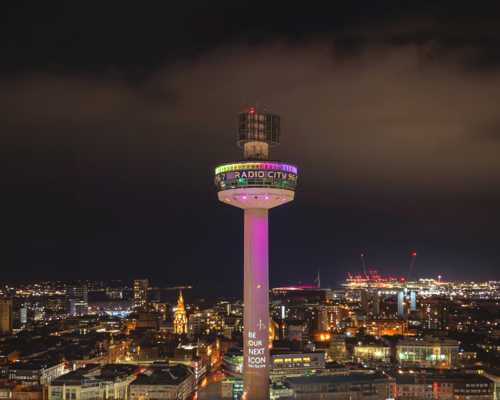
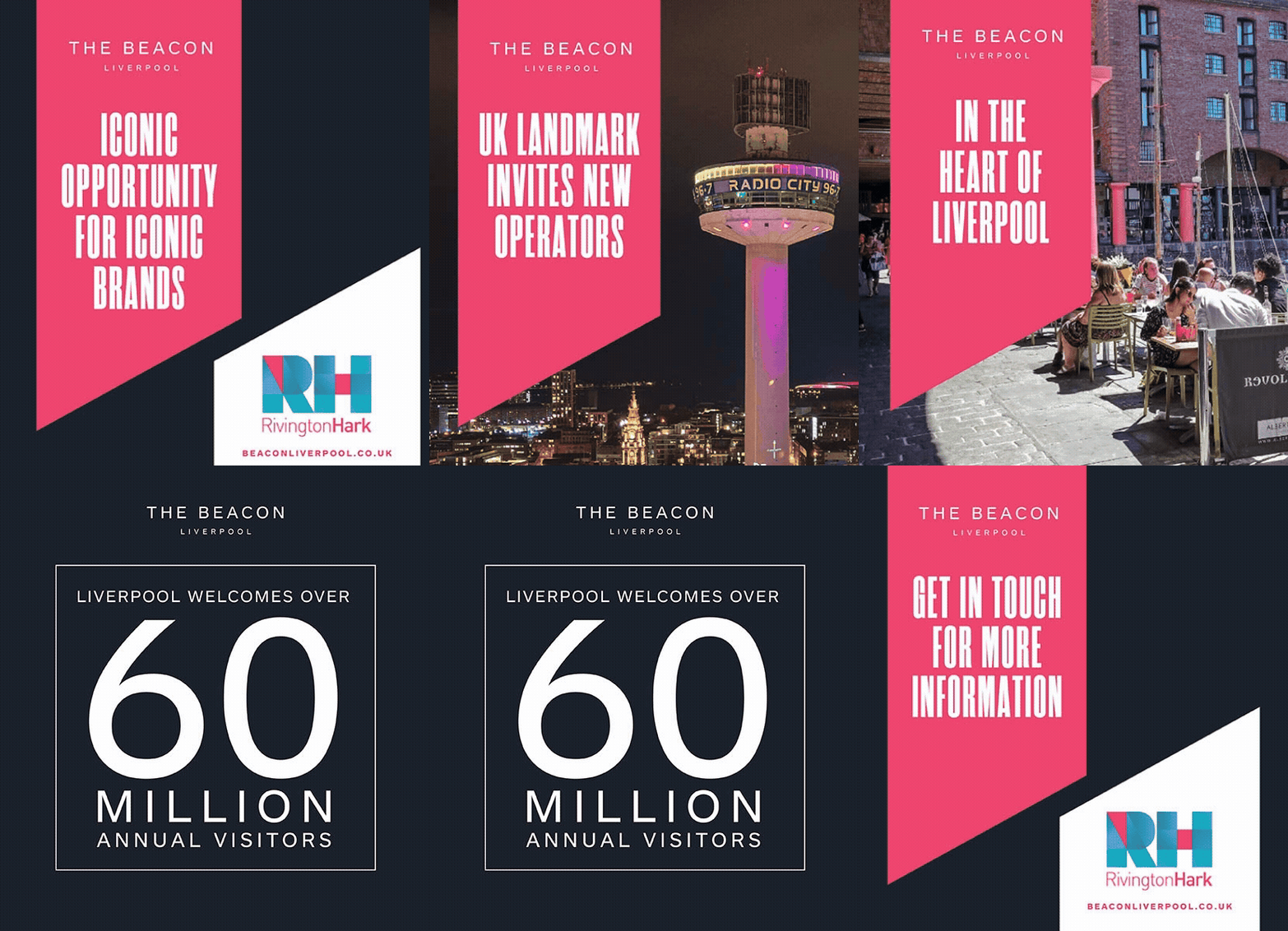
An opportunity to reimagine one of the UK’s most recognisable towers has been formally
opened by Rivington Hark, as St Johns Beacon invites operators and partners to shape its
next phase. [more...]
We know that where we live affects how healthy we are, but never before have they been prescribed quite like this. Stu Robarts walks the streets of the Healthy New Towns initiative to find out more about its prognosis
Cranbrook in Devon is one of the 10 Healthy New Town sites
It’s perhaps unsurprising that the National Health Service (NHS) has never got involved with building a town before. Coughs and colds have naturally taken precedence over homes and roads.
But there’s an increasing recognition that fixing people can only go so far in progressing public health. Instead, the NHS is seeking a more proactive, preventative approach to healthcare. The thinking goes that fewer people will need fixing if health is embedded more fundamentally into our lifestyles. And where better to embed it than the places we live? The Healthy New Towns initiative, which is being driven by the NHS, seeks to do just that. It will see 10 new towns designed around the healthy lifestyles of residents.
Making health a local business The Healthy New Towns scheme was launched in March 2016, with NHS chief executive Simon Stevens talking of an opportunity to ‘design out’ obesogenic environments, and ‘design in’ health and wellbeing. Expressions of interest had been sought the previous summer, resulting in a remarkable 114 responses from the likes of local authorities, housing associations and developers.
Responses were whittled down to 10 and “demonstrator sites” were chosen to be built across the country.
The developments range in size from 800 to 15,000 homes and there was no blueprint provided as to how they should be built. The developers of each site simply had to show an understanding of their own wellness priorities and provide rationales for radical new approaches to address them.
Ideas to spark wellbeing The proposed ideas for promoting healthy lifestyles at the various sites range from the obvious and practical – such as the provision of ample green space – to the more considered and involved, like building multidisciplinary health and wellness centres and designing their operations from the ground up to ensure people can be seen for multiple different, but related, appointments all on the same day. To enable people to see a doctor, for example, and then to get exercise prescription.
Other features include infrastructure for children to walk or cycle to school and to encourage play along the way, fast-food-free zones near schools and dementia-friendly street design. Each set of features reflects the unique health and wellness challenges that the different sites will be tackling.
Healthy place plans Perhaps the most notable of the demonstrator sites is Halton Lea – the first location to be chosen. Its “Halton Connected” concept will see health-focused ideas integrated into the new development with a view to supporting people of all ages. Amongst them are a mobile app that will reward users for walking by giving discounts at local shops, an urban obstacle course connecting sports facilities around the town and free bikes at new housing developments.
A community kitchen will serve healthy food to local schools and hospitals, as well as offering healthy cooking lessons for all residents.
Building a legacy Buoyed by the positive response to Healthy New Towns, the NHS is laying the groundwork for the scheme’s legacy. In the belief that housing developers and associations have a big part to play in shaping the health of new communities, it has assembled a network of 12 organisations to implement and promote the principles on which it is based. As the network grows, it’s hoped that the approach to building healthy new towns becomes a healthy habit within the industry.
A new immersive attraction designed to transport visitors into the final hours of ancient Pompeii
is preparing to open near the world-famous archaeological site in southern Italy.
Experience design company, BRC Imagination Arts, has completed a transition that sees founder
Bob Rogers pass ownership of the business to four long-serving senior executives, while
remaining actively involved with the company.
Movie Park Germany has opened a new Paramount Pictures-themed attraction as part of its 30th
anniversary celebrations, using immersive storytelling and adaptive reuse to reinforce the park’s
longstanding “Hollywood in Germany” positioning.
Therme Manchester’s 28-acre development, which will include interconnected glass pavilions
that measure 65,000sq m, will be the largest bathing and wellbeing attraction in the world once
complete, according to prof David Russell, CEO of Therme UK.
Efteling has opened Hooghmoed, a new family drop tower designed to broaden the appeal of its
recently launched Sirene Island themed area and introduce younger visitors to thrill attractions.
A proposed Puy du Fou development near Bicester and Universal Destinations and Experiences’
planned resort in Bedford are emerging as part of a wider transformation of the Oxford–
Cambridge Growth Corridor into a major centre for UK leisure and tourism inv
Shedd Aquarium has opened the Immersion Theater developed in partnership with SimEx-
Iwerks, as part of a wider strategy to enhance the guest experience and create additional
revenue opportunities.
The UK government has announced a temporary reduction in VAT on visitor attractions and
children’s meals as part of a summer cost-of-living support package designed to stimulate the
visitor economy and encourage family days out.
As designer Yinka Ilori prepares for his first solo gallery show in London, he speaks exclusively
to CLADmag about his mission to spread joy, the power of play, and his bold approach to using
colour (including the colours you won’t see in his work).
The government of Thailand is exploring plans for a THB300bn (£6.3bn, US$8.3bn)
entertainment complex in the country’s Eastern Economic Corridor (EEC), with officials
proposing a large-scale theme park and sports destination as part of a broader tourism and
economic development strategy.
An opportunity to reimagine one of the UK’s most recognisable towers has been formally
opened by Rivington Hark, as St Johns Beacon invites operators and partners to shape its
next phase. [more...]