With knife crime growing in the UK, two entrepreneurs decided a new approach was needed. Ben Wintour, co-founder of Steel Warriors, speaks to Kath Hudson about turning confiscated knives into street gyms for callisthenics
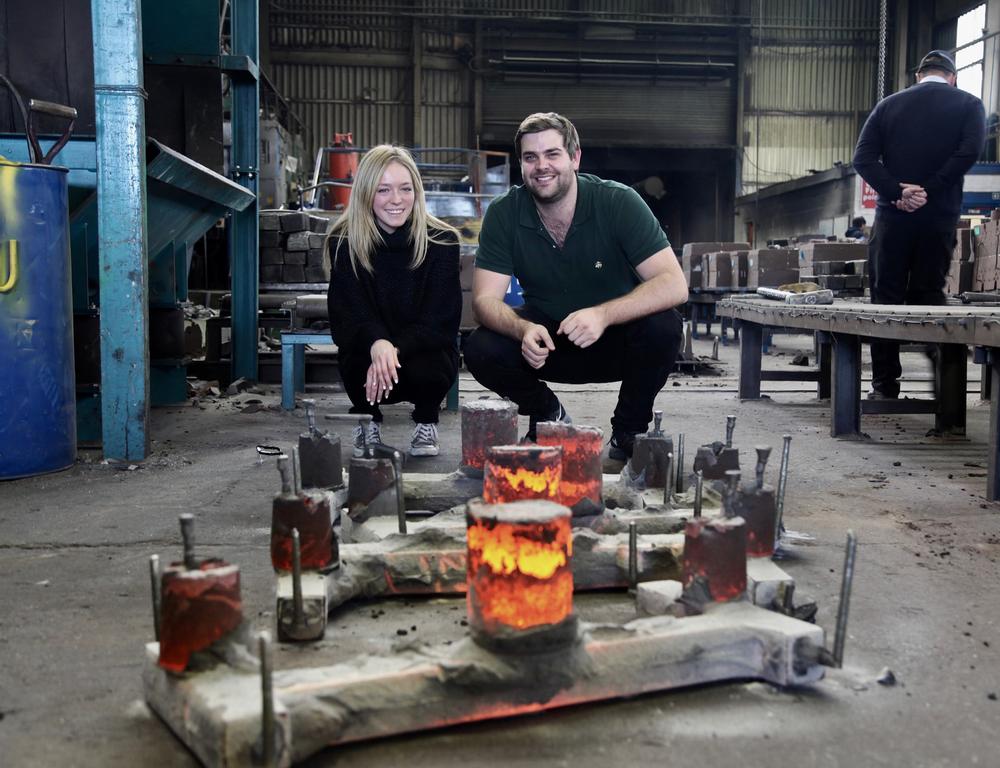
Pia Fontes and Ben Wintour are fighting knife crime with their charity Steel Warriors
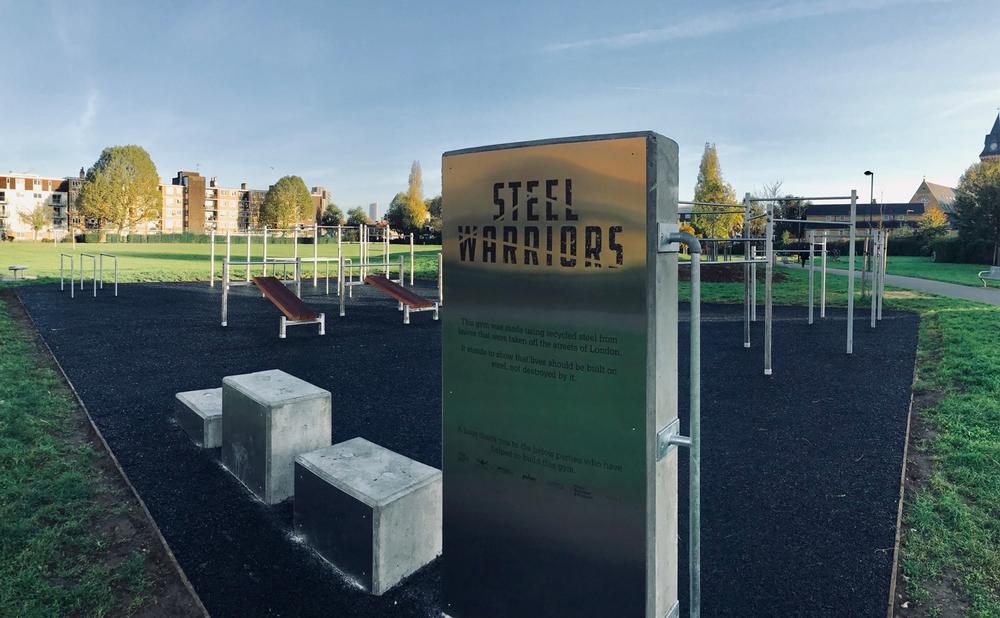
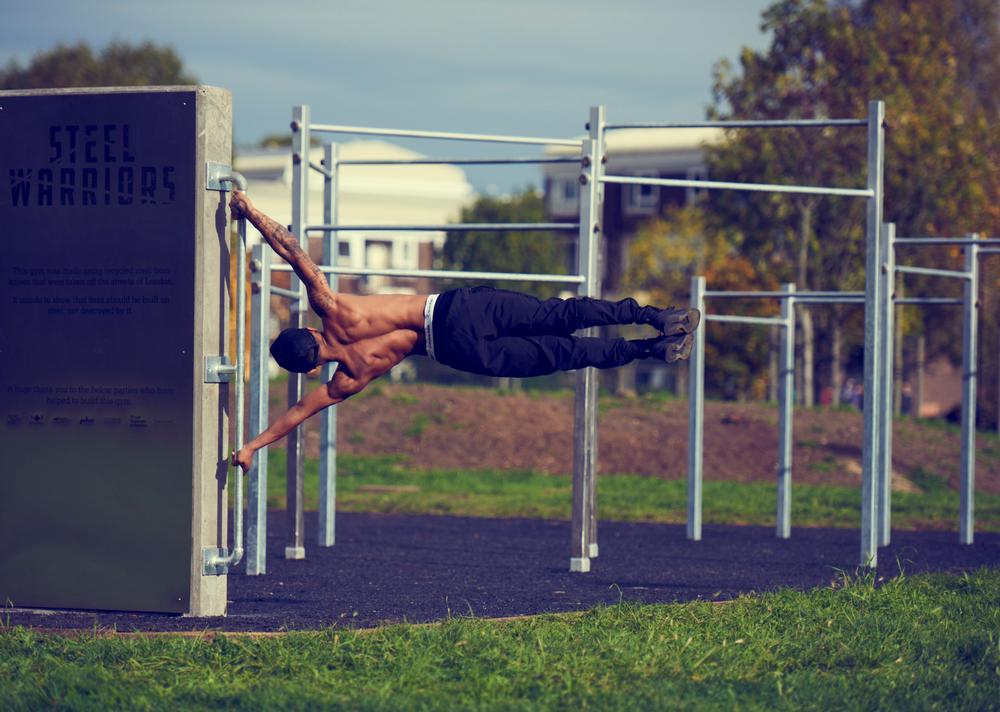
Our sign says ‘This gym has been built using knives taken off the street, to show that life should be built on steel, not destroyed by it’,” says Ben Wintour, co-founder of Steel Warriors, a new charity taking a fresh approach to fighting knife crime.
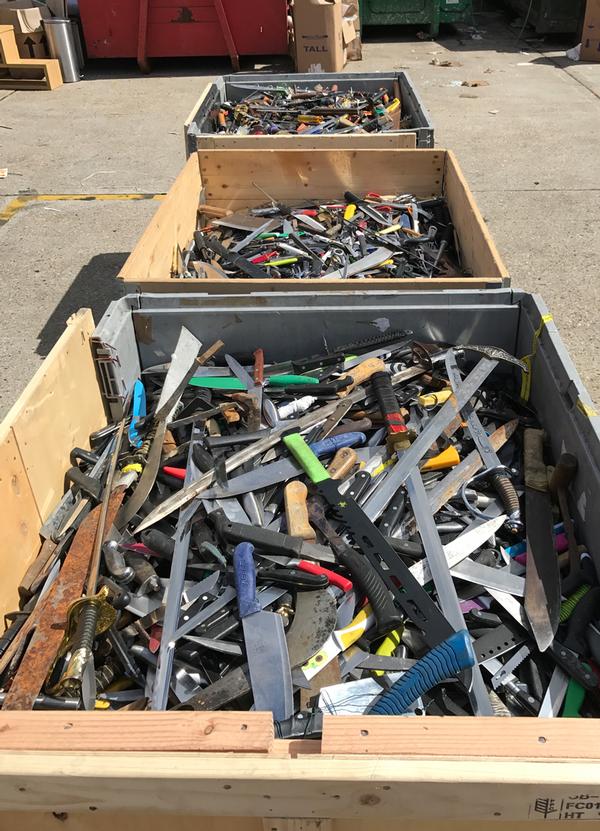
Situated in Langdon Park, in the London borough of Tower Hamlets, Steel Warriors is a callisthenics gym constructed from two tonnes of recycled knives taken off the streets. Wintour aims for this to be the first of many sites around the UK and doesn’t plan to stop until there are no knives left to recycle. “When there’s no more steel to build with we’ll have done our work,” he says.
This seems an unlikely career deviation for the co-founders, Ben Wintour and Pia Fontes, who previously worked together in PR, but Wintour says the inspiration came from constantly reading about crime figures in the newspapers and realising that a fresh approach was needed.
“Working in PR, I had to read the newspapers every day and became concerned about the issue of knife crime. I read a shocking insight that a ton of knives are being confiscated every month in London alone and I wanted to do something about it,” he says. “Looking at previous campaigns, we saw they were well meaning, but not that effective. The two central messages were that if you carried a knife you were likely to either get locked up, or else hurt or killed. Neither of these messages resonated with the audience, or were acting as a deterrent.”
Wintour and Fontes decided that a whole new approach was needed, where teenagers could be empowered, so that they no longer felt they had to have a knife for protection. “We looked at the reasons why teenagers were carrying knives and found that one was for protection, and the other was to flex their muscle,” he says. “So we looked at finding alternative ways to meet these needs. Callisthenics is becoming quite a thing in prisons and seemed a good place to start.”
The duo had a number of boxes they wanted to tick. Firstly, they wanted to provide a place where teenagers could build both their bodies and confidence. Since many of those who carry knives can’t afford gym membership, they wanted it to be free. They also wanted it to be a place where a community could be built, the topic of knife crime could be discussed and steps taken towards prevention for all involved.
Facing the challenges Having come up with a great idea, there were then a number of logistical challenges to overcome: getting buy-in from the police, finding a site, finding people who could turn knives into a gym, designing the gym and paying for it all.
“It wasn’t an area I was familiar with, so I had to make lots of calls to steel fabricators, gym builders and engineers,” says Wintour. “The idea started to take off when Heyne Tillett Steel came on board – they had worked on projects at The Science Museum, liked the sound of what we were doing, and were prepared to do it on a pro bono basis.”
It took a little more persusasion to get the police involved, as they wanted a strong case that the project would work. However, once they came on board they were a supportive partner. Many of the companies involved did so on a pro bono basis. “We made it clear from the start that we didn’t have the means to pay, as there was no funding in place, but with the support of our partners we managed to get the first gym up and running virtually for free,” says Wintour. “There were a few items we couldn’t source free, including the rubber matting. These costs were underwritten by a benefactor.”
A location was found next to a youth centre called Spotlight in Tower Hamlets. The borough has seen an 8 per cent rise in knife crime in the last year and is one of London’s most deprived areas. The site has a high footfall, but isn’t part of gang territory, making it a more neutral location.
In terms of programming, the equipment features a snapcode that people can scan to take them to a YouTube channel featuring online training which explains how to use it.
deterring loitering After a discussion, the team decided against having benches around, as they don’t want people to loiter. “We had a conversation about offering free wifi, but concerns were raised that this might make it a place to deal drugs,” says Wintour.
“One of our ambassadors is a former drug dealer who has turned his life around,” she explains. “Drug dealers are likely to carry knives and might benefit from being in a place that is about transforming attitudes, but although this is something we want to encourage, we also want the space to feel unthreatening and unintimidating, so lots of people will come. Hence the decision to keep it wifi free.”
Wintour says it’s encouraging to see the local school making use of it, as well as women from the local Bengali community. A few PTs have also got on board and it’s attracted the attention of gym tourists from further afield.
The success of this site will be key to taking plans forward to develop more around the country. Wintour and Fontes are now working with the police to look at crime figures and Snapchat to see how many visitors come to the location.
Steel Warriors is now a registered charity and the team is looking at ways to raise funds for a roll-out. “Our partners have been very generous, but we can’t expect them to continue to make a loss, so we’re about to start a fundraising push,” says Wintour. “We’re hoping to get as many gyms off the ground as possible. At the moment the first one is making an impact on a local level, but we want to make a real change.”
As well as more sites in London, the cities of Birmingham, Liverpool, Leeds and Manchester are on the list and Wintour is appealing to the health and fitness sector for help. “Lots of young people can’t afford gym membership, but it would be fantastic if gyms could give back to their communities by sponsoring gyms that serve the dual purpose of mobilising hard to reach groups and taking a stand against knife crime.”
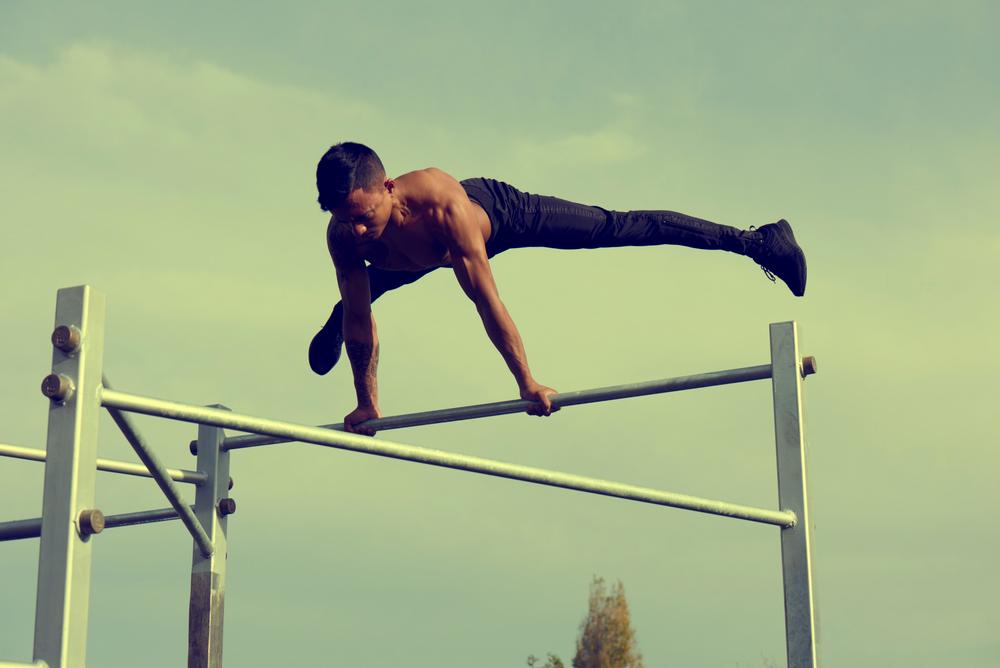
Callisthenics means beautiful strength, originating from the Greek words kallos (beauty) and sthenos (strength). It’s a discipline that uses body weight training to build up core strength.
The aim of callisthenics is to increase strength and flexibility through pushing, pulling and lifting your own body weight. According to statista.com, from 2006 to 2016 the number of people participating in callisthenics in the US rose from 7.12m to 25.11m.
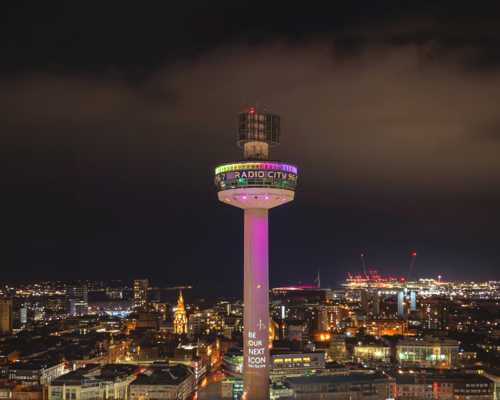
An opportunity to reimagine one of the UK’s most recognisable towers has been formally
opened by Rivington Hark, as St Johns Beacon invites operators and partners to shape its
next phase. [more...]
With knife crime growing in the UK, two entrepreneurs decided a new approach was needed. Ben Wintour, co-founder of Steel Warriors, speaks to Kath Hudson about turning confiscated knives into street gyms for callisthenics
Pia Fontes and Ben Wintour are fighting knife crime with their charity Steel Warriors
Our sign says ‘This gym has been built using knives taken off the street, to show that life should be built on steel, not destroyed by it’,” says Ben Wintour, co-founder of Steel Warriors, a new charity taking a fresh approach to fighting knife crime.
Situated in Langdon Park, in the London borough of Tower Hamlets, Steel Warriors is a callisthenics gym constructed from two tonnes of recycled knives taken off the streets. Wintour aims for this to be the first of many sites around the UK and doesn’t plan to stop until there are no knives left to recycle. “When there’s no more steel to build with we’ll have done our work,” he says.
This seems an unlikely career deviation for the co-founders, Ben Wintour and Pia Fontes, who previously worked together in PR, but Wintour says the inspiration came from constantly reading about crime figures in the newspapers and realising that a fresh approach was needed.
“Working in PR, I had to read the newspapers every day and became concerned about the issue of knife crime. I read a shocking insight that a ton of knives are being confiscated every month in London alone and I wanted to do something about it,” he says. “Looking at previous campaigns, we saw they were well meaning, but not that effective. The two central messages were that if you carried a knife you were likely to either get locked up, or else hurt or killed. Neither of these messages resonated with the audience, or were acting as a deterrent.”
Wintour and Fontes decided that a whole new approach was needed, where teenagers could be empowered, so that they no longer felt they had to have a knife for protection. “We looked at the reasons why teenagers were carrying knives and found that one was for protection, and the other was to flex their muscle,” he says. “So we looked at finding alternative ways to meet these needs. Callisthenics is becoming quite a thing in prisons and seemed a good place to start.”
The duo had a number of boxes they wanted to tick. Firstly, they wanted to provide a place where teenagers could build both their bodies and confidence. Since many of those who carry knives can’t afford gym membership, they wanted it to be free. They also wanted it to be a place where a community could be built, the topic of knife crime could be discussed and steps taken towards prevention for all involved.
Facing the challenges Having come up with a great idea, there were then a number of logistical challenges to overcome: getting buy-in from the police, finding a site, finding people who could turn knives into a gym, designing the gym and paying for it all.
“It wasn’t an area I was familiar with, so I had to make lots of calls to steel fabricators, gym builders and engineers,” says Wintour. “The idea started to take off when Heyne Tillett Steel came on board – they had worked on projects at The Science Museum, liked the sound of what we were doing, and were prepared to do it on a pro bono basis.”
It took a little more persusasion to get the police involved, as they wanted a strong case that the project would work. However, once they came on board they were a supportive partner. Many of the companies involved did so on a pro bono basis. “We made it clear from the start that we didn’t have the means to pay, as there was no funding in place, but with the support of our partners we managed to get the first gym up and running virtually for free,” says Wintour. “There were a few items we couldn’t source free, including the rubber matting. These costs were underwritten by a benefactor.”
A location was found next to a youth centre called Spotlight in Tower Hamlets. The borough has seen an 8 per cent rise in knife crime in the last year and is one of London’s most deprived areas. The site has a high footfall, but isn’t part of gang territory, making it a more neutral location.
In terms of programming, the equipment features a snapcode that people can scan to take them to a YouTube channel featuring online training which explains how to use it.
deterring loitering After a discussion, the team decided against having benches around, as they don’t want people to loiter. “We had a conversation about offering free wifi, but concerns were raised that this might make it a place to deal drugs,” says Wintour.
“One of our ambassadors is a former drug dealer who has turned his life around,” she explains. “Drug dealers are likely to carry knives and might benefit from being in a place that is about transforming attitudes, but although this is something we want to encourage, we also want the space to feel unthreatening and unintimidating, so lots of people will come. Hence the decision to keep it wifi free.”
Wintour says it’s encouraging to see the local school making use of it, as well as women from the local Bengali community. A few PTs have also got on board and it’s attracted the attention of gym tourists from further afield.
The success of this site will be key to taking plans forward to develop more around the country. Wintour and Fontes are now working with the police to look at crime figures and Snapchat to see how many visitors come to the location.
Steel Warriors is now a registered charity and the team is looking at ways to raise funds for a roll-out. “Our partners have been very generous, but we can’t expect them to continue to make a loss, so we’re about to start a fundraising push,” says Wintour. “We’re hoping to get as many gyms off the ground as possible. At the moment the first one is making an impact on a local level, but we want to make a real change.”
As well as more sites in London, the cities of Birmingham, Liverpool, Leeds and Manchester are on the list and Wintour is appealing to the health and fitness sector for help. “Lots of young people can’t afford gym membership, but it would be fantastic if gyms could give back to their communities by sponsoring gyms that serve the dual purpose of mobilising hard to reach groups and taking a stand against knife crime.”
Callisthenics means beautiful strength, originating from the Greek words kallos (beauty) and sthenos (strength). It’s a discipline that uses body weight training to build up core strength.
The aim of callisthenics is to increase strength and flexibility through pushing, pulling and lifting your own body weight. According to statista.com, from 2006 to 2016 the number of people participating in callisthenics in the US rose from 7.12m to 25.11m.
A new immersive attraction designed to transport visitors into the final hours of ancient Pompeii
is preparing to open near the world-famous archaeological site in southern Italy.
Experience design company, BRC Imagination Arts, has completed a transition that sees founder
Bob Rogers pass ownership of the business to four long-serving senior executives, while
remaining actively involved with the company.
Movie Park Germany has opened a new Paramount Pictures-themed attraction as part of its 30th
anniversary celebrations, using immersive storytelling and adaptive reuse to reinforce the park’s
longstanding “Hollywood in Germany” positioning.
Therme Manchester’s 28-acre development, which will include interconnected glass pavilions
that measure 65,000sq m, will be the largest bathing and wellbeing attraction in the world once
complete, according to prof David Russell, CEO of Therme UK.
Efteling has opened Hooghmoed, a new family drop tower designed to broaden the appeal of its
recently launched Sirene Island themed area and introduce younger visitors to thrill attractions.
A proposed Puy du Fou development near Bicester and Universal Destinations and Experiences’
planned resort in Bedford are emerging as part of a wider transformation of the Oxford–
Cambridge Growth Corridor into a major centre for UK leisure and tourism inv
Shedd Aquarium has opened the Immersion Theater developed in partnership with SimEx-
Iwerks, as part of a wider strategy to enhance the guest experience and create additional
revenue opportunities.
The UK government has announced a temporary reduction in VAT on visitor attractions and
children’s meals as part of a summer cost-of-living support package designed to stimulate the
visitor economy and encourage family days out.
As designer Yinka Ilori prepares for his first solo gallery show in London, he speaks exclusively
to CLADmag about his mission to spread joy, the power of play, and his bold approach to using
colour (including the colours you won’t see in his work).
The government of Thailand is exploring plans for a THB300bn (£6.3bn, US$8.3bn)
entertainment complex in the country’s Eastern Economic Corridor (EEC), with officials
proposing a large-scale theme park and sports destination as part of a broader tourism and
economic development strategy.
An opportunity to reimagine one of the UK’s most recognisable towers has been formally
opened by Rivington Hark, as St Johns Beacon invites operators and partners to shape its
next phase. [more...]