The aim of the School Games is to create an Olympic-style event to put competitive sport back at the heart of schools. Six years on, is it achieving its mission? Youth Sports Trust head of sport, Emily Reynolds talks to Kath Hudson
By Kath Hudson | Published in Sports Management Mar Apr 2017 issue 130
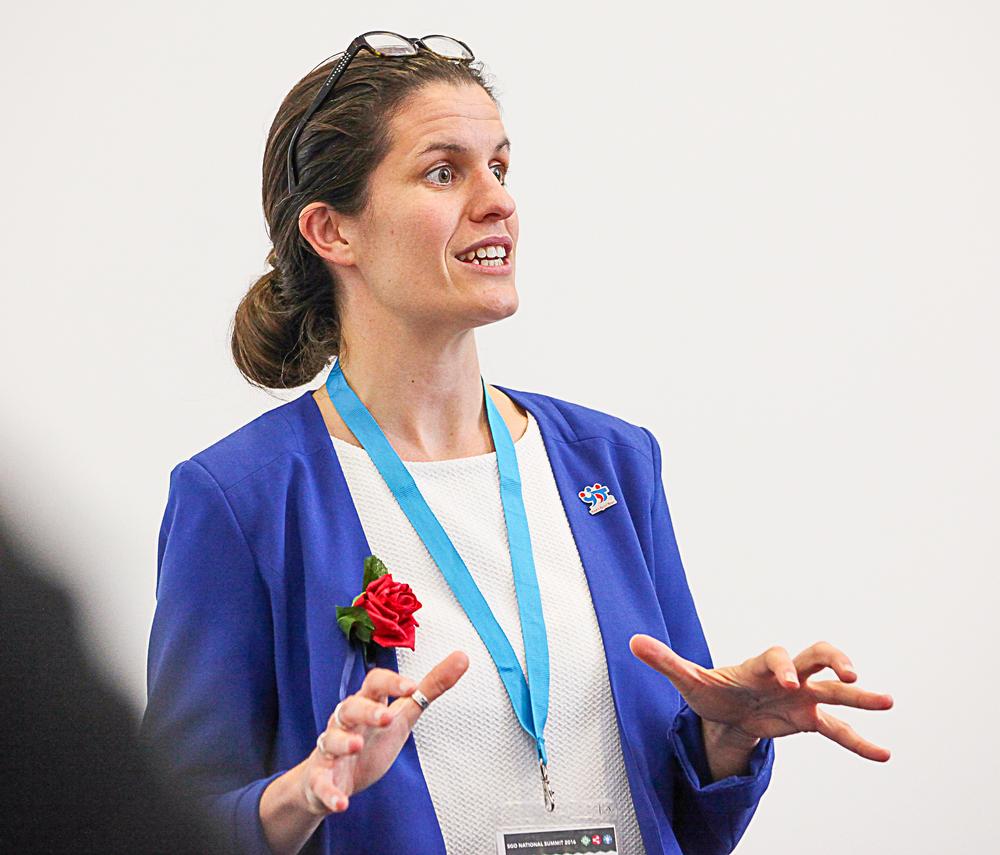
Emily Reynolds, Youth Sports Trust head of sport says the Sports Games is still succeeding in engaging children
In the run up to the London 2012 Olympics, when the Department of Culture, Media and Sport was keenly focused on legacy and “inspiring a generation”, the School Games were created to bring competition back into school sport, broaden participation at grassroots and create another talent pathway to spot potential international athletes.
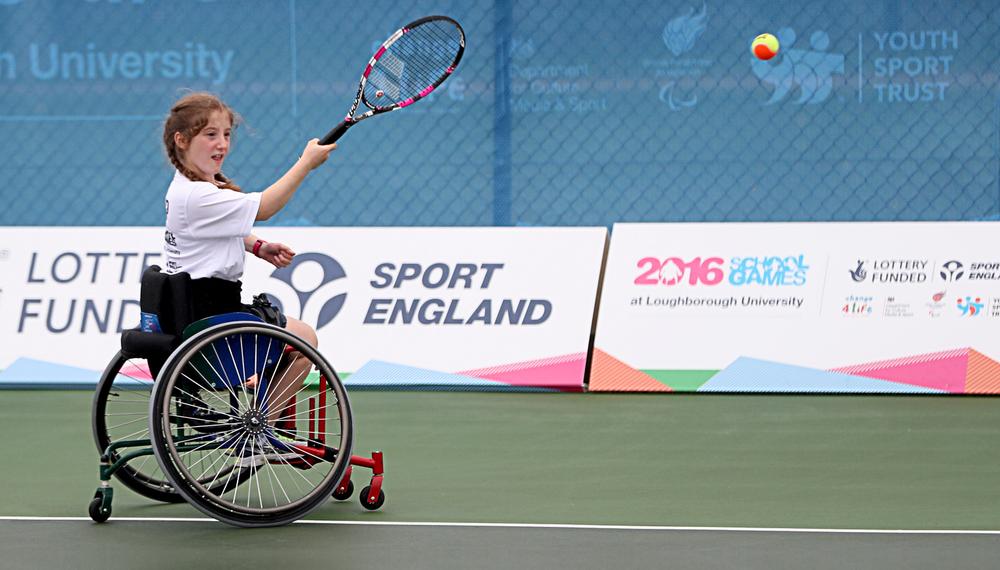
“The School Games are a bottom-up approach, to drive an increase in participation and a greater diversity in school sport,” says Emily Reynolds, head of sport at the Youth Sports Trust, which is the delivery partner for the School Games. “They aim to inspire a breadth of opportunity, and hook more children in, with both traditional and non-traditional sports. Another main driver was to provide a competitive opportunity for young people with special educational needs and disabilities.”
There are four levels: level one is intra -school competition; level two is inter-school and level three is a county event, run by a Local Organising Committee. These three levels run on from each other, with children/schools qualifying through the levels. However, level four, the National Finals, features fewer sports and just 1,500 children who have been picked through community sports clubs affiliated to national governing bodies. Some elite international athletes are already coming via this route.
Backed by the DCMS, DH and Sport England, in 2011 the Youth Sports Trust appointed 450 School Games Organisers (SGOs) to facilitate competitions, as well as engage with and support schools in improving their sporting offer and delivering the Department of Health’s Change 4 Life programme. Participating schools have access to tool kits and advice in introducing new sports, and are encouraged to sign up to the School Games Mark. This is a Kitemark style standard, which benchmarks each school’s performance in inclusivity and fostering the spirit of the Games. There are three levels: bronze, silver and gold.
Redefining competition However, the School Games aren’t just about creating more competitions, and achieving the gold standard is not just about having the most successful children engaged. Schools need to embrace the process to get the most out of it, which might mean leaving the sporty kids at school and taking the less physically able to an event.
“It is competition with a new purpose, with the School Games’ values of self belief, passion, respect and teamwork at the core,” says Reynolds. “Schools are being asked to be more inclusive, which means having to choose which events they will field the A team to try and win trophies, and which events are simply about giving all children the chance to participate in sport.”
This approach has also led to schools introducing more sports to cater for the motivations of different young people. Handball, dodgeball, American football and dance have all grown in popularity. Another way that secondary schools can achieve the higher School Games Mark is by involving children in the decision-making process, giving them the chance to help run the competitions and inform the activities.
The involvement of the students has shaped the way the School Games has evolved and has led to the introduction of sports which reflect their interests, resulting in increased participation. For example, surfing featured in the level three (county level) competition in Cornwall. Through Sport England funding, the Youth Sports Trust is working with new sports as part of the Schools Sport Hubs programme. Sports such as kiteboarding, scooting, skateboarding and BMX, may succeed in being included in the School Games.
“Schools have been required to embrace more sports,” says Reynolds. “There are 42 different sports to choose from, and for each of these the national governing bodies have come on board to create competition cards on how best to engage with young people, run events and set up a competition structure. There are plenty of resources and easily accessible tools to bring curricular and extra curricular opportunities to fruition and make activities more palatable for less able children, or to inspire them through sports they haven’t experienced before.”
It sounds great, but is this putting extra pressure on hard-pressed teachers? According to Reynolds, the response from schools has been overwhelmingly positive, with some 10,000 having now signed up to the School Games Mark and the number growing each year. “This is a very positive benchmark for us in terms of the impact the Games have had and schools’ desire to be engaged,” she says. “Schools really want to be recognised for their competitive sport offer, but also the progress they have made in applying for the School Games Mark.”
Thanks to the Primary PE Premium, there has been an injection of cash into primary school sport – each school gets around £9,000 a year – and this has generally removed the funding barriers. However, other barriers do remain. Reynolds, who began as an SGO, says that staff capacity, confidence, skills and knowledge in introducing new sports are commonly seen as barriers in some schools. “The SGOs are there to support schools in this respect, and bring competition cards and toolkits to life, but sometimes staffing remains a problem,” she says. “For example, in some cases it may be difficult to spare staff to accompany children to inter-school competitions.”
Sport England review Sporting Futures, released in December 2015, recognised the contribution that the School Games had made, but also said the time was right to review the priorities. A Sport England task force released its review in July, which was positive, stating that the School Games are well placed to make a strong contribution to delivering the strategic outcomes of Sporting Futures.
Going forward, in order to maximise its impact, the taskforce called for the School Games to engage even more children in competitive sport by engendering a sense of competence, enjoyment and also avoiding negative experiences of competitive sport.
There are plans to use digital technology to reach out to those who see themselves as less sporting and to extend the opportunities for personal best challenges, in the way that parkrun and Race for Life do. It was also suggested that case studies are shared from the most successful county events to inspire sustained participation.
“The review showed a year on year growth in participation, both in the number of schools and children,” says Reynolds. “The breadth of the Games and the sporting opportunities offered was also regarded as positive. Now the Youth Sports Trust is looking at how to take on board the recommendations going forward, in order to further improve the reach and experience that the School Games offer.”
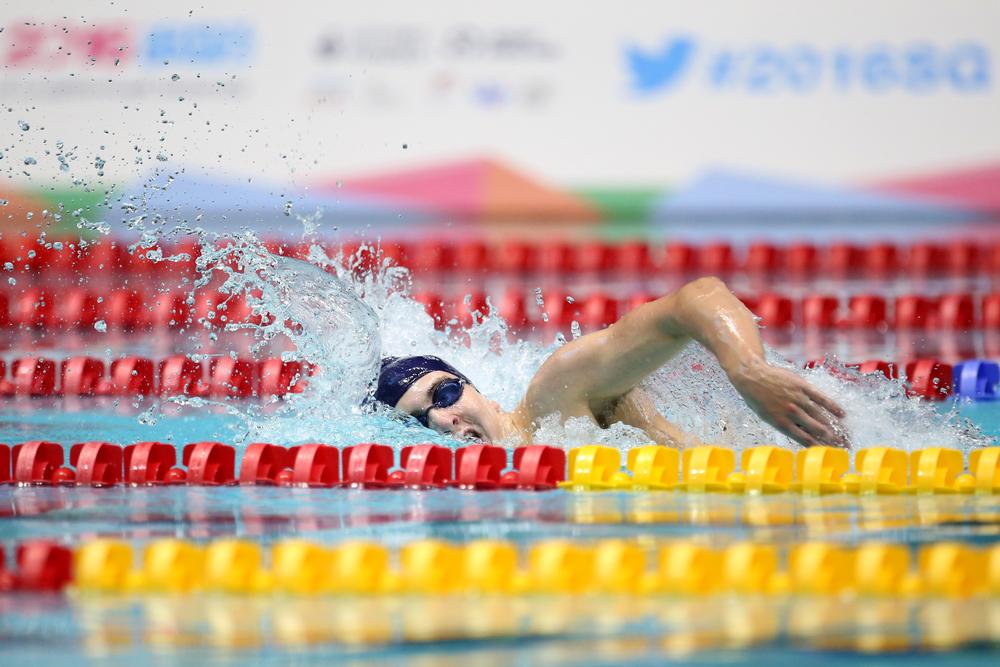
The School Games provide the scope for both facility operators and community clubs to engage with schools and to get more children active. The review has called for further connectivity with community partners, for example, asking sports clubs to run taster sessions at schools. It also noted that having access to facilities, such as swimming pools, is very important for allowing competitions to go ahead.
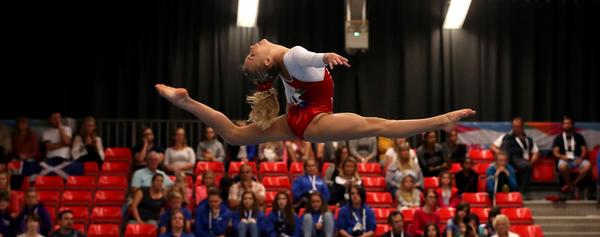
As well as helping to diversify school sport, The School Games are acting as a springboard for talented individuals: paralympic gold medallists Ellie Simmonds, Hannah Cockroft and Jonnie Peacock, as well as GB sprinter Adam Gemili and heptathlete Katrina Johnson-Thompson, have come through the system.
One of Team GB’s breakthrough stars at Rio 2016, gymnast Max Whitlock, is a School Games alumni and says the events are a great training ground for elite athletes. “Going to an Olympic, Paralympic or Commonwealth Games is an incredible experience but it can also be a daunting one. The School Games provides young athletes with a taste of what a major multi-sport event is like and that can only help them in their future sporting careers,” he says.
An opportunity to reimagine one of the UK’s most recognisable towers has been formally
opened by Rivington Hark, as St Johns Beacon invites operators and partners to shape its
next phase. [more...]
The aim of the School Games is to create an Olympic-style event to put competitive sport back at the heart of schools. Six years on, is it achieving its mission? Youth Sports Trust head of sport, Emily Reynolds talks to Kath Hudson
By Kath Hudson | Published in Sports Management Mar Apr 2017 issue 130
Emily Reynolds, Youth Sports Trust head of sport says the Sports Games is still succeeding in engaging children
In the run up to the London 2012 Olympics, when the Department of Culture, Media and Sport was keenly focused on legacy and “inspiring a generation”, the School Games were created to bring competition back into school sport, broaden participation at grassroots and create another talent pathway to spot potential international athletes.
“The School Games are a bottom-up approach, to drive an increase in participation and a greater diversity in school sport,” says Emily Reynolds, head of sport at the Youth Sports Trust, which is the delivery partner for the School Games. “They aim to inspire a breadth of opportunity, and hook more children in, with both traditional and non-traditional sports. Another main driver was to provide a competitive opportunity for young people with special educational needs and disabilities.”
There are four levels: level one is intra -school competition; level two is inter-school and level three is a county event, run by a Local Organising Committee. These three levels run on from each other, with children/schools qualifying through the levels. However, level four, the National Finals, features fewer sports and just 1,500 children who have been picked through community sports clubs affiliated to national governing bodies. Some elite international athletes are already coming via this route.
Backed by the DCMS, DH and Sport England, in 2011 the Youth Sports Trust appointed 450 School Games Organisers (SGOs) to facilitate competitions, as well as engage with and support schools in improving their sporting offer and delivering the Department of Health’s Change 4 Life programme. Participating schools have access to tool kits and advice in introducing new sports, and are encouraged to sign up to the School Games Mark. This is a Kitemark style standard, which benchmarks each school’s performance in inclusivity and fostering the spirit of the Games. There are three levels: bronze, silver and gold.
Redefining competition However, the School Games aren’t just about creating more competitions, and achieving the gold standard is not just about having the most successful children engaged. Schools need to embrace the process to get the most out of it, which might mean leaving the sporty kids at school and taking the less physically able to an event.
“It is competition with a new purpose, with the School Games’ values of self belief, passion, respect and teamwork at the core,” says Reynolds. “Schools are being asked to be more inclusive, which means having to choose which events they will field the A team to try and win trophies, and which events are simply about giving all children the chance to participate in sport.”
This approach has also led to schools introducing more sports to cater for the motivations of different young people. Handball, dodgeball, American football and dance have all grown in popularity. Another way that secondary schools can achieve the higher School Games Mark is by involving children in the decision-making process, giving them the chance to help run the competitions and inform the activities.
The involvement of the students has shaped the way the School Games has evolved and has led to the introduction of sports which reflect their interests, resulting in increased participation. For example, surfing featured in the level three (county level) competition in Cornwall. Through Sport England funding, the Youth Sports Trust is working with new sports as part of the Schools Sport Hubs programme. Sports such as kiteboarding, scooting, skateboarding and BMX, may succeed in being included in the School Games.
“Schools have been required to embrace more sports,” says Reynolds. “There are 42 different sports to choose from, and for each of these the national governing bodies have come on board to create competition cards on how best to engage with young people, run events and set up a competition structure. There are plenty of resources and easily accessible tools to bring curricular and extra curricular opportunities to fruition and make activities more palatable for less able children, or to inspire them through sports they haven’t experienced before.”
It sounds great, but is this putting extra pressure on hard-pressed teachers? According to Reynolds, the response from schools has been overwhelmingly positive, with some 10,000 having now signed up to the School Games Mark and the number growing each year. “This is a very positive benchmark for us in terms of the impact the Games have had and schools’ desire to be engaged,” she says. “Schools really want to be recognised for their competitive sport offer, but also the progress they have made in applying for the School Games Mark.”
Thanks to the Primary PE Premium, there has been an injection of cash into primary school sport – each school gets around £9,000 a year – and this has generally removed the funding barriers. However, other barriers do remain. Reynolds, who began as an SGO, says that staff capacity, confidence, skills and knowledge in introducing new sports are commonly seen as barriers in some schools. “The SGOs are there to support schools in this respect, and bring competition cards and toolkits to life, but sometimes staffing remains a problem,” she says. “For example, in some cases it may be difficult to spare staff to accompany children to inter-school competitions.”
Sport England review Sporting Futures, released in December 2015, recognised the contribution that the School Games had made, but also said the time was right to review the priorities. A Sport England task force released its review in July, which was positive, stating that the School Games are well placed to make a strong contribution to delivering the strategic outcomes of Sporting Futures.
Going forward, in order to maximise its impact, the taskforce called for the School Games to engage even more children in competitive sport by engendering a sense of competence, enjoyment and also avoiding negative experiences of competitive sport.
There are plans to use digital technology to reach out to those who see themselves as less sporting and to extend the opportunities for personal best challenges, in the way that parkrun and Race for Life do. It was also suggested that case studies are shared from the most successful county events to inspire sustained participation.
“The review showed a year on year growth in participation, both in the number of schools and children,” says Reynolds. “The breadth of the Games and the sporting opportunities offered was also regarded as positive. Now the Youth Sports Trust is looking at how to take on board the recommendations going forward, in order to further improve the reach and experience that the School Games offer.”
The School Games provide the scope for both facility operators and community clubs to engage with schools and to get more children active. The review has called for further connectivity with community partners, for example, asking sports clubs to run taster sessions at schools. It also noted that having access to facilities, such as swimming pools, is very important for allowing competitions to go ahead.
As well as helping to diversify school sport, The School Games are acting as a springboard for talented individuals: paralympic gold medallists Ellie Simmonds, Hannah Cockroft and Jonnie Peacock, as well as GB sprinter Adam Gemili and heptathlete Katrina Johnson-Thompson, have come through the system.
One of Team GB’s breakthrough stars at Rio 2016, gymnast Max Whitlock, is a School Games alumni and says the events are a great training ground for elite athletes. “Going to an Olympic, Paralympic or Commonwealth Games is an incredible experience but it can also be a daunting one. The School Games provides young athletes with a taste of what a major multi-sport event is like and that can only help them in their future sporting careers,” he says.
A new immersive attraction designed to transport visitors into the final hours of ancient Pompeii
is preparing to open near the world-famous archaeological site in southern Italy.
Experience design company, BRC Imagination Arts, has completed a transition that sees founder
Bob Rogers pass ownership of the business to four long-serving senior executives, while
remaining actively involved with the company.
Movie Park Germany has opened a new Paramount Pictures-themed attraction as part of its 30th
anniversary celebrations, using immersive storytelling and adaptive reuse to reinforce the park’s
longstanding “Hollywood in Germany” positioning.
Therme Manchester’s 28-acre development, which will include interconnected glass pavilions
that measure 65,000sq m, will be the largest bathing and wellbeing attraction in the world once
complete, according to prof David Russell, CEO of Therme UK.
Efteling has opened Hooghmoed, a new family drop tower designed to broaden the appeal of its
recently launched Sirene Island themed area and introduce younger visitors to thrill attractions.
A proposed Puy du Fou development near Bicester and Universal Destinations and Experiences’
planned resort in Bedford are emerging as part of a wider transformation of the Oxford–
Cambridge Growth Corridor into a major centre for UK leisure and tourism inv
Shedd Aquarium has opened the Immersion Theater developed in partnership with SimEx-
Iwerks, as part of a wider strategy to enhance the guest experience and create additional
revenue opportunities.
The UK government has announced a temporary reduction in VAT on visitor attractions and
children’s meals as part of a summer cost-of-living support package designed to stimulate the
visitor economy and encourage family days out.
As designer Yinka Ilori prepares for his first solo gallery show in London, he speaks exclusively
to CLADmag about his mission to spread joy, the power of play, and his bold approach to using
colour (including the colours you won’t see in his work).
The government of Thailand is exploring plans for a THB300bn (£6.3bn, US$8.3bn)
entertainment complex in the country’s Eastern Economic Corridor (EEC), with officials
proposing a large-scale theme park and sports destination as part of a broader tourism and
economic development strategy.
An opportunity to reimagine one of the UK’s most recognisable towers has been formally
opened by Rivington Hark, as St Johns Beacon invites operators and partners to shape its
next phase. [more...]