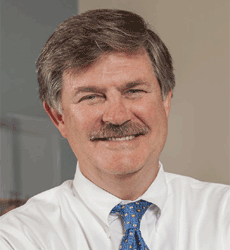
Wolf Prix, the CEO of Coop Himmelb(l)au,
has criticised design competitions
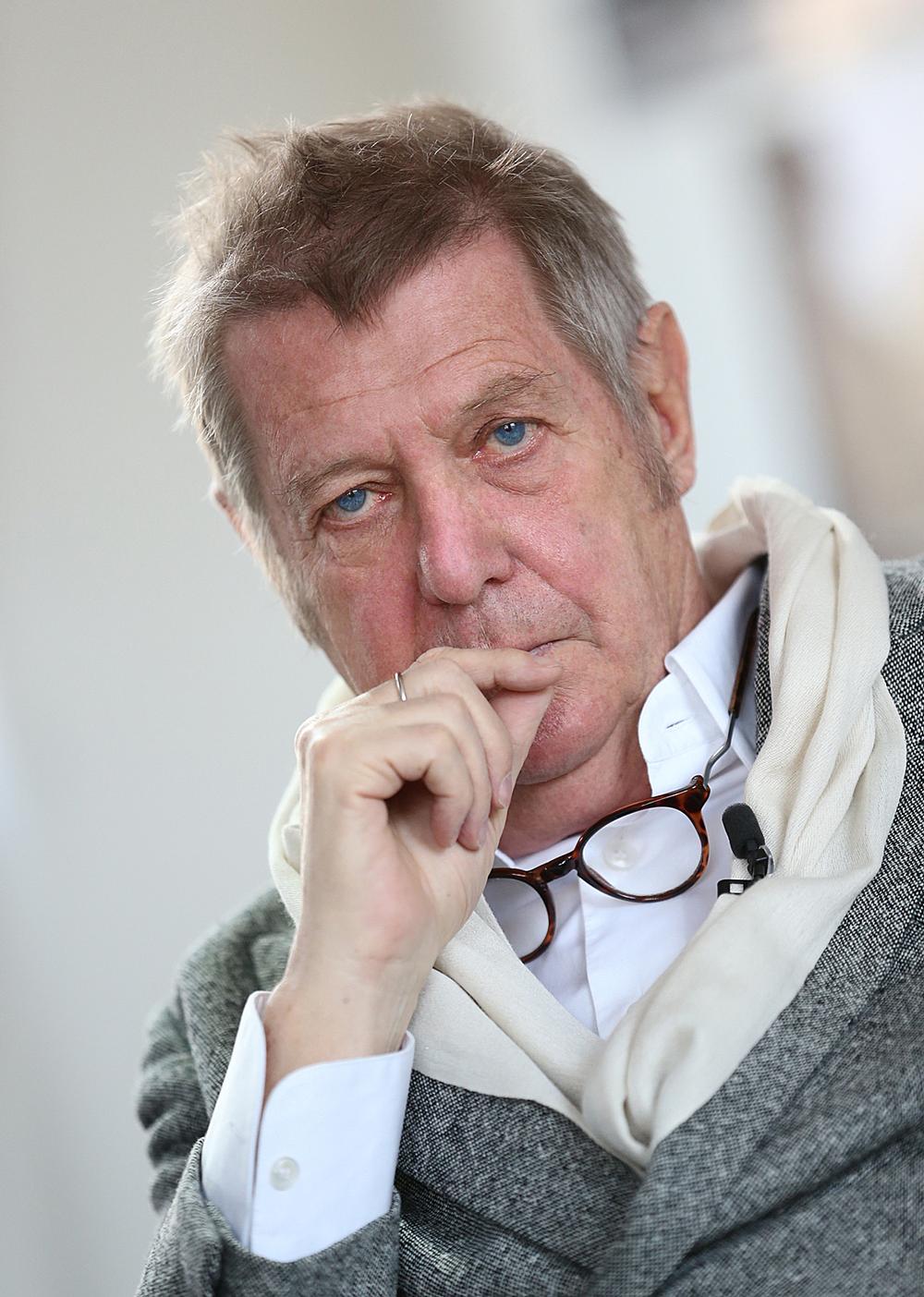
Wolf Prix, the design principal and CEO of Austrian architecture studio Coop Himmelb(l)au has slammed design competitions, arguing they “diminish the value of our thinking.”
In a frank talk about the state of the industry and the challenges of tomorrow, made at the World Architecture Festival in Berlin, Prix claimed that “to make a competition is a very stupid thing.”
“I repeat myself a thousand times, but can you imagine 100 or 200 surgeons having to prove they can perform heart surgery, without getting any money?” he said. “Only the stupid architects are doing it. I read in the newspaper recently an investor said ‘I’m happy to have competitions because I get 100 ideas for free.’”
Expanding on the point later in the talk, Prix continued: “I don’t want to work for nothing. It is a diminishing of the value of our thinking. And anonymous competition contributions are making architects slaves to money.
“One of my former students won a competition, and I calculated with him what he will gain after five years. It turns out he will make a loss of E200,000. That means he has to do everything a client wants to pay this back.”
Prix also used the platform to talk about the role of architects more widely.
“As architects, we think we save the client and that we can walk on water. But I haven’t seen an architect who could walk on water. Or we think we’re supporting the whole world on our shoulders. No way. We are really like Chaplin, because the invisible aspects of architecture are suppressing our ideas.”
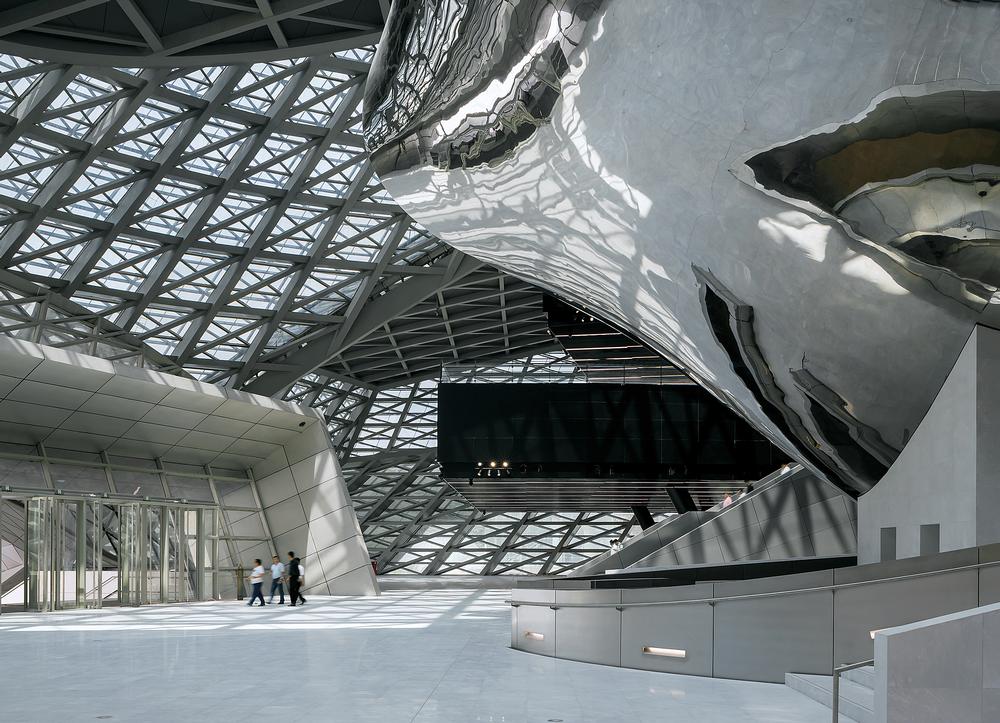
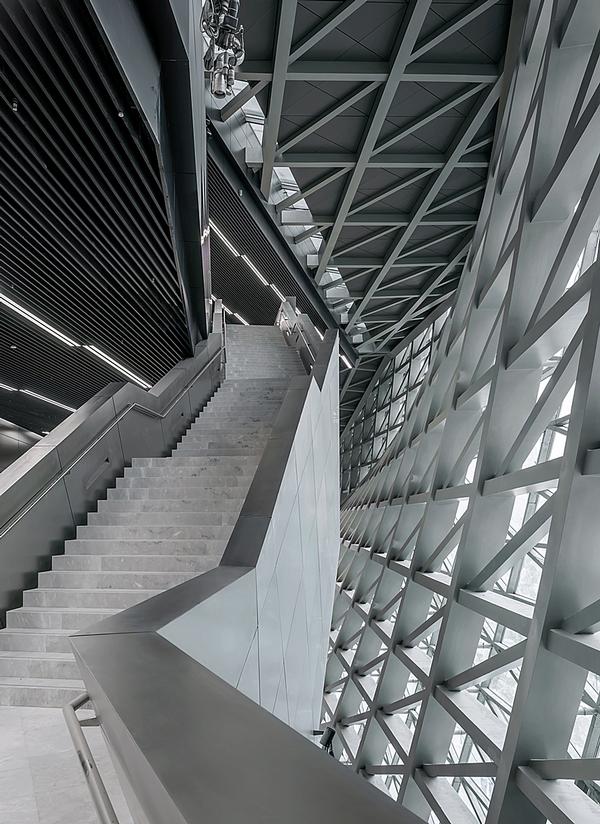
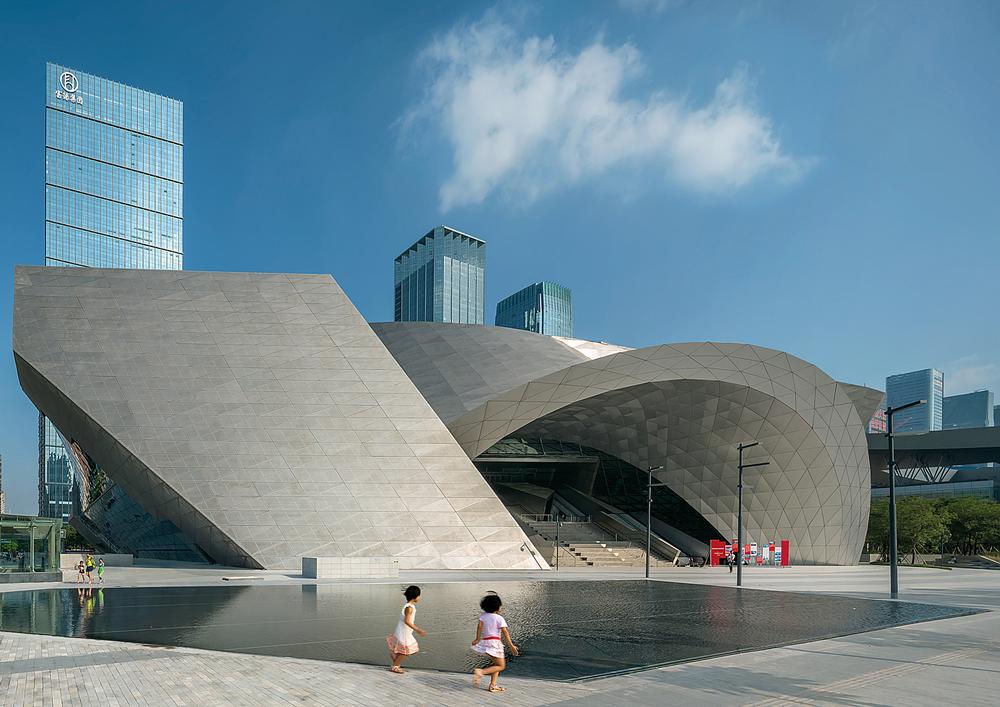
Prix, and Coop Himmelb(l)au, are known for their boundary-pushing projects featuring structural, abstract forms, such as the Museum of Contemporary Art and Planning Exhibition (MOCAPE) in Shenzhen, China, which opened in October 2016. The House of Bread, a museum and events centre for Austrian bread company Backaldrin, is due to open in Asten, northern Austria, this year.
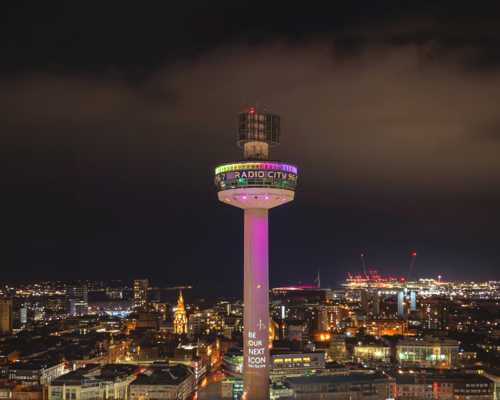
An opportunity to reimagine one of the UK’s most recognisable towers has been formally
opened by Rivington Hark, as St Johns Beacon invites operators and partners to shape its
next phase. [more...]
Wolf Prix, the CEO of Coop Himmelb(l)au,
has criticised design competitions
Wolf Prix, the design principal and CEO of Austrian architecture studio Coop Himmelb(l)au has slammed design competitions, arguing they “diminish the value of our thinking.”
In a frank talk about the state of the industry and the challenges of tomorrow, made at the World Architecture Festival in Berlin, Prix claimed that “to make a competition is a very stupid thing.”
“I repeat myself a thousand times, but can you imagine 100 or 200 surgeons having to prove they can perform heart surgery, without getting any money?” he said. “Only the stupid architects are doing it. I read in the newspaper recently an investor said ‘I’m happy to have competitions because I get 100 ideas for free.’”
Expanding on the point later in the talk, Prix continued: “I don’t want to work for nothing. It is a diminishing of the value of our thinking. And anonymous competition contributions are making architects slaves to money.
“One of my former students won a competition, and I calculated with him what he will gain after five years. It turns out he will make a loss of E200,000. That means he has to do everything a client wants to pay this back.”
Prix also used the platform to talk about the role of architects more widely.
“As architects, we think we save the client and that we can walk on water. But I haven’t seen an architect who could walk on water. Or we think we’re supporting the whole world on our shoulders. No way. We are really like Chaplin, because the invisible aspects of architecture are suppressing our ideas.”
Prix, and Coop Himmelb(l)au, are known for their boundary-pushing projects featuring structural, abstract forms, such as the Museum of Contemporary Art and Planning Exhibition (MOCAPE) in Shenzhen, China, which opened in October 2016. The House of Bread, a museum and events centre for Austrian bread company Backaldrin, is due to open in Asten, northern Austria, this year.
A new immersive attraction designed to transport visitors into the final hours of ancient Pompeii
is preparing to open near the world-famous archaeological site in southern Italy.
Experience design company, BRC Imagination Arts, has completed a transition that sees founder
Bob Rogers pass ownership of the business to four long-serving senior executives, while
remaining actively involved with the company.
Movie Park Germany has opened a new Paramount Pictures-themed attraction as part of its 30th
anniversary celebrations, using immersive storytelling and adaptive reuse to reinforce the park’s
longstanding “Hollywood in Germany” positioning.
Therme Manchester’s 28-acre development, which will include interconnected glass pavilions
that measure 65,000sq m, will be the largest bathing and wellbeing attraction in the world once
complete, according to prof David Russell, CEO of Therme UK.
Efteling has opened Hooghmoed, a new family drop tower designed to broaden the appeal of its
recently launched Sirene Island themed area and introduce younger visitors to thrill attractions.
A proposed Puy du Fou development near Bicester and Universal Destinations and Experiences’
planned resort in Bedford are emerging as part of a wider transformation of the Oxford–
Cambridge Growth Corridor into a major centre for UK leisure and tourism inv
Shedd Aquarium has opened the Immersion Theater developed in partnership with SimEx-
Iwerks, as part of a wider strategy to enhance the guest experience and create additional
revenue opportunities.
The UK government has announced a temporary reduction in VAT on visitor attractions and
children’s meals as part of a summer cost-of-living support package designed to stimulate the
visitor economy and encourage family days out.
As designer Yinka Ilori prepares for his first solo gallery show in London, he speaks exclusively
to CLADmag about his mission to spread joy, the power of play, and his bold approach to using
colour (including the colours you won’t see in his work).
The government of Thailand is exploring plans for a THB300bn (£6.3bn, US$8.3bn)
entertainment complex in the country’s Eastern Economic Corridor (EEC), with officials
proposing a large-scale theme park and sports destination as part of a broader tourism and
economic development strategy.
An opportunity to reimagine one of the UK’s most recognisable towers has been formally
opened by Rivington Hark, as St Johns Beacon invites operators and partners to shape its
next phase. [more...]