The FA’s head of grassroots delivery talks to Matthew Campelli about a renewed focus on educating coaches and the role of the National Football Centre in Burton
By Matthew Campelli | Published in Sports Management 22 feb 2016 issue 114
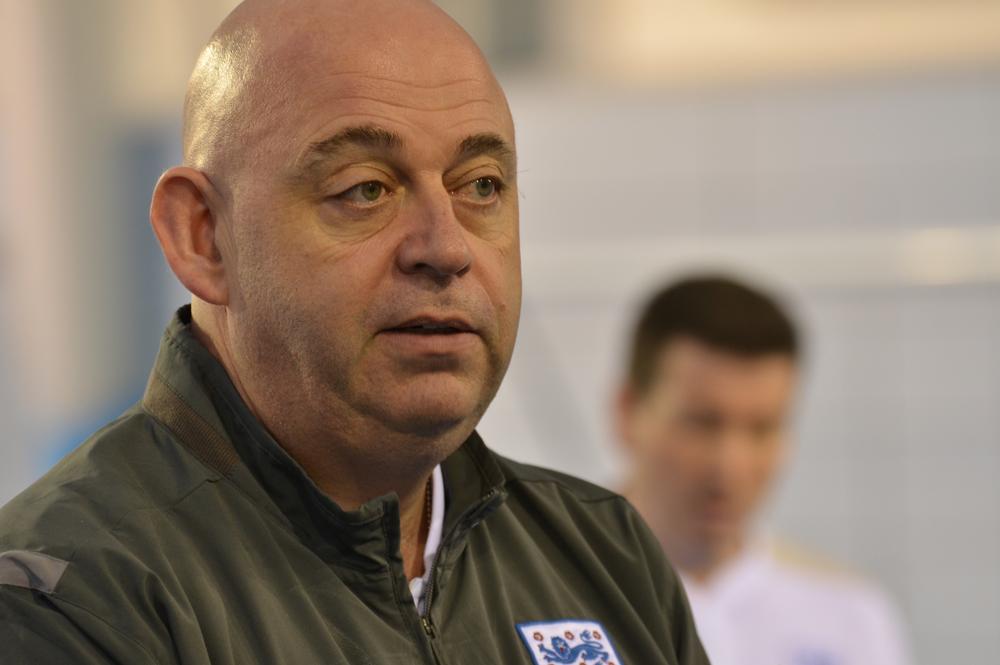
Les Howie joined the Football Association as head of grassroots in 1998
We’ve got to destroy the myth about Spain and Germany having more coaches than us . That’s historical,” says Les Howie following a question he’s probably had to answer more times than he would have liked.
Since it emerged in 2013 that England had 1,161 coaches qualified to UEFA A standard compared to 12,720 in Spain and 5,500 in Germany, the quality and quantity of English coaches has been firmly under the microscope.
At the level above – UEFA Pro – England had 203 coaches to Spain’s 2,140 and Germany’s 1,000, but the Football Association’s (FA) head of grassroots delivery is very keen to put those figures into a wider and more positive context.
“Spain”, says Howie, “counts back to 1948” to measure its number of UEFA-qualified coaches, while in Germany it’s “statutory” for coaches at some amateur levels to have UEFA B licenses.
“Only in the past five years has UEFA B been the required standard to coach at first team level in the Football League – we’re not comparing like with like, but that’s used as a great big stick to hit us over the head with,” he says. “Year-on-year we now put as many people through the UEFA B course as other countries.”
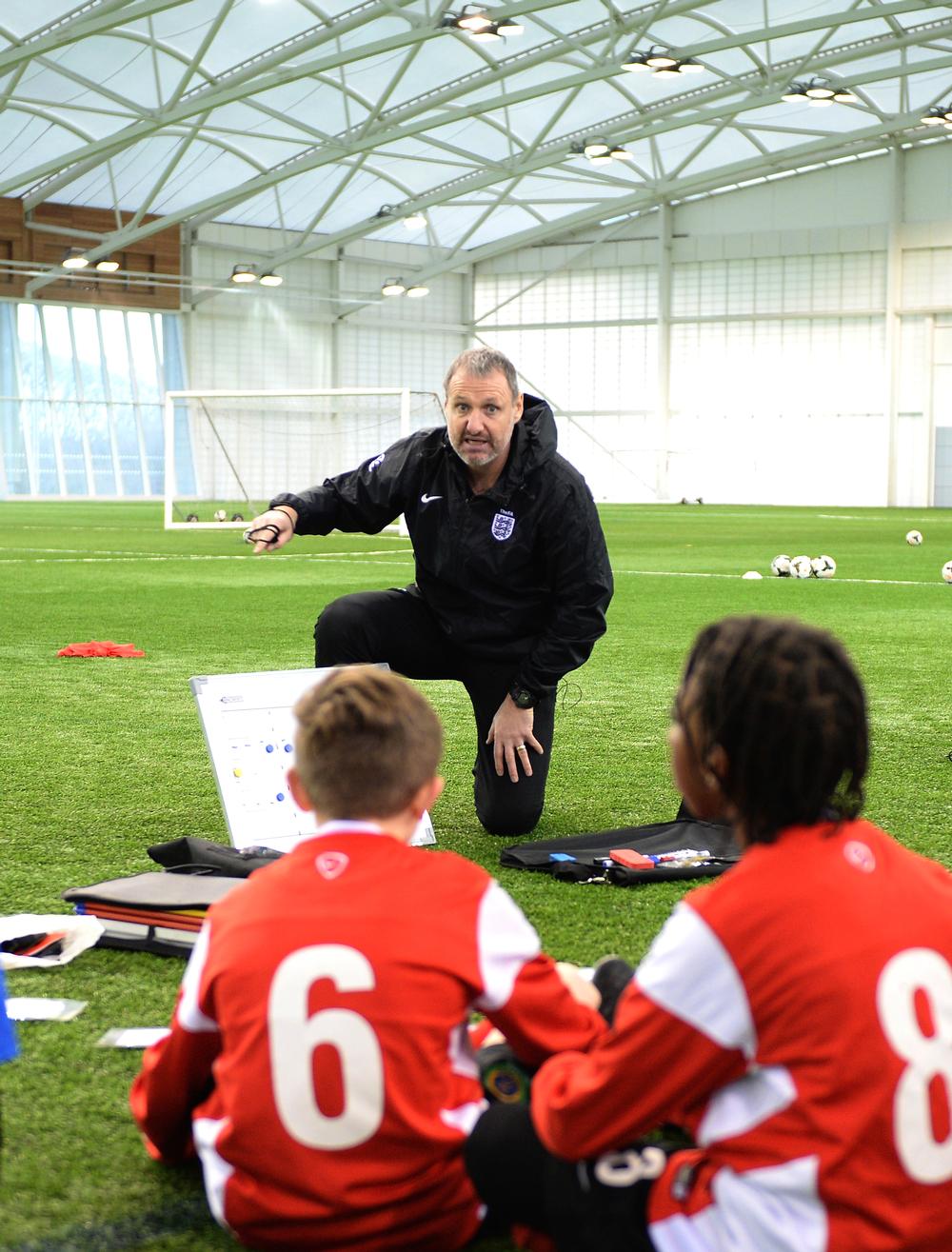
Talking to Sports Management at the FA’s impressive National Football Centre, St George’s Park in Burton-on-Trent, Howie highlights a concerted effort by the governing body to take coaching in England to another level.
The number of FA-trained regional coaches has more than doubled, from 16 to 40 over the past year to support the eight members of nationwide coaching staff who work with children in schools. A bursary of £500,000 (US$712,422, €658,025) has been created for coaches wanting to complete a Level Two Youth Award qualification. Individual bursaries of £50-£100 (US$71-US$142, €66-€132) will “help 8,000 coaches get to that level” this season, Howie claims confidently.
The FA is in the middle of conducting a major coaching review and is writing new courses for both budding and experienced coaches to undertake from August 2016.
A “competency-based model” will be the basis of the new courses, bringing together child development, child specialisation and pastoral care, as well as tactical and technical knowledge. It will include what Howie describes as the “four corners” – technical and tactical; physical; psychological; and social elements.
“In terms of psychological competency, at Level One, it might be about helping children make sure they have lots of opportunities to make decisions, while at UEFA Pro level it might be about teaching players to handle stress and pressure in a Champions League final,” he explains.
All the new courses have been developed, written and will be delivered at St George’s Park, which Howie says will “help raise standards and keep us in touch with what’s going on”.
“This is where we write the courses, pilot them and where the tutors come to be trained, supported and developed,” he adds. “It’s like being taught by someone who went to Oxford or Cambridge.”
Level One courses cost “on average” £150 (US$214, €197) - “less than a fiver an hour” – while a UEFA Pro license, including study visits, board, lodgings, meals, kit and 150 hours of contact time, costs around £7,000 (US$9,973, €9,211).
“My daughter’s Masters degree is £7,000, but then I have to pay her board and lodgings. She probably gets in total 150 hours of contact time,” he says. “That’s the same as a Pro license, but that’s your Masters in football.”
Bursaries are also being provided to regional FAs to target 100 more female and black, Asian and minority ethnic (BAME) coaches taking the UEFA B license. Higher up the ladder, former Tranmere Rovers forward Wayne Allison will oversee the development of BAME coaches at the elite level – particularly coaches going from UEFA B to UEFA A.
Modular support and online learning has been incorporated into the process by the FA, with the launch of its England DNA website last December, which highlights all of the organisation’s practices for coaches to use in their day-to-day sessions. But Howie, and the FA’s, overarching message is one of creativity and prioritising the long-term.
“I don’t want a shed load of trophies when children are 10, I want them to be playing and enjoying football 20 years time,” he says. “It doesn’t mean to say those kids won’t want to win their game on Sunday, and it won’t be the most competitive 40 minutes of their week, but the chances are they’ll forget the final score five minutes after the final whistle.”
The FA’s head of grassroots delivery talks to Matthew Campelli about a renewed focus on educating coaches and the role of the National Football Centre in Burton
By Matthew Campelli | Published in Sports Management 22 feb 2016 issue 114
Les Howie joined the Football Association as head of grassroots in 1998
We’ve got to destroy the myth about Spain and Germany having more coaches than us . That’s historical,” says Les Howie following a question he’s probably had to answer more times than he would have liked.
Since it emerged in 2013 that England had 1,161 coaches qualified to UEFA A standard compared to 12,720 in Spain and 5,500 in Germany, the quality and quantity of English coaches has been firmly under the microscope.
At the level above – UEFA Pro – England had 203 coaches to Spain’s 2,140 and Germany’s 1,000, but the Football Association’s (FA) head of grassroots delivery is very keen to put those figures into a wider and more positive context.
“Spain”, says Howie, “counts back to 1948” to measure its number of UEFA-qualified coaches, while in Germany it’s “statutory” for coaches at some amateur levels to have UEFA B licenses.
“Only in the past five years has UEFA B been the required standard to coach at first team level in the Football League – we’re not comparing like with like, but that’s used as a great big stick to hit us over the head with,” he says. “Year-on-year we now put as many people through the UEFA B course as other countries.”
Talking to Sports Management at the FA’s impressive National Football Centre, St George’s Park in Burton-on-Trent, Howie highlights a concerted effort by the governing body to take coaching in England to another level.
The number of FA-trained regional coaches has more than doubled, from 16 to 40 over the past year to support the eight members of nationwide coaching staff who work with children in schools. A bursary of £500,000 (US$712,422, €658,025) has been created for coaches wanting to complete a Level Two Youth Award qualification. Individual bursaries of £50-£100 (US$71-US$142, €66-€132) will “help 8,000 coaches get to that level” this season, Howie claims confidently.
The FA is in the middle of conducting a major coaching review and is writing new courses for both budding and experienced coaches to undertake from August 2016.
A “competency-based model” will be the basis of the new courses, bringing together child development, child specialisation and pastoral care, as well as tactical and technical knowledge. It will include what Howie describes as the “four corners” – technical and tactical; physical; psychological; and social elements.
“In terms of psychological competency, at Level One, it might be about helping children make sure they have lots of opportunities to make decisions, while at UEFA Pro level it might be about teaching players to handle stress and pressure in a Champions League final,” he explains.
All the new courses have been developed, written and will be delivered at St George’s Park, which Howie says will “help raise standards and keep us in touch with what’s going on”.
“This is where we write the courses, pilot them and where the tutors come to be trained, supported and developed,” he adds. “It’s like being taught by someone who went to Oxford or Cambridge.”
Level One courses cost “on average” £150 (US$214, €197) - “less than a fiver an hour” – while a UEFA Pro license, including study visits, board, lodgings, meals, kit and 150 hours of contact time, costs around £7,000 (US$9,973, €9,211).
“My daughter’s Masters degree is £7,000, but then I have to pay her board and lodgings. She probably gets in total 150 hours of contact time,” he says. “That’s the same as a Pro license, but that’s your Masters in football.”
Bursaries are also being provided to regional FAs to target 100 more female and black, Asian and minority ethnic (BAME) coaches taking the UEFA B license. Higher up the ladder, former Tranmere Rovers forward Wayne Allison will oversee the development of BAME coaches at the elite level – particularly coaches going from UEFA B to UEFA A.
Modular support and online learning has been incorporated into the process by the FA, with the launch of its England DNA website last December, which highlights all of the organisation’s practices for coaches to use in their day-to-day sessions. But Howie, and the FA’s, overarching message is one of creativity and prioritising the long-term.
“I don’t want a shed load of trophies when children are 10, I want them to be playing and enjoying football 20 years time,” he says. “It doesn’t mean to say those kids won’t want to win their game on Sunday, and it won’t be the most competitive 40 minutes of their week, but the chances are they’ll forget the final score five minutes after the final whistle.”
The Toverland theme park in the Netherlands has announced a €98m expansion programme
that will add a resort, new attractions and staff facilities as it pursues plans to become a multi-
day destination.
Hotel de France, located on the British Isle of Jersey, has created a wellness retreat package
that includes a hot yoga session that will take place in Jersey Zoo’s butterfly sanctuary.
A new immersive attraction designed to transport visitors into the final hours of ancient Pompeii
is preparing to open near the world-famous archaeological site in southern Italy.
Experience design company, BRC Imagination Arts, has completed a transition that sees founder
Bob Rogers pass ownership of the business to four long-serving senior executives, while
remaining actively involved with the company.
Movie Park Germany has opened a new Paramount Pictures-themed attraction as part of its 30th
anniversary celebrations, using immersive storytelling and adaptive reuse to reinforce the park’s
longstanding “Hollywood in Germany” positioning.
Therme Manchester’s 28-acre development, which will include interconnected glass pavilions
that measure 65,000sq m, will be the largest bathing and wellbeing attraction in the world once
complete, according to prof David Russell, CEO of Therme UK.
Efteling has opened Hooghmoed, a new family drop tower designed to broaden the appeal of its
recently launched Sirene Island themed area and introduce younger visitors to thrill attractions.
A proposed Puy du Fou development near Bicester and Universal Destinations and Experiences’
planned resort in Bedford are emerging as part of a wider transformation of the Oxford–
Cambridge Growth Corridor into a major centre for UK leisure and tourism inv
Shedd Aquarium has opened the Immersion Theater developed in partnership with SimEx-
Iwerks, as part of a wider strategy to enhance the guest experience and create additional
revenue opportunities.
The UK government has announced a temporary reduction in VAT on visitor attractions and
children’s meals as part of a summer cost-of-living support package designed to stimulate the
visitor economy and encourage family days out.
+ More news
COMPANY PROFILES
Alterface Alterface’s Creative Division team is
seasoned in concept and ride development,
as well as storyte [more...]
Simworx Ltd The company was initially established
in 1997. Terry Monkton and Andrew
Roberts are the key stakeh [more...]
Painting With Light By combining lighting, video, scenic and architectural elements, sound and special effects we tell s [more...]
DJW David & Lynn Willrich started the Company
over thirty years ago, from the Audio Visual
Department [more...]