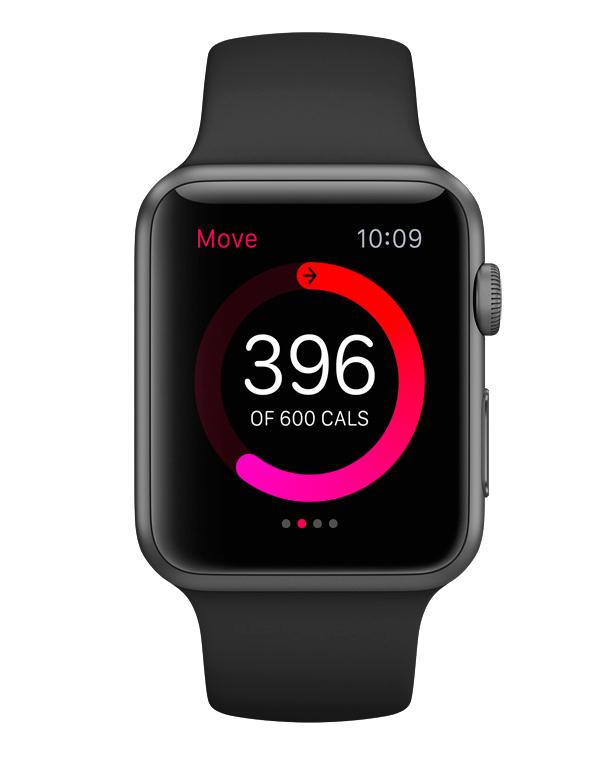
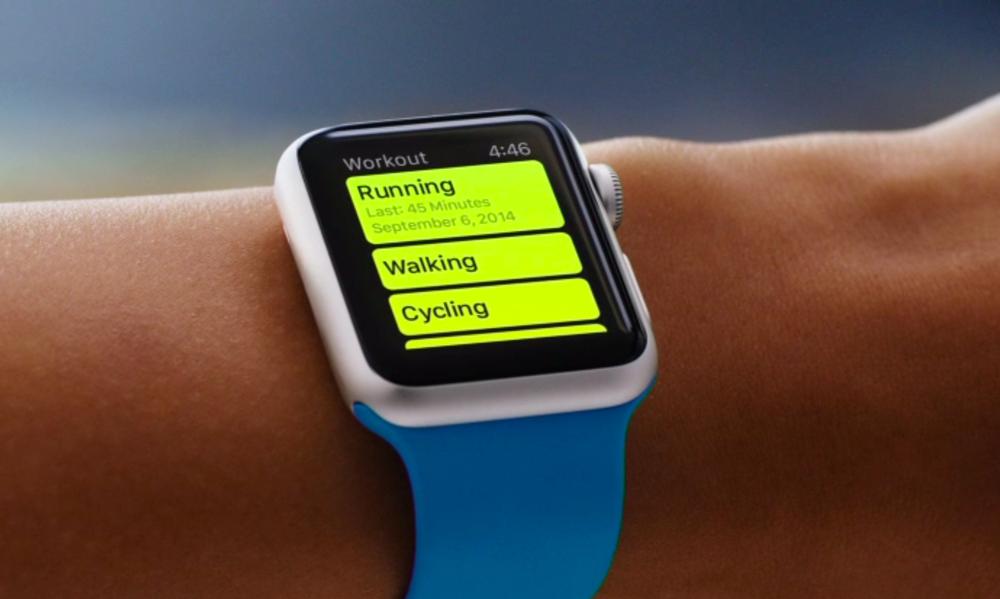
The Apple Watch marks part of a revolution in fitness
Rapidly advancing technologies are revolutionising almost every industry, and health and fitness is no exception, with a growing number of digital alternatives to working out in health clubs now available. Like the digital revolution of music, which destroyed record store business models, the explosion of digital fitness alternatives like wearables and mobile apps looms over traditional fitness business models; the overall wearable technology market looks set to reach as many as 1 billion units by 2020.
This month’s release of the Apple Watch represents a significant event within this trend, with global sales set to exceed 30 million units in 2015 according to some reports. Apple’s entry to the wearables market draws particular attention thanks to the company’s status as king of consumer product development: ensuring the Apple Watch successfully fulfils consumer needs will be the brand’s top priority.
No immediate blow So what will the launch of the Apple Watch really mean to the health club industry?
In the near-term and based on what the Apple Watch, other wearables and mobile applications can do today, the technology won’t immediately deliver a crushing blow to existing business models. While consumers are likely to purchase technologies to help them become healthier, these technologies are simply not at the point where they can deliver results and fully replace bricks and mortar fitness services and experiences. As with predictions of flying cars decades ago, enthusiasm can outpace reality when it comes to emerging technologies.
However, despite some of the Apple Watch’s initial limitations such as battery life, the technology of this product – and indeed others – will continue to advance. Over the next five years, we’re therefore likely to see a variety of business disruptions resulting from tools – including the Apple Watch 2 and beyond – that will certainly begin to significantly impact the health club industry. Consumers will be offered more convenient and effective alternatives to gym memberships, and a real shift in consumer habits will most likely occur as a result.
Get the prep work done It’s therefore essential that gyms begin to consider service models that incorporate these consumer technologies. For example, coaching could use wearables to enhance feedback from trainers for client activities inside and outside the four walls of the gym, while the compilation of a variety of data from wearables, apps, fitness equipment, billing and CRM – including, of course, integration with Apple’s own HealthKit – could enable personalised member experiences in-club.
The list of possibilities is long, and the solution may well come from an industry outsider with a fresh perspective: Uber wasn’t founded by cab drivers. But ultimately, as with other industries, if bricks and mortar fitness models don’t embrace the shift towards a blend of digital and bricks and mortar service models, the prognosis might not be good.
In the interim, don’t be worried that the Apple Watch will take away your clients as soon as it’s launched – but be prepared for what’s to come. Believe me, technology is revolutionising health and fitness for the better, whether we like it or not.
Bryan O’Rourke is a health club industry expert, technologist, financier, shareholder and executive in several fitness companies. He is CEO of consulting firm Integerus and the Fitness Industry Technology Council (www.fit-c.org), CSO of Fitmarc and The Flywheel Group, and a member of the ACE industry advisory panel.
Web: www.bryankorourke.com
Global sales of the Apple Watch are predicted to exceed 30 million units in 2015
An opportunity to reimagine one of the UK’s most recognisable towers has been formally
opened by Rivington Hark, as St Johns Beacon invites operators and partners to shape its
next phase. [more...]
The Apple Watch marks part of a revolution in fitness
Rapidly advancing technologies are revolutionising almost every industry, and health and fitness is no exception, with a growing number of digital alternatives to working out in health clubs now available. Like the digital revolution of music, which destroyed record store business models, the explosion of digital fitness alternatives like wearables and mobile apps looms over traditional fitness business models; the overall wearable technology market looks set to reach as many as 1 billion units by 2020.
This month’s release of the Apple Watch represents a significant event within this trend, with global sales set to exceed 30 million units in 2015 according to some reports. Apple’s entry to the wearables market draws particular attention thanks to the company’s status as king of consumer product development: ensuring the Apple Watch successfully fulfils consumer needs will be the brand’s top priority.
No immediate blow So what will the launch of the Apple Watch really mean to the health club industry?
In the near-term and based on what the Apple Watch, other wearables and mobile applications can do today, the technology won’t immediately deliver a crushing blow to existing business models. While consumers are likely to purchase technologies to help them become healthier, these technologies are simply not at the point where they can deliver results and fully replace bricks and mortar fitness services and experiences. As with predictions of flying cars decades ago, enthusiasm can outpace reality when it comes to emerging technologies.
However, despite some of the Apple Watch’s initial limitations such as battery life, the technology of this product – and indeed others – will continue to advance. Over the next five years, we’re therefore likely to see a variety of business disruptions resulting from tools – including the Apple Watch 2 and beyond – that will certainly begin to significantly impact the health club industry. Consumers will be offered more convenient and effective alternatives to gym memberships, and a real shift in consumer habits will most likely occur as a result.
Get the prep work done It’s therefore essential that gyms begin to consider service models that incorporate these consumer technologies. For example, coaching could use wearables to enhance feedback from trainers for client activities inside and outside the four walls of the gym, while the compilation of a variety of data from wearables, apps, fitness equipment, billing and CRM – including, of course, integration with Apple’s own HealthKit – could enable personalised member experiences in-club.
The list of possibilities is long, and the solution may well come from an industry outsider with a fresh perspective: Uber wasn’t founded by cab drivers. But ultimately, as with other industries, if bricks and mortar fitness models don’t embrace the shift towards a blend of digital and bricks and mortar service models, the prognosis might not be good.
In the interim, don’t be worried that the Apple Watch will take away your clients as soon as it’s launched – but be prepared for what’s to come. Believe me, technology is revolutionising health and fitness for the better, whether we like it or not.
Bryan O’Rourke is a health club industry expert, technologist, financier, shareholder and executive in several fitness companies. He is CEO of consulting firm Integerus and the Fitness Industry Technology Council (www.fit-c.org), CSO of Fitmarc and The Flywheel Group, and a member of the ACE industry advisory panel.
Web: www.bryankorourke.com
Global sales of the Apple Watch are predicted to exceed 30 million units in 2015
Hotel de France, located on the British Isle of Jersey, has created a wellness retreat package
that includes a hot yoga session that will take place in Jersey Zoo’s butterfly sanctuary.
A new immersive attraction designed to transport visitors into the final hours of ancient Pompeii
is preparing to open near the world-famous archaeological site in southern Italy.
Experience design company, BRC Imagination Arts, has completed a transition that sees founder
Bob Rogers pass ownership of the business to four long-serving senior executives, while
remaining actively involved with the company.
Movie Park Germany has opened a new Paramount Pictures-themed attraction as part of its 30th
anniversary celebrations, using immersive storytelling and adaptive reuse to reinforce the park’s
longstanding “Hollywood in Germany” positioning.
Therme Manchester’s 28-acre development, which will include interconnected glass pavilions
that measure 65,000sq m, will be the largest bathing and wellbeing attraction in the world once
complete, according to prof David Russell, CEO of Therme UK.
Efteling has opened Hooghmoed, a new family drop tower designed to broaden the appeal of its
recently launched Sirene Island themed area and introduce younger visitors to thrill attractions.
A proposed Puy du Fou development near Bicester and Universal Destinations and Experiences’
planned resort in Bedford are emerging as part of a wider transformation of the Oxford–
Cambridge Growth Corridor into a major centre for UK leisure and tourism inv
Shedd Aquarium has opened the Immersion Theater developed in partnership with SimEx-
Iwerks, as part of a wider strategy to enhance the guest experience and create additional
revenue opportunities.
The UK government has announced a temporary reduction in VAT on visitor attractions and
children’s meals as part of a summer cost-of-living support package designed to stimulate the
visitor economy and encourage family days out.
As designer Yinka Ilori prepares for his first solo gallery show in London, he speaks exclusively
to CLADmag about his mission to spread joy, the power of play, and his bold approach to using
colour (including the colours you won’t see in his work).
The government of Thailand is exploring plans for a THB300bn (£6.3bn, US$8.3bn)
entertainment complex in the country’s Eastern Economic Corridor (EEC), with officials
proposing a large-scale theme park and sports destination as part of a broader tourism and
economic development strategy.
An opportunity to reimagine one of the UK’s most recognisable towers has been formally
opened by Rivington Hark, as St Johns Beacon invites operators and partners to shape its
next phase. [more...]