Endurance training can induce changes that affect how we use our genes / photo: www.shutterstock.com
Scientists in Sweden have made what looks to be a significant breakthrough in the quest to establish exactly how exercise leads to better health and fitness.
It’s an accepted principle that exercise helps us attain better levels of fitness and reduce the risk of many cardiovascular diseases, but the biology behind this has long remained unclear. Now, researchers at the Karolinska Institute in Stockholm believe they may have cracked the case, concluding that regular exercise has the power to change the shape and functioning of our genes by altering our DNA.
“Through endurance training – a lifestyle change that’s easily available for most people and doesn’t cost much money – we can induce changes that affect how we use our genes and, through that, get healthier and more functional muscles that ultimately improve our quality of life,” the study’s lead researcher, Maléne Lindholm, told The New York Times.
The results of the study, which was published in the journal Epigenetics*, may have future implications for the prevention and treatment of obesity, diabetes and heart disease.
One-legged cycling The small study recruited 23 young, healthy men and women who performed supervised, one-legged cycling, where the untrained leg served as a control. The participants took part in a 45-minute training session, four times a week over the course of three months.
Performance was measured in both legs before and after training, and after the three months there were clear physical improvements evident in the exercised leg that were not present in the idle leg. Scientists were then able to home in on the changes at cellular level.
Gene altering By using cutting-edge genomic analysis, the researchers found that exercise has the ability to change the methylation patterns on the genome of muscle cells, altering the proteins these genes express. This, in turn, affects the physiological responses elsewhere in the body. A large majority of these genes play a role in energy metabolism, insulin response and inflammation in muscles – regulating how fit these muscles, and in turn our bodies, can become.
Dr Carl Johan Sundberg, a pharmacology professor at the institute who also worked on the study, adds: “We found that endurance training in a co-ordinated fashion affects thousands of DNA methylation sites and genes associated to improvement in muscle function and health.
“This could be of great importance for the understanding and treatment of common diseases such as cardiovascular disease, but also for how to maintain a good muscle function throughout life.
“Interestingly, we also saw that there were epigenetic differences between male and female skeletal muscle, which may be of importance to develop gender-specific therapies in the future.”
Lindholm says another focus could be looking into whether these genetic changes would remain if someone were to stop exercising, as well as the impact different types of training have on genes.
*Lindholm ME & Sundberg CJ et al. An integrative analysis reveals coordinated reprogramming of the epigenome and the transcriptome in human skeletal muscle after training. Epigentics. December 2014
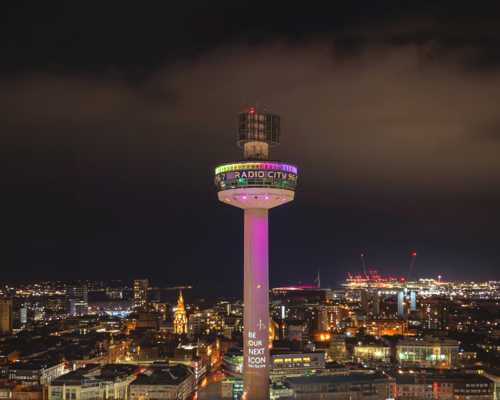
An opportunity to reimagine one of the UK’s most recognisable towers has been formally
opened by Rivington Hark, as St Johns Beacon invites operators and partners to shape its
next phase. [more...]
Endurance training can induce changes that affect how we use our genes / photo: www.shutterstock.com
Scientists in Sweden have made what looks to be a significant breakthrough in the quest to establish exactly how exercise leads to better health and fitness.
It’s an accepted principle that exercise helps us attain better levels of fitness and reduce the risk of many cardiovascular diseases, but the biology behind this has long remained unclear. Now, researchers at the Karolinska Institute in Stockholm believe they may have cracked the case, concluding that regular exercise has the power to change the shape and functioning of our genes by altering our DNA.
“Through endurance training – a lifestyle change that’s easily available for most people and doesn’t cost much money – we can induce changes that affect how we use our genes and, through that, get healthier and more functional muscles that ultimately improve our quality of life,” the study’s lead researcher, Maléne Lindholm, told The New York Times.
The results of the study, which was published in the journal Epigenetics*, may have future implications for the prevention and treatment of obesity, diabetes and heart disease.
One-legged cycling The small study recruited 23 young, healthy men and women who performed supervised, one-legged cycling, where the untrained leg served as a control. The participants took part in a 45-minute training session, four times a week over the course of three months.
Performance was measured in both legs before and after training, and after the three months there were clear physical improvements evident in the exercised leg that were not present in the idle leg. Scientists were then able to home in on the changes at cellular level.
Gene altering By using cutting-edge genomic analysis, the researchers found that exercise has the ability to change the methylation patterns on the genome of muscle cells, altering the proteins these genes express. This, in turn, affects the physiological responses elsewhere in the body. A large majority of these genes play a role in energy metabolism, insulin response and inflammation in muscles – regulating how fit these muscles, and in turn our bodies, can become.
Dr Carl Johan Sundberg, a pharmacology professor at the institute who also worked on the study, adds: “We found that endurance training in a co-ordinated fashion affects thousands of DNA methylation sites and genes associated to improvement in muscle function and health.
“This could be of great importance for the understanding and treatment of common diseases such as cardiovascular disease, but also for how to maintain a good muscle function throughout life.
“Interestingly, we also saw that there were epigenetic differences between male and female skeletal muscle, which may be of importance to develop gender-specific therapies in the future.”
Lindholm says another focus could be looking into whether these genetic changes would remain if someone were to stop exercising, as well as the impact different types of training have on genes.
*Lindholm ME & Sundberg CJ et al. An integrative analysis reveals coordinated reprogramming of the epigenome and the transcriptome in human skeletal muscle after training. Epigentics. December 2014
Hotel de France, located on the British Isle of Jersey, has created a wellness retreat package
that includes a hot yoga session that will take place in Jersey Zoo’s butterfly sanctuary.
A new immersive attraction designed to transport visitors into the final hours of ancient Pompeii
is preparing to open near the world-famous archaeological site in southern Italy.
Experience design company, BRC Imagination Arts, has completed a transition that sees founder
Bob Rogers pass ownership of the business to four long-serving senior executives, while
remaining actively involved with the company.
Movie Park Germany has opened a new Paramount Pictures-themed attraction as part of its 30th
anniversary celebrations, using immersive storytelling and adaptive reuse to reinforce the park’s
longstanding “Hollywood in Germany” positioning.
Therme Manchester’s 28-acre development, which will include interconnected glass pavilions
that measure 65,000sq m, will be the largest bathing and wellbeing attraction in the world once
complete, according to prof David Russell, CEO of Therme UK.
Efteling has opened Hooghmoed, a new family drop tower designed to broaden the appeal of its
recently launched Sirene Island themed area and introduce younger visitors to thrill attractions.
A proposed Puy du Fou development near Bicester and Universal Destinations and Experiences’
planned resort in Bedford are emerging as part of a wider transformation of the Oxford–
Cambridge Growth Corridor into a major centre for UK leisure and tourism inv
Shedd Aquarium has opened the Immersion Theater developed in partnership with SimEx-
Iwerks, as part of a wider strategy to enhance the guest experience and create additional
revenue opportunities.
The UK government has announced a temporary reduction in VAT on visitor attractions and
children’s meals as part of a summer cost-of-living support package designed to stimulate the
visitor economy and encourage family days out.
As designer Yinka Ilori prepares for his first solo gallery show in London, he speaks exclusively
to CLADmag about his mission to spread joy, the power of play, and his bold approach to using
colour (including the colours you won’t see in his work).
The government of Thailand is exploring plans for a THB300bn (£6.3bn, US$8.3bn)
entertainment complex in the country’s Eastern Economic Corridor (EEC), with officials
proposing a large-scale theme park and sports destination as part of a broader tourism and
economic development strategy.
+ More news
COMPANY PROFILES
QubicaAMF UK QubicaAMF is the largest and most
innovative bowling equipment provider with
600 employees worldwi [more...]
An opportunity to reimagine one of the UK’s most recognisable towers has been formally
opened by Rivington Hark, as St Johns Beacon invites operators and partners to shape its
next phase. [more...]