Networks today are larger and more efficient than at any other time in history / photo: www.shutterstock.com/ Syda Productions
The Fitness Sector Social Good Report, published in 2014, explores the idea that a business with a purpose beyond maximising its own self-interests can ensure long-term relevance with its stakeholders, thereby creating a more valued and sustainable organisation.
The report is structured around eight themes: purposeful, responsible, authentic, generous, compassionate, connected, collaborative and influential. In this article, I briefly discuss four themes and what they mean for your business.
Purposeful When I discover a new and interesting new business, there are normally two things I immediately want to understand. First, what the business makes. Then I want to know the founder’s story: why did they start the business and what’s the big idea that’s fuelling it? Understanding its purpose – the shared understanding of the reason why the business exists – is the filter I use to help me decide if I’m going to care about this business.
Remember, if I care, then I will share with my network. I believe clarity of purpose matters because it unites people and drives actions. As Nikos Mourkogiannis, global expert in strategic leadership, says: “Purpose is a reason for doing something that appeals to a person’s sense of what is right and what is worthwhile. So it creates a sense of obligation. Business purpose is the most powerful, but least leveraged, weapon in leadership.”
There are four distinct types of business purpose. The first is Heroism: driving the standards for the world to follow (Facebook, Zipcar). The second is Excellence: providing the best possible product or service, with an insatiable pursuit of ever-higher standards (Apple, Lego). Then there’s Discovery: a love of the new and innovative, where the founders are often intellectually curious and have a desire to re-invent industries (Twitter, Samsung). Finally there’s Altruism: serving the needs of others (Disney, Kickstarter).
The fitness sector is driven by an altruistic purpose. However, some external industry observers see a contradiction. During an interview with Giles Gibbons, CEO of Good Business, he commented: “What’s interesting about the fitness industry is that it has an incredibly strong social purpose: to help others. [It’s a purpose] that’s well understood by the general public. It’s a fantastic place to start and actually quite rare. I think the challenge for the fitness industry is that it seems to forget about this and sees people as numbers, thinking of it as a cost-driven business. As a result, I don’t think it’s achieving the aspiration, the loyalty and the warmth it should from such an important societal function.”
So consider this… What does your organisation fundamentally stand for? Are you creating a legacy that will be long remembered?
Responsible In 1970, Milton Friedman, the Nobel prize-winning economist, wrote a famous essay in the New York Times Magazine titled ‘The Social Responsibility of Business is to Increase its Profits’.
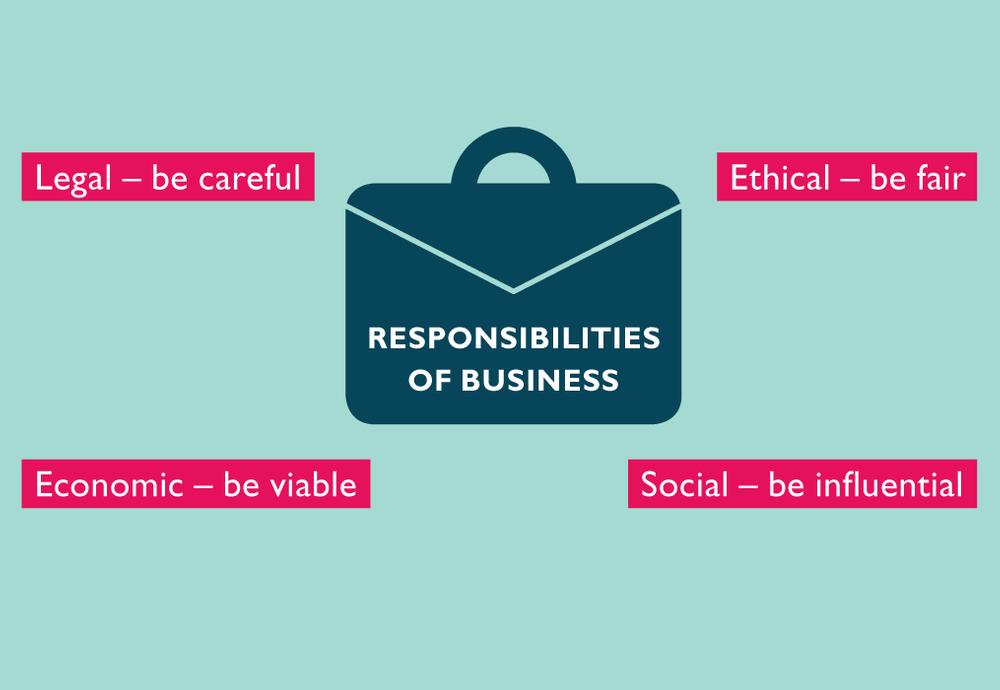
More than 44 years have since passed and the world of business is now very different, with the responsibilities of business arguably far more complex to define (see Figure 1, p105). Now, an increasing number of businesses routinely invest in social and environmental projects that may seem well outside the scope of their core business activity.
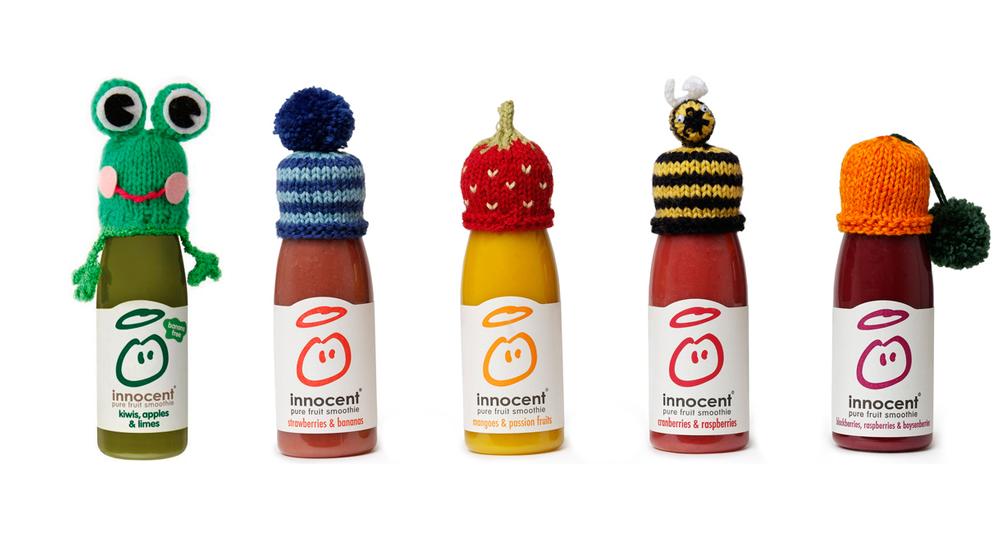
For example, while I was writing my report, Innocent Drinks was encouraging people across the UK to knit little woollen hats to adorn the tops of its smoothie bottles. The company donated £0.25 to the charity Age UK each time a bottle with a hat was sold, with the goal of reducing the number of old and frail people dying from the cold weather in England and Wales. So what was the connection between a business that liquidises fruit and an elderly person who has never purchased a smoothie? Well, it seems as though many businesses are fundamentally redefining their role in society, which is reshaping their perspective of who is a stakeholder.
So consider this… How much clarity is there in your organisation about core responsibilities? Would a neutral person conclude that your organisation’s terms of business are transparent, fair and reasonable?
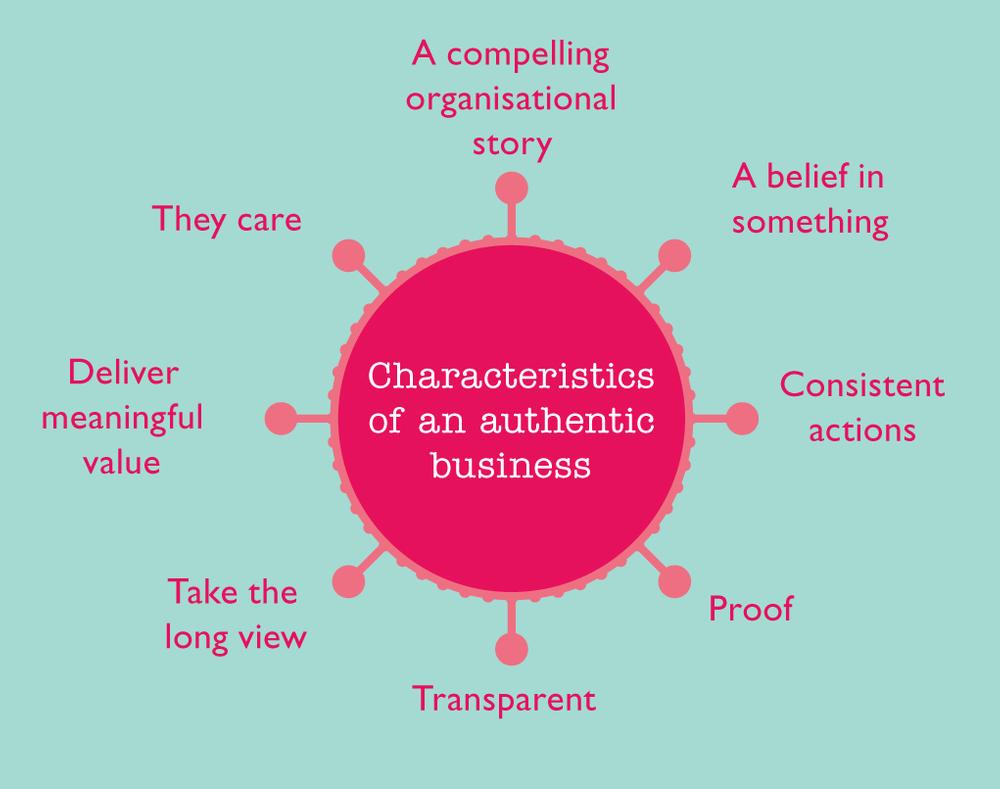
Authentic ‘Authentic’ means to be real or genuine. In a business context, it broadly translates to: “This is who we are and this is what we stand for. Please come join us if this matters to you as well” – but I believe there are many facets to an authentic business (see Figure 2, left). When an individual and a business do genuinely connect, there’s a meeting of both heart and mind. Customers become enthusiastic advocates who just love talking about your organisational story. So what’s your organisation’s story? Do you have one, and would it captivate a room full of strangers? This matters because a remarkable story has the potential to rapidly spread through a person’s network – and networks today are larger and more efficient than at any other time in the history of humanity. Organisations with a remarkable story get more mentions on social networks, powered by an individual’s passion and excitement to inform others. This means they spend less on paid advertising trying to convince others to ‘like’ them.
So consider this… Does your organisation have a compelling story that spreads far beyond its geographic boundaries? How good is your organisation at proving the difference it makes to the lives of its customers and its community?
Generous Organisations need to have a reputation for authentic generosity if they are to remain relevant to their stakeholders. Throwing out a few scraps of charity once a quarter is neither credible nor sufficient. Indeed, it smells of putting the interests of the business first – especially when the press release is rushed out, talking more about the act while lacking proof of results or details of the difference made.
So is your business a ‘net giver’ or ‘net taker’? Communities will care if a club is perceived as a net giver rather than a net taker. What is a ‘net giver’? Simply put, it’s a club that, over the course of time, gives more to its community than it takes out. A business never wants to have a reputation for being a ‘net taker’, as it’s a label that’s very hard to shrug off.
As Thomas Kolster said in his book Goodvertising: “Generosity can be a clear differentiator in a crowded market. Generosity is a powerful story to tell about a brand and can attract new customers, new suppliers and partnerships.”
So consider this… How generous is your organisation when the press and media aren’t looking? How could a sustained sense of generosity be embedded into your organisation – one that will be genuinely credible to consumers?
FOR FURTHER INFORMATION Ray Algar is MD of Oxygen Consulting, a company that provides strategic business insights for organisations connected to the global health and fitness industry. He also founded Gymtopia, an award-winning digital platform that shares stories about how the fitness industry is creating positive social impact in communities around the world.
Download a complimentary copy of the Fitness Sector Social Good Report: http://bit.ly/SocialGoodReport
Fitness Sector Social Good Report
How generous is your business? Are your charity efforts ad hoc and superficial, or is sustained generosity embedded in your organisation? / photo: www.shutterstock.com/breakwavemedia
Figure 1: Multiple responsibilities of a modern business / VISUAL INSIGHT,OXYGEN CONSULTING, 2014
Figure 2: Characteristics of an authentic business
Innocent Drinks donated £0.25 to Age UK for every bottle sold with
a knitted hat
COMPANY PROFILES
QubicaAMF UK
QubicaAMF is the largest and most
innovative bowling equipment provider with
600 employees worldwi [more...]
Polin Waterparks
Polin was founded in Istanbul in 1976. Polin
has since grown into a leading company in
the waterpa [more...]
Taylor Made Designs
Founded in 1993, Taylor Made
Designs supply corporate clothing
and brand-enhancing merchandise
to [more...]
instantprint
We’re a Yorkshire-based online printer, founded
in 2009 by Adam Carnell and James Kinsella. [more...]
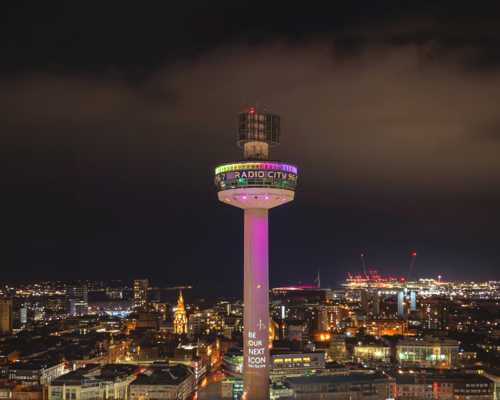
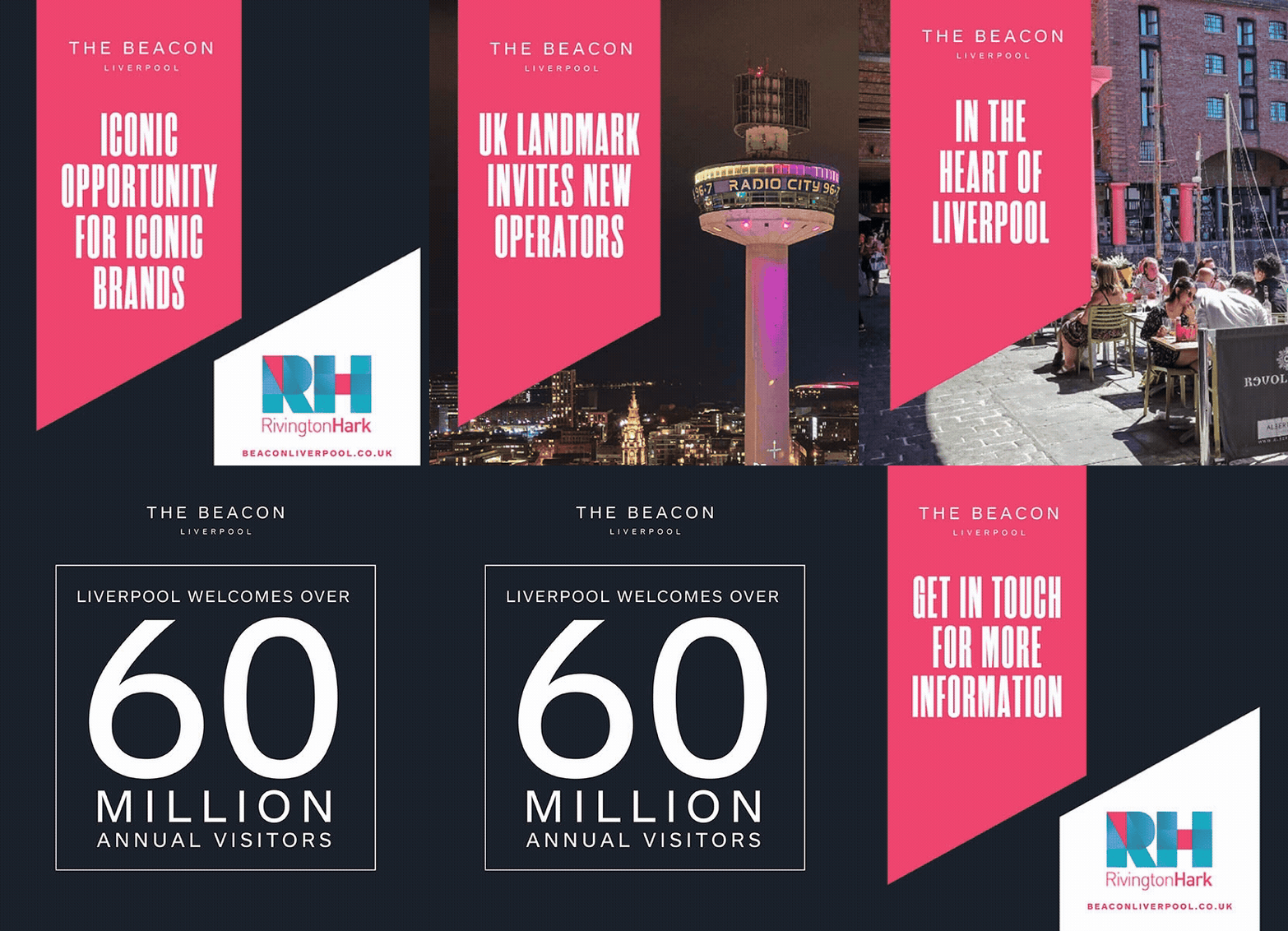
An opportunity to reimagine one of the UK’s most recognisable towers has been formally
opened by Rivington Hark, as St Johns Beacon invites operators and partners to shape its
next phase. [more...]
Networks today are larger and more efficient than at any other time in history / photo: www.shutterstock.com/ Syda Productions
The Fitness Sector Social Good Report, published in 2014, explores the idea that a business with a purpose beyond maximising its own self-interests can ensure long-term relevance with its stakeholders, thereby creating a more valued and sustainable organisation.
The report is structured around eight themes: purposeful, responsible, authentic, generous, compassionate, connected, collaborative and influential. In this article, I briefly discuss four themes and what they mean for your business.
Purposeful When I discover a new and interesting new business, there are normally two things I immediately want to understand. First, what the business makes. Then I want to know the founder’s story: why did they start the business and what’s the big idea that’s fuelling it? Understanding its purpose – the shared understanding of the reason why the business exists – is the filter I use to help me decide if I’m going to care about this business.
Remember, if I care, then I will share with my network. I believe clarity of purpose matters because it unites people and drives actions. As Nikos Mourkogiannis, global expert in strategic leadership, says: “Purpose is a reason for doing something that appeals to a person’s sense of what is right and what is worthwhile. So it creates a sense of obligation. Business purpose is the most powerful, but least leveraged, weapon in leadership.”
There are four distinct types of business purpose. The first is Heroism: driving the standards for the world to follow (Facebook, Zipcar). The second is Excellence: providing the best possible product or service, with an insatiable pursuit of ever-higher standards (Apple, Lego). Then there’s Discovery: a love of the new and innovative, where the founders are often intellectually curious and have a desire to re-invent industries (Twitter, Samsung). Finally there’s Altruism: serving the needs of others (Disney, Kickstarter).
The fitness sector is driven by an altruistic purpose. However, some external industry observers see a contradiction. During an interview with Giles Gibbons, CEO of Good Business, he commented: “What’s interesting about the fitness industry is that it has an incredibly strong social purpose: to help others. [It’s a purpose] that’s well understood by the general public. It’s a fantastic place to start and actually quite rare. I think the challenge for the fitness industry is that it seems to forget about this and sees people as numbers, thinking of it as a cost-driven business. As a result, I don’t think it’s achieving the aspiration, the loyalty and the warmth it should from such an important societal function.”
So consider this… What does your organisation fundamentally stand for? Are you creating a legacy that will be long remembered?
Responsible In 1970, Milton Friedman, the Nobel prize-winning economist, wrote a famous essay in the New York Times Magazine titled ‘The Social Responsibility of Business is to Increase its Profits’.
More than 44 years have since passed and the world of business is now very different, with the responsibilities of business arguably far more complex to define (see Figure 1, p105). Now, an increasing number of businesses routinely invest in social and environmental projects that may seem well outside the scope of their core business activity.
For example, while I was writing my report, Innocent Drinks was encouraging people across the UK to knit little woollen hats to adorn the tops of its smoothie bottles. The company donated £0.25 to the charity Age UK each time a bottle with a hat was sold, with the goal of reducing the number of old and frail people dying from the cold weather in England and Wales. So what was the connection between a business that liquidises fruit and an elderly person who has never purchased a smoothie? Well, it seems as though many businesses are fundamentally redefining their role in society, which is reshaping their perspective of who is a stakeholder.
So consider this… How much clarity is there in your organisation about core responsibilities? Would a neutral person conclude that your organisation’s terms of business are transparent, fair and reasonable?
Authentic ‘Authentic’ means to be real or genuine. In a business context, it broadly translates to: “This is who we are and this is what we stand for. Please come join us if this matters to you as well” – but I believe there are many facets to an authentic business (see Figure 2, left). When an individual and a business do genuinely connect, there’s a meeting of both heart and mind. Customers become enthusiastic advocates who just love talking about your organisational story. So what’s your organisation’s story? Do you have one, and would it captivate a room full of strangers? This matters because a remarkable story has the potential to rapidly spread through a person’s network – and networks today are larger and more efficient than at any other time in the history of humanity. Organisations with a remarkable story get more mentions on social networks, powered by an individual’s passion and excitement to inform others. This means they spend less on paid advertising trying to convince others to ‘like’ them.
So consider this… Does your organisation have a compelling story that spreads far beyond its geographic boundaries? How good is your organisation at proving the difference it makes to the lives of its customers and its community?
Generous Organisations need to have a reputation for authentic generosity if they are to remain relevant to their stakeholders. Throwing out a few scraps of charity once a quarter is neither credible nor sufficient. Indeed, it smells of putting the interests of the business first – especially when the press release is rushed out, talking more about the act while lacking proof of results or details of the difference made.
So is your business a ‘net giver’ or ‘net taker’? Communities will care if a club is perceived as a net giver rather than a net taker. What is a ‘net giver’? Simply put, it’s a club that, over the course of time, gives more to its community than it takes out. A business never wants to have a reputation for being a ‘net taker’, as it’s a label that’s very hard to shrug off.
As Thomas Kolster said in his book Goodvertising: “Generosity can be a clear differentiator in a crowded market. Generosity is a powerful story to tell about a brand and can attract new customers, new suppliers and partnerships.”
So consider this… How generous is your organisation when the press and media aren’t looking? How could a sustained sense of generosity be embedded into your organisation – one that will be genuinely credible to consumers?
FOR FURTHER INFORMATION Ray Algar is MD of Oxygen Consulting, a company that provides strategic business insights for organisations connected to the global health and fitness industry. He also founded Gymtopia, an award-winning digital platform that shares stories about how the fitness industry is creating positive social impact in communities around the world.
Download a complimentary copy of the Fitness Sector Social Good Report: http://bit.ly/SocialGoodReport
Fitness Sector Social Good Report
How generous is your business? Are your charity efforts ad hoc and superficial, or is sustained generosity embedded in your organisation? / photo: www.shutterstock.com/breakwavemedia
Figure 1: Multiple responsibilities of a modern business / VISUAL INSIGHT,OXYGEN CONSULTING, 2014
Figure 2: Characteristics of an authentic business
Innocent Drinks donated £0.25 to Age UK for every bottle sold with
a knitted hat
Hotel de France, located on the British Isle of Jersey, has created a wellness retreat package
that includes a hot yoga session that will take place in Jersey Zoo’s butterfly sanctuary.
A new immersive attraction designed to transport visitors into the final hours of ancient Pompeii
is preparing to open near the world-famous archaeological site in southern Italy.
Experience design company, BRC Imagination Arts, has completed a transition that sees founder
Bob Rogers pass ownership of the business to four long-serving senior executives, while
remaining actively involved with the company.
Movie Park Germany has opened a new Paramount Pictures-themed attraction as part of its 30th
anniversary celebrations, using immersive storytelling and adaptive reuse to reinforce the park’s
longstanding “Hollywood in Germany” positioning.
Therme Manchester’s 28-acre development, which will include interconnected glass pavilions
that measure 65,000sq m, will be the largest bathing and wellbeing attraction in the world once
complete, according to prof David Russell, CEO of Therme UK.
Efteling has opened Hooghmoed, a new family drop tower designed to broaden the appeal of its
recently launched Sirene Island themed area and introduce younger visitors to thrill attractions.
A proposed Puy du Fou development near Bicester and Universal Destinations and Experiences’
planned resort in Bedford are emerging as part of a wider transformation of the Oxford–
Cambridge Growth Corridor into a major centre for UK leisure and tourism inv
Shedd Aquarium has opened the Immersion Theater developed in partnership with SimEx-
Iwerks, as part of a wider strategy to enhance the guest experience and create additional
revenue opportunities.
The UK government has announced a temporary reduction in VAT on visitor attractions and
children’s meals as part of a summer cost-of-living support package designed to stimulate the
visitor economy and encourage family days out.
As designer Yinka Ilori prepares for his first solo gallery show in London, he speaks exclusively
to CLADmag about his mission to spread joy, the power of play, and his bold approach to using
colour (including the colours you won’t see in his work).
The government of Thailand is exploring plans for a THB300bn (£6.3bn, US$8.3bn)
entertainment complex in the country’s Eastern Economic Corridor (EEC), with officials
proposing a large-scale theme park and sports destination as part of a broader tourism and
economic development strategy.
+ More news
COMPANY PROFILES
QubicaAMF UK QubicaAMF is the largest and most
innovative bowling equipment provider with
600 employees worldwi [more...]
Polin Waterparks Polin was founded in Istanbul in 1976. Polin
has since grown into a leading company in
the waterpa [more...]
Taylor Made Designs Founded in 1993, Taylor Made
Designs supply corporate clothing
and brand-enhancing merchandise
to [more...]
instantprint We’re a Yorkshire-based online printer, founded
in 2009 by Adam Carnell and James Kinsella. [more...]
An opportunity to reimagine one of the UK’s most recognisable towers has been formally
opened by Rivington Hark, as St Johns Beacon invites operators and partners to shape its
next phase. [more...]