Badminton – the art of rallying a shuttlecock to and fro across a net – is one of the world’s oldest sports and thought to have originated in ancient Egypt. Variations of the game have since been recorded dating back to 5th century China but it wasn’t recognised on English shores until the 1860s, when British army officers stationed in Poona, India, brought the game back to Badminton House in Gloucestershire.
The Duke of Beaufort hosted a lawn party and the game of badminton was born. The Badminton Association of England (BAofE) was formed in 1893. Badminton is still one of the country's most popular ‘garden pursuits', although it's debatable whether that helps or hinders the image of the sport.
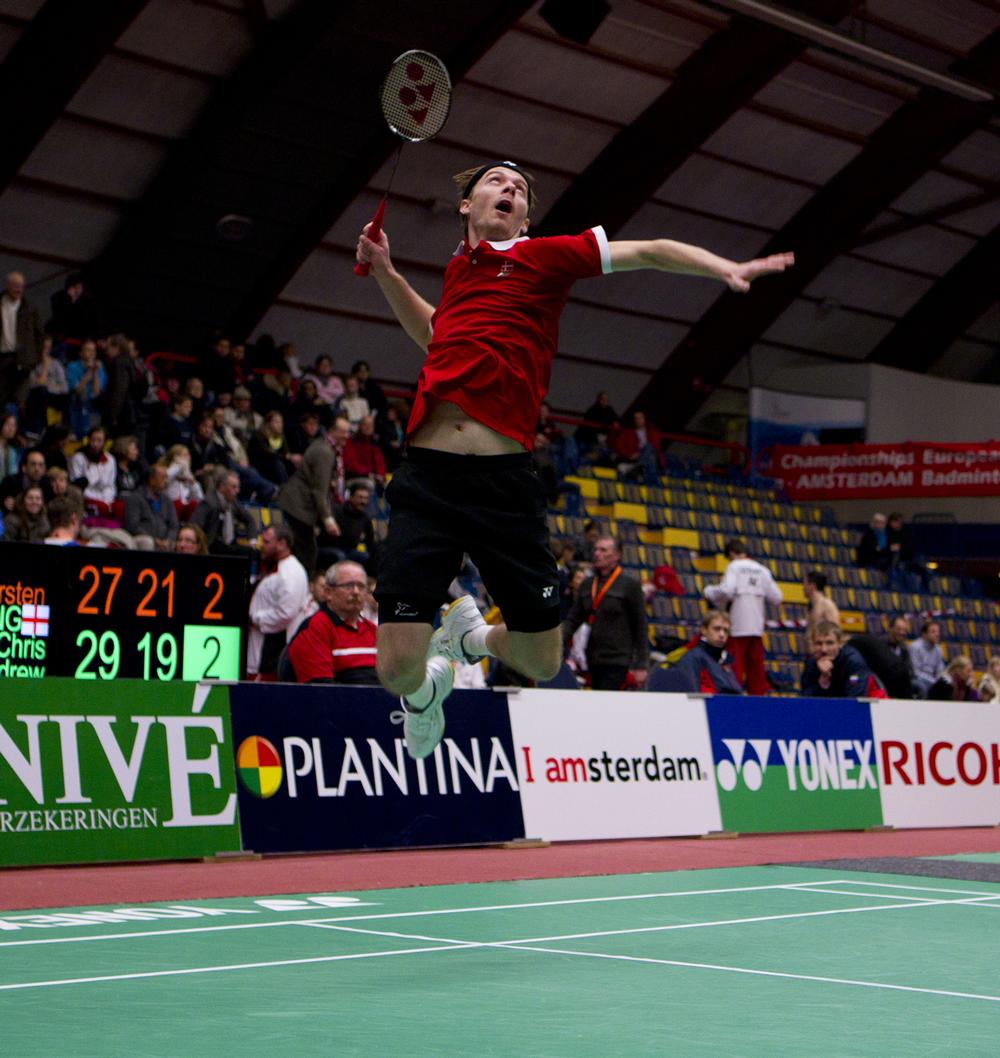
Speedy shuttlecocks Badminton is the fastest racquet sport in the world. Clocking a top smash speed of 206mph, it quite literally smacks squash (172mph) and tennis (164mph) out of the park. It's also the most widely played racquet sport, with 3.5 million occasional players in the UK, 615,000 weekly players and more than 1 million regular monthly players – and the numbers are rising. Badminton is a steadily growing sport, and since 2009-10, the number of adults, aged 16+ playing weekly has risen by 26,500. In 2014, Badminton England reported an increase of 66,500 in the 14-25 age group, particularly among women.
Gender divide One of the biggest advantages of badminton is that it is gender neutral. From a young age, boys and girls play alongside each other and our most celebrated badminton heroes, Gail Ems and Nathan Robertson, stood side by side when claiming their silver medals in Athens 2004. Thirtyseven per cent of weekly players are female, rising to 41 per cent on a monthly basis. For 14 to 15-year-olds the female numbers are slightly higher, with 44 per cent of weekly players and 47 per cent monthly. Badminton is the fifth most popular individual or team sport for women (after swimming, cycling, athletics and equestrian) and those who do play are upping their game, with 44 per cent of female badminton players doing more activity this year. In a climate where the pressure is on NGBs to get more women physically active, it seems badminton is in a very strong place.
Pick up a racquet Badminton England is committed to increasing grassroots participation, with a whole sport plan for 2013-17 which includes programmes designed to attract and grow the game at all levels.
The National School Championships currently attracts more than 30,000 participants across 1,600 schools and in total badminton is offered at more than 2,300 schools. The aim is to impact on more formal play, integrating badminton into the curriculum and GCSE requirements, as well as to develop a new national junior league. Badminton England is also redesigning its primary school offering and investing in further education. Currently offered at 56 universities, the NGB is looking to expand to 70 by March 2017, adapting its programmes to suit the college market.
One of the key challenges for NGBs is to fund and maintain a sufficient workforce to grow the sport. Badminton England’s community-based approach is helping to circumvent this. The introduction of Community Badminton Networks (CBN) –where a group of key local partners comes together to build a development plan for badminton in their area – means there's an organic focus designed to increase participation and enable anyone who wants to play badminton to find activity appropriate to their ability and desire. The people are effectively championing the sport on Badminton England's behalf.
Under the modern PLAY Badminton initiative, Badminton England has a flexible approach to listening and responding to the needs of its providers, such as the leisure centre market. Rejecting the one size fits all approach, badminton now comes in all shapes and sizes, from No Strings pay and play options, to Battle Badminton singles leagues and coached sessions, the NGB is making it as easy as possible to encourage playing.
The programme that is possibly the boldest move for badminton, however, is the Smash up! campaign. Designed for 13- to 16-year-olds, the innovative product is currently in 1,000 schools, plus 500 community and leisure sites. Delivered by trained ‘activators’ the sessions involve music and casual play and focus more on allowing teenagers to try the sport and experiment with the speed and skills involved. Badminton England is also supporting it socially, creating a ‘racquetheads’ Twitter channel It to make young people more familiar with the sport.
Courtside Badminton is an indoor sport and, therefore, somewhat restricted by the availability of court space and time. Badminton England has established a strong relationship with a number of national operators. As part of the PLAY Badminton programme they invest in partnerships with operators to upgrade and increase the use of sports halls under their management in identified priority areas. In return for this investment they seek to secure increased court access.
The aforementioned CBNs also play a role in galvanising the support of local partners to refurbish courts or even to access untapped community resources such as schools and churches.
However, it's the dedicated badminton centres that have proven to be the best way to develop the sport at participation and performance level. Unfortunately, England still has very few centres where badminton is the priority sport. Currently, in Denmark – one of the major European competitor nations – almost every town has a hall designed for badminton as a priority sport and most badminton clubs own their own purpose-built badminton facilities or have great access and guaranteed tenure. This is thought to be a major factor in Denmark’s high participation rates and international success. Badminton England wishes to invest in the development of more dedicated centres.
Talent pathways The International Badminton Federation (IBF) – now the Badminton World Federation – was established in the first half of the 20th century. However, it was not until 1992 that badminton gained Olympic status, demonstrating its relative infancy on the international playing field. In October 2014 it was also confirmed as a Paralympic sport for 2020 in Tokyo. In England, the badminton Performance Centres are the real starting point of the talent pathway, being fed from schools, clubs, CBNs and aimed at youngsters from primary school to 17- and 18-years old.
The 10 England Performance Training sites around the country provide opportunities for the most talented individuals within the Performance Centres. The England Junior Programmes provide individual places for the most talented from 13 upwards. The most talented players among the England and GB senior teams are based at the National Badminton Centre in Milton Keynes.
One of the key challenges facing the sport is that unlike tennis, there is no Wimbledon fever, with coverage of the sport not yet screened on terrestrial channels. This year, however, has seen the spectator offering grow, with the successful launch of the National Badminton League, which is being televised on Sky sports. This means more exposure for some of Britain’s best players, such as Chris and Gabby Adcock. The duo, partners both on and off the court, are ranked fifth in the world at mixed doubles.
Fancy a game? Yet in spite of the investment which has been made in improving facilities and programmes and the obvious love and affection surrounding the sport, badminton is still struggling to be taken as seriously as an innovative, strong performance sport. It's one of the easiest entry level sports, every leisure centre offers it and 3.5 million people pick up a racquet! In Asian cultures badminton is extremely popular, and it's a true cradle-to-grave sport.
Having to compete against other giants of sport such as football, rugby and tennis, badminton’s main challenge may well be the way it's perceived. Despite being incredibly fast, competitive and gender neutral, badminton has yet to challenge its outdated reputation head on. The small steps taken so far, such as Smash up! have proven successful, so clearly there's a desire to play if the message is right. If anything it's frustrating that the top badminton players are not household names and that badminton fever is not yet gripping the nation.
As part of its Whole Sport Plan Badminton England has set a weekly participation target of 153,000 for 14-25 year-olds. The hope is that targeted marketing campaigns, the presence on Sky TV, and the increased level of social media activity will help to promote the sport. However, unless badminton begins to invest in repositioning the sport towards a younger, performance-motivated audience, then it may forever be seen as nothing more than the nation’s favourite summer pastime, played by grannies and girls alike. The key question still stands – can you name a professional player?
BaddersBirds The brain child of an inner city London badminton club looking to cement badminton’s appeal to young professional city girls. The concept is to enable girls from a variety of backgrounds to give badminton a go and see the benefits. In the majority of cases, women take up badminton looking to lose weight or get fitter but at first the emphasis has to naturally be on learning the skills needed. Baddersbirds, set up by four county players, had the idea of integrating a 45 minute yoga and fitness class (taught by a top London personal trainer) with an hour of learning to play. Promoted only on twitter and with flyers designed by a local artist, “the girls who come get to burn calories and enjoy a game," the campaign literature states. "Life is so busy these days, it helps to know you’ll get your fitness fix and still get to hit a feather or two. Badminton is fast, fun and a great way to get fit and we want to prove it!”
@baddersbirds
BaddersBirds
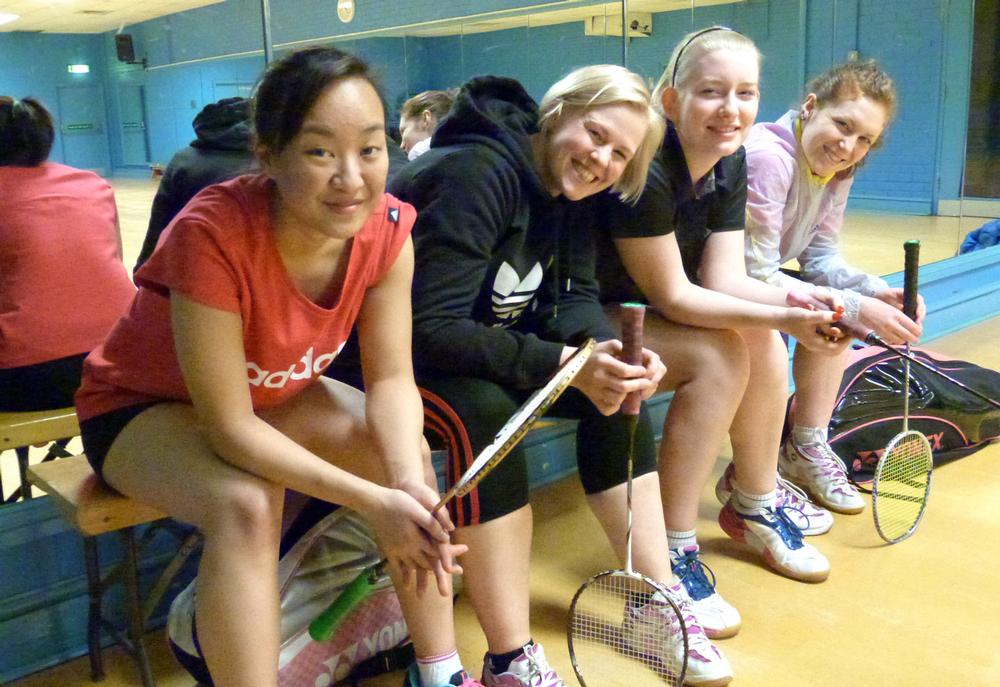
Badminton is popular among girls - 47 per cent of young players in the UK are female
An opportunity to reimagine one of the UK’s most recognisable towers has been formally
opened by Rivington Hark, as St Johns Beacon invites operators and partners to shape its
next phase. [more...]
Badminton – the art of rallying a shuttlecock to and fro across a net – is one of the world’s oldest sports and thought to have originated in ancient Egypt. Variations of the game have since been recorded dating back to 5th century China but it wasn’t recognised on English shores until the 1860s, when British army officers stationed in Poona, India, brought the game back to Badminton House in Gloucestershire.
The Duke of Beaufort hosted a lawn party and the game of badminton was born. The Badminton Association of England (BAofE) was formed in 1893. Badminton is still one of the country's most popular ‘garden pursuits', although it's debatable whether that helps or hinders the image of the sport.
Speedy shuttlecocks Badminton is the fastest racquet sport in the world. Clocking a top smash speed of 206mph, it quite literally smacks squash (172mph) and tennis (164mph) out of the park. It's also the most widely played racquet sport, with 3.5 million occasional players in the UK, 615,000 weekly players and more than 1 million regular monthly players – and the numbers are rising. Badminton is a steadily growing sport, and since 2009-10, the number of adults, aged 16+ playing weekly has risen by 26,500. In 2014, Badminton England reported an increase of 66,500 in the 14-25 age group, particularly among women.
Gender divide One of the biggest advantages of badminton is that it is gender neutral. From a young age, boys and girls play alongside each other and our most celebrated badminton heroes, Gail Ems and Nathan Robertson, stood side by side when claiming their silver medals in Athens 2004. Thirtyseven per cent of weekly players are female, rising to 41 per cent on a monthly basis. For 14 to 15-year-olds the female numbers are slightly higher, with 44 per cent of weekly players and 47 per cent monthly. Badminton is the fifth most popular individual or team sport for women (after swimming, cycling, athletics and equestrian) and those who do play are upping their game, with 44 per cent of female badminton players doing more activity this year. In a climate where the pressure is on NGBs to get more women physically active, it seems badminton is in a very strong place.
Pick up a racquet Badminton England is committed to increasing grassroots participation, with a whole sport plan for 2013-17 which includes programmes designed to attract and grow the game at all levels.
The National School Championships currently attracts more than 30,000 participants across 1,600 schools and in total badminton is offered at more than 2,300 schools. The aim is to impact on more formal play, integrating badminton into the curriculum and GCSE requirements, as well as to develop a new national junior league. Badminton England is also redesigning its primary school offering and investing in further education. Currently offered at 56 universities, the NGB is looking to expand to 70 by March 2017, adapting its programmes to suit the college market.
One of the key challenges for NGBs is to fund and maintain a sufficient workforce to grow the sport. Badminton England’s community-based approach is helping to circumvent this. The introduction of Community Badminton Networks (CBN) –where a group of key local partners comes together to build a development plan for badminton in their area – means there's an organic focus designed to increase participation and enable anyone who wants to play badminton to find activity appropriate to their ability and desire. The people are effectively championing the sport on Badminton England's behalf.
Under the modern PLAY Badminton initiative, Badminton England has a flexible approach to listening and responding to the needs of its providers, such as the leisure centre market. Rejecting the one size fits all approach, badminton now comes in all shapes and sizes, from No Strings pay and play options, to Battle Badminton singles leagues and coached sessions, the NGB is making it as easy as possible to encourage playing.
The programme that is possibly the boldest move for badminton, however, is the Smash up! campaign. Designed for 13- to 16-year-olds, the innovative product is currently in 1,000 schools, plus 500 community and leisure sites. Delivered by trained ‘activators’ the sessions involve music and casual play and focus more on allowing teenagers to try the sport and experiment with the speed and skills involved. Badminton England is also supporting it socially, creating a ‘racquetheads’ Twitter channel It to make young people more familiar with the sport.
Courtside Badminton is an indoor sport and, therefore, somewhat restricted by the availability of court space and time. Badminton England has established a strong relationship with a number of national operators. As part of the PLAY Badminton programme they invest in partnerships with operators to upgrade and increase the use of sports halls under their management in identified priority areas. In return for this investment they seek to secure increased court access.
The aforementioned CBNs also play a role in galvanising the support of local partners to refurbish courts or even to access untapped community resources such as schools and churches.
However, it's the dedicated badminton centres that have proven to be the best way to develop the sport at participation and performance level. Unfortunately, England still has very few centres where badminton is the priority sport. Currently, in Denmark – one of the major European competitor nations – almost every town has a hall designed for badminton as a priority sport and most badminton clubs own their own purpose-built badminton facilities or have great access and guaranteed tenure. This is thought to be a major factor in Denmark’s high participation rates and international success. Badminton England wishes to invest in the development of more dedicated centres.
Talent pathways The International Badminton Federation (IBF) – now the Badminton World Federation – was established in the first half of the 20th century. However, it was not until 1992 that badminton gained Olympic status, demonstrating its relative infancy on the international playing field. In October 2014 it was also confirmed as a Paralympic sport for 2020 in Tokyo. In England, the badminton Performance Centres are the real starting point of the talent pathway, being fed from schools, clubs, CBNs and aimed at youngsters from primary school to 17- and 18-years old.
The 10 England Performance Training sites around the country provide opportunities for the most talented individuals within the Performance Centres. The England Junior Programmes provide individual places for the most talented from 13 upwards. The most talented players among the England and GB senior teams are based at the National Badminton Centre in Milton Keynes.
One of the key challenges facing the sport is that unlike tennis, there is no Wimbledon fever, with coverage of the sport not yet screened on terrestrial channels. This year, however, has seen the spectator offering grow, with the successful launch of the National Badminton League, which is being televised on Sky sports. This means more exposure for some of Britain’s best players, such as Chris and Gabby Adcock. The duo, partners both on and off the court, are ranked fifth in the world at mixed doubles.
Fancy a game? Yet in spite of the investment which has been made in improving facilities and programmes and the obvious love and affection surrounding the sport, badminton is still struggling to be taken as seriously as an innovative, strong performance sport. It's one of the easiest entry level sports, every leisure centre offers it and 3.5 million people pick up a racquet! In Asian cultures badminton is extremely popular, and it's a true cradle-to-grave sport.
Having to compete against other giants of sport such as football, rugby and tennis, badminton’s main challenge may well be the way it's perceived. Despite being incredibly fast, competitive and gender neutral, badminton has yet to challenge its outdated reputation head on. The small steps taken so far, such as Smash up! have proven successful, so clearly there's a desire to play if the message is right. If anything it's frustrating that the top badminton players are not household names and that badminton fever is not yet gripping the nation.
As part of its Whole Sport Plan Badminton England has set a weekly participation target of 153,000 for 14-25 year-olds. The hope is that targeted marketing campaigns, the presence on Sky TV, and the increased level of social media activity will help to promote the sport. However, unless badminton begins to invest in repositioning the sport towards a younger, performance-motivated audience, then it may forever be seen as nothing more than the nation’s favourite summer pastime, played by grannies and girls alike. The key question still stands – can you name a professional player?
BaddersBirds The brain child of an inner city London badminton club looking to cement badminton’s appeal to young professional city girls. The concept is to enable girls from a variety of backgrounds to give badminton a go and see the benefits. In the majority of cases, women take up badminton looking to lose weight or get fitter but at first the emphasis has to naturally be on learning the skills needed. Baddersbirds, set up by four county players, had the idea of integrating a 45 minute yoga and fitness class (taught by a top London personal trainer) with an hour of learning to play. Promoted only on twitter and with flyers designed by a local artist, “the girls who come get to burn calories and enjoy a game," the campaign literature states. "Life is so busy these days, it helps to know you’ll get your fitness fix and still get to hit a feather or two. Badminton is fast, fun and a great way to get fit and we want to prove it!”
@baddersbirds
BaddersBirds
Badminton is popular among girls - 47 per cent of young players in the UK are female
Hotel de France, located on the British Isle of Jersey, has created a wellness retreat package
that includes a hot yoga session that will take place in Jersey Zoo’s butterfly sanctuary.
A new immersive attraction designed to transport visitors into the final hours of ancient Pompeii
is preparing to open near the world-famous archaeological site in southern Italy.
Experience design company, BRC Imagination Arts, has completed a transition that sees founder
Bob Rogers pass ownership of the business to four long-serving senior executives, while
remaining actively involved with the company.
Movie Park Germany has opened a new Paramount Pictures-themed attraction as part of its 30th
anniversary celebrations, using immersive storytelling and adaptive reuse to reinforce the park’s
longstanding “Hollywood in Germany” positioning.
Therme Manchester’s 28-acre development, which will include interconnected glass pavilions
that measure 65,000sq m, will be the largest bathing and wellbeing attraction in the world once
complete, according to prof David Russell, CEO of Therme UK.
Efteling has opened Hooghmoed, a new family drop tower designed to broaden the appeal of its
recently launched Sirene Island themed area and introduce younger visitors to thrill attractions.
A proposed Puy du Fou development near Bicester and Universal Destinations and Experiences’
planned resort in Bedford are emerging as part of a wider transformation of the Oxford–
Cambridge Growth Corridor into a major centre for UK leisure and tourism inv
Shedd Aquarium has opened the Immersion Theater developed in partnership with SimEx-
Iwerks, as part of a wider strategy to enhance the guest experience and create additional
revenue opportunities.
The UK government has announced a temporary reduction in VAT on visitor attractions and
children’s meals as part of a summer cost-of-living support package designed to stimulate the
visitor economy and encourage family days out.
As designer Yinka Ilori prepares for his first solo gallery show in London, he speaks exclusively
to CLADmag about his mission to spread joy, the power of play, and his bold approach to using
colour (including the colours you won’t see in his work).
The government of Thailand is exploring plans for a THB300bn (£6.3bn, US$8.3bn)
entertainment complex in the country’s Eastern Economic Corridor (EEC), with officials
proposing a large-scale theme park and sports destination as part of a broader tourism and
economic development strategy.
+ More news
COMPANY PROFILES
DJW David & Lynn Willrich started the Company
over thirty years ago, from the Audio Visual
Department [more...]
An opportunity to reimagine one of the UK’s most recognisable towers has been formally
opened by Rivington Hark, as St Johns Beacon invites operators and partners to shape its
next phase. [more...]