In-park and ride safety is of prime importance in the attractions industry, and the challenges are ever changing. We ask industry experts in Europe and the US about the latest developments
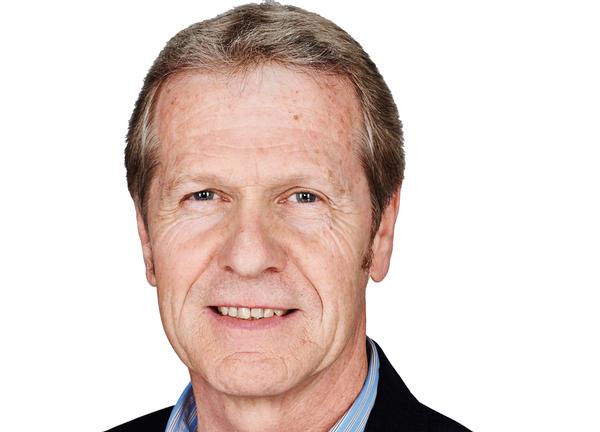
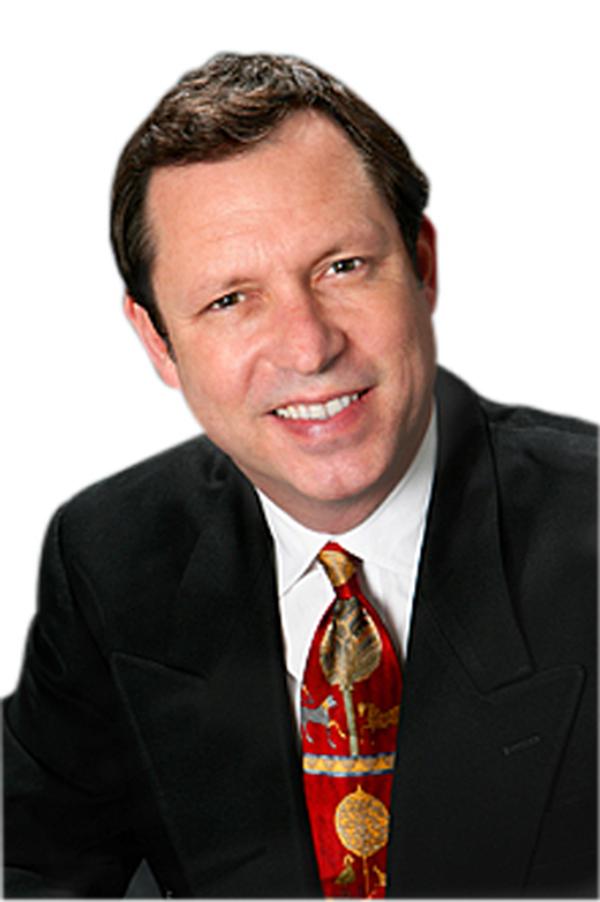
Adrian MahonDirector of Health, Safety & Risk Management Merlin Entertainments
Mahon, Merlin Entertainments
What does your work involve? I’ve recently completed my term as the chair of IAAPA’s European Safety Committee. I was also an IAAPA Global Safety Committee member but have since handed over responsibility to Paul Chatelot from Disneyland Paris. I was also a member of IAAPA’s European Advisory Committee
Describe the IAAPA Safety Committee’s role in Europe? It was set up in 2011 as a sub-committee of both IAAPA’s Global Safety Committee and IAAPA’s Advisory Committee to assist IAAPA’s members to adopt and promote safe practices in their attractions and to represent their interests in health and safety issues. The Global Safety Committee deals with matters beyond Europe.
What’s the current focus of the committee with regards to safety in theme park rides? It has focused on revised EN and new ISO standards for Amusement Devices; developing a ‘Best Practice Safety Management System’ which members can adopt; developing best practices for guests with disabilities to boost accessibility; safety seminars for members; and gathering data on incident rates for member benchmarking and promotion.
What challenges face the industry at the moment? A survey of members last year revealed these key issues: guest misbehaviour and failure to follow instructions for their safety – 87 per cent of incidents on rides were caused by guests’ behaviour; recruitment and retention of ride operators and engineers; and changes in legislation – especially with regards disability discrimination.
How can these be addressed? To address misbehaviour, we need to find more effective ways of communicating the safety message to our guests, particularly using technology and social media. Regarding recruitment, our industry offers great career opportunities, but we need to ‘sell’ that message more effectively and back it up with clear career development structures and training. For legislation, the industry needs to anticipate the changes, develop a consistent and reasoned case and get that viewpoint across effectively to legislators and influencers.
What are the main recent safety improvements? Technology has advanced significantly and ride control systems have high levels of safety ‘redundancy’ built in, increasing reliability. The adoption and rigorous application of standards such as EN and the American Society for Testing and Materials (ASTM) by more countries has been of great benefit – and these standards are regularly reviewed and improved in their own right.
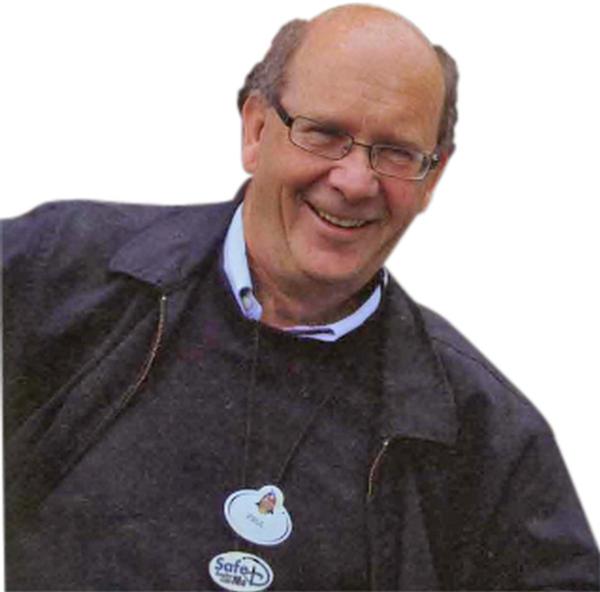
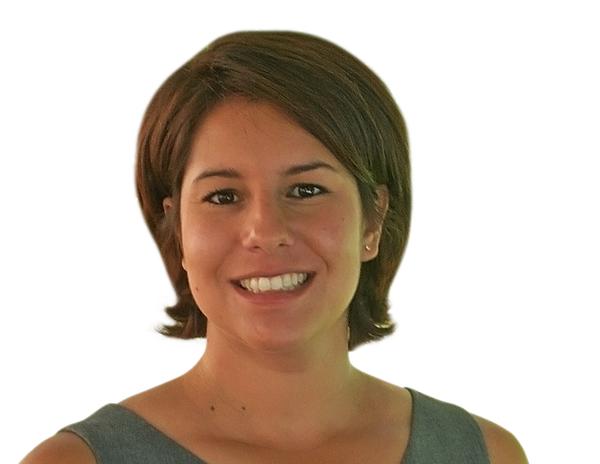
Paul ChatelotDirector of prevention, safety and environmental standardsDisneyland Paris
Chatelot, Disneyland Paris
Do you have a background/experience in safety? As a qualified aerospace and transport mechanical engineer, I’ve been involved with major programmes with Airbus, and GE/Snecma CFM56 engines for Formula 1 Grand Prix cars ? where safety is the number one priority. Since 1990, I’ve held key roles at Disneyland Paris: QA manager for ride design and construction; maintenance director; safety director for employee safety; and now safety director for all aspects of guest safety (attractions, food safety, consumers product, special events, fire prevention, hazardous installations and transports, fireworks and crisis management). So you could say safety is in my DNA.
What does your work at IAAPA Europe involve? As an IAAPA Global Safety Committee member, it involves maintaining good relationships with all European members and understanding different cultures; having a good understanding of the stakes for manufacturers and park operators; and working together to ensure robust safety in our industry.
What’s the current focus of the committee with regards to safety in theme park rides? Accessibility is a key challenge and there’s been a lot of research and conferences in this area. We’re also developing and sharing content for best practices or standards via a new safety management system.
What challenges face the industry at the moment? There’s the focus on how to manage guest behaviour; training operators and maintenance teams; and accessibility for people with special needs. Also, evolution of the EN Norm 13814 and development of an ISO Norm related to design, manufacturing maintenance, operations and inspections.
How can these be addressed? With the involvement of our safety experts in the different Working Groups; communicating with IAAPA members on best practices for safety; sharing our challenges with government agencies, authorities, associations and involving them; developing better communication tools for our guests to boost their safety awareness; and adapting future ride designs to address challenging behaviours.
What are the main recent safety improvements? Design standards are now very robust, and incidents related to design, maintenance or operations are very rare in theme parks with permanent rides.
What’s your advice to today’s operators and suppliers? At the IAAPA level, it’s important that manufacturers and operators work together with a common goal – safety. And to adapt training programmes and supervision to suit the needs of employees.
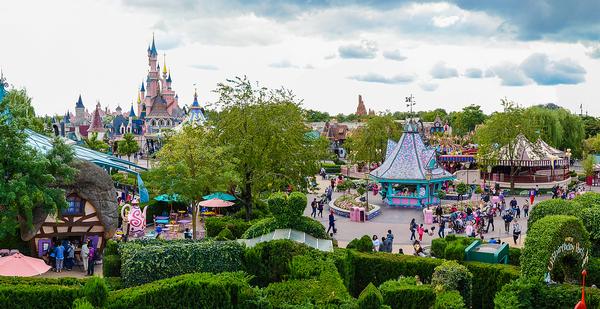
Disneyland Paris
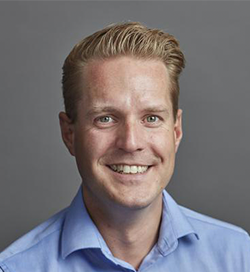
Jim SeayPresidentPremier Rides
Jim Seay
What does your safety work involve? I’ve been chair of ASTM F24 (Amusement Rides and Devices) for six years. For six years prior to that, I was vice chair. Before that I served as subcommittee chair for the design and manufacturing standard.
What’s the current focus of the ASTM with regards to safety in theme park rides? All our 1,000-plus members volunteer their time to develop consensus safety standards that can be applied globally. The focus is on traditional areas of ride safety (design, operation and maintenance of rollercoasters, family and water rides) plus new products quickly expanding on the market (zip lines and trampoline courts).
What challenges face the industry at the moment? The dramatic growth of the industry on a global basis, especially in rapidly emerging economies like Brazil, Russia, India and China, is creating a tremendous demand for applicable global safety practices and a significant need for experienced talent to build new facilities and get them operating with a high level of safety.
How can these be addressed? Regarding safety practices, ASTM F24 has established two protocols that allow for the adoption of F24 standards by countries with established or emerging economies. ASTM F24 is publishing a Canada-specific standard that, in addition to current F24 requirements, includes long-withheld practices important to Canada. Bolivia recently completed a year-long review of the F24 standards and published their own standards via their standards body IBNORCA, referencing many key F24 standards.
What are the main recent safety improvements? Global efforts regarding education have been significant and effective. IAAPA has presented safety seminars virtually worldwide with a large audience of suppliers, regulators, inspectors and operators. This has made a great impact and helped establish global connections for those who participated. There’s been a strong effort to harmonise safety standards worldwide to ensure a global minimum bar for safe operations at amusement parks everywhere. IAAPA sponsors meetings with experts from countries globally to help determine how best to harmonise existing standards. The ASTM F24 and EURONORM harmonisation effort has been a great success. The rapid adoption of existing standards, especially ASTM F24, by countries with emerging economies has created an environment where operators acting outside normal boundaries of safe practices are fewer. Finally, the tremendous amount of volunteering that’s being done for standards has created a resource that can quickly react to new technologies being introduced to the industry and has been able to quickly develop safety standards for those technologies. New trampoline court safety standards are a good example.
Are there any changes to legislation on the horizon? Extensive legislative efforts are occurring worldwide which makes the job of those focused on safety more difficult to ensure harmonisation. Of great concern are new standards established by countries that do not take into consideration existing efforts of groups like ASTM and EURONORM.
What advice do you have for the industry? The industry shouldn’t fear a focus on safety practices – they result in better performance and equipment.
Three key issues are guest misbehaviour; recruitment and retention of ride operators and engineers; and changes in legislation, especially with regards to disability discrimination
Franceen GonzalesVP of Business DevelopmentWhiteWater West Industries
Gonzales, WhiteWater West
What safety committees are you involved with? IAAPA Safety Committee, ASTM international board of directors, and National Swimming Pool Foundation board of directors.
How does your background assist with this work? I’ve spent 27 years operating amusement parks, waterparks, resorts and FECs, focusing mainly on safety and risk management. Understanding how parks operate, how rides and devices work, and how employees and guests interact with rides and devices gives an understanding of what is realistic, reasonable, and addresses risk in these environments.
What’s the current focus with regards to safety in water park rides? There are standards through EN and ASTM on waterslides and now we have one on aquatic play. We’re currently focusing on sprays in play environments, fall protection on waterslides, netting in aquatic play, stationary waves and wave pools. Sprays are of interest to minimise injuries from water impacts to the face and eyes. Several companies now sell stationary waves and some minimum standards should be developed as more products come into the market. Wave pools have always been considered a pool, but the mechanism that creates the wave is of interest to minimise certain risks inherent to these environments.
What challenges face the industry at the moment? Not so much a challenge but an opportunity ? there’s a lot of growth right now and employing minimum standards, especially in areas where waterparks are new, will help operators and manufacturers minimise risk to guests and employees. There’s a learning curve for new operators ? minimum standards help to start them off on the right foot.
What are the main recent safety improvements? The work that has gone into harmonising standards worldwide. Previously manufacturers had several local standards to consider when designing, changing from locale to locale. With harmonisation, we take the best and most reasonable standard and make that the new standard for all.
EN and ASTM have been working to harmonise amusement ride and device standards and that will encourage others to do so. ASTM provided a forum for Canada to write its own standards using an ASTM designation with F24 standards, customised to accommodate Canada-specific requirements. This will become the model for other countries to use ASTM F24 standards and develop their own to meet local needs, and meanwhile have access to the most robust set of standards for the industry written by accomplished experts. This means that as the industry grows globally, we’re all using the latest standards to establish a baseline for industry safety.
There are now standards through EN and ASTM on waterslides
COMPANY PROFILES
IAAPA EMEA
IAAPA Expo Europe was established in 2006 and has grown to the largest international conference and [more...]
instantprint
We’re a Yorkshire-based online printer, founded
in 2009 by Adam Carnell and James Kinsella. [more...]
In-park and ride safety is of prime importance in the attractions industry, and the challenges are ever changing. We ask industry experts in Europe and the US about the latest developments
Adrian MahonDirector of Health, Safety & Risk Management Merlin Entertainments
Mahon, Merlin Entertainments
What does your work involve? I’ve recently completed my term as the chair of IAAPA’s European Safety Committee. I was also an IAAPA Global Safety Committee member but have since handed over responsibility to Paul Chatelot from Disneyland Paris. I was also a member of IAAPA’s European Advisory Committee
Describe the IAAPA Safety Committee’s role in Europe? It was set up in 2011 as a sub-committee of both IAAPA’s Global Safety Committee and IAAPA’s Advisory Committee to assist IAAPA’s members to adopt and promote safe practices in their attractions and to represent their interests in health and safety issues. The Global Safety Committee deals with matters beyond Europe.
What’s the current focus of the committee with regards to safety in theme park rides? It has focused on revised EN and new ISO standards for Amusement Devices; developing a ‘Best Practice Safety Management System’ which members can adopt; developing best practices for guests with disabilities to boost accessibility; safety seminars for members; and gathering data on incident rates for member benchmarking and promotion.
What challenges face the industry at the moment? A survey of members last year revealed these key issues: guest misbehaviour and failure to follow instructions for their safety – 87 per cent of incidents on rides were caused by guests’ behaviour; recruitment and retention of ride operators and engineers; and changes in legislation – especially with regards disability discrimination.
How can these be addressed? To address misbehaviour, we need to find more effective ways of communicating the safety message to our guests, particularly using technology and social media. Regarding recruitment, our industry offers great career opportunities, but we need to ‘sell’ that message more effectively and back it up with clear career development structures and training. For legislation, the industry needs to anticipate the changes, develop a consistent and reasoned case and get that viewpoint across effectively to legislators and influencers.
What are the main recent safety improvements? Technology has advanced significantly and ride control systems have high levels of safety ‘redundancy’ built in, increasing reliability. The adoption and rigorous application of standards such as EN and the American Society for Testing and Materials (ASTM) by more countries has been of great benefit – and these standards are regularly reviewed and improved in their own right.
Paul ChatelotDirector of prevention, safety and environmental standardsDisneyland Paris
Chatelot, Disneyland Paris
Do you have a background/experience in safety? As a qualified aerospace and transport mechanical engineer, I’ve been involved with major programmes with Airbus, and GE/Snecma CFM56 engines for Formula 1 Grand Prix cars ? where safety is the number one priority. Since 1990, I’ve held key roles at Disneyland Paris: QA manager for ride design and construction; maintenance director; safety director for employee safety; and now safety director for all aspects of guest safety (attractions, food safety, consumers product, special events, fire prevention, hazardous installations and transports, fireworks and crisis management). So you could say safety is in my DNA.
What does your work at IAAPA Europe involve? As an IAAPA Global Safety Committee member, it involves maintaining good relationships with all European members and understanding different cultures; having a good understanding of the stakes for manufacturers and park operators; and working together to ensure robust safety in our industry.
What’s the current focus of the committee with regards to safety in theme park rides? Accessibility is a key challenge and there’s been a lot of research and conferences in this area. We’re also developing and sharing content for best practices or standards via a new safety management system.
What challenges face the industry at the moment? There’s the focus on how to manage guest behaviour; training operators and maintenance teams; and accessibility for people with special needs. Also, evolution of the EN Norm 13814 and development of an ISO Norm related to design, manufacturing maintenance, operations and inspections.
How can these be addressed? With the involvement of our safety experts in the different Working Groups; communicating with IAAPA members on best practices for safety; sharing our challenges with government agencies, authorities, associations and involving them; developing better communication tools for our guests to boost their safety awareness; and adapting future ride designs to address challenging behaviours.
What are the main recent safety improvements? Design standards are now very robust, and incidents related to design, maintenance or operations are very rare in theme parks with permanent rides.
What’s your advice to today’s operators and suppliers? At the IAAPA level, it’s important that manufacturers and operators work together with a common goal – safety. And to adapt training programmes and supervision to suit the needs of employees.
Disneyland Paris
Jim SeayPresidentPremier Rides
Jim Seay
What does your safety work involve? I’ve been chair of ASTM F24 (Amusement Rides and Devices) for six years. For six years prior to that, I was vice chair. Before that I served as subcommittee chair for the design and manufacturing standard.
What’s the current focus of the ASTM with regards to safety in theme park rides? All our 1,000-plus members volunteer their time to develop consensus safety standards that can be applied globally. The focus is on traditional areas of ride safety (design, operation and maintenance of rollercoasters, family and water rides) plus new products quickly expanding on the market (zip lines and trampoline courts).
What challenges face the industry at the moment? The dramatic growth of the industry on a global basis, especially in rapidly emerging economies like Brazil, Russia, India and China, is creating a tremendous demand for applicable global safety practices and a significant need for experienced talent to build new facilities and get them operating with a high level of safety.
How can these be addressed? Regarding safety practices, ASTM F24 has established two protocols that allow for the adoption of F24 standards by countries with established or emerging economies. ASTM F24 is publishing a Canada-specific standard that, in addition to current F24 requirements, includes long-withheld practices important to Canada. Bolivia recently completed a year-long review of the F24 standards and published their own standards via their standards body IBNORCA, referencing many key F24 standards.
What are the main recent safety improvements? Global efforts regarding education have been significant and effective. IAAPA has presented safety seminars virtually worldwide with a large audience of suppliers, regulators, inspectors and operators. This has made a great impact and helped establish global connections for those who participated. There’s been a strong effort to harmonise safety standards worldwide to ensure a global minimum bar for safe operations at amusement parks everywhere. IAAPA sponsors meetings with experts from countries globally to help determine how best to harmonise existing standards. The ASTM F24 and EURONORM harmonisation effort has been a great success. The rapid adoption of existing standards, especially ASTM F24, by countries with emerging economies has created an environment where operators acting outside normal boundaries of safe practices are fewer. Finally, the tremendous amount of volunteering that’s being done for standards has created a resource that can quickly react to new technologies being introduced to the industry and has been able to quickly develop safety standards for those technologies. New trampoline court safety standards are a good example.
Are there any changes to legislation on the horizon? Extensive legislative efforts are occurring worldwide which makes the job of those focused on safety more difficult to ensure harmonisation. Of great concern are new standards established by countries that do not take into consideration existing efforts of groups like ASTM and EURONORM.
What advice do you have for the industry? The industry shouldn’t fear a focus on safety practices – they result in better performance and equipment.
Three key issues are guest misbehaviour; recruitment and retention of ride operators and engineers; and changes in legislation, especially with regards to disability discrimination
Franceen GonzalesVP of Business DevelopmentWhiteWater West Industries
Gonzales, WhiteWater West
What safety committees are you involved with? IAAPA Safety Committee, ASTM international board of directors, and National Swimming Pool Foundation board of directors.
How does your background assist with this work? I’ve spent 27 years operating amusement parks, waterparks, resorts and FECs, focusing mainly on safety and risk management. Understanding how parks operate, how rides and devices work, and how employees and guests interact with rides and devices gives an understanding of what is realistic, reasonable, and addresses risk in these environments.
What’s the current focus with regards to safety in water park rides? There are standards through EN and ASTM on waterslides and now we have one on aquatic play. We’re currently focusing on sprays in play environments, fall protection on waterslides, netting in aquatic play, stationary waves and wave pools. Sprays are of interest to minimise injuries from water impacts to the face and eyes. Several companies now sell stationary waves and some minimum standards should be developed as more products come into the market. Wave pools have always been considered a pool, but the mechanism that creates the wave is of interest to minimise certain risks inherent to these environments.
What challenges face the industry at the moment? Not so much a challenge but an opportunity ? there’s a lot of growth right now and employing minimum standards, especially in areas where waterparks are new, will help operators and manufacturers minimise risk to guests and employees. There’s a learning curve for new operators ? minimum standards help to start them off on the right foot.
What are the main recent safety improvements? The work that has gone into harmonising standards worldwide. Previously manufacturers had several local standards to consider when designing, changing from locale to locale. With harmonisation, we take the best and most reasonable standard and make that the new standard for all.
EN and ASTM have been working to harmonise amusement ride and device standards and that will encourage others to do so. ASTM provided a forum for Canada to write its own standards using an ASTM designation with F24 standards, customised to accommodate Canada-specific requirements. This will become the model for other countries to use ASTM F24 standards and develop their own to meet local needs, and meanwhile have access to the most robust set of standards for the industry written by accomplished experts. This means that as the industry grows globally, we’re all using the latest standards to establish a baseline for industry safety.
There are now standards through EN and ASTM on waterslides
The Toverland theme park in the Netherlands has announced a €98m expansion programme
that will add a resort, new attractions and staff facilities as it pursues plans to become a multi-
day destination.
Hotel de France, located on the British Isle of Jersey, has created a wellness retreat package
that includes a hot yoga session that will take place in Jersey Zoo’s butterfly sanctuary.
A new immersive attraction designed to transport visitors into the final hours of ancient Pompeii
is preparing to open near the world-famous archaeological site in southern Italy.
Experience design company, BRC Imagination Arts, has completed a transition that sees founder
Bob Rogers pass ownership of the business to four long-serving senior executives, while
remaining actively involved with the company.
Movie Park Germany has opened a new Paramount Pictures-themed attraction as part of its 30th
anniversary celebrations, using immersive storytelling and adaptive reuse to reinforce the park’s
longstanding “Hollywood in Germany” positioning.
Therme Manchester’s 28-acre development, which will include interconnected glass pavilions
that measure 65,000sq m, will be the largest bathing and wellbeing attraction in the world once
complete, according to prof David Russell, CEO of Therme UK.
Efteling has opened Hooghmoed, a new family drop tower designed to broaden the appeal of its
recently launched Sirene Island themed area and introduce younger visitors to thrill attractions.
A proposed Puy du Fou development near Bicester and Universal Destinations and Experiences’
planned resort in Bedford are emerging as part of a wider transformation of the Oxford–
Cambridge Growth Corridor into a major centre for UK leisure and tourism inv
Shedd Aquarium has opened the Immersion Theater developed in partnership with SimEx-
Iwerks, as part of a wider strategy to enhance the guest experience and create additional
revenue opportunities.
The UK government has announced a temporary reduction in VAT on visitor attractions and
children’s meals as part of a summer cost-of-living support package designed to stimulate the
visitor economy and encourage family days out.
+ More news
COMPANY PROFILES
IAAPA EMEA IAAPA Expo Europe was established in 2006 and has grown to the largest international conference and [more...]
instantprint We’re a Yorkshire-based online printer, founded
in 2009 by Adam Carnell and James Kinsella. [more...]