With more than 30,000 supplier clients in 85 countries, Ecocert is recognised worldwide for the certification of natural and organic food and food products, services and management systems. It’s also widely known in the organic cosmetics sector, where under the Ecocert Greenlife division, it certifies over 1,000 brands which, it says, represents 75 per cent of the market. Now, this specialist company has turned its attention to spa operations with the launch of its Being label to help consumers recognise high-quality spa facilities which are respectful of the environment.
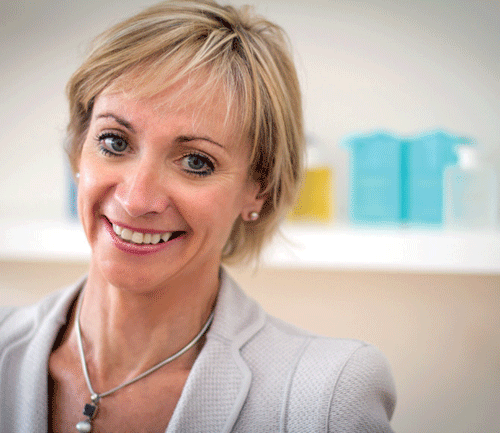
Having trialled the label in France, Ecocert is now looking to roll it out globally. Valerie Lemarie, the general manager of Ecocert Greenlife reveals the details.
Why did you launch the Being label? More consumers are looking for wellness centres where they can experience ‘real wellbeing’ – relaxation using healthy, natural products in a space/business that’s environmentally friendly.
It’s difficult to quantify the demand, but we know it’s a growing industry as cosmetic brands have created eco-friendly product lines; many establishments offer organic/natural treatments; and specialist websites, magazines (Organic Spa) and associations (the Green Spa Network) have launched.
How did you develop it? It took us two years in total. Ecocert already has certifications for golf, catering, forest management and other operations, but to form the technical criteria for Being, we put together a committee of 12 spa, wellbeing and hospitality professionals (see p50). Their input on quality of service, treatment protocols and staff management was a great help. We also sought feedback from the public about what they’d want the label to cover.
What difficulties did you face? The main challenge was making sure the criteria met with the various regulations that are already enforced around the world – from health and safety protocols through to swimming pool, cosmetics and labour laws.
What’s the criteria? For Level 1 – Ecological Spa we have 50 basic criteria (see opposite) which focus on services/the condition of treatments (10); products purchased, used or sold by the spa establishments (13); and site management (27). Then spas at Level 2 – Excellence: Organic & Ecological Spa should meet all criteria at Level 1 plus six additional standards. Three of these should be based on exceeding the compulsory criteria, such as having more than one natural and organic product and treatment offering. The other three can be chosen by the spa and be specific to its operation, such as committing to using renewable energy sources like solar panels, or sourcing more products locally.
How does Being differ to Green Globe’s spa benchmarks? Our’s is the first standard to focus specifically on spas – Green Globe is an adaptation of resort and hospitality management (see SB08/2 p74) – it’s also the first to give guarantees to the end-user.
What are the minimum requirements for site management? At the very least, spas should record water and energy consumption, the quantity of waste and identify areas for improvement. Various other criteria include efficient insulation of heat experiences, use of low energy lights and regulation of water chemicals.
What are your requirements for staff competence? Therapists need to be sufficiently qualified and deliver on protocols to ensure quality of service. Each therapist needs a job description and clear development plans for on-going training and qualifications.
What’s the certification process? We’ve created a free online self-assessment questionnaire covering 24 points which operators can fill out to see what criteria they already meet and what they can improve on; along with details of which criteria they don’t meet and what they need to do to pass.
We also offer training courses for operators wanting to fully understand the Being standard and the certification steps.
Once the questionnaire’s been filled out, we need documented evidence of operators are meeting criteria. We’ll then conduct a site inspection and highlight any areas that need extra work in a conformity report. Once we’re satisfied that the spa has passed the criteria, we’ll issue them with a certificate and Being plaque.
We have two office-based people and eight field inspectors in our Organic & Ecological Spas Department to oversee this process.
How much does certification cost? It’s a fixed yearly fee which ranges from €800-€6,000 (US$1,050-US$7,900, £687-£5,150) depending on the size and type of the spa. A discount is available for operators with multiple sites.
What does the fee cover? The documentary review, inspection visit and report, issue of the Being nameplate and as well as promotional tools such as stickers, brochures and our soon to launch website.
How are spas monitored thereafter? There will be at least one anonymous visit or unannounced inspection a year.
What are the advantages of having a Being certification? There are many! This certification has the benefit of the backing from Ecocert – a globally recognised certification body; and an expert in natural and organic certification.
With 23 criteria based on the wellbeing of customers and quality of treatments, the Being certification will indicate that you are a spa that takes care of your clients. The standard could be used as a point of differentiation – to point out your environmental commitment in your spa operation, while analysing environmental practices such as waste, water and electricity management often helps reduce costs. Involving your team in the process can also help to motivate them by giving them a common goal.
How are you raising awareness of it? Via Ecocert’s website, a Facebook page, at conferences/trade shows and through advertising. Towards the end of 2013 we will also be launching a dedicated Being website, which will include a public-facing register of Being-certified facilities.
How many spas are certified? At the moment we only have a few, including Eco Spa Melvita in Paris and Carnac Thalasso & Spa Resort Hôtel in Bretagne. However, 15 more are already going through the process and we’re aiming to have 50 certified in the next 12 months.
We’ve also developed the Being Program to help fast track certification. At a fixed cost of €800 (US$1,050, £689), this involves online training, regular follow up and access to our network of certified suppliers and consultants to get operators through certification within two years.
What countries and companies will you target? Europe, the US and Asia are our main focus, but as Ecocert is present in more than 85 countries we’re not ruling anything out.
In terms of companies, we’ll be targeting eco-chic spas and those in luxury hotels and resorts. We think that if a spa claims to be high-end, then it’s already going to be offering organic/natural products and that it will be mindful of how its operations are impacting on the environment.
Read more from this issue of Attractions Management magazine
View contents of Attractions Management 2013 issue 3
Interview: Lee David Stephens
Thai-based management company
MSpa runs 44 spas with 450 staff. The
General Manager talks to Katie Barnes
about a recent deal with Per Aquum
and its rapid expansion
Interview: Kathryn Moore
MSpa’s operations director is creating
a brand new wellness concept and a
fast track spa manager programme
Company Profile Promotion: GOCO Hospitality
After just four years of operation GOCO Hospitality is regarded as a global leader
in wellness hospitality segment of the industry. With 22 projects on its books,
spanning three continents, we look at what underpins the company’s success
Company profile promotion: Comfort Zone
The Comfort Zone spa brand has been newly revamped and revitalised to better communicate its core offerings as a natural, scientific and soul-centred skincare and lifestyle brand
Green: Being green
Ecocert’s new Being label is the first
public-facing green certification for
spa operations, eco-friendly
Promotional Feature: Part 4 - Pre-Opening
Opening a spa successfully is all about planning. Gary
Henkin, president of WTS and Doug Chambers, principal
of Blu Spas, share their experience of pre-opening
Company Profile Promotion: Aromatherapy Associates
Global product company Aromatherapy Associates knows how
to make treatments and retail work in a spa environment and
partners with operators to make a real point of difference
Industry survey: Price to pay
A GSWS report on global therapist pay focuses on differing salary composition, benefit and commission structures. Lisa Starr takes a closer look
Spa Retreat: Running on juice
Juice Master founder Jason Vale tells
Kate Cracknell about its retreats and
how juicing can help prevent disease
Interview: Wee Wei Ling
Neena Dhillon meets the founder of
St Gregory: the spa brand owned by Pan
Pacific that’s just opened a wellness
floor in Singapore’s ‘hotel in a garden’
Research: Moving target
A McKinsey study highlights the fast-changing
spending patterns of China’s
luxury consumers. Leonor Stanton
finds out what this means for spas
Advertisement Promotion: A gift from Ez-Runner...
Vouchers can be used as a stand-alone system integrated into your website or added as a module of Ez-Runner’s leisure management software to control your spa facility
The Being standard Level 1 – Ecological Spa has 50 mandatory criteria over three domains:
Services * At least one treatment should be based exclusively on organic and natural products * Detailed procedures are needed for all treatment protocols * Traceability of treatments – for every client, a spa should know what treatment was followed, products applied and therapist * Competence of staff and spa managers (see below) * Comfort levels of customers throughout * Guest satisfaction surveys with corrective action plans
Products * There should be at least one organic or natural product offering for sale in the spa * Certified organic snacks * Natural cleaning products * Textiles (towels, bathrobes, uniforms etc) should be organic, natural or recycled * Air perfumes or candles used in the spa should natural or organic
Site management * Environmental management of water, energy and waste * Compliance with all current standards and regulations – from health and safety protocols through to cosmetics, pool management and labour laws * Equipment maintenance * Hygiene and security conditions * Pool and pond treatment * Environmental management of laundry operations * Minimum social criteria – workplace compliance with basic human rights, local regulations and fundamental conventions of the International Labour Organization
Being committee
The industry experts who consulted on the development of the Being label include the following people:
Véronique Balcaen and Yves Rocher, Spa l’Heure Végétale at La Grée de Landes – eco hotel spa Nathalie Bouchon Poireau, Cinq Mondes – day spas and cosmetics Agnès Bourgeon – architect and spa designer Véronique Brégeon, LeCoq-Gadby – hotel spa Marie Cazaux – spa consultant Noémie de Goys, Nohèm – cosmetics brand & spa Martial Denetre, Carnac resort – thalassotherapy spa Aldina Duarte-Ramos, Sofitel – hotel spa chain Amanda Gerentes Chevillat, Melvita – cosmetic brand Jean Eric Knecht, Elégance Group – spa & beauty school Ludovic Lainé, La Paz Group – spa designer Laurent Malbert, Chill Out Design – equipment manufacturer
Ecocert is well known as it already certifies over 1,000 natural and organic cosmetic brands, but this is the first time it’s focused on spa operations
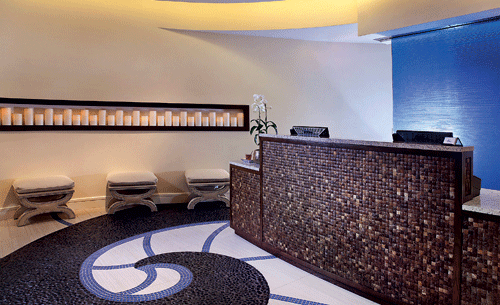
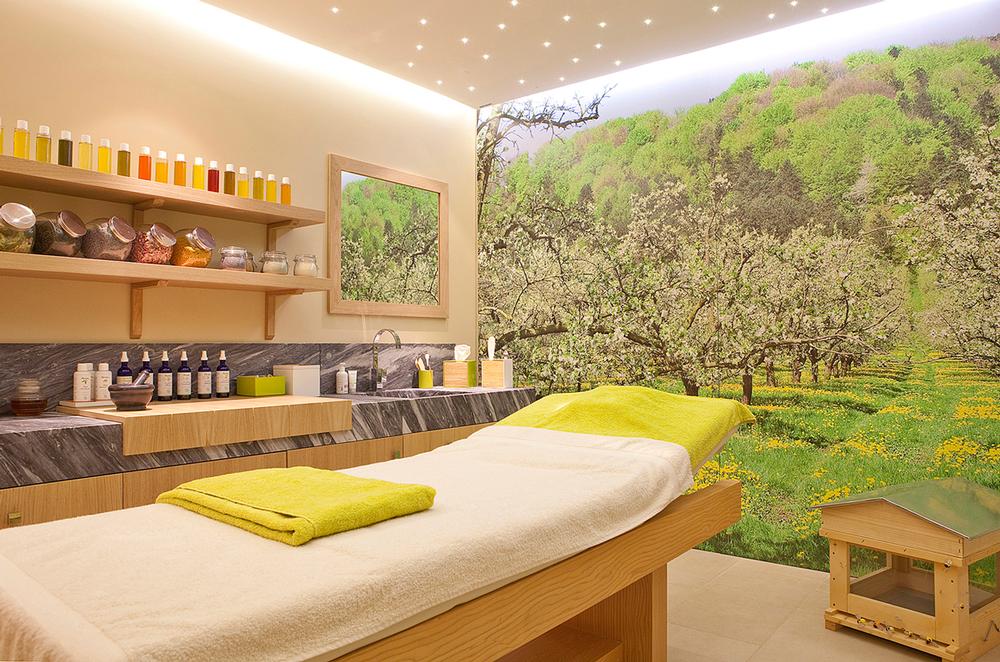
Melvita’s eco spa in Paris is one of the first facilities to earn the Being label
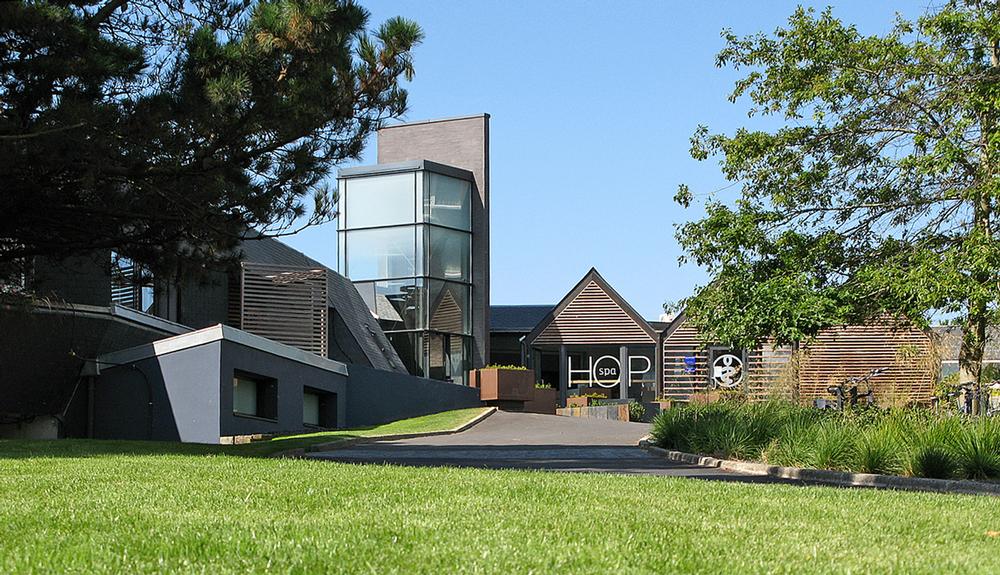
The goal is to certify 50 spas in 12 months to join other Being facilities such as the Carnac thalasso resort in France
COMPANY PROFILES
RMA Ltd
RMA Ltd is a one-stop global company
that can design, build and produce from a
greenfield site upw [more...]
Alterface
Alterface’s Creative Division team is
seasoned in concept and ride development,
as well as storyte [more...]
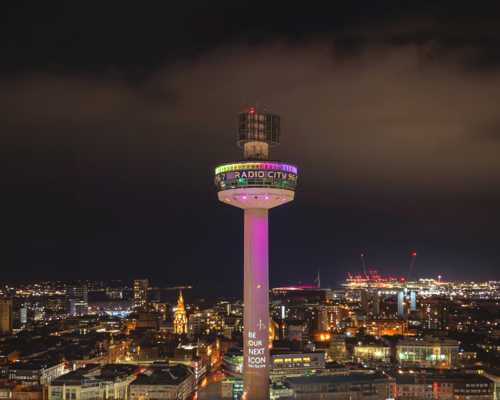
An opportunity to reimagine one of the UK’s most recognisable towers has been formally
opened by Rivington Hark, as St Johns Beacon invites operators and partners to shape its
next phase. [more...]
With more than 30,000 supplier clients in 85 countries, Ecocert is recognised worldwide for the certification of natural and organic food and food products, services and management systems. It’s also widely known in the organic cosmetics sector, where under the Ecocert Greenlife division, it certifies over 1,000 brands which, it says, represents 75 per cent of the market. Now, this specialist company has turned its attention to spa operations with the launch of its Being label to help consumers recognise high-quality spa facilities which are respectful of the environment.
Having trialled the label in France, Ecocert is now looking to roll it out globally. Valerie Lemarie, the general manager of Ecocert Greenlife reveals the details.
Why did you launch the Being label? More consumers are looking for wellness centres where they can experience ‘real wellbeing’ – relaxation using healthy, natural products in a space/business that’s environmentally friendly.
It’s difficult to quantify the demand, but we know it’s a growing industry as cosmetic brands have created eco-friendly product lines; many establishments offer organic/natural treatments; and specialist websites, magazines (Organic Spa) and associations (the Green Spa Network) have launched.
How did you develop it? It took us two years in total. Ecocert already has certifications for golf, catering, forest management and other operations, but to form the technical criteria for Being, we put together a committee of 12 spa, wellbeing and hospitality professionals (see p50). Their input on quality of service, treatment protocols and staff management was a great help. We also sought feedback from the public about what they’d want the label to cover.
What difficulties did you face? The main challenge was making sure the criteria met with the various regulations that are already enforced around the world – from health and safety protocols through to swimming pool, cosmetics and labour laws.
What’s the criteria? For Level 1 – Ecological Spa we have 50 basic criteria (see opposite) which focus on services/the condition of treatments (10); products purchased, used or sold by the spa establishments (13); and site management (27). Then spas at Level 2 – Excellence: Organic & Ecological Spa should meet all criteria at Level 1 plus six additional standards. Three of these should be based on exceeding the compulsory criteria, such as having more than one natural and organic product and treatment offering. The other three can be chosen by the spa and be specific to its operation, such as committing to using renewable energy sources like solar panels, or sourcing more products locally.
How does Being differ to Green Globe’s spa benchmarks? Our’s is the first standard to focus specifically on spas – Green Globe is an adaptation of resort and hospitality management (see SB08/2 p74) – it’s also the first to give guarantees to the end-user.
What are the minimum requirements for site management? At the very least, spas should record water and energy consumption, the quantity of waste and identify areas for improvement. Various other criteria include efficient insulation of heat experiences, use of low energy lights and regulation of water chemicals.
What are your requirements for staff competence? Therapists need to be sufficiently qualified and deliver on protocols to ensure quality of service. Each therapist needs a job description and clear development plans for on-going training and qualifications.
What’s the certification process? We’ve created a free online self-assessment questionnaire covering 24 points which operators can fill out to see what criteria they already meet and what they can improve on; along with details of which criteria they don’t meet and what they need to do to pass.
We also offer training courses for operators wanting to fully understand the Being standard and the certification steps.
Once the questionnaire’s been filled out, we need documented evidence of operators are meeting criteria. We’ll then conduct a site inspection and highlight any areas that need extra work in a conformity report. Once we’re satisfied that the spa has passed the criteria, we’ll issue them with a certificate and Being plaque.
We have two office-based people and eight field inspectors in our Organic & Ecological Spas Department to oversee this process.
How much does certification cost? It’s a fixed yearly fee which ranges from €800-€6,000 (US$1,050-US$7,900, £687-£5,150) depending on the size and type of the spa. A discount is available for operators with multiple sites.
What does the fee cover? The documentary review, inspection visit and report, issue of the Being nameplate and as well as promotional tools such as stickers, brochures and our soon to launch website.
How are spas monitored thereafter? There will be at least one anonymous visit or unannounced inspection a year.
What are the advantages of having a Being certification? There are many! This certification has the benefit of the backing from Ecocert – a globally recognised certification body; and an expert in natural and organic certification.
With 23 criteria based on the wellbeing of customers and quality of treatments, the Being certification will indicate that you are a spa that takes care of your clients. The standard could be used as a point of differentiation – to point out your environmental commitment in your spa operation, while analysing environmental practices such as waste, water and electricity management often helps reduce costs. Involving your team in the process can also help to motivate them by giving them a common goal.
How are you raising awareness of it? Via Ecocert’s website, a Facebook page, at conferences/trade shows and through advertising. Towards the end of 2013 we will also be launching a dedicated Being website, which will include a public-facing register of Being-certified facilities.
How many spas are certified? At the moment we only have a few, including Eco Spa Melvita in Paris and Carnac Thalasso & Spa Resort Hôtel in Bretagne. However, 15 more are already going through the process and we’re aiming to have 50 certified in the next 12 months.
We’ve also developed the Being Program to help fast track certification. At a fixed cost of €800 (US$1,050, £689), this involves online training, regular follow up and access to our network of certified suppliers and consultants to get operators through certification within two years.
What countries and companies will you target? Europe, the US and Asia are our main focus, but as Ecocert is present in more than 85 countries we’re not ruling anything out.
In terms of companies, we’ll be targeting eco-chic spas and those in luxury hotels and resorts. We think that if a spa claims to be high-end, then it’s already going to be offering organic/natural products and that it will be mindful of how its operations are impacting on the environment.
Read more from this issue of Attractions Management magazine
View contents of Attractions Management 2013 issue 3
Interview: Lee David Stephens
Thai-based management company
MSpa runs 44 spas with 450 staff. The
General Manager talks to Katie Barnes
about a recent deal with Per Aquum
and its rapid expansion
Interview: Kathryn Moore
MSpa’s operations director is creating
a brand new wellness concept and a
fast track spa manager programme
Company Profile Promotion: GOCO Hospitality
After just four years of operation GOCO Hospitality is regarded as a global leader
in wellness hospitality segment of the industry. With 22 projects on its books,
spanning three continents, we look at what underpins the company’s success
Company profile promotion: Comfort Zone
The Comfort Zone spa brand has been newly revamped and revitalised to better communicate its core offerings as a natural, scientific and soul-centred skincare and lifestyle brand
Green: Being green
Ecocert’s new Being label is the first
public-facing green certification for
spa operations, eco-friendly
Promotional Feature: Part 4 - Pre-Opening
Opening a spa successfully is all about planning. Gary
Henkin, president of WTS and Doug Chambers, principal
of Blu Spas, share their experience of pre-opening
Company Profile Promotion: Aromatherapy Associates
Global product company Aromatherapy Associates knows how
to make treatments and retail work in a spa environment and
partners with operators to make a real point of difference
Industry survey: Price to pay
A GSWS report on global therapist pay focuses on differing salary composition, benefit and commission structures. Lisa Starr takes a closer look
Spa Retreat: Running on juice
Juice Master founder Jason Vale tells
Kate Cracknell about its retreats and
how juicing can help prevent disease
Interview: Wee Wei Ling
Neena Dhillon meets the founder of
St Gregory: the spa brand owned by Pan
Pacific that’s just opened a wellness
floor in Singapore’s ‘hotel in a garden’
Research: Moving target
A McKinsey study highlights the fast-changing
spending patterns of China’s
luxury consumers. Leonor Stanton
finds out what this means for spas
Advertisement Promotion: A gift from Ez-Runner...
Vouchers can be used as a stand-alone system integrated into your website or added as a module of Ez-Runner’s leisure management software to control your spa facility
The Being standard Level 1 – Ecological Spa has 50 mandatory criteria over three domains:
Services * At least one treatment should be based exclusively on organic and natural products * Detailed procedures are needed for all treatment protocols * Traceability of treatments – for every client, a spa should know what treatment was followed, products applied and therapist * Competence of staff and spa managers (see below) * Comfort levels of customers throughout * Guest satisfaction surveys with corrective action plans
Products * There should be at least one organic or natural product offering for sale in the spa * Certified organic snacks * Natural cleaning products * Textiles (towels, bathrobes, uniforms etc) should be organic, natural or recycled * Air perfumes or candles used in the spa should natural or organic
Site management * Environmental management of water, energy and waste * Compliance with all current standards and regulations – from health and safety protocols through to cosmetics, pool management and labour laws * Equipment maintenance * Hygiene and security conditions * Pool and pond treatment * Environmental management of laundry operations * Minimum social criteria – workplace compliance with basic human rights, local regulations and fundamental conventions of the International Labour Organization
Being committee
The industry experts who consulted on the development of the Being label include the following people:
Véronique Balcaen and Yves Rocher, Spa l’Heure Végétale at La Grée de Landes – eco hotel spa Nathalie Bouchon Poireau, Cinq Mondes – day spas and cosmetics Agnès Bourgeon – architect and spa designer Véronique Brégeon, LeCoq-Gadby – hotel spa Marie Cazaux – spa consultant Noémie de Goys, Nohèm – cosmetics brand & spa Martial Denetre, Carnac resort – thalassotherapy spa Aldina Duarte-Ramos, Sofitel – hotel spa chain Amanda Gerentes Chevillat, Melvita – cosmetic brand Jean Eric Knecht, Elégance Group – spa & beauty school Ludovic Lainé, La Paz Group – spa designer Laurent Malbert, Chill Out Design – equipment manufacturer
Ecocert is well known as it already certifies over 1,000 natural and organic cosmetic brands, but this is the first time it’s focused on spa operations
Melvita’s eco spa in Paris is one of the first facilities to earn the Being label
The goal is to certify 50 spas in 12 months to join other Being facilities such as the Carnac thalasso resort in France
A new immersive attraction designed to transport visitors into the final hours of ancient Pompeii
is preparing to open near the world-famous archaeological site in southern Italy.
Experience design company, BRC Imagination Arts, has completed a transition that sees founder
Bob Rogers pass ownership of the business to four long-serving senior executives, while
remaining actively involved with the company.
Movie Park Germany has opened a new Paramount Pictures-themed attraction as part of its 30th
anniversary celebrations, using immersive storytelling and adaptive reuse to reinforce the park’s
longstanding “Hollywood in Germany” positioning.
Therme Manchester’s 28-acre development, which will include interconnected glass pavilions
that measure 65,000sq m, will be the largest bathing and wellbeing attraction in the world once
complete, according to prof David Russell, CEO of Therme UK.
Efteling has opened Hooghmoed, a new family drop tower designed to broaden the appeal of its
recently launched Sirene Island themed area and introduce younger visitors to thrill attractions.
A proposed Puy du Fou development near Bicester and Universal Destinations and Experiences’
planned resort in Bedford are emerging as part of a wider transformation of the Oxford–
Cambridge Growth Corridor into a major centre for UK leisure and tourism inv
Shedd Aquarium has opened the Immersion Theater developed in partnership with SimEx-
Iwerks, as part of a wider strategy to enhance the guest experience and create additional
revenue opportunities.
The UK government has announced a temporary reduction in VAT on visitor attractions and
children’s meals as part of a summer cost-of-living support package designed to stimulate the
visitor economy and encourage family days out.
As designer Yinka Ilori prepares for his first solo gallery show in London, he speaks exclusively
to CLADmag about his mission to spread joy, the power of play, and his bold approach to using
colour (including the colours you won’t see in his work).
The government of Thailand is exploring plans for a THB300bn (£6.3bn, US$8.3bn)
entertainment complex in the country’s Eastern Economic Corridor (EEC), with officials
proposing a large-scale theme park and sports destination as part of a broader tourism and
economic development strategy.
An opportunity to reimagine one of the UK’s most recognisable towers has been formally
opened by Rivington Hark, as St Johns Beacon invites operators and partners to shape its
next phase. [more...]