In recent years, a number of research studies have heralded the benefits of long-term exercise on cognitive function. Few, however, have looked at how much exercise is needed to make a difference – and now a new study* by scientists at UC Irvine (UCI) suggests that just a short burst of moderate physical activity can immediately improve memory in older adults.
It’s an interesting finding considering the resurgence of high-intensity interval training that’s taking place in the health and fitness industry at the moment (see our recent HIT series, HCM July, August and October 2012).
Surprise test The relatively small study, led by post-doctoral neurobiologist Sabrina Segal and her team at UCI, was based on 31 healthy adults and 23 patients who were recruited from the university’s Alzheimer’s Disease Center. Their ages ranged from 50–85 years.
For the study, the participants were split into two groups, with both groups starting out by looking at 20 emotionally positive images – such as pictures of nature and animals.
Participants then either exercised for six minutes on a stationary cycle at 70 per cent VO2 max, or rested quietly (the sedentary control group). An hour after the exercise or rest, participants were then surprised with a test where they were asked to describe the images they had seen in as much detail as possible.
Saliva samples were also taken before participants looked at the images and immediately after, as well as before the bike test/rest and at 10-, 30- and 50-minute intervals after that.
Double-sided The results revealed that the people who had exercised recalled significantly more images and details than those who had rested. This was the case among both healthy ageing adults and those with Alzheimer’s.
In fact, in a surprise outcome, exercise appeared to aid memory even more effectively in the participants with Alzheimer’s – this group saw almost a twofold improvement, compared to 1.3-fold among healthy adults. Segal says: “We found that a single, short instance of moderately intense exercise particularly improved memory in individuals with memory deficits [Alzheimer’s].”
She adds: “Because of its implications and the need to better understand the mechanism by which exercise may enhance memory, we’re following up this study with an investigation of potential underlying biological factors.”
One of the biological factors Segal believes is it at play is the exercise-induced release of norepinephrine – a chemical that is strongly linked to memory in the brain. In the study, she found that salivary alpha amylase – a biomarker reflecting norepinephrine activity in the brain – had significantly increased in the groups which exercised. And, in correlation with the memory test results, salivary alpha amylase was at a greater level among the people suffering from Alzheimer’s.
“The current findings offer a natural and relatively safe alternative to pharmacological interventions for memory enhancement in healthy older individuals, as well as those who suffer from cognitive deficits,” she concludes.
*Segal et al. Exercise-Induced Activation Enhances Memory Consolidation in Both Normal Aging and Patients with Anmestic Mild Cognitive Impairment. Journal of Alzheimer’s Disease. November 2012
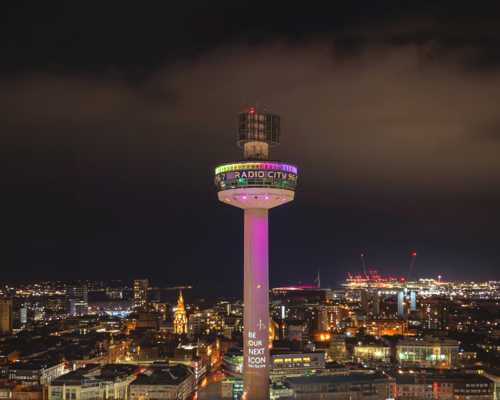
An opportunity to reimagine one of the UK’s most recognisable towers has been formally
opened by Rivington Hark, as St Johns Beacon invites operators and partners to shape its
next phase. [more...]
In recent years, a number of research studies have heralded the benefits of long-term exercise on cognitive function. Few, however, have looked at how much exercise is needed to make a difference – and now a new study* by scientists at UC Irvine (UCI) suggests that just a short burst of moderate physical activity can immediately improve memory in older adults.
It’s an interesting finding considering the resurgence of high-intensity interval training that’s taking place in the health and fitness industry at the moment (see our recent HIT series, HCM July, August and October 2012).
Surprise test The relatively small study, led by post-doctoral neurobiologist Sabrina Segal and her team at UCI, was based on 31 healthy adults and 23 patients who were recruited from the university’s Alzheimer’s Disease Center. Their ages ranged from 50–85 years.
For the study, the participants were split into two groups, with both groups starting out by looking at 20 emotionally positive images – such as pictures of nature and animals.
Participants then either exercised for six minutes on a stationary cycle at 70 per cent VO2 max, or rested quietly (the sedentary control group). An hour after the exercise or rest, participants were then surprised with a test where they were asked to describe the images they had seen in as much detail as possible.
Saliva samples were also taken before participants looked at the images and immediately after, as well as before the bike test/rest and at 10-, 30- and 50-minute intervals after that.
Double-sided The results revealed that the people who had exercised recalled significantly more images and details than those who had rested. This was the case among both healthy ageing adults and those with Alzheimer’s.
In fact, in a surprise outcome, exercise appeared to aid memory even more effectively in the participants with Alzheimer’s – this group saw almost a twofold improvement, compared to 1.3-fold among healthy adults. Segal says: “We found that a single, short instance of moderately intense exercise particularly improved memory in individuals with memory deficits [Alzheimer’s].”
She adds: “Because of its implications and the need to better understand the mechanism by which exercise may enhance memory, we’re following up this study with an investigation of potential underlying biological factors.”
One of the biological factors Segal believes is it at play is the exercise-induced release of norepinephrine – a chemical that is strongly linked to memory in the brain. In the study, she found that salivary alpha amylase – a biomarker reflecting norepinephrine activity in the brain – had significantly increased in the groups which exercised. And, in correlation with the memory test results, salivary alpha amylase was at a greater level among the people suffering from Alzheimer’s.
“The current findings offer a natural and relatively safe alternative to pharmacological interventions for memory enhancement in healthy older individuals, as well as those who suffer from cognitive deficits,” she concludes.
*Segal et al. Exercise-Induced Activation Enhances Memory Consolidation in Both Normal Aging and Patients with Anmestic Mild Cognitive Impairment. Journal of Alzheimer’s Disease. November 2012
A new immersive attraction designed to transport visitors into the final hours of ancient Pompeii
is preparing to open near the world-famous archaeological site in southern Italy.
Experience design company, BRC Imagination Arts, has completed a transition that sees founder
Bob Rogers pass ownership of the business to four long-serving senior executives, while
remaining actively involved with the company.
Movie Park Germany has opened a new Paramount Pictures-themed attraction as part of its 30th
anniversary celebrations, using immersive storytelling and adaptive reuse to reinforce the park’s
longstanding “Hollywood in Germany” positioning.
Therme Manchester’s 28-acre development, which will include interconnected glass pavilions
that measure 65,000sq m, will be the largest bathing and wellbeing attraction in the world once
complete, according to prof David Russell, CEO of Therme UK.
Efteling has opened Hooghmoed, a new family drop tower designed to broaden the appeal of its
recently launched Sirene Island themed area and introduce younger visitors to thrill attractions.
A proposed Puy du Fou development near Bicester and Universal Destinations and Experiences’
planned resort in Bedford are emerging as part of a wider transformation of the Oxford–
Cambridge Growth Corridor into a major centre for UK leisure and tourism inv
Shedd Aquarium has opened the Immersion Theater developed in partnership with SimEx-
Iwerks, as part of a wider strategy to enhance the guest experience and create additional
revenue opportunities.
The UK government has announced a temporary reduction in VAT on visitor attractions and
children’s meals as part of a summer cost-of-living support package designed to stimulate the
visitor economy and encourage family days out.
As designer Yinka Ilori prepares for his first solo gallery show in London, he speaks exclusively
to CLADmag about his mission to spread joy, the power of play, and his bold approach to using
colour (including the colours you won’t see in his work).
The government of Thailand is exploring plans for a THB300bn (£6.3bn, US$8.3bn)
entertainment complex in the country’s Eastern Economic Corridor (EEC), with officials
proposing a large-scale theme park and sports destination as part of a broader tourism and
economic development strategy.
An opportunity to reimagine one of the UK’s most recognisable towers has been formally
opened by Rivington Hark, as St Johns Beacon invites operators and partners to shape its
next phase. [more...]