Immersive soundscapes add that extra dynamic for awesome audiovisual exhibitions and gallery spaces. Audio designer Peter Key tells us how to deliver the best in show
Audio is a becoming an ever more compelling component of immersive exhibition design at visitor attractions and museums. Audio adds to the experience – a dynamic soundscape or two sets the scene, location, era. It’s a must-have for large screen audiovisuals. All visitors enjoy a bit of theatricality! Now imagine a trade exhibit or arcade chockablock with competing soundscapes. To cope with the cacophony, visitors start to block out the “white noise”. So figuring out your audio design is quite simply paramount to engage, and not alienate, your audience.
A Riot of Noise It’s often the way that exhibitions starring distinct soundtracks are placed side-by-side in the same gallery. Each soundtrack is played simultaneously across the open space and the gallery resonates with a discordant mish mash of sounds. To prevent this from happening, a common misconception is to adopt directional speakers so that visitors can walk from one audible sound zone to another without cross-interference.
Unfortunately this idea is misconstrued. Within the quiet surrounds of a production studio, each new soundtrack broadcasts a smooth voice, emotive music and suggestive sound effects. But when it’s heard within the general ambient sounds of the gallery walls, competing against an adjacent exhibition playing another dynamic soundtrack, the graphical illustration of how sound is contained and emitted using directional speakers isn’t quite so accurate or simple in practice.
Unintelligible Audio Choosing the correct type of loudspeakers and designing the best acoustic environment are also key to creating an engaging audio visitor experience.
Again, all too often, loudspeakers are added to a design specification without any consideration of their positioning. A black box fixed to a well-designed feature either side of a screen may not in fact be the best aesthetic solution.
So ask yourself: “Do you really need a loudspeaker next to the screen?” In an enclosed cinema, yes of course, but in an open gallery perhaps the sound source should be positioned as near as possible to the listening position, above the visitors’ listening bench. After all, the criteria is to hear the audio track clearly over-and-above all other intruding sounds.
Acoustic consideration is vital to transform a space from sounding like a large bathroom (where you‘d rather not spend much time) into an entertaining environment (where you’d really like to stay for hours). Often, acoustic treatment is dismissed as having no immediate effect on design. But that decision may come back to bite when a client standing in the space finds the audio unintelligible and asks for the undesirable echo to be reduced. The answer is – probably not without a large cash injection.
Can’t be Contained I like hearing the phrase: “An audio immersive experience.” Or a design specification outlining: “The visitor walks into a space and is instantly transported into a world of audio with sounds coming at them from all directions.”
As a sound producer, these requests provide the opportunity to be ultra creative. But then your heart sinks – you discover this immersive audio experience will not to be contained within its own space, but placed in the middle of a gallery; no walls, no containment. And no amount of directional speaker technology will create the experience the client is envisaging.
Unfortunately, it’s also too late to change the design intent – and any audio solutions put forward now may disappoint! If only someone had considered this from an audio, rather than a purely design, standpoint.
Although we all relish opportunities to provide solutions to seemingly impossible problems, in reality, sometimes it’s just not feasibly achievable.
Unique spaces As a lead sound designer working in the heritage and attractions industry, I encounter all these issues a great deal.
Most listening spaces in museums and visitor attractions are unique. In the main, they don’t conform to the standard audio model of 5:1, 7:1, 9:1 ... and although it would be significantly easier if they did, the great challenge for my profession is to create something unique and push the audio boundaries as far as they can go!
So, when asked how audio will work within a gallery or exhibition space, my first comment is to ask clients to consider how the audio will work in context with everything else in that space – and not make the all too common mistake of considering the audio component of the exhibition in pure isolation.
Sound solutions One solution that can be put into practice at the beginning of the audio process is to consider the overall sound playback for the entire gallery. By drawing and plotting circles of audio activity containing voice, music and sound effects, areas of potential audio conflict become immediately apparent. If two exhibitions featuring music are adjacent to one another, why not consider physically moving them apart. If they are to stay together, produce each exhibition’s programme of music as one entity lasting the same duration with a similar composition and tempo so that they complement one another.
If two adjacent exhibitions feature the same voice artist, it may prove difficult for visitors to concentrate on one audio while overhearing the other. In this case, consider using different voice overs.
Another solution is the use of sound effects instead of voice overs. By avoiding pitched sounds, a more balanced audio coexistence can be attained. This is ideal for overall soundscapes in a gallery space, allowing visitors to walk between audio scenes in complete harmony. If you did this with different music pieces, the walk would be a less pleasant auditory experience!
Let's Amplify At the end of the day, we can’t reinvent the laws of acoustics, but if your exhibition design team discuss potential areas of sound conflict with your sound design team at an early stage in the decision-making process, solutions can be developed to minimise sound spill and create an overall harmonious audio experience for the enjoyment of all your visitors.
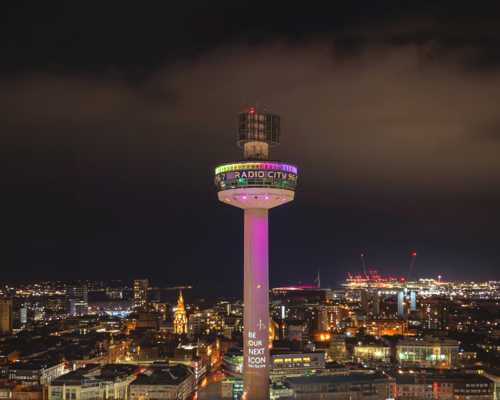
An opportunity to reimagine one of the UK’s most recognisable towers has been formally
opened by Rivington Hark, as St Johns Beacon invites operators and partners to shape its
next phase. [more...]
Immersive soundscapes add that extra dynamic for awesome audiovisual exhibitions and gallery spaces. Audio designer Peter Key tells us how to deliver the best in show
Audio is a becoming an ever more compelling component of immersive exhibition design at visitor attractions and museums. Audio adds to the experience – a dynamic soundscape or two sets the scene, location, era. It’s a must-have for large screen audiovisuals. All visitors enjoy a bit of theatricality! Now imagine a trade exhibit or arcade chockablock with competing soundscapes. To cope with the cacophony, visitors start to block out the “white noise”. So figuring out your audio design is quite simply paramount to engage, and not alienate, your audience.
A Riot of Noise It’s often the way that exhibitions starring distinct soundtracks are placed side-by-side in the same gallery. Each soundtrack is played simultaneously across the open space and the gallery resonates with a discordant mish mash of sounds. To prevent this from happening, a common misconception is to adopt directional speakers so that visitors can walk from one audible sound zone to another without cross-interference.
Unfortunately this idea is misconstrued. Within the quiet surrounds of a production studio, each new soundtrack broadcasts a smooth voice, emotive music and suggestive sound effects. But when it’s heard within the general ambient sounds of the gallery walls, competing against an adjacent exhibition playing another dynamic soundtrack, the graphical illustration of how sound is contained and emitted using directional speakers isn’t quite so accurate or simple in practice.
Unintelligible Audio Choosing the correct type of loudspeakers and designing the best acoustic environment are also key to creating an engaging audio visitor experience.
Again, all too often, loudspeakers are added to a design specification without any consideration of their positioning. A black box fixed to a well-designed feature either side of a screen may not in fact be the best aesthetic solution.
So ask yourself: “Do you really need a loudspeaker next to the screen?” In an enclosed cinema, yes of course, but in an open gallery perhaps the sound source should be positioned as near as possible to the listening position, above the visitors’ listening bench. After all, the criteria is to hear the audio track clearly over-and-above all other intruding sounds.
Acoustic consideration is vital to transform a space from sounding like a large bathroom (where you‘d rather not spend much time) into an entertaining environment (where you’d really like to stay for hours). Often, acoustic treatment is dismissed as having no immediate effect on design. But that decision may come back to bite when a client standing in the space finds the audio unintelligible and asks for the undesirable echo to be reduced. The answer is – probably not without a large cash injection.
Can’t be Contained I like hearing the phrase: “An audio immersive experience.” Or a design specification outlining: “The visitor walks into a space and is instantly transported into a world of audio with sounds coming at them from all directions.”
As a sound producer, these requests provide the opportunity to be ultra creative. But then your heart sinks – you discover this immersive audio experience will not to be contained within its own space, but placed in the middle of a gallery; no walls, no containment. And no amount of directional speaker technology will create the experience the client is envisaging.
Unfortunately, it’s also too late to change the design intent – and any audio solutions put forward now may disappoint! If only someone had considered this from an audio, rather than a purely design, standpoint.
Although we all relish opportunities to provide solutions to seemingly impossible problems, in reality, sometimes it’s just not feasibly achievable.
Unique spaces As a lead sound designer working in the heritage and attractions industry, I encounter all these issues a great deal.
Most listening spaces in museums and visitor attractions are unique. In the main, they don’t conform to the standard audio model of 5:1, 7:1, 9:1 ... and although it would be significantly easier if they did, the great challenge for my profession is to create something unique and push the audio boundaries as far as they can go!
So, when asked how audio will work within a gallery or exhibition space, my first comment is to ask clients to consider how the audio will work in context with everything else in that space – and not make the all too common mistake of considering the audio component of the exhibition in pure isolation.
Sound solutions One solution that can be put into practice at the beginning of the audio process is to consider the overall sound playback for the entire gallery. By drawing and plotting circles of audio activity containing voice, music and sound effects, areas of potential audio conflict become immediately apparent. If two exhibitions featuring music are adjacent to one another, why not consider physically moving them apart. If they are to stay together, produce each exhibition’s programme of music as one entity lasting the same duration with a similar composition and tempo so that they complement one another.
If two adjacent exhibitions feature the same voice artist, it may prove difficult for visitors to concentrate on one audio while overhearing the other. In this case, consider using different voice overs.
Another solution is the use of sound effects instead of voice overs. By avoiding pitched sounds, a more balanced audio coexistence can be attained. This is ideal for overall soundscapes in a gallery space, allowing visitors to walk between audio scenes in complete harmony. If you did this with different music pieces, the walk would be a less pleasant auditory experience!
Let's Amplify At the end of the day, we can’t reinvent the laws of acoustics, but if your exhibition design team discuss potential areas of sound conflict with your sound design team at an early stage in the decision-making process, solutions can be developed to minimise sound spill and create an overall harmonious audio experience for the enjoyment of all your visitors.
A new immersive attraction designed to transport visitors into the final hours of ancient Pompeii
is preparing to open near the world-famous archaeological site in southern Italy.
Experience design company, BRC Imagination Arts, has completed a transition that sees founder
Bob Rogers pass ownership of the business to four long-serving senior executives, while
remaining actively involved with the company.
Movie Park Germany has opened a new Paramount Pictures-themed attraction as part of its 30th
anniversary celebrations, using immersive storytelling and adaptive reuse to reinforce the park’s
longstanding “Hollywood in Germany” positioning.
Therme Manchester’s 28-acre development, which will include interconnected glass pavilions
that measure 65,000sq m, will be the largest bathing and wellbeing attraction in the world once
complete, according to prof David Russell, CEO of Therme UK.
Efteling has opened Hooghmoed, a new family drop tower designed to broaden the appeal of its
recently launched Sirene Island themed area and introduce younger visitors to thrill attractions.
A proposed Puy du Fou development near Bicester and Universal Destinations and Experiences’
planned resort in Bedford are emerging as part of a wider transformation of the Oxford–
Cambridge Growth Corridor into a major centre for UK leisure and tourism inv
Shedd Aquarium has opened the Immersion Theater developed in partnership with SimEx-
Iwerks, as part of a wider strategy to enhance the guest experience and create additional
revenue opportunities.
The UK government has announced a temporary reduction in VAT on visitor attractions and
children’s meals as part of a summer cost-of-living support package designed to stimulate the
visitor economy and encourage family days out.
As designer Yinka Ilori prepares for his first solo gallery show in London, he speaks exclusively
to CLADmag about his mission to spread joy, the power of play, and his bold approach to using
colour (including the colours you won’t see in his work).
The government of Thailand is exploring plans for a THB300bn (£6.3bn, US$8.3bn)
entertainment complex in the country’s Eastern Economic Corridor (EEC), with officials
proposing a large-scale theme park and sports destination as part of a broader tourism and
economic development strategy.
An opportunity to reimagine one of the UK’s most recognisable towers has been formally
opened by Rivington Hark, as St Johns Beacon invites operators and partners to shape its
next phase. [more...]