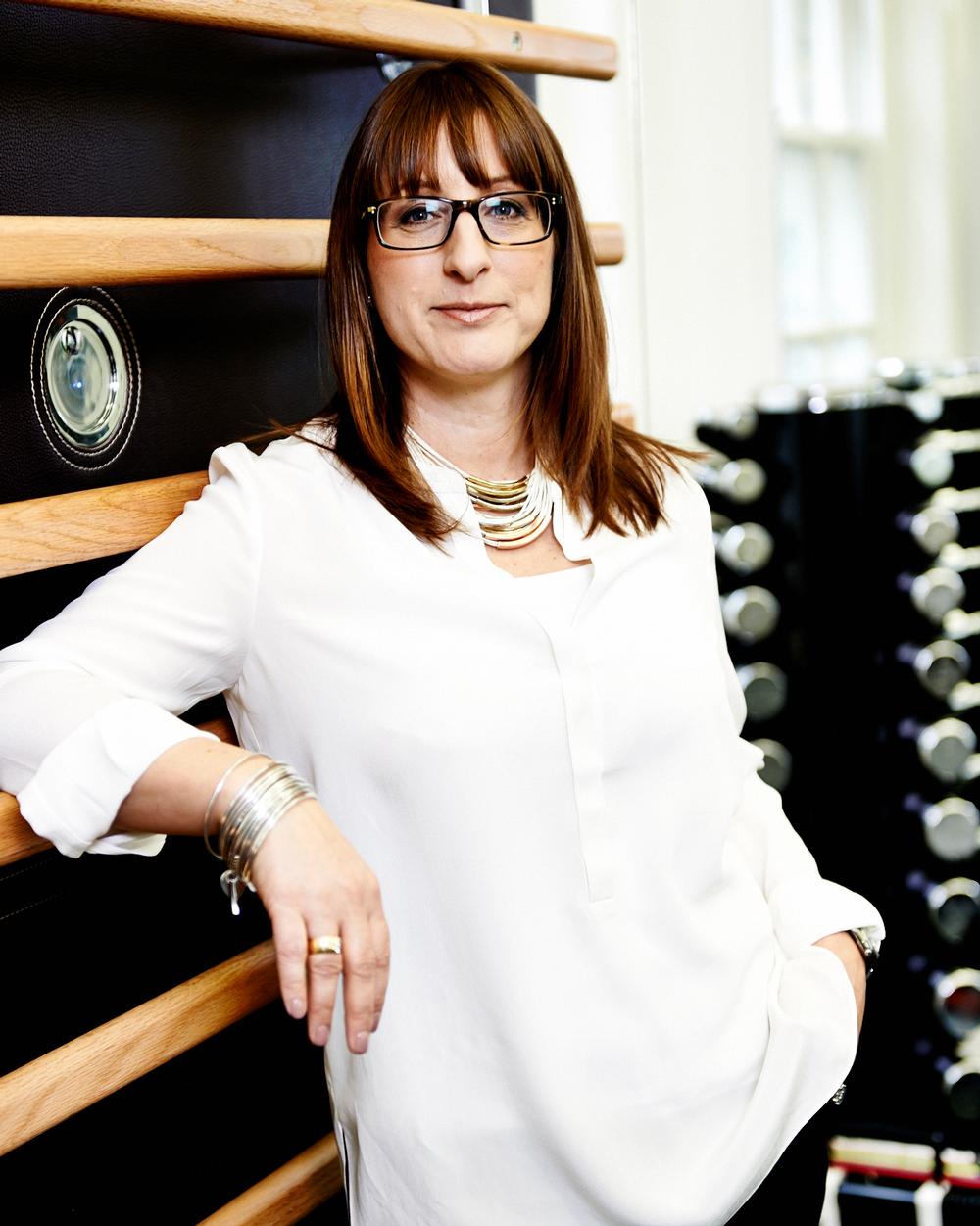
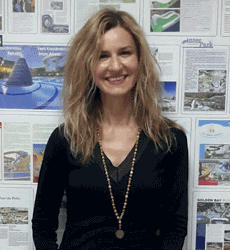
Mathews has seen the boutique fitness sector grow exponentially since she launched her studio brand in 2007
Where did the idea for Ten Health & Fitness come from? I was in a car accident and suffered a number of injuries, including severe whiplash, a fractured coccyx and soft tissue damage. The impact on my quality of life was significant. I was often in pain, I lost a lot of mobility and wasn’t able to work for around six months.
I saw GPs, physios and sport massage therapists, all based in different practices and none very interested in a joined-up approach to my case. I became frustrated by this lack of consistency and joined a local rehab gym where I met David Higgins, a personal trainer who specialised in a dynamic form of pilates.
David had also recognised this lack of joined-up thinking in the sector, and together we saw a gap in the market for a boutique pilates studio that could offer both rehab and functional exercise. By combining my marketing background with David’s fitness expertise, we felt we had a chance to make our business idea a reality.
Can you describe your offering? We’re not one of those ‘get a beasting in a nightclub’ providers. Our focus is on small classes and expert trainers. Combine that with our in-house physiotherapy, massage and rehab offer and we occupy a really interesting place in the boutique fitness sector. We sit at the point where the fitness world meets the medical sector, offering a ‘prehabilitative’ approach to fitness and exercise.
How did you get started? We were lucky to be one of the first entrants into the boutique fitness sector; when we started in 2007, no-one was entering the sector with the amount of funding we’re seeing now. We were (and still pretty much are) self-funded, and had a really tight budget. When we opened, David taught 40 hours of classes a week while I manned the reception.
But we were in the right place at the right time, with a strong product. By the end of 2008, we were doing well enough to hire more trainers and open a second studio.
Where did the name ‘Ten’ come from? We always felt a good name should mean everything and nothing. Think of brands like Apple, Gap, Reebok, Audi… whatever the initial reason for the name, they’ve just become ciphers, a memorable short-hand for a brand or experience. We wanted to get to that point quickly with something short, memorable, different and recognisable, and also something that wouldn’t limit us. Ten seemed to fit the bill.
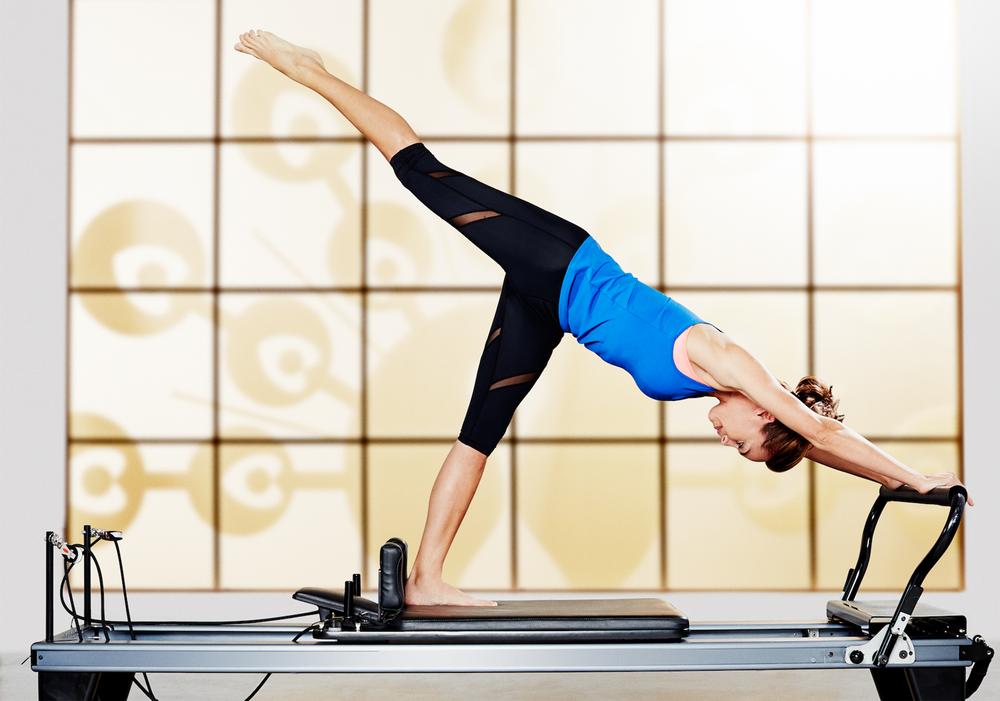
How has business progressed? Dynamic reformer pilates will always be at the heart of our business, but as we’ve grown we’ve been able to broaden our offering. We’ve recently introduced two new classes: TenStretch, a reformer-based stretch class; and TenYoga, developed in conjunction with physios to make it more suitable for today’s sedentary and desk-bound lifestyles.
We’ve also used the learnings from our own in-house REPs-accredited training academy to launch TenEducation, which offers reformer-based courses for external fitness, rehab and therapy professionals. Our eighth studio opens in Fitzrovia, London, in a couple of months, but I think there’s still room for growth.
How has the market changed? The boutique fitness sector has grown exponentially since we opened. There’s now much more competition for sites and rents have gone through the roof in recent years, which puts pressure on margins. A relatively new challenge affecting us – and the sector – is the arrival of ClassPass and other aggregators. It’s great that they’re encouraging people to experiment and maybe fall in love with something they wouldn’t have otherwise tried, but they’re also in danger of devaluing what we do.
A ClassPass user can do a basic exercise-to-music class in a room full of 50 or 60 other people one day, and a highly specialist class with just a handful of people the next. But they’re doing it all on the same monthly pass. So they’re encouraged to value all classes – and all providers – the same, when they’re patently not. It’s something we have to manage carefully.
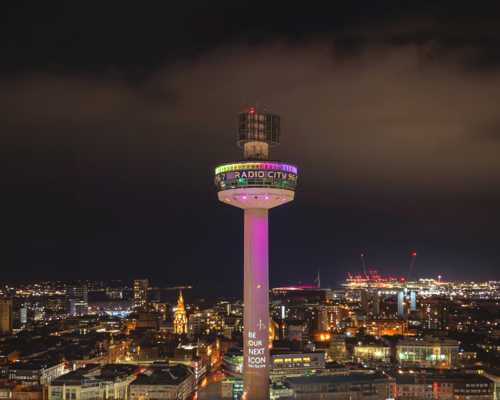
An opportunity to reimagine one of the UK’s most recognisable towers has been formally
opened by Rivington Hark, as St Johns Beacon invites operators and partners to shape its
next phase. [more...]
Mathews has seen the boutique fitness sector grow exponentially since she launched her studio brand in 2007
Where did the idea for Ten Health & Fitness come from? I was in a car accident and suffered a number of injuries, including severe whiplash, a fractured coccyx and soft tissue damage. The impact on my quality of life was significant. I was often in pain, I lost a lot of mobility and wasn’t able to work for around six months.
I saw GPs, physios and sport massage therapists, all based in different practices and none very interested in a joined-up approach to my case. I became frustrated by this lack of consistency and joined a local rehab gym where I met David Higgins, a personal trainer who specialised in a dynamic form of pilates.
David had also recognised this lack of joined-up thinking in the sector, and together we saw a gap in the market for a boutique pilates studio that could offer both rehab and functional exercise. By combining my marketing background with David’s fitness expertise, we felt we had a chance to make our business idea a reality.
Can you describe your offering? We’re not one of those ‘get a beasting in a nightclub’ providers. Our focus is on small classes and expert trainers. Combine that with our in-house physiotherapy, massage and rehab offer and we occupy a really interesting place in the boutique fitness sector. We sit at the point where the fitness world meets the medical sector, offering a ‘prehabilitative’ approach to fitness and exercise.
How did you get started? We were lucky to be one of the first entrants into the boutique fitness sector; when we started in 2007, no-one was entering the sector with the amount of funding we’re seeing now. We were (and still pretty much are) self-funded, and had a really tight budget. When we opened, David taught 40 hours of classes a week while I manned the reception.
But we were in the right place at the right time, with a strong product. By the end of 2008, we were doing well enough to hire more trainers and open a second studio.
Where did the name ‘Ten’ come from? We always felt a good name should mean everything and nothing. Think of brands like Apple, Gap, Reebok, Audi… whatever the initial reason for the name, they’ve just become ciphers, a memorable short-hand for a brand or experience. We wanted to get to that point quickly with something short, memorable, different and recognisable, and also something that wouldn’t limit us. Ten seemed to fit the bill.
How has business progressed? Dynamic reformer pilates will always be at the heart of our business, but as we’ve grown we’ve been able to broaden our offering. We’ve recently introduced two new classes: TenStretch, a reformer-based stretch class; and TenYoga, developed in conjunction with physios to make it more suitable for today’s sedentary and desk-bound lifestyles.
We’ve also used the learnings from our own in-house REPs-accredited training academy to launch TenEducation, which offers reformer-based courses for external fitness, rehab and therapy professionals. Our eighth studio opens in Fitzrovia, London, in a couple of months, but I think there’s still room for growth.
How has the market changed? The boutique fitness sector has grown exponentially since we opened. There’s now much more competition for sites and rents have gone through the roof in recent years, which puts pressure on margins. A relatively new challenge affecting us – and the sector – is the arrival of ClassPass and other aggregators. It’s great that they’re encouraging people to experiment and maybe fall in love with something they wouldn’t have otherwise tried, but they’re also in danger of devaluing what we do.
A ClassPass user can do a basic exercise-to-music class in a room full of 50 or 60 other people one day, and a highly specialist class with just a handful of people the next. But they’re doing it all on the same monthly pass. So they’re encouraged to value all classes – and all providers – the same, when they’re patently not. It’s something we have to manage carefully.
A new immersive attraction designed to transport visitors into the final hours of ancient Pompeii
is preparing to open near the world-famous archaeological site in southern Italy.
Experience design company, BRC Imagination Arts, has completed a transition that sees founder
Bob Rogers pass ownership of the business to four long-serving senior executives, while
remaining actively involved with the company.
Movie Park Germany has opened a new Paramount Pictures-themed attraction as part of its 30th
anniversary celebrations, using immersive storytelling and adaptive reuse to reinforce the park’s
longstanding “Hollywood in Germany” positioning.
Therme Manchester’s 28-acre development, which will include interconnected glass pavilions
that measure 65,000sq m, will be the largest bathing and wellbeing attraction in the world once
complete, according to prof David Russell, CEO of Therme UK.
Efteling has opened Hooghmoed, a new family drop tower designed to broaden the appeal of its
recently launched Sirene Island themed area and introduce younger visitors to thrill attractions.
A proposed Puy du Fou development near Bicester and Universal Destinations and Experiences’
planned resort in Bedford are emerging as part of a wider transformation of the Oxford–
Cambridge Growth Corridor into a major centre for UK leisure and tourism inv
Shedd Aquarium has opened the Immersion Theater developed in partnership with SimEx-
Iwerks, as part of a wider strategy to enhance the guest experience and create additional
revenue opportunities.
The UK government has announced a temporary reduction in VAT on visitor attractions and
children’s meals as part of a summer cost-of-living support package designed to stimulate the
visitor economy and encourage family days out.
As designer Yinka Ilori prepares for his first solo gallery show in London, he speaks exclusively
to CLADmag about his mission to spread joy, the power of play, and his bold approach to using
colour (including the colours you won’t see in his work).
The government of Thailand is exploring plans for a THB300bn (£6.3bn, US$8.3bn)
entertainment complex in the country’s Eastern Economic Corridor (EEC), with officials
proposing a large-scale theme park and sports destination as part of a broader tourism and
economic development strategy.
An opportunity to reimagine one of the UK’s most recognisable towers has been formally
opened by Rivington Hark, as St Johns Beacon invites operators and partners to shape its
next phase. [more...]