The CEO of Sportscotland reveals how a new strategy to develop sport – coupled with the boost given by Glasgow 2014 – means that the future is bright for Scottish sport
By Tom Walker | Published in Sports Management 04 Apr 2016 issue 117
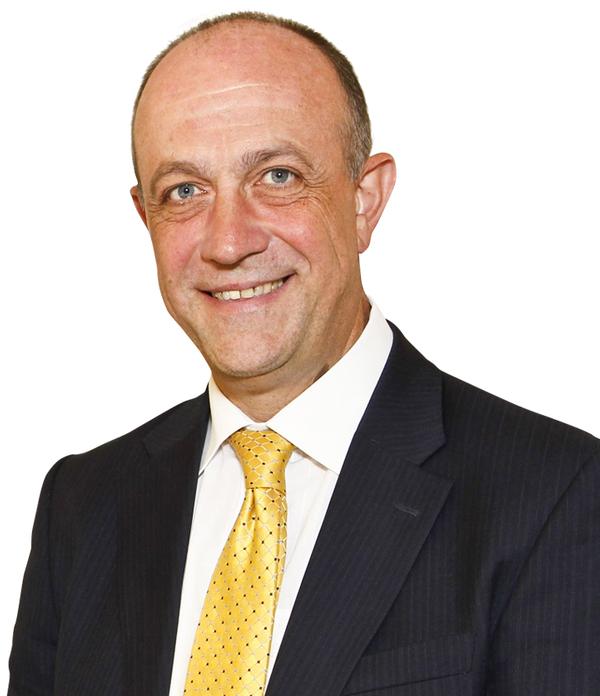
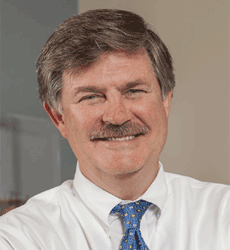
Harris first joined Sportscotland in 1991 and was appointed CEO
in 2005
“The biggest change has been the one we’ve made to our approach,” says Stewart Harris, Sportscotland CEO, when asked to describe the changes he’s seen during his 24-year career at the organisation.
“We’ve gone from a project-based, funding stream approach to a system which places more emphasis on local partnerships and the creation of sustainable opportunities,” he says.
“We now have a clear vision, which is to create a world class sport system for everyone in Scotland across three key development areas – schools and education; club and community; and high performance. This vision offers us a narrative, which sits underneath everything we try and do.”
INCREASING PARTICIPATION Harris, a former PE teacher and coach of the Scottish women’s basketball team, took over as Sportscotland CEO in 2005. He stepped into the role having spent 14 years with the organisation in a number of positions – including a stint as director of widening opportunities.
He describes the Sportscotland’s approach, developed as part of a re-organisation which began in 2009, as a system which aims for three outcomes. “We want to get more people playing sport, make sure those who already take part keep playing and also offer opportunities for high performance progression for those with talent and ambition,” Harris says.
“That’s what drives us and over the past eight years we’ve built a stable platform from which we can put our plans into action.”
The new strategy seems to be working. Government figures show that more than three-quarters of Scottish adults (78 per cent) now participate in sport and exercise at least once a month – up from 72 per cent in 2009. The high figure does include walking, but even if walking is excluded, statistics show that 51 per cent take part in organised sport or exercise on a monthly basis.
“We were also really encouraged by the Global Observatory for Physical Activity’s recent report, which showed Scotland having 64 per cent of its population engaging in 150 minutes of moderate exercise a week,” Harris adds. ”We’ve worked hard on getting the message of physical activity out there, so seeing figures like that are encouraging.”
COMMUNITY MATTERS An integral part of Sportscotland’s system is the way it engages local communities and utilises local expertise and partnerships. At its heart lies the newly-established community hubs – a key programme announced by the Scottish Government as part of its Glasgow 2014 Commonwealth Games legacy strategy.
The Lottery-funded hubs aim to bring together sport clubs and key local partners who want to develop and grow the sporting offering in the community. The focus is on sustainable, community-led facilities which get clubs working together to provide welcoming, safe and fun environments for sport.
“It’s a really simple concept and sustainable as it uses existing facilities. A community sport hub can be set up in a school, at a club, a community centre – the idea is to set up a hub by bringing together different sports and clubs and putting them in charge of their own destiny.”
Last month, Sportscotland surpassed the government’s target of reaching 150 hubs by 2016. There are now 153 operational hubs across the country with at least one in each of Scotland’s 32 local authorities. Harris says that a new £6m investment over the next four years will further develop existing hubs – and help reach a new target of 200 hubs by 2020. The new target means that by 2020, £13.5m will have been invested into the hub project.
“There are almost 1,000 clubs and 115,000 members across the hubs, which offer a wide range of sports and activities, and this is providing more and better opportunities for people of all ages and abilities to take part,” he says.
LEGACY PLANS The community hubs are just one of the success stories coming out of the Glasgow 2014 legacy and Harris says the effects of the Games will be felt for years to come.
“The government had a very good legacy plan, which covered an entire set of portfolios from transport and education to business and sport,” he says. “One of the targets for sport was to create excitement in communities across the country and we’ve done that through the hubs.
“But the coaching stats are also very impressive. From having just under 5,000 Level 1 qualified sports coaches in 2009, we’ve gone to now having more than 19,000 post Glasgow 2014. The number of the more advanced Level 2 coaches has more than doubled in the same time frame – from just under 2,000 in 2009 to 4,500.
“It’s important to remember that these aren’t just numbers. These are people who are now being deployed at community sports hubs, at clubs, at schools – people who are making a real difference at every level.”
INTO THE FUTURE Looking ahead, Harris is confident that the system will continue to deliver success. Sportscotland published its new corporate plan last year and in it the organisation lays out a clear blueprint for the organisation’s work until 2019. Entitled Raising the Bar, the document calls for increased emphasis on local partnerships and further cooperation between national and regional partners.
For Harris, the ultimate goal is clear. “I’ve always wanted to see Scotland being an active nation and a very positive sporting nation,” he says.
“We’ll have to work hard as a nation to achieve that and maintain the gains we’ve already made – but I think we have the right ingredients, the right partners and the right direction.
“Our approach means that there are now real synergies – at local level – between PE teachers, schools coordinators, sports development staff and national governing bodies. It is my belief that Sportscotland has been a catalyst for that. It’s something we’re really proud of.”
The CEO of Sportscotland reveals how a new strategy to develop sport – coupled with the boost given by Glasgow 2014 – means that the future is bright for Scottish sport
By Tom Walker | Published in Sports Management 04 Apr 2016 issue 117
Harris first joined Sportscotland in 1991 and was appointed CEO
in 2005
“The biggest change has been the one we’ve made to our approach,” says Stewart Harris, Sportscotland CEO, when asked to describe the changes he’s seen during his 24-year career at the organisation.
“We’ve gone from a project-based, funding stream approach to a system which places more emphasis on local partnerships and the creation of sustainable opportunities,” he says.
“We now have a clear vision, which is to create a world class sport system for everyone in Scotland across three key development areas – schools and education; club and community; and high performance. This vision offers us a narrative, which sits underneath everything we try and do.”
INCREASING PARTICIPATION Harris, a former PE teacher and coach of the Scottish women’s basketball team, took over as Sportscotland CEO in 2005. He stepped into the role having spent 14 years with the organisation in a number of positions – including a stint as director of widening opportunities.
He describes the Sportscotland’s approach, developed as part of a re-organisation which began in 2009, as a system which aims for three outcomes. “We want to get more people playing sport, make sure those who already take part keep playing and also offer opportunities for high performance progression for those with talent and ambition,” Harris says.
“That’s what drives us and over the past eight years we’ve built a stable platform from which we can put our plans into action.”
The new strategy seems to be working. Government figures show that more than three-quarters of Scottish adults (78 per cent) now participate in sport and exercise at least once a month – up from 72 per cent in 2009. The high figure does include walking, but even if walking is excluded, statistics show that 51 per cent take part in organised sport or exercise on a monthly basis.
“We were also really encouraged by the Global Observatory for Physical Activity’s recent report, which showed Scotland having 64 per cent of its population engaging in 150 minutes of moderate exercise a week,” Harris adds. ”We’ve worked hard on getting the message of physical activity out there, so seeing figures like that are encouraging.”
COMMUNITY MATTERS An integral part of Sportscotland’s system is the way it engages local communities and utilises local expertise and partnerships. At its heart lies the newly-established community hubs – a key programme announced by the Scottish Government as part of its Glasgow 2014 Commonwealth Games legacy strategy.
The Lottery-funded hubs aim to bring together sport clubs and key local partners who want to develop and grow the sporting offering in the community. The focus is on sustainable, community-led facilities which get clubs working together to provide welcoming, safe and fun environments for sport.
“It’s a really simple concept and sustainable as it uses existing facilities. A community sport hub can be set up in a school, at a club, a community centre – the idea is to set up a hub by bringing together different sports and clubs and putting them in charge of their own destiny.”
Last month, Sportscotland surpassed the government’s target of reaching 150 hubs by 2016. There are now 153 operational hubs across the country with at least one in each of Scotland’s 32 local authorities. Harris says that a new £6m investment over the next four years will further develop existing hubs – and help reach a new target of 200 hubs by 2020. The new target means that by 2020, £13.5m will have been invested into the hub project.
“There are almost 1,000 clubs and 115,000 members across the hubs, which offer a wide range of sports and activities, and this is providing more and better opportunities for people of all ages and abilities to take part,” he says.
LEGACY PLANS The community hubs are just one of the success stories coming out of the Glasgow 2014 legacy and Harris says the effects of the Games will be felt for years to come.
“The government had a very good legacy plan, which covered an entire set of portfolios from transport and education to business and sport,” he says. “One of the targets for sport was to create excitement in communities across the country and we’ve done that through the hubs.
“But the coaching stats are also very impressive. From having just under 5,000 Level 1 qualified sports coaches in 2009, we’ve gone to now having more than 19,000 post Glasgow 2014. The number of the more advanced Level 2 coaches has more than doubled in the same time frame – from just under 2,000 in 2009 to 4,500.
“It’s important to remember that these aren’t just numbers. These are people who are now being deployed at community sports hubs, at clubs, at schools – people who are making a real difference at every level.”
INTO THE FUTURE Looking ahead, Harris is confident that the system will continue to deliver success. Sportscotland published its new corporate plan last year and in it the organisation lays out a clear blueprint for the organisation’s work until 2019. Entitled Raising the Bar, the document calls for increased emphasis on local partnerships and further cooperation between national and regional partners.
For Harris, the ultimate goal is clear. “I’ve always wanted to see Scotland being an active nation and a very positive sporting nation,” he says.
“We’ll have to work hard as a nation to achieve that and maintain the gains we’ve already made – but I think we have the right ingredients, the right partners and the right direction.
“Our approach means that there are now real synergies – at local level – between PE teachers, schools coordinators, sports development staff and national governing bodies. It is my belief that Sportscotland has been a catalyst for that. It’s something we’re really proud of.”
The Toverland theme park in the Netherlands has announced a €98m expansion programme
that will add a resort, new attractions and staff facilities as it pursues plans to become a multi-
day destination.
Hotel de France, located on the British Isle of Jersey, has created a wellness retreat package
that includes a hot yoga session that will take place in Jersey Zoo’s butterfly sanctuary.
A new immersive attraction designed to transport visitors into the final hours of ancient Pompeii
is preparing to open near the world-famous archaeological site in southern Italy.
Experience design company, BRC Imagination Arts, has completed a transition that sees founder
Bob Rogers pass ownership of the business to four long-serving senior executives, while
remaining actively involved with the company.
Movie Park Germany has opened a new Paramount Pictures-themed attraction as part of its 30th
anniversary celebrations, using immersive storytelling and adaptive reuse to reinforce the park’s
longstanding “Hollywood in Germany” positioning.
Therme Manchester’s 28-acre development, which will include interconnected glass pavilions
that measure 65,000sq m, will be the largest bathing and wellbeing attraction in the world once
complete, according to prof David Russell, CEO of Therme UK.
Efteling has opened Hooghmoed, a new family drop tower designed to broaden the appeal of its
recently launched Sirene Island themed area and introduce younger visitors to thrill attractions.
A proposed Puy du Fou development near Bicester and Universal Destinations and Experiences’
planned resort in Bedford are emerging as part of a wider transformation of the Oxford–
Cambridge Growth Corridor into a major centre for UK leisure and tourism inv
Shedd Aquarium has opened the Immersion Theater developed in partnership with SimEx-
Iwerks, as part of a wider strategy to enhance the guest experience and create additional
revenue opportunities.
The UK government has announced a temporary reduction in VAT on visitor attractions and
children’s meals as part of a summer cost-of-living support package designed to stimulate the
visitor economy and encourage family days out.