Man meets nature at
the $185m Perot Museum
of Nature and Science.
Nicole G Small, Eugene
McDermott chief executive
officer, explains why it’s the
next generation of museums
By Kathleen Whyman | Published in Attractions Management 2013 issue 2
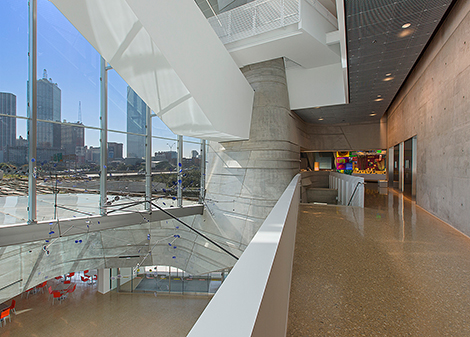
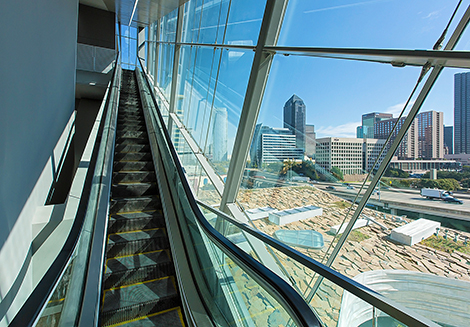
Visitors can see out across the city from the museum
What is the Perot Museum? The Perot Museum of Nature and Science opened in Dallas, Texas, USA, on 1st December 2012. We believe it’s the next generation of nature and science museums.
Covering 11 storeys and housing 11 galleries and a 3D theatre, the building is a large cube floating over a plinth. It’s designed to inspire awareness of science through an immersive and interactive environment that actively engages visitors.
Conceived by Thom Mayne of Morphosis Architects in collaboration with Talley Associates, the plinth is landscaped with an acre of rolling roofscape comprised of rock and native drought-resistant grasses that reflect Texas’s indigenous landscape and demonstrates a living system that will evolve naturally over time.
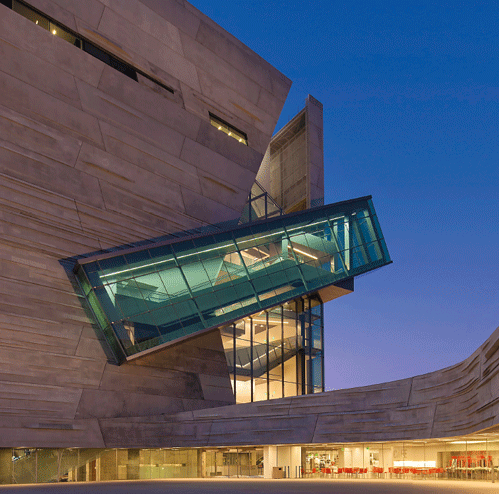
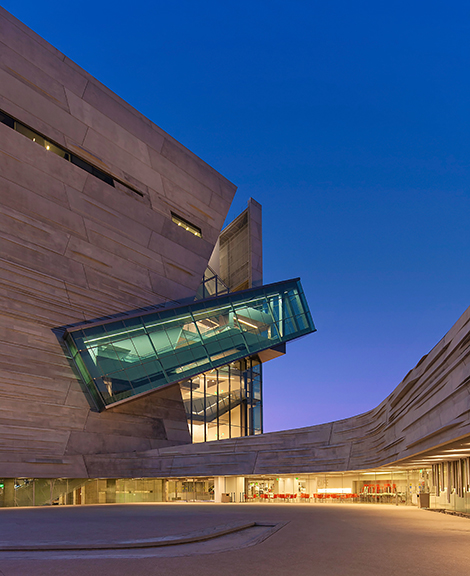
The cube is rotated several degrees off the city grid, so is visually arresting from a distance. The body of the cube is pierced dramatically by a 150ft (46m) glass prism encasing the building’s 54ft (16m), continuous-flow escalator.
The building’s getting most of the attention, but we’re an institution that’s existed for more than 75 years and we’re continuing our mission of inspiring minds about nature and science.
How do you achieve your mission? Anywhere you live in the world, the global challenges that are driving our health and economy, such as energy crisis, water challenges or disease, will eventually be solved by science. We want to continue to engage our public by making them more science literate and encourage our children to pursue careers in maths, science, technology, science and engineering. Then they can go out there and become the next Nobel Laureate, or at least thought leaders in their field, and solve many of the problems that our world is currently facing.
To achieve this, we’ve picked 11 galleries in which to tell those stories. Woven into those stories are educational opportunities for people to learn about the different areas of science.
For example, instead of a physics or maths hall, we have a Sports Hall where visitors learn about anatomy, physiology, nutrition, the human body and physics – there are so many science lessons you can teach through sport.
The Being Human Hall focuses on biology and the technology we use to better understand the body and learn about ageing and the brain.
The idea is that people will be drawn into a hall, each of which has between five and 10 disciplines of science. It’s a more integrated sciences approach than other museums. One of the challenges is to make science fun, engaging and interesting. People often think science is something that happens in a lab, but science is everywhere. We’re helping people understand that science is part of their everyday lives.
What’s the content? The 180,000sq ft (16,720sq m) building has 11 permanent halls; a gallery for temporary exhibitions; six learning lab classrooms; a 3D, high definition theatre; an auditorium; and guest amenities including a café and retail store.
How were the contents sourced? This is one of the things that we’re excited about with this new level of museum – we’ve levered content expertise from all sorts of people. We had help from Nobel Laureate’s, the local universities’ scientists and appropriate corporation partnerships. For example, for the Texas Instruments Engineering and Innovation Hall, we were able to source content from thought leaders in this sector and leverage that into creating terrific exhibits.
How did you choose the design? The building is the 12th exhibit. We needed it to be a prime example of where man meets nature, so had a competition to select a designer, rather than the design – that process came later – to ensure we’d be working with someone who completely understood our mission. We picked Thom Mayne because he’s incredibly innovative and inventive. We liked his choice of materials and the fact that he was a professor.
His design was inspired by nature. Different geologic formations are reflected in the pre-cast concrete exterior and the landscape design represents many eco regions around Texas.
The living roof is a one-acre water collection system. We’ve just been called the greenest building in Texas, which supports our environmental aims. Everything about the building represents our mission.
For the interior, we looked at great museums all over the world to get ideas about the type of place we wanted to create. We worked closely with three exhibit design firms – Amaze Design, Paul Bernhard Exhibit Design and Associates and Science Museum of Minnesota – to create this concept.
How is the museum sustainable? The building is a teaching tool about sustainability. The landscape design, by Talley Associates, serves as an extension of the building design and includes indigenous plant species. It’s integrated with the ground floor lobby and café spaces via the plaza areas, providing a seamless merger between the natural landscape and artificially-made environment of the building.
Other environmental elements include a rainwater collection system filling 50,000-gallon cisterns to supply the irrigation system; solar-powered hot water heating; and material choices emphasising recycled and locally sourced materials. We also built on a former Brownfield site.
We have three green building certifications: LEED (Leadership in Energy and Environmental Design); Green Globes; and Sustainable Sites Initiative.
What have been the challenges? Coordinating everyone could be a challenge at times. We had so many great partners with different and wonderful ways of thinking. Working with all these vendors allowed everyone to push each other’s thinking, which resulted in a tremendous project that came in on budget – and we were actually able to open a little earlier than planned.
Now that we’re open, the challenge is coping with the volume of traffic. It’s more than we’d expected – we’ve had 350,000 visitors since opening on 1st December – so we’re having to adjust our guest service and our operations to make sure we can accommodate that number of visitors and still provide a really positive visitor experience. We can house about 2,000 people at a time and over the course of the day can have up to 10,000 visitors. This can become a challenge when people stay for five or six hours, which some do. However, this is a good problem to have.
How is the museum funded? The entire US$185m (£122.5m, E145m) was raised privately from individuals and corporations. The museum is named after Margot and Ross Perot, thanks to a $50m (£33.1m, E39m) donation from their five grown up children. The Perots are a long-time family in our community and have been incredibly philanthropic over the years. We had a connective with them in a variety of ways and were fortunate enough to have the opportunity to take them to see the Houston Museum of Natural Science. They were excited about envisaging what a science museum could be. Mrs Perot had been a teacher, so has a great appreciation for education, and Mr Perot founded multiple technology companies, so their children felt this was a wonderful way to honour their parents.
We’re incredibly lucky to have such wonderful partners, many of whom we’ve been able to thank by naming sections of the museum after them. An endowment has been created for the museum’s upkeep.
What’s the education programme? We worked closely with teacher advisory committees, who helped us determine the content for the exhibit hall as well as the curriculum for education programmes. We’ve identified where we think the biggest gaps are in science learning and combined that with what the teachers said they needed help with in the classrooms to create a set of curriculum for children of all ages. We start at six-months-old and go up through high school and college, plus we have adult programming.
We’ve sold out all of our school programmes for the year, so they’ve all been well received. Our first social science evening for adults sold out for 1,500 people in a few days. The sleepovers for kids are also popular.
What’s Campaign for Excellence? We deduced that successful institutions continue to focus on long-term operational excellence. Having capital to do that was important. We identified six areas that we need to focus on: operations excellence; temporary exhibits; innovation; research and collections; and endowment. We decided to continue raising funds to support those areas, so that the long-term operation continues to have the necessary capital to provide excellent programmes.
It’s progressing well because we were able to meet our fundraising challenge for the project a year early.
What are the future plans? We’re focused on innovative, engaging programming right now. As for physical assets, we’ve designed the building so that we can double the square footage. At some point we’ll commence to phase two, but we’re not quite there yet.
What does the museum mean to you? When you start at the beginning and go through the planning, you can only hope what it might bring to people.
I believe we’re changing lives and that one day there will be a Nobel Laureate who says they were inspired at the Perot Museum.
Read more from this issue of Attractions Management magazine
View contents of Attractions Management 2013 issue 2
Editor's letter : Dealing with protests
The industry attracts protesters for the
same reason it attracts sponsors – it's
high profile and extremely engaged with
its audience
Profile: Tim Fisher
The CEO of Village Roadshow Theme
Parks reveals how the company's
defied the double-dip global recession
with record attendances to its existing
parks and three more due to open
Museum: The big idea
San Francisco's Exploratorium reopened
in April in a venue three times its original
size. The museum's Linda Dackman
shows how the new space is being used
Aquarium: Den Blå Planet
The CEO and designer describe
Denmark's new aquarium, which is
shaped like a whirlpool and has 20,000
animals and up to 8,000 visitors a day
New opening: Thinking inside the box
The Perot Museum is shaped like a cube
and described as the next generation
of nature and science museums. CEO
Nicole Small explains how and why
Restoration: Home improvement
The Historic Dyess Colony: Boyhood
Home of Johnny Cash project is
restoring the famous singer's house,
educating visitors about the New
Deal era and revitalising the area
Planetarium: The sky at night
Two dome theatres are among the
highlights of Canada's new Rio Tinto
Alcan Planetarium, which shows what's
going on in the universe as it happens
Social media: Smart moves
Find out how to use digital opportunities
beyond your website in a new series
by social media expert Kelly Wheeler
Moody Family Children’s Museum Aimed at children under five. Highlights include an environment mimicking the Great Trinity Forest, child’s-size replicas of the Margaret Hunt Hill Bridge, Reunion Tower and the Dallas Farmers Market. Other attractions include water play tables, a gazebo-enclosed baby and toddler park, an art lab and an outdoor dino dig.
The Jan and Trevor Rees-Jones Traveling Exhibition Hall The 7,500sq ft (700sq m) space is designed to properly present and preserve artefact displays.
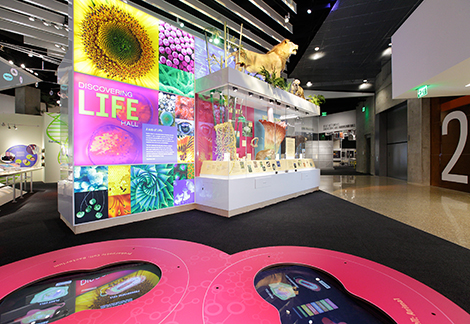
Discovering Life Hall Uncover stories of the biosphere with interactive games and dioramas, naturalist activities, displays and taxidermy that reveal unique stories associated with biodiversity, evolution and Texas ecology.
The Rees-Jones Foundation Dynamic Earth Hall Experience an earthquake, touch a tornado, broadcast a weather forecast and explore extreme Earth events within controlled safety.
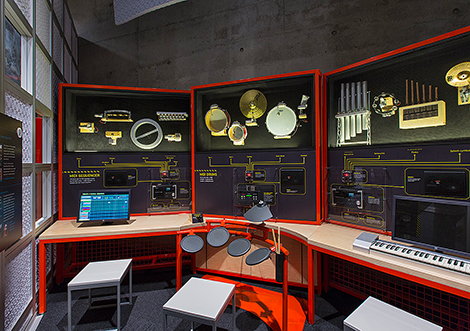
Texas Instruments Engineering and Innovation Hall Build a better building, program movements in a 3D animation lab, create music in a sound studio and design and build a robot to race through a maze, pick up objects or compete with other robots.
Sports Hall Explore the body in motion by throwing a ball, turning cartwheels or trying to outrun a Tyrannosaurus rex.
Tom Hunt Energy Hall Take a virtual trip deep underground to explore a drilling rig from the inside out and discover how fossil fuels and alternative energy sources are playing a powerful role as global demand for energy is on the rise.
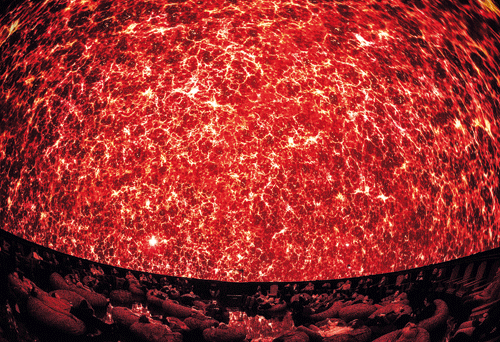
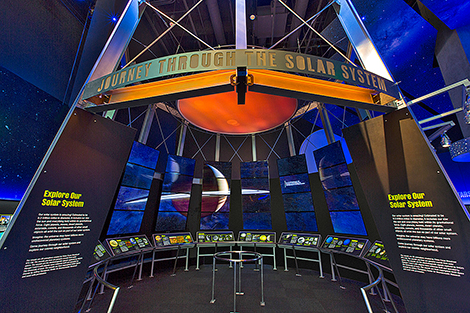
Expanding Universe Hall Take a 3D-animated journey through the solar system
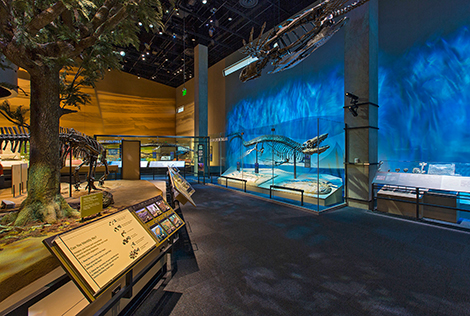
T. Boone Pickens Life Then and Now Hall See the first installation of the Alamosaurus and the new species Pachyrhinosaurus perotorum, discovered in Alaska by the Perot Museum’s Anthony Fiorillo
Lyda Hill Gems and Minerals Hall Highlights include a 6ft (1.8m)-high, 1.5-ton amethyst, grape jelly geode that can be opened and closed with a large hand-wheel and Mexico’s Cave of Giants – home to the largest natural mineral crystals ever found, some up to 40ft (12m)-long.
Being Human Hall Scrutinise slices of a human specimen, record the electrical activity of a heart and use brain waves to launch a Ping-Pong ball.
Rose Hall of Birds Take to the air via a full-body flight simulator and discover the links between dinosaurs and modern-day birds
The Hoglund Foundation Theater The Perot Museum has a three-year multi-film deal with National Geographic to show and debut all NatGeo film products. The museum opened with Sea Monsters 3D: A Prehistoric Adventure and Meerkats 3D. For spring break, Wildest Weather in the Solar System 3D is showing
A 150ft glass prism encases the building’s 54ft continuous-flow escalator, which stands out against the night sky
The Discovering Life Hall
T Boone Pickens Life Then and Now Hall
The glass-enclosed escalator overlooks downtown Dallas
Midi Sound Studio in Texas Instruments Engineering and Innovation Hall
The Expanding Universe Hall
COMPANY PROFILES
Clip 'n Climb
Clip ‘n Climb currently offers facility owners and
investors more than 40 colourful and unique
Cha [more...]
Taylor Made Designs
Founded in 1993, Taylor Made
Designs supply corporate clothing
and brand-enhancing merchandise
to [more...]
IAAPA EMEA
IAAPA Expo Europe was established in 2006 and has grown to the largest international conference and [more...]
Polin Waterparks
Polin was founded in Istanbul in 1976. Polin
has since grown into a leading company in
the waterpa [more...]
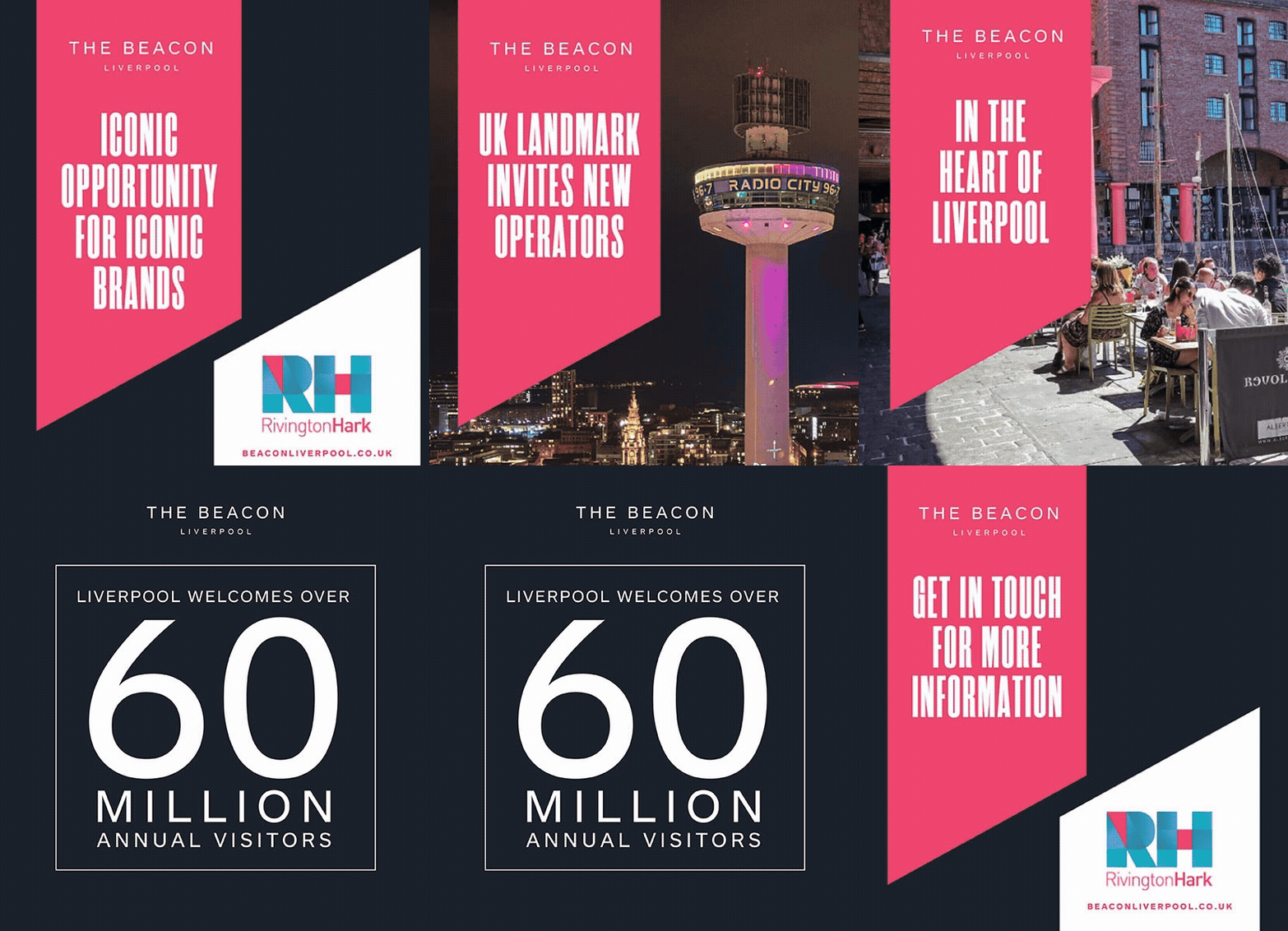
An opportunity to reimagine one of the UK’s most recognisable towers has been formally
opened by Rivington Hark, as St Johns Beacon invites operators and partners to shape its
next phase. [more...]
Man meets nature at
the $185m Perot Museum
of Nature and Science.
Nicole G Small, Eugene
McDermott chief executive
officer, explains why it’s the
next generation of museums
By Kathleen Whyman | Published in Attractions Management 2013 issue 2
Visitors can see out across the city from the museum
What is the Perot Museum? The Perot Museum of Nature and Science opened in Dallas, Texas, USA, on 1st December 2012. We believe it’s the next generation of nature and science museums.
Covering 11 storeys and housing 11 galleries and a 3D theatre, the building is a large cube floating over a plinth. It’s designed to inspire awareness of science through an immersive and interactive environment that actively engages visitors.
Conceived by Thom Mayne of Morphosis Architects in collaboration with Talley Associates, the plinth is landscaped with an acre of rolling roofscape comprised of rock and native drought-resistant grasses that reflect Texas’s indigenous landscape and demonstrates a living system that will evolve naturally over time.
The cube is rotated several degrees off the city grid, so is visually arresting from a distance. The body of the cube is pierced dramatically by a 150ft (46m) glass prism encasing the building’s 54ft (16m), continuous-flow escalator.
The building’s getting most of the attention, but we’re an institution that’s existed for more than 75 years and we’re continuing our mission of inspiring minds about nature and science.
How do you achieve your mission? Anywhere you live in the world, the global challenges that are driving our health and economy, such as energy crisis, water challenges or disease, will eventually be solved by science. We want to continue to engage our public by making them more science literate and encourage our children to pursue careers in maths, science, technology, science and engineering. Then they can go out there and become the next Nobel Laureate, or at least thought leaders in their field, and solve many of the problems that our world is currently facing.
To achieve this, we’ve picked 11 galleries in which to tell those stories. Woven into those stories are educational opportunities for people to learn about the different areas of science.
For example, instead of a physics or maths hall, we have a Sports Hall where visitors learn about anatomy, physiology, nutrition, the human body and physics – there are so many science lessons you can teach through sport.
The Being Human Hall focuses on biology and the technology we use to better understand the body and learn about ageing and the brain.
The idea is that people will be drawn into a hall, each of which has between five and 10 disciplines of science. It’s a more integrated sciences approach than other museums. One of the challenges is to make science fun, engaging and interesting. People often think science is something that happens in a lab, but science is everywhere. We’re helping people understand that science is part of their everyday lives.
What’s the content? The 180,000sq ft (16,720sq m) building has 11 permanent halls; a gallery for temporary exhibitions; six learning lab classrooms; a 3D, high definition theatre; an auditorium; and guest amenities including a café and retail store.
How were the contents sourced? This is one of the things that we’re excited about with this new level of museum – we’ve levered content expertise from all sorts of people. We had help from Nobel Laureate’s, the local universities’ scientists and appropriate corporation partnerships. For example, for the Texas Instruments Engineering and Innovation Hall, we were able to source content from thought leaders in this sector and leverage that into creating terrific exhibits.
How did you choose the design? The building is the 12th exhibit. We needed it to be a prime example of where man meets nature, so had a competition to select a designer, rather than the design – that process came later – to ensure we’d be working with someone who completely understood our mission. We picked Thom Mayne because he’s incredibly innovative and inventive. We liked his choice of materials and the fact that he was a professor.
His design was inspired by nature. Different geologic formations are reflected in the pre-cast concrete exterior and the landscape design represents many eco regions around Texas.
The living roof is a one-acre water collection system. We’ve just been called the greenest building in Texas, which supports our environmental aims. Everything about the building represents our mission.
For the interior, we looked at great museums all over the world to get ideas about the type of place we wanted to create. We worked closely with three exhibit design firms – Amaze Design, Paul Bernhard Exhibit Design and Associates and Science Museum of Minnesota – to create this concept.
How is the museum sustainable? The building is a teaching tool about sustainability. The landscape design, by Talley Associates, serves as an extension of the building design and includes indigenous plant species. It’s integrated with the ground floor lobby and café spaces via the plaza areas, providing a seamless merger between the natural landscape and artificially-made environment of the building.
Other environmental elements include a rainwater collection system filling 50,000-gallon cisterns to supply the irrigation system; solar-powered hot water heating; and material choices emphasising recycled and locally sourced materials. We also built on a former Brownfield site.
We have three green building certifications: LEED (Leadership in Energy and Environmental Design); Green Globes; and Sustainable Sites Initiative.
What have been the challenges? Coordinating everyone could be a challenge at times. We had so many great partners with different and wonderful ways of thinking. Working with all these vendors allowed everyone to push each other’s thinking, which resulted in a tremendous project that came in on budget – and we were actually able to open a little earlier than planned.
Now that we’re open, the challenge is coping with the volume of traffic. It’s more than we’d expected – we’ve had 350,000 visitors since opening on 1st December – so we’re having to adjust our guest service and our operations to make sure we can accommodate that number of visitors and still provide a really positive visitor experience. We can house about 2,000 people at a time and over the course of the day can have up to 10,000 visitors. This can become a challenge when people stay for five or six hours, which some do. However, this is a good problem to have.
How is the museum funded? The entire US$185m (£122.5m, E145m) was raised privately from individuals and corporations. The museum is named after Margot and Ross Perot, thanks to a $50m (£33.1m, E39m) donation from their five grown up children. The Perots are a long-time family in our community and have been incredibly philanthropic over the years. We had a connective with them in a variety of ways and were fortunate enough to have the opportunity to take them to see the Houston Museum of Natural Science. They were excited about envisaging what a science museum could be. Mrs Perot had been a teacher, so has a great appreciation for education, and Mr Perot founded multiple technology companies, so their children felt this was a wonderful way to honour their parents.
We’re incredibly lucky to have such wonderful partners, many of whom we’ve been able to thank by naming sections of the museum after them. An endowment has been created for the museum’s upkeep.
What’s the education programme? We worked closely with teacher advisory committees, who helped us determine the content for the exhibit hall as well as the curriculum for education programmes. We’ve identified where we think the biggest gaps are in science learning and combined that with what the teachers said they needed help with in the classrooms to create a set of curriculum for children of all ages. We start at six-months-old and go up through high school and college, plus we have adult programming.
We’ve sold out all of our school programmes for the year, so they’ve all been well received. Our first social science evening for adults sold out for 1,500 people in a few days. The sleepovers for kids are also popular.
What’s Campaign for Excellence? We deduced that successful institutions continue to focus on long-term operational excellence. Having capital to do that was important. We identified six areas that we need to focus on: operations excellence; temporary exhibits; innovation; research and collections; and endowment. We decided to continue raising funds to support those areas, so that the long-term operation continues to have the necessary capital to provide excellent programmes.
It’s progressing well because we were able to meet our fundraising challenge for the project a year early.
What are the future plans? We’re focused on innovative, engaging programming right now. As for physical assets, we’ve designed the building so that we can double the square footage. At some point we’ll commence to phase two, but we’re not quite there yet.
What does the museum mean to you? When you start at the beginning and go through the planning, you can only hope what it might bring to people.
I believe we’re changing lives and that one day there will be a Nobel Laureate who says they were inspired at the Perot Museum.
Read more from this issue of Attractions Management magazine
View contents of Attractions Management 2013 issue 2
Editor's letter : Dealing with protests
The industry attracts protesters for the
same reason it attracts sponsors – it's
high profile and extremely engaged with
its audience
Profile: Tim Fisher
The CEO of Village Roadshow Theme
Parks reveals how the company's
defied the double-dip global recession
with record attendances to its existing
parks and three more due to open
Museum: The big idea
San Francisco's Exploratorium reopened
in April in a venue three times its original
size. The museum's Linda Dackman
shows how the new space is being used
Aquarium: Den Blå Planet
The CEO and designer describe
Denmark's new aquarium, which is
shaped like a whirlpool and has 20,000
animals and up to 8,000 visitors a day
New opening: Thinking inside the box
The Perot Museum is shaped like a cube
and described as the next generation
of nature and science museums. CEO
Nicole Small explains how and why
Restoration: Home improvement
The Historic Dyess Colony: Boyhood
Home of Johnny Cash project is
restoring the famous singer's house,
educating visitors about the New
Deal era and revitalising the area
Planetarium: The sky at night
Two dome theatres are among the
highlights of Canada's new Rio Tinto
Alcan Planetarium, which shows what's
going on in the universe as it happens
Social media: Smart moves
Find out how to use digital opportunities
beyond your website in a new series
by social media expert Kelly Wheeler
Moody Family Children’s Museum Aimed at children under five. Highlights include an environment mimicking the Great Trinity Forest, child’s-size replicas of the Margaret Hunt Hill Bridge, Reunion Tower and the Dallas Farmers Market. Other attractions include water play tables, a gazebo-enclosed baby and toddler park, an art lab and an outdoor dino dig.
The Jan and Trevor Rees-Jones Traveling Exhibition Hall The 7,500sq ft (700sq m) space is designed to properly present and preserve artefact displays.
Discovering Life Hall Uncover stories of the biosphere with interactive games and dioramas, naturalist activities, displays and taxidermy that reveal unique stories associated with biodiversity, evolution and Texas ecology.
The Rees-Jones Foundation Dynamic Earth Hall Experience an earthquake, touch a tornado, broadcast a weather forecast and explore extreme Earth events within controlled safety.
Texas Instruments Engineering and Innovation Hall Build a better building, program movements in a 3D animation lab, create music in a sound studio and design and build a robot to race through a maze, pick up objects or compete with other robots.
Sports Hall Explore the body in motion by throwing a ball, turning cartwheels or trying to outrun a Tyrannosaurus rex.
Tom Hunt Energy Hall Take a virtual trip deep underground to explore a drilling rig from the inside out and discover how fossil fuels and alternative energy sources are playing a powerful role as global demand for energy is on the rise.
Expanding Universe Hall Take a 3D-animated journey through the solar system
T. Boone Pickens Life Then and Now Hall See the first installation of the Alamosaurus and the new species Pachyrhinosaurus perotorum, discovered in Alaska by the Perot Museum’s Anthony Fiorillo
Lyda Hill Gems and Minerals Hall Highlights include a 6ft (1.8m)-high, 1.5-ton amethyst, grape jelly geode that can be opened and closed with a large hand-wheel and Mexico’s Cave of Giants – home to the largest natural mineral crystals ever found, some up to 40ft (12m)-long.
Being Human Hall Scrutinise slices of a human specimen, record the electrical activity of a heart and use brain waves to launch a Ping-Pong ball.
Rose Hall of Birds Take to the air via a full-body flight simulator and discover the links between dinosaurs and modern-day birds
The Hoglund Foundation Theater The Perot Museum has a three-year multi-film deal with National Geographic to show and debut all NatGeo film products. The museum opened with Sea Monsters 3D: A Prehistoric Adventure and Meerkats 3D. For spring break, Wildest Weather in the Solar System 3D is showing
A 150ft glass prism encases the building’s 54ft continuous-flow escalator, which stands out against the night sky
The Discovering Life Hall
T Boone Pickens Life Then and Now Hall
The glass-enclosed escalator overlooks downtown Dallas
Midi Sound Studio in Texas Instruments Engineering and Innovation Hall
Movie Park Germany has opened a new Paramount Pictures-themed attraction as part of its 30th
anniversary celebrations, using immersive storytelling and adaptive reuse to reinforce the park’s
longstanding “Hollywood in Germany” positioning.
Therme Manchester’s 28-acre development, which will include interconnected glass pavilions
that measure 65,000sq m, will be the largest bathing and wellbeing attraction in the world once
complete, according to prof David Russell, CEO of Therme UK.
Efteling has opened Hooghmoed, a new family drop tower designed to broaden the appeal of its
recently launched Sirene Island themed area and introduce younger visitors to thrill attractions.
A proposed Puy du Fou development near Bicester and Universal Destinations and Experiences’
planned resort in Bedford are emerging as part of a wider transformation of the Oxford–
Cambridge Growth Corridor into a major centre for UK leisure and tourism inv
Shedd Aquarium has opened the Immersion Theater developed in partnership with SimEx-
Iwerks, as part of a wider strategy to enhance the guest experience and create additional
revenue opportunities.
The UK government has announced a temporary reduction in VAT on visitor attractions and
children’s meals as part of a summer cost-of-living support package designed to stimulate the
visitor economy and encourage family days out.
As designer Yinka Ilori prepares for his first solo gallery show in London, he speaks exclusively
to CLADmag about his mission to spread joy, the power of play, and his bold approach to using
colour (including the colours you won’t see in his work).
The government of Thailand is exploring plans for a THB300bn (£6.3bn, US$8.3bn)
entertainment complex in the country’s Eastern Economic Corridor (EEC), with officials
proposing a large-scale theme park and sports destination as part of a broader tourism and
economic development strategy.
Royal Caribbean has revealed its Hero of the Seas cruise ship, home to the most pools at sea
(nine), and a record-breaking 28 dining venues, as well as attractions including a waterpark
with two new family raft slides.
An opportunity to reimagine one of the UK’s most recognisable towers has been formally
opened by Rivington Hark, as St Johns Beacon invites operators and partners to shape its
next phase. [more...]