Latest
issue
Get Attractions Management digital magazine FREE
Sign up here ▸
Jobs   News   Features   Products   Company profilesProfiles   Magazine   Handbook   Advertise    Subscribe  
NEWS
Active Lives survey reports latest health club and physical activity numbers
POSTED 21 Apr 2023 . BY Tom Walker
The number of adults taking part in fitness activities has seen significant rises over the last 12 months, but remains below pre-pandemic levels Credit: Shutterstock/SeventyFour
Physical activity levels among adults in England have returned to pre-pandemic levels
63.1% of the adult population takes part in at least 150 minutes of moderate intensity physical activity each week
A quarter (25.8%) of the population are classed as inactive
The figures come from the Active Lives report, from Sport England
Overall physical activity levels among adults in England have returned to pre-pandemic levels, being in line with 2018-19 and above 2016 numbers.

According to the latest Active Lives report, from Sport England, nearly two-thirds (63.1 per cent) of the adult population were classified as 'active', undertaking at least 150 minutes of moderate-intensity physical activity each week, during the period between November 2021 and November 2022, with a further 11.1 per cent classified as 'fairly active' at 30 - 149 minutes a week, meaning 74.2 per cent of UK adults are undertaking some form of meaningful exercise.

When it comes to the inactive, levels are now above pre-pandemic levels, with a quarter (25.8 per cent) of the population classed as inactive (averaging fewer than 30 minutes of exercise a week).

The types of activities people are undertaking were also researched.

Going to the gym and other fitness activities have seen significant rises over the last 12 months, up from 11.4m in November 2021 to 12.5m in November 2022, although both remain below their pre-pandemic levels, with fitness still down by 1.4m when compared to Nov 2018-19.

Numbers for health club visits between 2016 and 2022 are as follows: 2016-17 – 13.2m, 2017-18 – 13.5m, 2018-19 13.9m, 2019-20 12.7m, 2020-21 11.4m, 2021-22 12.5m

Football saw an increase of 561,000 regular players in the year from November 2021 to 2022, while cricket (up 124,000), netball (up 139,000) and basketball (up 57,000) also saw growth.

Cycling for leisure and sport and running (includes treadmill) had slightly falling numbers before the pandemic and both saw numbers increase during it. However, since the pandemic we’ve seen different outcomes for each, with cycling for leisure and sport remaining up on pre-pandemic numbers by just over 300,000 and running dropping further, continuing the prior trend (down by nearly 1m since Nov 15-16).

Swimming and team sports both had downward trends before the pandemic but were perhaps the most impacted activities given the nature and locations of taking part in them. While swimming has seen significant recovery, levels remain below pre-pandemic and we see a continuation of the downward trend (down by just over 1m since Nov 15-16). In contrast, team sports has recovered to pre-pandemic levels with indications of a stabilisation at around 3.1m players.

Overall, the data shows that the scale of recovery has varied across different sections of society with women, those from lower socio-economic groups and black and Asian people still less likely to be active than others.

Age continues to be a major factor that determines how likely a person is to be physically active.

In the report, Sport England states: "The older a person is the less likely they are to meet the Chief Medical Officers’ guidelines.

"However, this masks some long-term trends and, despite a significant recovery over the last year, there are now nearly half a million fewer active young people (aged 16-34) than six years ago.

"Conversely, we were seeing significant progress in older adults’ activity levels prior to the pandemic and these continued to increase once restrictions were lifted. There are now 1.3m (5.0 per cent) more active 55-74-year-olds and just over half a million (7.8 per cent) more active people aged 75+ than there were in November 2015-16."

The most deprived places (IMD 1-3) fared worst, with activity levels remaining below both pre-pandemic (down 3.1 per cent) and November 2015-16 levels (down 2.6 per cent).

Tim Hollingsworth, CEO of Sport England, said: "The pandemic was an unprecedented challenge to community sport and activity in England, so it’s great news that the overall number of people being physically active has bounced back to pre-pandemic levels.

“We know, however, that there is still much to do. It’s clear that alongside continuing significant financial challenges, the recovery has not been universal, and today’s report provides further evidence that some groups face more barriers to being active than others.

“That’s exactly why our Uniting the Movement strategy continues to see us work with our partners to disproportionately focus resources and funding toward the people and places that need the most support to be active.

“Today’s data also shows the challenge facing the country in ensuring young adults continue to engage with physical activity and we’ll work with our partners to ensure the offer available to this group remains relevant and accessible.”

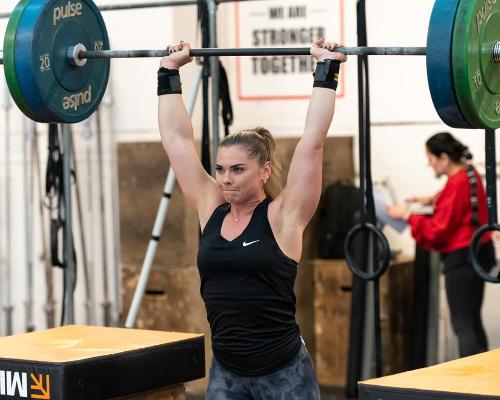
Given its importance to healthy ageing and overall wellbeing, Sport England has been tracking strength training (muscle strengthening) as a separate category and reports on this in Active Lives, observing no change to average participation, but showing that there's been a decline in women participating, offset by an increase in men. A drop among those aged 35-54 (-1.2 per cent) is countered by an increase among those aged 55-74 (+1.0 per cent).

The proportion of those meeting the guideline continue to decline with age, with a sharp drop at age 75 or over (to 29 per cent).

There’s been a small increase in those with a disability or long-term health condition meeting muscle strengthening guidelines (+1.5 per cent), while the least affluent groups (NS-SEC 6-8) remain less likely to meet the guideline (33 per cent vs. 52 per cent for the most affluent). Despite increases for Asian (excluding Chinese) of +3.0 per cent and Chinese (+6.9 per cent) adults, those from Black (40 per cent), Asian (excluding Chinese) (38 per cent) and other (37 per cent) ethnic groups continue to be the least likely to meet the guideline.

Commenting on the figures, Huw Edwards, CEO at ukactive, said: "The findings show the essential role of gyms, pools and leisure facilities in driving this recovery, with overall fitness activities up by 2.3 per cent on last year and gym sessions (2.8 per cent) and swimming (3.9 per cent) also bouncing back to meet strong consumer demand.

“While the return to pre-pandemic levels is positive, we should have ambitions to greatly increase the number of people being physically active. This is what the Government’s upcoming Sports Strategy must deliver by empowering the physical activity sector to grow and helping more people be more active, more often.

“We must do more to address the ongoing inequalities in our communities which were exacerbated by the pandemic and are still struggling to recover, with the number of active people in England’s least affluent areas activity levels down 3.1 per cent compared to 2018/19.

“Fitness and leisure facilities are essential for the health of these communities and while the government has committed to £63m of funding to prevent further closures of pools and leisure centres due to high energy costs, a long-term strategy is critical," said Edwards.

To download the full Active Lives report, click here.

RELATED STORIES
  Sport England denies UK Parliament’s accusation that it has lost track of £1.05bn in grant funding


A report issued by the UK Parliament’s Public Accounts Committee has accused Sport England of losing track of how £1.05bn in grants have been spent since 2016 and only accounting for £450m.
  Kid's activity levels back to pre-pandemic levels in UK, but lack of government support would threaten recovery


Children’s and young people’s activity levels are back to pre-pandemic levels, confirms Sport England in its annual Active Lives Children and Young People Survey 2021-2022.
  Physical activity levels slow to recover – pandemic creates 1.3m inactive adults


Physical activity levels are recovering slowly following the large drops in participation numbers caused by the COVID-19 pandemic restrictions.
MORE NEWS
OMA completes New Museum transformation with landmark expansion and Oberon restaurant
OMA has completed a major transformation of New York's New Museum, creating a larger cultural campus that combines expanded exhibition spaces with learning, performance, hospitality and public programming.
David Rockwell creates immersive magic destination, The Hand and The Eye
A US$50 million (£44.2 million, €51.2 million) transformation of Chicago's historic McCormick Mansion has created a new destination that combines live magic, immersive theatre, dining and private membership under one roof.
Montana Heritage Center opens with immersive exhibits and US$107 million investment
The Montana Historical Society has officially celebrated the opening of its new Montana Heritage Center, a US$107 million (£79 million, €92 million) destination that combines immersive storytelling with cutting-edge audiovisual technology to bring the sta
Universal launches new theme park model with Kids Resort
Universal Destinations and Experiences has launched a new regional theme park model with the opening of Universal Kids Resort in Frisco, Texas.
+ More news   
LATEST JOBS
General Manager, The Needles
Heritage Great Britain
Salary: c£70,000pa + benefits + relocation support
Job location: Isle of Wight , United Kingdom
+ More jobs  

COMPANY PROFILES
instantprint

We’re a Yorkshire-based online printer, founded in 2009 by Adam Carnell and James Kinsella. [more...]
Alterface

Alterface’s Creative Division team is seasoned in concept and ride development, as well as storyte [more...]
iPlayCO

iPlayCo was established in 1999. [more...]
IAAPA EMEA

IAAPA Expo Europe was established in 2006 and has grown to the largest international conference and [more...]
+ More profiles  
CATALOGUE GALLERY
 

+ More catalogues  
DIRECTORY
+ More directory  
DIARY


23-26 Aug 2026

Elevate Spa Riviera Maya Edition

The Riviera Maya Edition Kanai, Playa del Carmen, Mexico
28-29 Sep 2026

Wellness Destination AI Tech Summit – Tourism, Hospitality & Real Estate, 28-29 Sept 2026

Grand Ballroom, METT Singapore, Singapore
+ More diary  
LATEST ISSUES
+ View Magazine Archive

Attractions Management

2026 issue 1


View issue contents
View on turning pages
Download PDF
FREE digital subscription
Print subscription

Attractions Management

2025 issue 2


View issue contents
View on turning pages
Download PDF
FREE digital subscription
Print subscription

Attractions Management

2025 issue 1


View issue contents
View on turning pages
Download PDF
FREE digital subscription
Print subscription

Attractions Management

2024 issue 4


View issue contents
View on turning pages
Download PDF
FREE digital subscription
Print subscription

Attractions Management News

06 Apr 2020 issue 153


View on turning pages
Download PDF
View archive
FREE digital subscription
Print subscription

Attractions Handbook

2019


View issue contents
View on turning pages
Download PDF
FREE digital subscription
Print subscription
 
ABOUT LEISURE MEDIA
LEISURE MEDIA MAGAZINES
LEISURE MEDIA HANDBOOKS
LEISURE MEDIA WEBSITES
LEISURE MEDIA PRODUCT SEARCH
 
ATTRACTIONS MANAGEMENT
ATTRACTIONS MANAGEMENT NEWS
ATTRACTIONS HANDBOOK
PRINT SUBSCRIPTIONS
FREE DIGITAL SUBSCRIPTIONS
ADVERTISE . CONTACT US

Leisure Media
Tel: +44 (0)1462 431385

©Cybertrek 2026
Get Attractions Management digital magazine FREE
Sign up here ▸
Jobs    News   Products   Magazine   Subscribe
NEWS
Active Lives survey reports latest health club and physical activity numbers
POSTED 21 Apr 2023 . BY Tom Walker
The number of adults taking part in fitness activities has seen significant rises over the last 12 months, but remains below pre-pandemic levels Credit: Shutterstock/SeventyFour
Physical activity levels among adults in England have returned to pre-pandemic levels
63.1% of the adult population takes part in at least 150 minutes of moderate intensity physical activity each week
A quarter (25.8%) of the population are classed as inactive
The figures come from the Active Lives report, from Sport England
Overall physical activity levels among adults in England have returned to pre-pandemic levels, being in line with 2018-19 and above 2016 numbers.

According to the latest Active Lives report, from Sport England, nearly two-thirds (63.1 per cent) of the adult population were classified as 'active', undertaking at least 150 minutes of moderate-intensity physical activity each week, during the period between November 2021 and November 2022, with a further 11.1 per cent classified as 'fairly active' at 30 - 149 minutes a week, meaning 74.2 per cent of UK adults are undertaking some form of meaningful exercise.

When it comes to the inactive, levels are now above pre-pandemic levels, with a quarter (25.8 per cent) of the population classed as inactive (averaging fewer than 30 minutes of exercise a week).

The types of activities people are undertaking were also researched.

Going to the gym and other fitness activities have seen significant rises over the last 12 months, up from 11.4m in November 2021 to 12.5m in November 2022, although both remain below their pre-pandemic levels, with fitness still down by 1.4m when compared to Nov 2018-19.

Numbers for health club visits between 2016 and 2022 are as follows: 2016-17 – 13.2m, 2017-18 – 13.5m, 2018-19 13.9m, 2019-20 12.7m, 2020-21 11.4m, 2021-22 12.5m

Football saw an increase of 561,000 regular players in the year from November 2021 to 2022, while cricket (up 124,000), netball (up 139,000) and basketball (up 57,000) also saw growth.

Cycling for leisure and sport and running (includes treadmill) had slightly falling numbers before the pandemic and both saw numbers increase during it. However, since the pandemic we’ve seen different outcomes for each, with cycling for leisure and sport remaining up on pre-pandemic numbers by just over 300,000 and running dropping further, continuing the prior trend (down by nearly 1m since Nov 15-16).

Swimming and team sports both had downward trends before the pandemic but were perhaps the most impacted activities given the nature and locations of taking part in them. While swimming has seen significant recovery, levels remain below pre-pandemic and we see a continuation of the downward trend (down by just over 1m since Nov 15-16). In contrast, team sports has recovered to pre-pandemic levels with indications of a stabilisation at around 3.1m players.

Overall, the data shows that the scale of recovery has varied across different sections of society with women, those from lower socio-economic groups and black and Asian people still less likely to be active than others.

Age continues to be a major factor that determines how likely a person is to be physically active.

In the report, Sport England states: "The older a person is the less likely they are to meet the Chief Medical Officers’ guidelines.

"However, this masks some long-term trends and, despite a significant recovery over the last year, there are now nearly half a million fewer active young people (aged 16-34) than six years ago.

"Conversely, we were seeing significant progress in older adults’ activity levels prior to the pandemic and these continued to increase once restrictions were lifted. There are now 1.3m (5.0 per cent) more active 55-74-year-olds and just over half a million (7.8 per cent) more active people aged 75+ than there were in November 2015-16."

The most deprived places (IMD 1-3) fared worst, with activity levels remaining below both pre-pandemic (down 3.1 per cent) and November 2015-16 levels (down 2.6 per cent).

Tim Hollingsworth, CEO of Sport England, said: "The pandemic was an unprecedented challenge to community sport and activity in England, so it’s great news that the overall number of people being physically active has bounced back to pre-pandemic levels.

“We know, however, that there is still much to do. It’s clear that alongside continuing significant financial challenges, the recovery has not been universal, and today’s report provides further evidence that some groups face more barriers to being active than others.

“That’s exactly why our Uniting the Movement strategy continues to see us work with our partners to disproportionately focus resources and funding toward the people and places that need the most support to be active.

“Today’s data also shows the challenge facing the country in ensuring young adults continue to engage with physical activity and we’ll work with our partners to ensure the offer available to this group remains relevant and accessible.”

Given its importance to healthy ageing and overall wellbeing, Sport England has been tracking strength training (muscle strengthening) as a separate category and reports on this in Active Lives, observing no change to average participation, but showing that there's been a decline in women participating, offset by an increase in men. A drop among those aged 35-54 (-1.2 per cent) is countered by an increase among those aged 55-74 (+1.0 per cent).

The proportion of those meeting the guideline continue to decline with age, with a sharp drop at age 75 or over (to 29 per cent).

There’s been a small increase in those with a disability or long-term health condition meeting muscle strengthening guidelines (+1.5 per cent), while the least affluent groups (NS-SEC 6-8) remain less likely to meet the guideline (33 per cent vs. 52 per cent for the most affluent). Despite increases for Asian (excluding Chinese) of +3.0 per cent and Chinese (+6.9 per cent) adults, those from Black (40 per cent), Asian (excluding Chinese) (38 per cent) and other (37 per cent) ethnic groups continue to be the least likely to meet the guideline.

Commenting on the figures, Huw Edwards, CEO at ukactive, said: "The findings show the essential role of gyms, pools and leisure facilities in driving this recovery, with overall fitness activities up by 2.3 per cent on last year and gym sessions (2.8 per cent) and swimming (3.9 per cent) also bouncing back to meet strong consumer demand.

“While the return to pre-pandemic levels is positive, we should have ambitions to greatly increase the number of people being physically active. This is what the Government’s upcoming Sports Strategy must deliver by empowering the physical activity sector to grow and helping more people be more active, more often.

“We must do more to address the ongoing inequalities in our communities which were exacerbated by the pandemic and are still struggling to recover, with the number of active people in England’s least affluent areas activity levels down 3.1 per cent compared to 2018/19.

“Fitness and leisure facilities are essential for the health of these communities and while the government has committed to £63m of funding to prevent further closures of pools and leisure centres due to high energy costs, a long-term strategy is critical," said Edwards.

To download the full Active Lives report, click here.

RELATED STORIES
Sport England denies UK Parliament’s accusation that it has lost track of £1.05bn in grant funding


A report issued by the UK Parliament’s Public Accounts Committee has accused Sport England of losing track of how £1.05bn in grants have been spent since 2016 and only accounting for £450m.
Kid's activity levels back to pre-pandemic levels in UK, but lack of government support would threaten recovery


Children’s and young people’s activity levels are back to pre-pandemic levels, confirms Sport England in its annual Active Lives Children and Young People Survey 2021-2022.
Physical activity levels slow to recover – pandemic creates 1.3m inactive adults


Physical activity levels are recovering slowly following the large drops in participation numbers caused by the COVID-19 pandemic restrictions.
MORE NEWS
OMA completes New Museum transformation with landmark expansion and Oberon restaurant
OMA has completed a major transformation of New York's New Museum, creating a larger cultural campus that combines expanded exhibition spaces with learning, performance, hospitality and public programming.
David Rockwell creates immersive magic destination, The Hand and The Eye
A US$50 million (£44.2 million, €51.2 million) transformation of Chicago's historic McCormick Mansion has created a new destination that combines live magic, immersive theatre, dining and private membership under one roof.
Montana Heritage Center opens with immersive exhibits and US$107 million investment
The Montana Historical Society has officially celebrated the opening of its new Montana Heritage Center, a US$107 million (£79 million, €92 million) destination that combines immersive storytelling with cutting-edge audiovisual technology to bring the sta
Universal launches new theme park model with Kids Resort
Universal Destinations and Experiences has launched a new regional theme park model with the opening of Universal Kids Resort in Frisco, Texas.
San Antonio Zoo reports $283 million economic impact as expansion plans progress
San Antonio Zoo has reported a US$283 million economic impact for 2025, following a decade- long transformation programme that has seen almost US$200 million invested into the Texas attraction.
Great Barrier Reef attraction set for AU$180 million reinvention
Plans for the AU$180 million redevelopment of Reef HQ Aquarium in Townsville, Australia, are progressing, with the project set to transform the attraction into a global centre for reef education and conservation.
+ More news   
 
COMPANY PROFILES
instantprint

We’re a Yorkshire-based online printer, founded in 2009 by Adam Carnell and James Kinsella. [more...]
Alterface

Alterface’s Creative Division team is seasoned in concept and ride development, as well as storyte [more...]
iPlayCO

iPlayCo was established in 1999. [more...]
IAAPA EMEA

IAAPA Expo Europe was established in 2006 and has grown to the largest international conference and [more...]
+ More profiles  
CATALOGUE GALLERY
+ More catalogues  
DIRECTORY
+ More directory  
DIARY


23-26 Aug 2026

Elevate Spa Riviera Maya Edition

The Riviera Maya Edition Kanai, Playa del Carmen, Mexico
28-29 Sep 2026

Wellness Destination AI Tech Summit – Tourism, Hospitality & Real Estate, 28-29 Sept 2026

Grand Ballroom, METT Singapore, Singapore
+ More diary  


ADVERTISE . CONTACT US

Leisure Media
Tel: +44 (0)1462 431385

©Cybertrek 2026

ABOUT LEISURE MEDIA
LEISURE MEDIA MAGAZINES
LEISURE MEDIA HANDBOOKS
LEISURE MEDIA WEBSITES
LEISURE MEDIA PRODUCT SEARCH
ATTRACTIONS MANAGEMENT NEWS
ATTRACTIONS HANDBOOK
PRINT SUBSCRIPTIONS
FREE DIGITAL SUBSCRIPTIONS