Nikken Sekkei to masterplan Singapore's High Line-inspired rail corridor
POSTED 30 Nov 2015 . BY Kim Megson
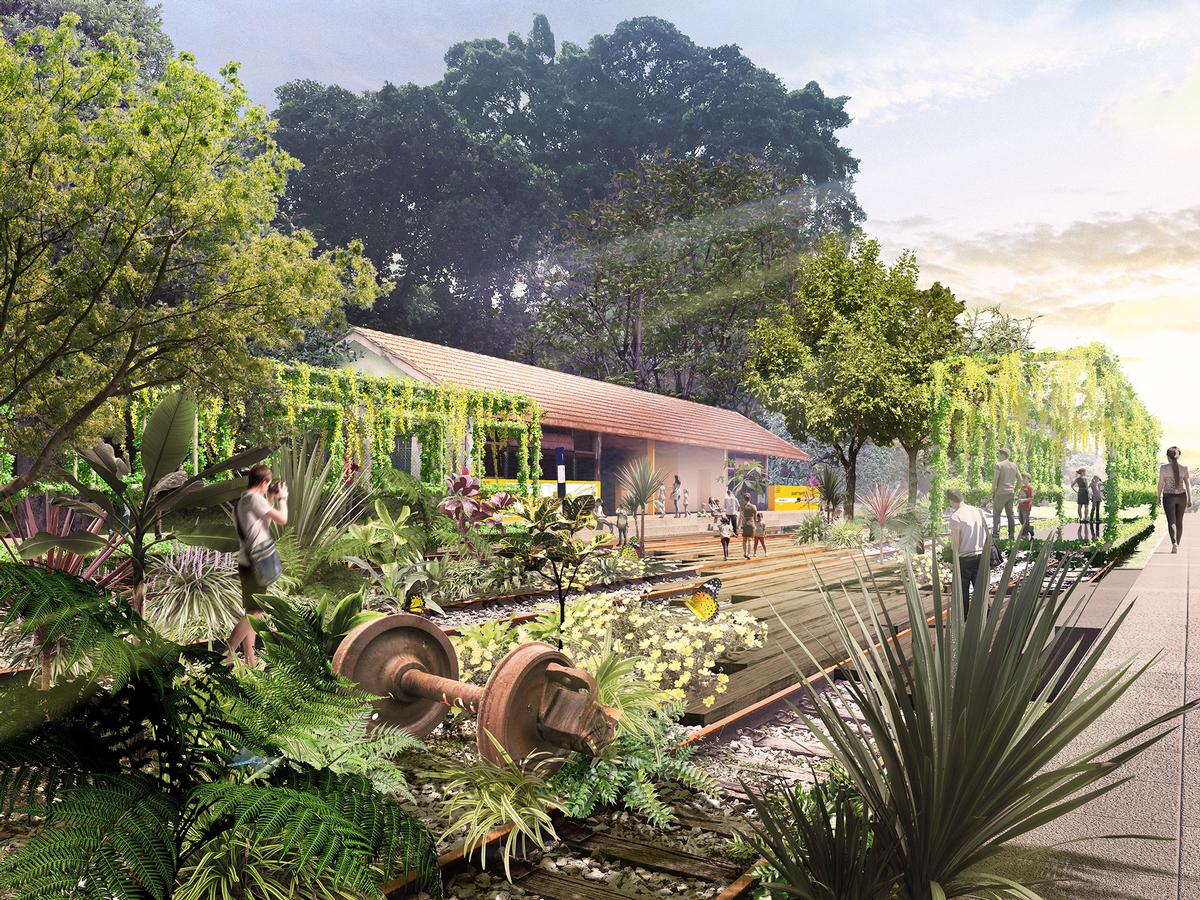
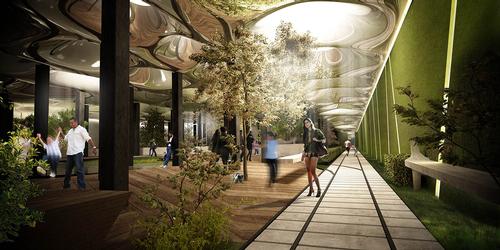
The railway line will be transformed into an open space for walkers, joggers and cyclists Credit: Nikken Sekkei
A design team led by Nikken Sekkei have won an international competition to develop a feasible plan for 24km (15m) of railway track stretching the length of Singapore.
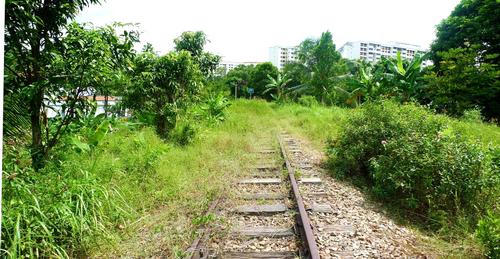
Inspired by New York’s phenomenally successful High Line – a disused railway transformed into a public greenway – Singapore’s Urban Redevelopment Authority (URA) invited international architecture studios to propose similarly innovative schemes for the city-state’s longest abandoned rail line.
Japanese architects Nikken Sekkei, working in collaboration with Tierra Design and Arup Singapore, proposed a concept called Lines of Life, featuring green areas, footpaths and bicycle paths linking communities along the route.
The studio have visualised a “seamless, inspiring, accessible, comfortable, memorable, eco-friendly and evolving space stitching the nation together” from Tanjong Pagar Railway Station in the south to Woodlands Checkpoint in the north.
Eight distinctively-themed stretches along the line will epitomise a unique character of each location. Visitors will be able to access the line from 122 access points along the route, stopping for a session of yoga, a rest in the garden or to observe the surrounding wildlife.
“We will integrate the communities touched by the rail corridor into the design itself to make a truly meaningful public asset within a broader urban context,” said the studio’s director of integrated public design, Wataru Tanaka.
“To this end we have undertaken a specifically co-ordinated team effort focusing on public design. Our clear vision has been supplemented with the knowledge and skills of our local Singapore-based team members, providing us with an execution plan for an immensely complex design task.”
Nikken Sekkei is now tasked with carrying out a feasibility study for the project, beginning with the initial 4km (2.5 mile) stretch. At the same time, a public exhibition and travelling roadshow will be co-ordinated by URA in Singapore to present and explain the design to residents.
The design competition for the project received huge interest from around the world, with 63 studios registering designs. Organisers whittled the number down to five shortlisted design teams, including West 8 and DP Architects; Grant Associates, MVRDV and Architects 61; and Turenscape International and MKPL Architects.
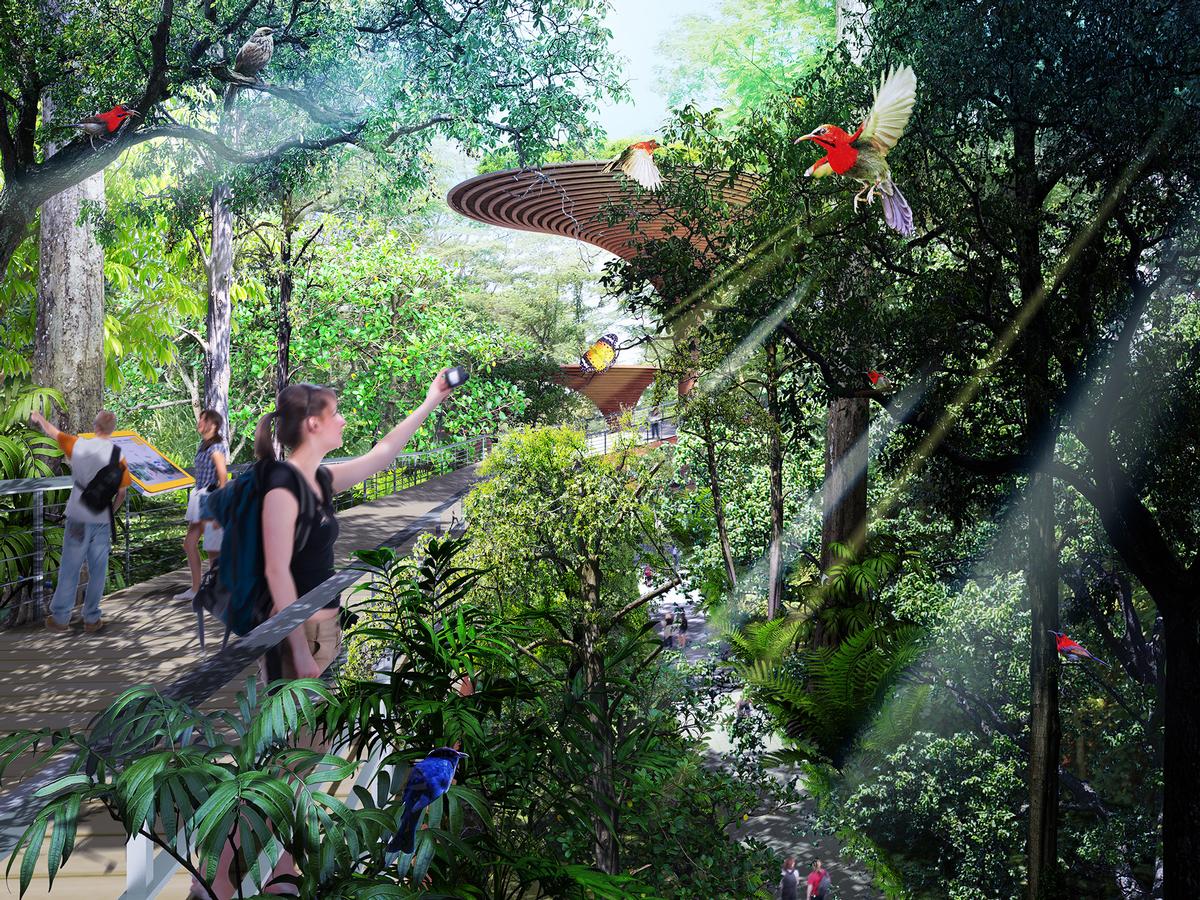
Visitors will be able to interact with the surrounding wildlife Credit: Nikken Sekkei
The architects want their open space to provide a 'life line' connecting the city Credit: Nikken Sekkei
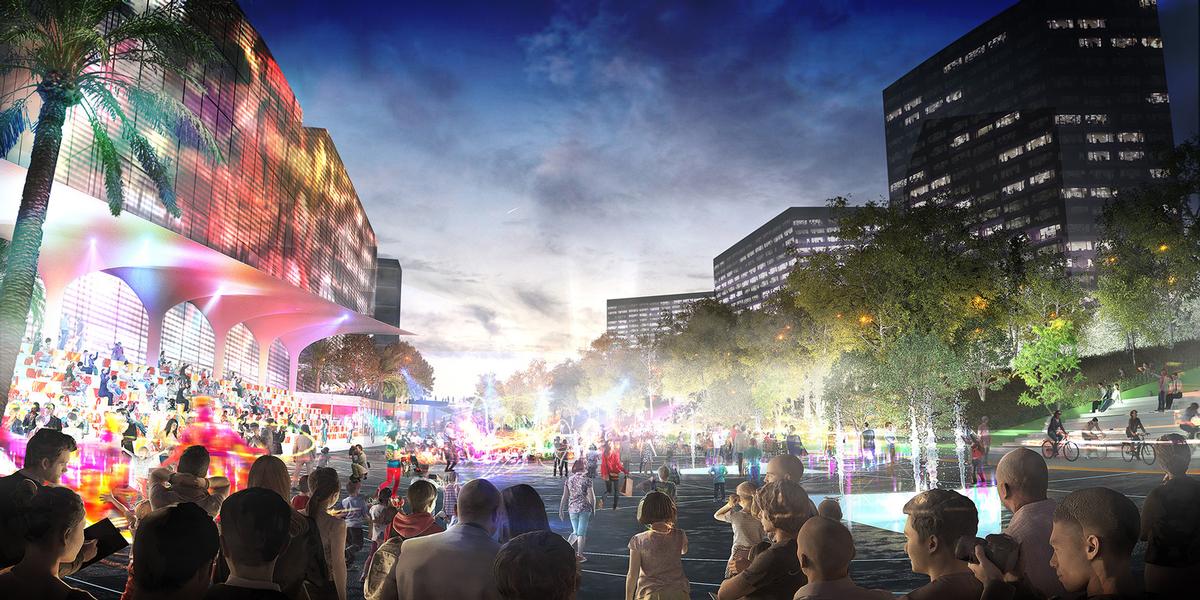
The studio says it will create a 'truly meaningful public asset within a broader urban context' Credit: Nikken Sekkei
PROJECT PROFILE: Singapore Rail Corridor Following the phenomenal success of New York’s High Line – a disused railway
transformed into a public greenway – architects across the world have been keen to get
their hands on similar projects, with cities and countries keen to capitalise on the unused
space. The Singaporean government is the latest to get involved, shortlisting five
architects to develop a feasible plan for 24km (15m) of track spanning the length of
Singapore from north to south.
Five teams shortlisted for Singapore's Rail Corridor redevelopment POSTED 04 Jun 2015. BY Tom Anstey Following the phenomenal success of New York’s High Line – a disused railway
transformed into a public greenway – architects across the world have been keen to get
their hands on similar projects, with cities and countries keen to capitalise on the unused
space. The Singaporean government is the latest to get involved, shortlisting five
architects to develop a feasible plan for 24km (15m) of track spanning the length of
Singapore from north to south.
OMA has completed a major transformation of New York's New Museum, creating a larger
cultural campus that combines expanded exhibition spaces with learning, performance,
hospitality and public programming.
A US$50 million (£44.2 million, €51.2 million) transformation of Chicago's historic McCormick
Mansion has created a new destination that combines live magic, immersive theatre, dining and
private membership under one roof.
The Montana Historical Society has officially celebrated the opening of its new Montana
Heritage
Center, a US$107 million (£79 million, €92 million) destination that combines immersive
storytelling with cutting-edge audiovisual technology to bring the sta
Nikken Sekkei to masterplan Singapore's High Line-inspired rail corridor
POSTED 30 Nov 2015 . BY Kim Megson
The railway line will be transformed into an open space for walkers, joggers and cyclists Credit: Nikken Sekkei
A design team led by Nikken Sekkei have won an international competition to develop a feasible plan for 24km (15m) of railway track stretching the length of Singapore.
Inspired by New York’s phenomenally successful High Line – a disused railway transformed into a public greenway – Singapore’s Urban Redevelopment Authority (URA) invited international architecture studios to propose similarly innovative schemes for the city-state’s longest abandoned rail line.
Japanese architects Nikken Sekkei, working in collaboration with Tierra Design and Arup Singapore, proposed a concept called Lines of Life, featuring green areas, footpaths and bicycle paths linking communities along the route.
The studio have visualised a “seamless, inspiring, accessible, comfortable, memorable, eco-friendly and evolving space stitching the nation together” from Tanjong Pagar Railway Station in the south to Woodlands Checkpoint in the north.
Eight distinctively-themed stretches along the line will epitomise a unique character of each location. Visitors will be able to access the line from 122 access points along the route, stopping for a session of yoga, a rest in the garden or to observe the surrounding wildlife.
“We will integrate the communities touched by the rail corridor into the design itself to make a truly meaningful public asset within a broader urban context,” said the studio’s director of integrated public design, Wataru Tanaka.
“To this end we have undertaken a specifically co-ordinated team effort focusing on public design. Our clear vision has been supplemented with the knowledge and skills of our local Singapore-based team members, providing us with an execution plan for an immensely complex design task.”
Nikken Sekkei is now tasked with carrying out a feasibility study for the project, beginning with the initial 4km (2.5 mile) stretch. At the same time, a public exhibition and travelling roadshow will be co-ordinated by URA in Singapore to present and explain the design to residents.
The design competition for the project received huge interest from around the world, with 63 studios registering designs. Organisers whittled the number down to five shortlisted design teams, including West 8 and DP Architects; Grant Associates, MVRDV and Architects 61; and Turenscape International and MKPL Architects.
Five teams shortlisted for Singapore's Rail Corridor redevelopment POSTED 04 Jun 2015. BY Tom Anstey Following the phenomenal success of New York’s High Line – a disused railway
transformed into a public greenway – architects across the world have been keen to get
their hands on similar projects, with cities and countries keen to capitalise on the unused
space. The Singaporean government is the latest to get involved, shortlisting five
architects to develop a feasible plan for 24km (15m) of track spanning the length of
Singapore from north to south.
OMA has completed a major transformation of New York's New Museum, creating a larger
cultural campus that combines expanded exhibition spaces with learning, performance,
hospitality and public programming.
A US$50 million (£44.2 million, €51.2 million) transformation of Chicago's historic McCormick
Mansion has created a new destination that combines live magic, immersive theatre, dining and
private membership under one roof.
The Montana Historical Society has officially celebrated the opening of its new Montana
Heritage
Center, a US$107 million (£79 million, €92 million) destination that combines immersive
storytelling with cutting-edge audiovisual technology to bring the sta
San Antonio Zoo has reported a US$283 million economic impact for 2025, following a decade-
long transformation programme that has seen almost US$200 million invested into the Texas
attraction.
Plans for the AU$180 million redevelopment of Reef HQ Aquarium in Townsville, Australia, are
progressing, with the project set to transform the attraction into a global centre for reef
education and conservation.