Hyperloop One sign deal to develop super-fast passenger network for UAE and offer first glimpse of Bjarke Ingels' project designs
POSTED 08 Nov 2016 . BY Kim Megson
Hyperloop One has signed a deal with Dubai’s Roads and Transport Authority to develop a passenger and cargo network Credit: Hyperloop One
We are heading for a future where our mental map of the city is completely reconfigured, as our habitual understanding of distance and proximity – time and space – is warped by this virgin form of travel – Bjarke Ingels
Hyperloop One, the Los Angeles firm racing to build the world’s first Hyperloop high-speed transport system, has signed a deal with Dubai’s Roads and Transport Authority (RTA) to pursue a passenger and cargo network in the United Arab Emirates (UAE).
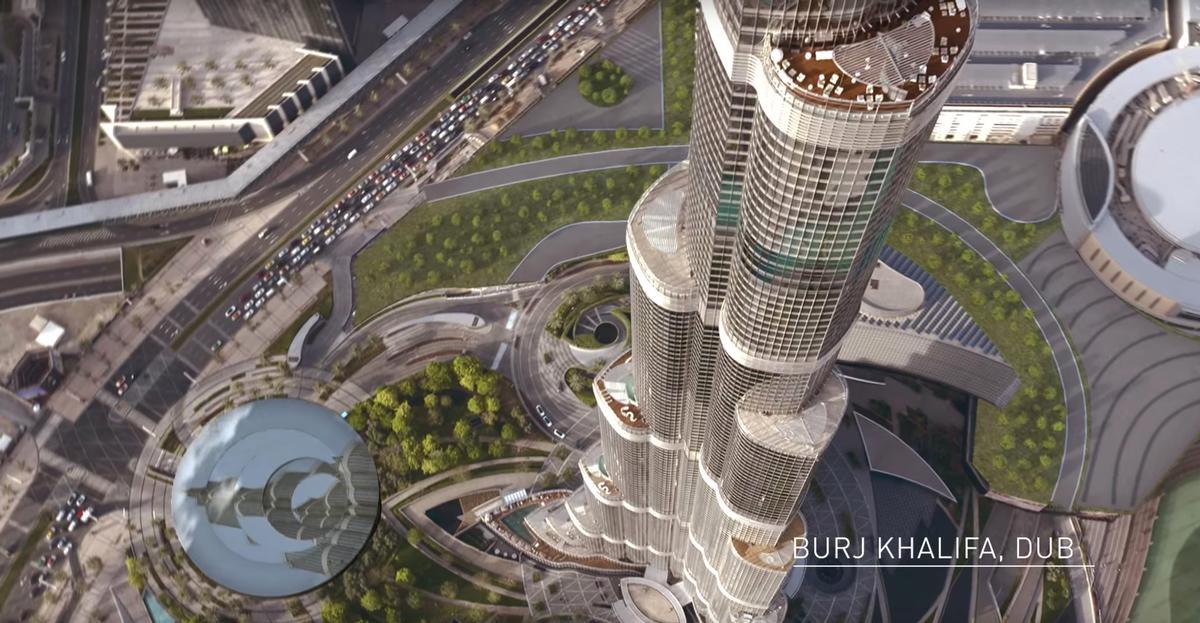
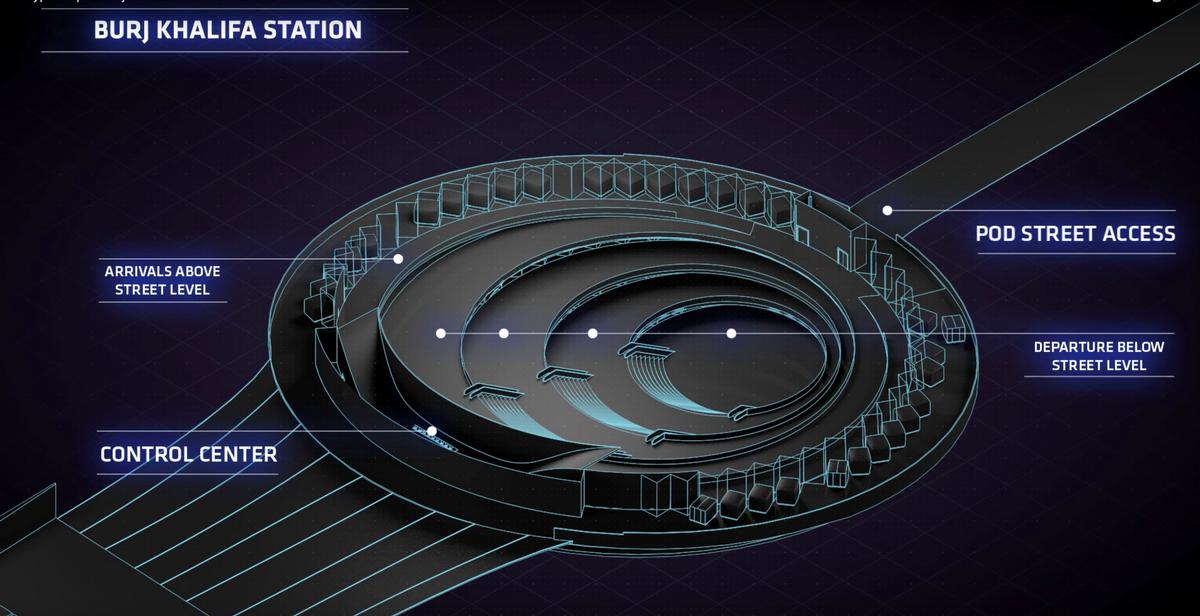
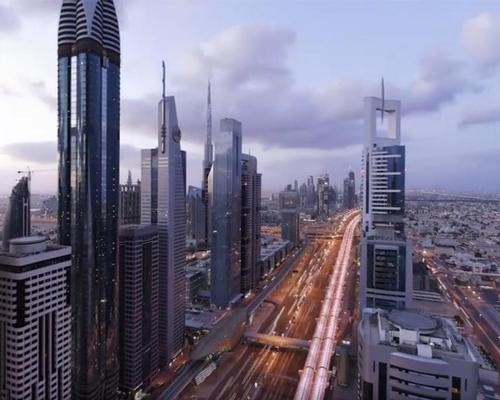
In a high-profile ceremony held in in Dubai’s Burj Khalifa today (8 November), the company offered a first glimpse of how its hyperloop system could work, and showcased how the system’s stations, control centre and pod designs, created by architects Bjarke Ingels Group (BIG), would look. The RTA will now finance a detailed feasibility study.
The launch revealed that despite rumours Hyperloop One was focusing its initial efforts on developing a cargo transport system, passenger travel remains a key part of the company’s plans.
"Together with BIG, we have worked on a seamless experience that starts the moment you think about being somewhere – not going somewhere,” said Josh Giegel, president of engineering for Hyperloop One. “We don’t sell cars, boats, trains, or planes. We sell time.”
A teaser video released by the company shows one man’s 124km journey, in the year 2020, from Abu Dhabi to Dubai, which Hyperloop One claims will be completed in just 12 minutes and can be made by up to 8,640 passengers per hour.
An explanation of how the network works can be viewed below:
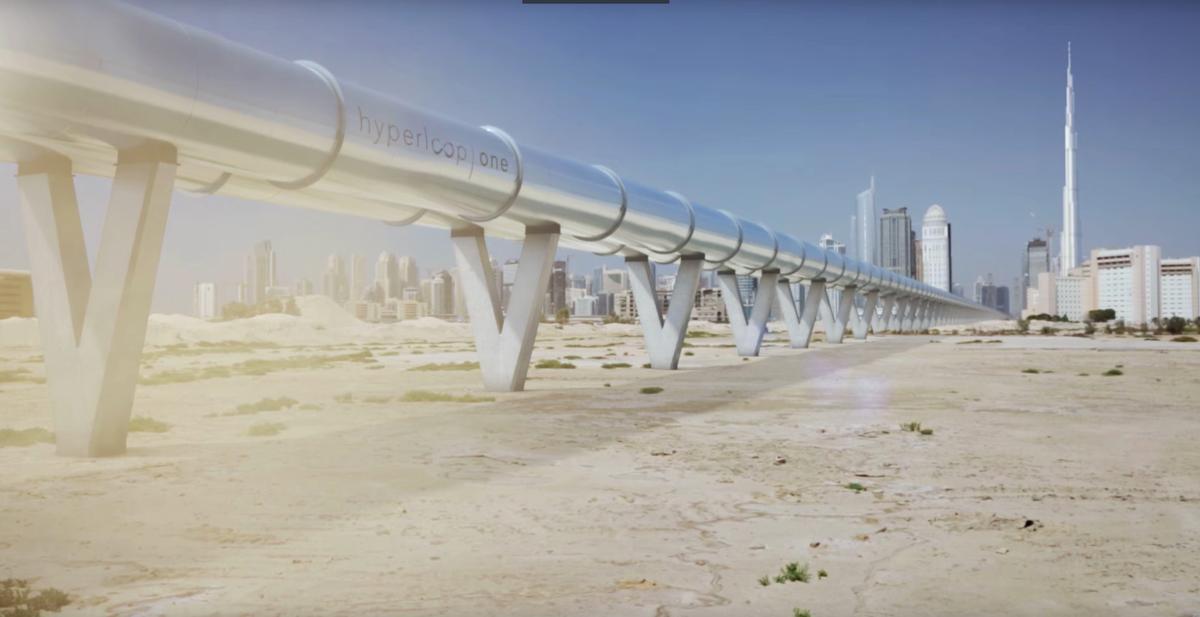
The hyperloop is a tube-based transport system in which pressurised capsules travel on an air cushion, driven by linear induction motors and air compressors, at speeds of up to 760mph (1,200 km/h). The concept was proposed by Canadian-American entrepreneur and engineer Elon Musk in 2013, firing the starting gun on a technological race to realise the concept.
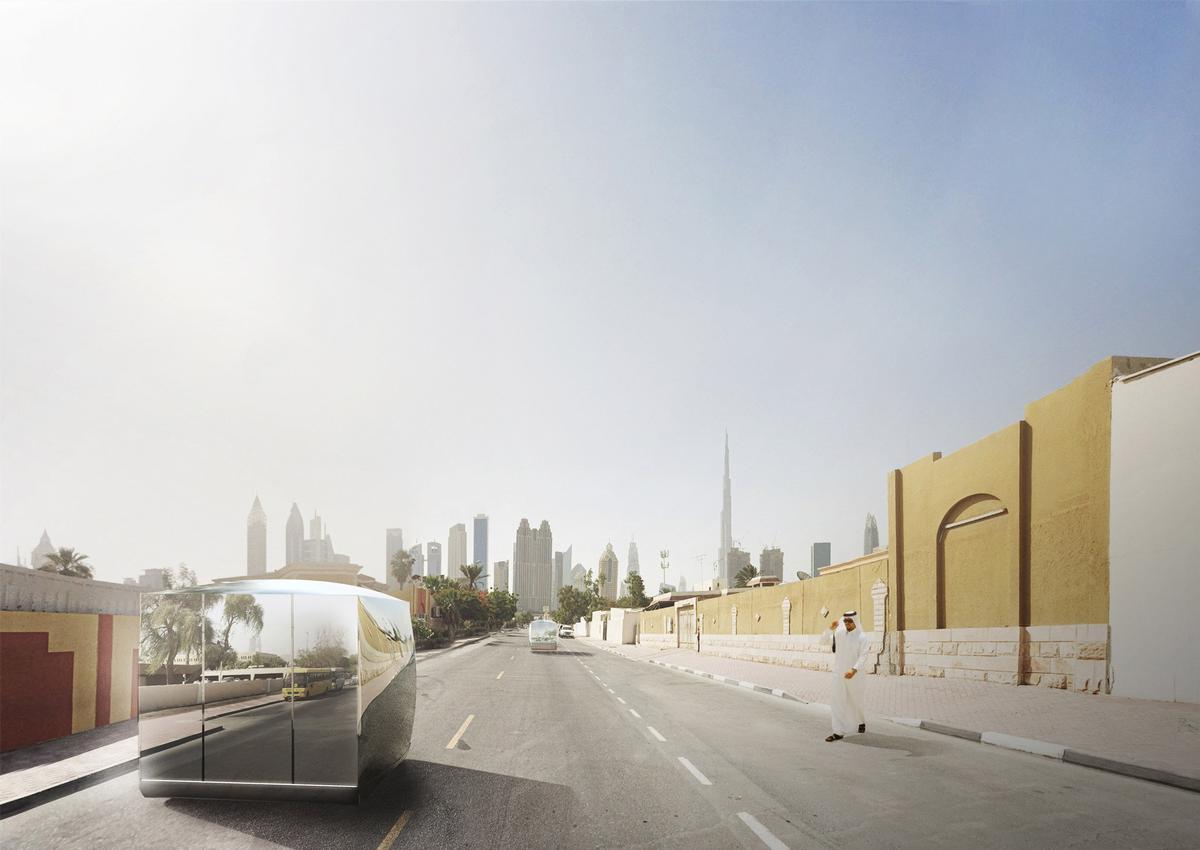
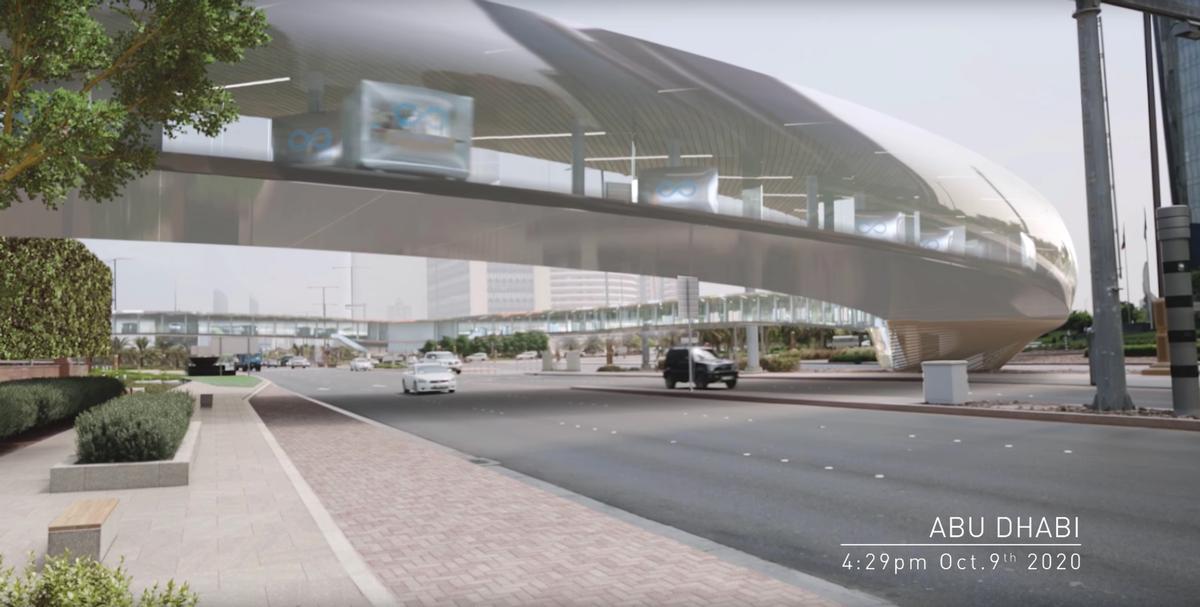
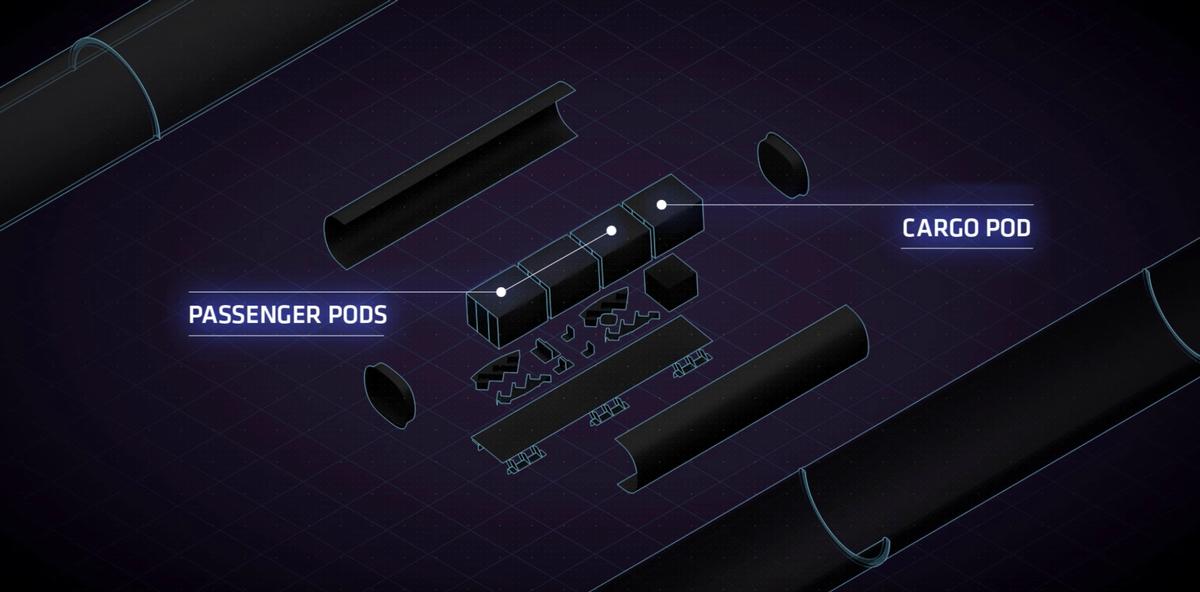
BIG's concept for Hyperloop One involves fleets of autonomous cubic pods that can travel along regular roads, picking up passengers, as well as within the hyperloop network's main transport hubs, where they are loaded into transporters which travel through elevated tubes to their destination. Upon arrival, the pods – which carry up to six people and offer different interior environments and seating arrangements – disembark from the transporter to another portal with gates, or out of the portal altogether where they can join the road system.
"With Hyperloop One we have given form to a mobility ecosystem of pods and portals, where the waiting hall has vanished along with waiting itself," said Ingels. "Hyperloop One combines collective commuting with individual freedom at near supersonic speed. We are heading for a future where our mental map of the city is completely reconfigured, as our habitual understanding of distance and proximity – time and space – is warped by this virgin form of travel.”
The design is based on a study of how an urban and inter-city transport network should integrate with existing infrastructure. The locations of the initial route in the UAE are selected by passenger density and proximity to existing or planned transportation hubs.
A major long-term goal for Hyperloop One is to “create a fifth mode of transport that will connect distant cities to form dynamic and efficient economic super-regions” – a vision which has major connotations for the leisure industry.
"Hyperloop is about creating a love for the new possibilities out there," said BIG Partner Jakob Lange. "With hyperloop, city planning can happen far from the city centres as physical distances are virtually eliminated. And we're not waiting for new technology to realise it. We have everything we need."
A teaser video released by the company shows one man’s 124km journey from Abu Dhabi to Dubai, which Hyperloop One claims will be completed in just 12 minutes Credit: Hyperloop One
The network's pods can leave the hyperloop portals and head onto the open road Credit: Hyperloop One
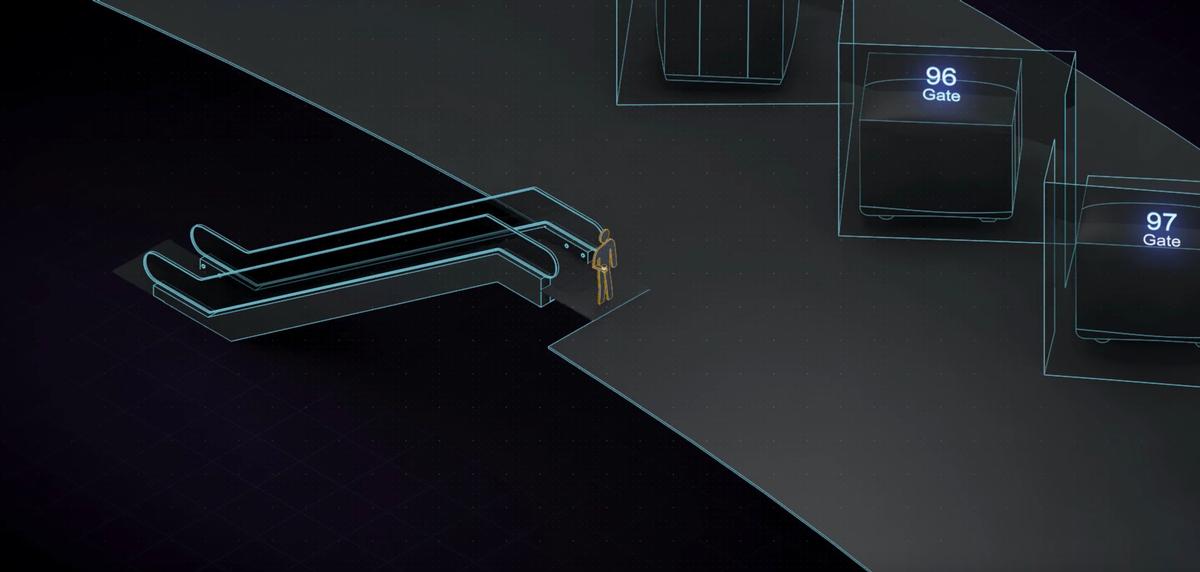
Passenger and cargo pods move between the gates and the larger Hyperloop transporters Credit: Hyperloop One
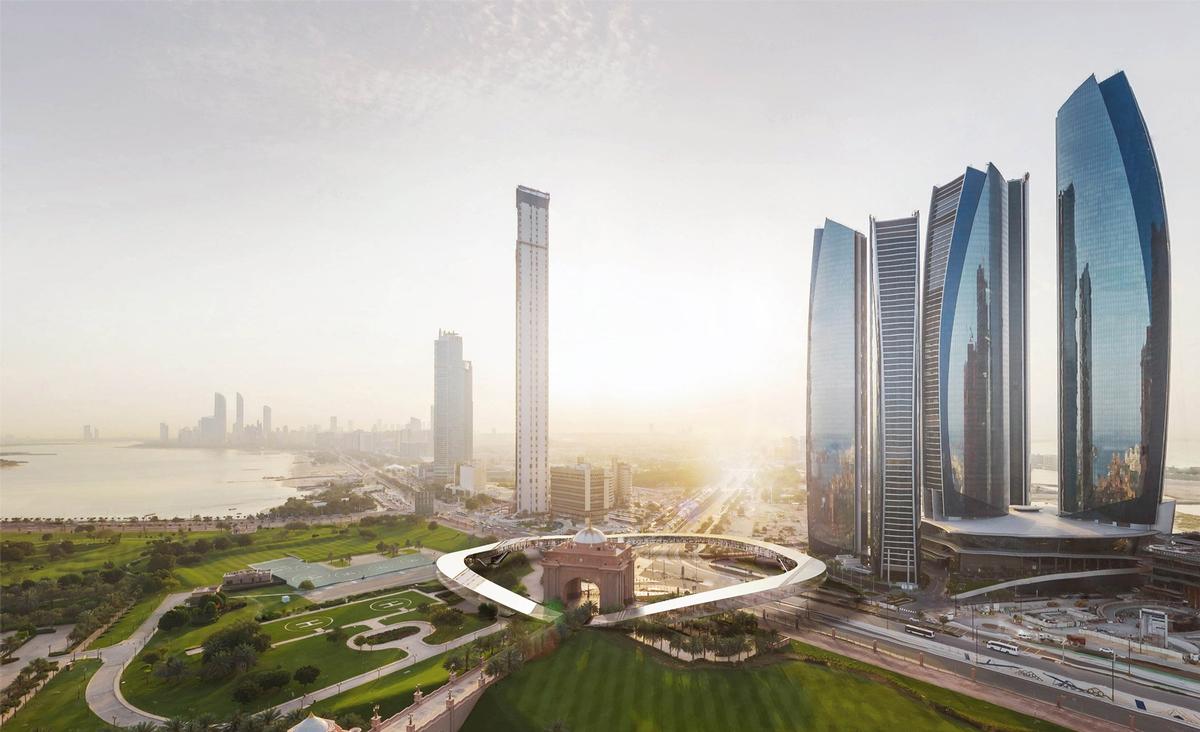
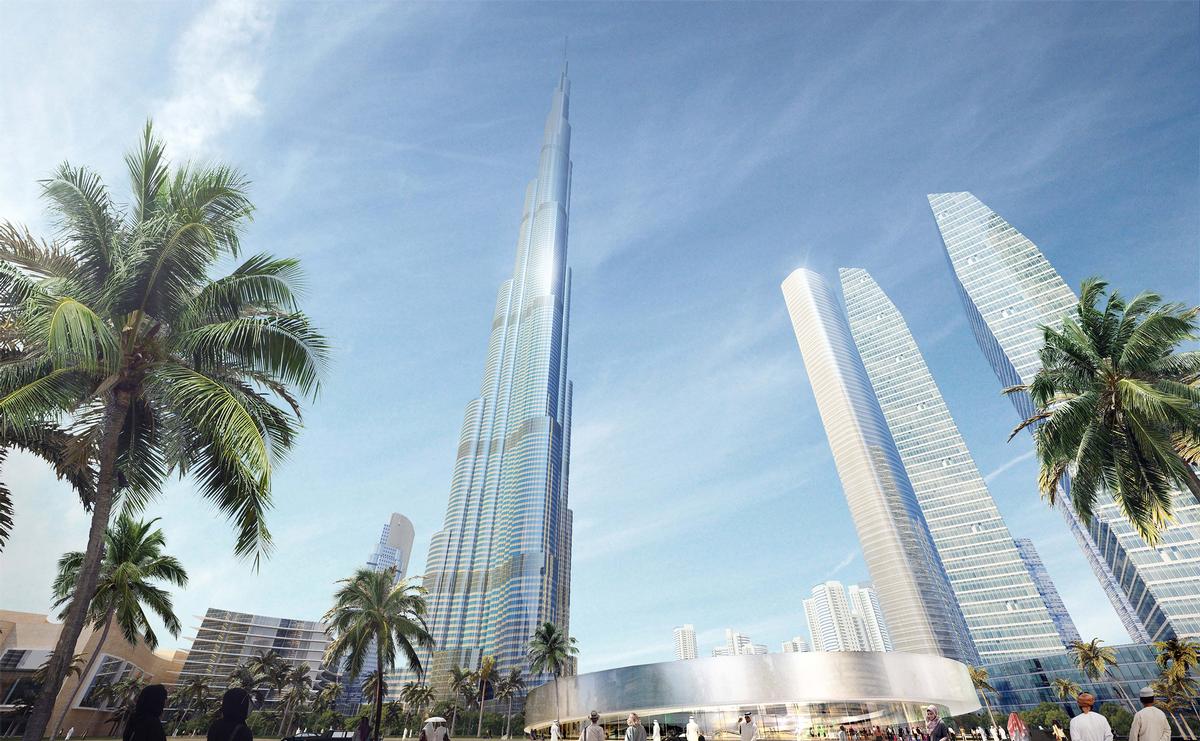
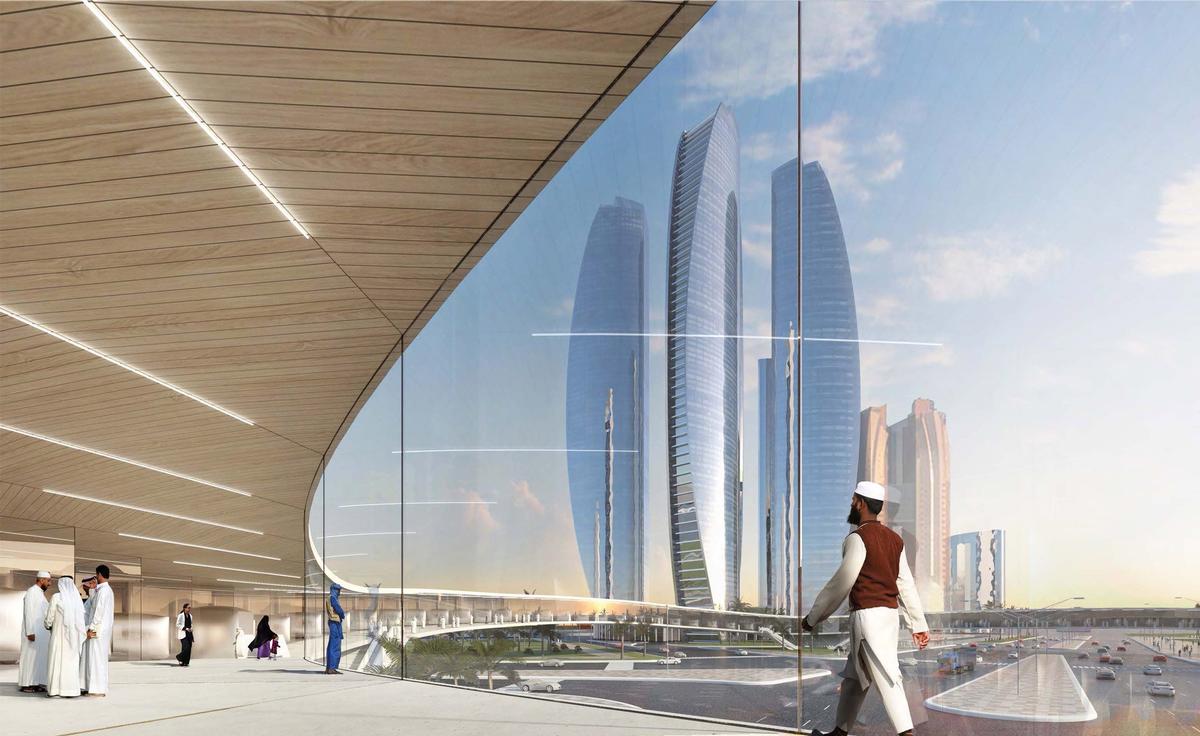
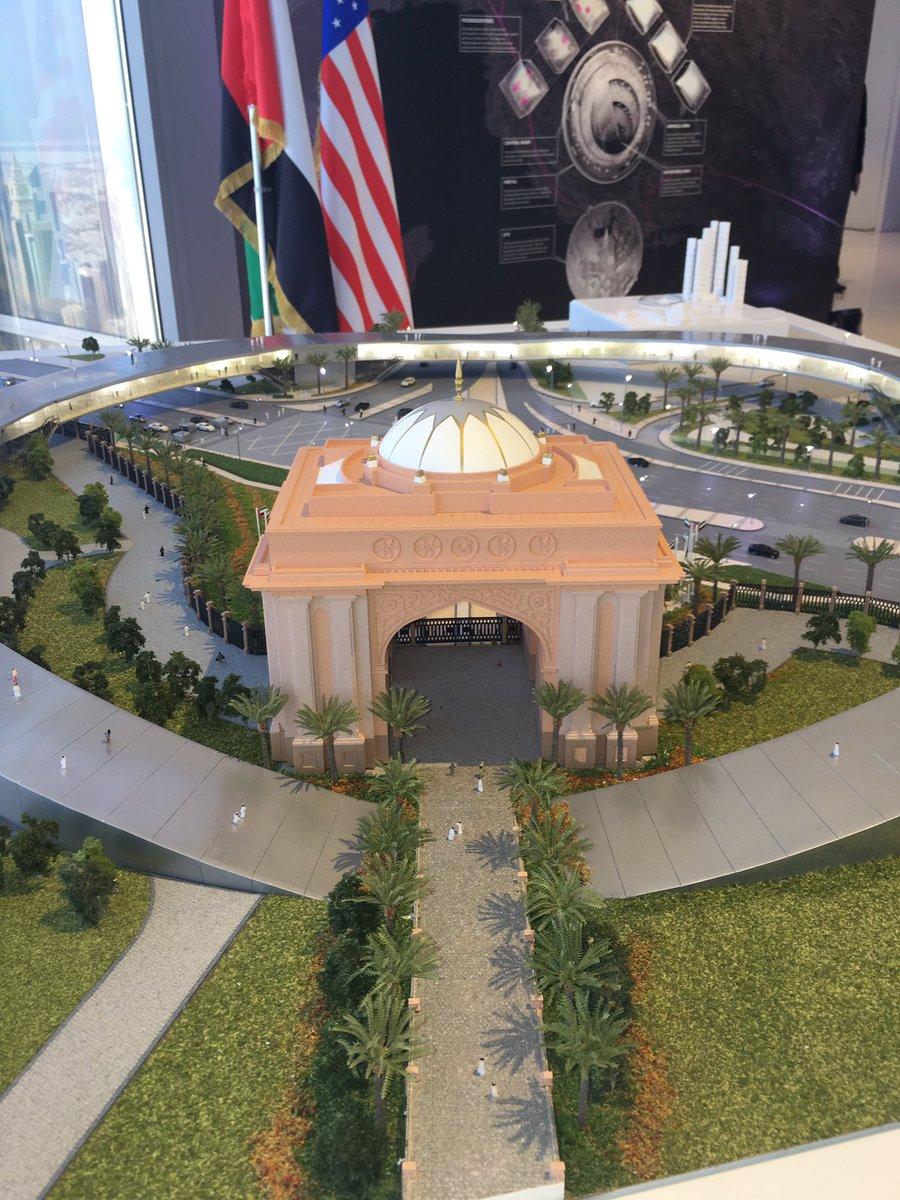
BIG's portal designs have been released by Hyperloop One Credit: Hyperloop One
Hyperloop One are focusing their energies on creating a futuristic passenger service Credit: Hyperloop One
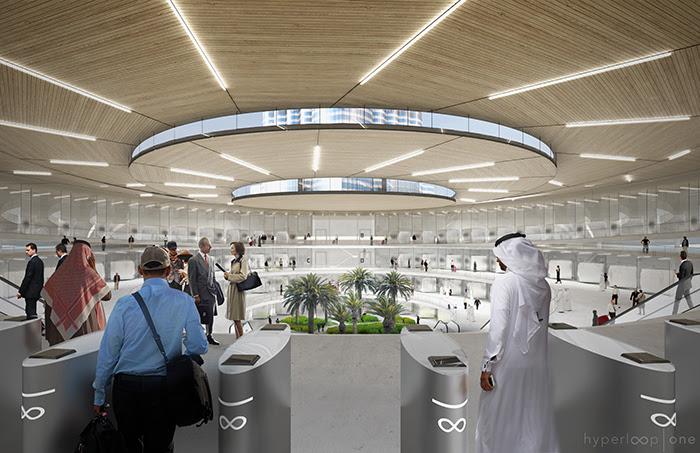
The interior of of of the portals Credit: Hyperloop One
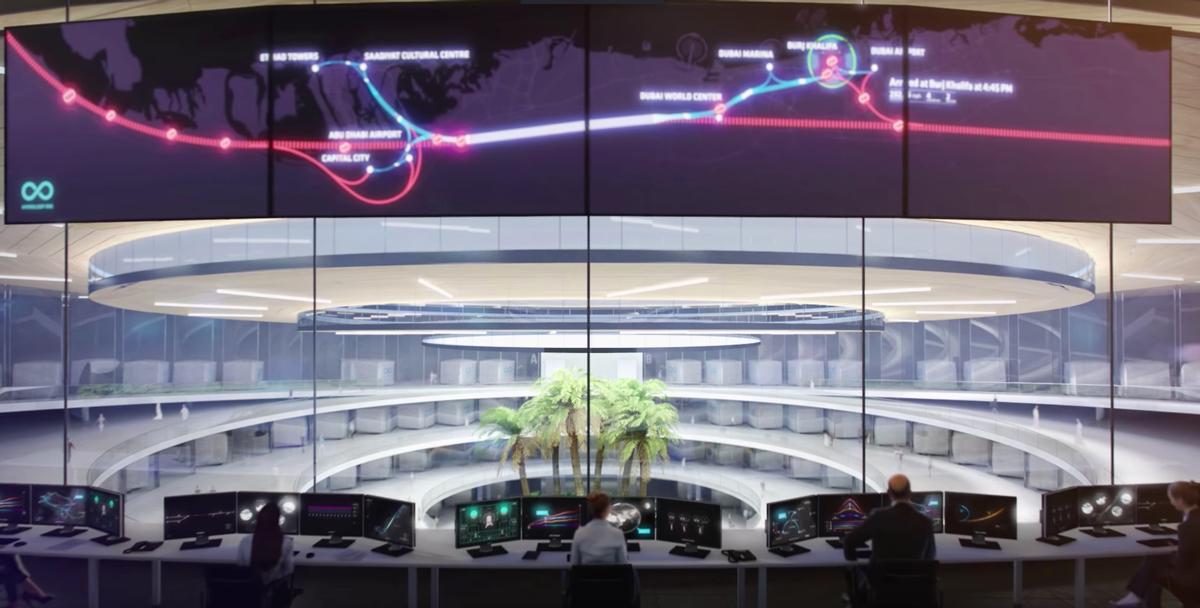
BIG's design for the Burj Khalifa control centre Credit: Hyperloop One
One of the portals, as imagined by Bjarke Ingels Credit: Hyperloop One
BIG's design for the Hyperloop One control centre Credit: Hyperloop One
Passengers start their journey by finding their gate Credit: Hyperloop One
They enter different pods, which will transport them to their transporter Credit: Hyperloop One
One Hyperloop potal will have over 100 gates Credit: Hyperloop One
Passenger and cargo pods are manoeuvred into each transporter Credit: Hyperloop One
After reaching their destination, the pods leave the transporter and carry passengers to the departure gates Credit: Hyperloop One
RELATED STORIES
Ready, set, design! Can you conceive a Hyperloop for Dubai in just 48 hours? POSTED 25 Aug 2016. BY Kim Megson The annual Build Earth Live ideas competition – which challenges teams to create a design
in just 48 hours – will return in September with entrants tasked to imagine a Hyperloop
network for the United Arab Emirates (UAE).
Could Elon Musk's Hyperloop revolutionise the world of leisure? POSTED 11 May 2016. BY Kim Megson Hyperloop One, the Los Angeles firm racing to build the world’s first Hyperloop high-speed
transport system, has partnered with Arup, AECOM and Bjarke Ingels Group (BIG) to
realise its ambitions.
London Museum will open four new food and drink destinations when it launches its new home
at Smithfield on 28 November, making hospitality a central part of the visitor experience at one
of the capital's biggest cultural openings of the year.
OMA has completed a major transformation of New York's New Museum, creating a larger
cultural campus that combines expanded exhibition spaces with learning, performance,
hospitality and public programming.
A US$50 million (£44.2 million, €51.2 million) transformation of Chicago's historic McCormick
Mansion has created a new destination that combines live magic, immersive theatre, dining and
private membership under one roof.
The Montana Historical Society has officially celebrated the opening of its new Montana
Heritage
Center, a US$107 million (£79 million, €92 million) destination that combines immersive
storytelling with cutting-edge audiovisual technology to bring the sta
Hyperloop One sign deal to develop super-fast passenger network for UAE and offer first glimpse of Bjarke Ingels' project designs
POSTED 08 Nov 2016 . BY Kim Megson
Hyperloop One has signed a deal with Dubai’s Roads and Transport Authority to develop a passenger and cargo network Credit: Hyperloop One
We are heading for a future where our mental map of the city is completely reconfigured, as our habitual understanding of distance and proximity – time and space – is warped by this virgin form of travel – Bjarke Ingels
Hyperloop One, the Los Angeles firm racing to build the world’s first Hyperloop high-speed transport system, has signed a deal with Dubai’s Roads and Transport Authority (RTA) to pursue a passenger and cargo network in the United Arab Emirates (UAE).
In a high-profile ceremony held in in Dubai’s Burj Khalifa today (8 November), the company offered a first glimpse of how its hyperloop system could work, and showcased how the system’s stations, control centre and pod designs, created by architects Bjarke Ingels Group (BIG), would look. The RTA will now finance a detailed feasibility study.
The launch revealed that despite rumours Hyperloop One was focusing its initial efforts on developing a cargo transport system, passenger travel remains a key part of the company’s plans.
"Together with BIG, we have worked on a seamless experience that starts the moment you think about being somewhere – not going somewhere,” said Josh Giegel, president of engineering for Hyperloop One. “We don’t sell cars, boats, trains, or planes. We sell time.”
A teaser video released by the company shows one man’s 124km journey, in the year 2020, from Abu Dhabi to Dubai, which Hyperloop One claims will be completed in just 12 minutes and can be made by up to 8,640 passengers per hour.
An explanation of how the network works can be viewed below:
The hyperloop is a tube-based transport system in which pressurised capsules travel on an air cushion, driven by linear induction motors and air compressors, at speeds of up to 760mph (1,200 km/h). The concept was proposed by Canadian-American entrepreneur and engineer Elon Musk in 2013, firing the starting gun on a technological race to realise the concept.
BIG's concept for Hyperloop One involves fleets of autonomous cubic pods that can travel along regular roads, picking up passengers, as well as within the hyperloop network's main transport hubs, where they are loaded into transporters which travel through elevated tubes to their destination. Upon arrival, the pods – which carry up to six people and offer different interior environments and seating arrangements – disembark from the transporter to another portal with gates, or out of the portal altogether where they can join the road system.
"With Hyperloop One we have given form to a mobility ecosystem of pods and portals, where the waiting hall has vanished along with waiting itself," said Ingels. "Hyperloop One combines collective commuting with individual freedom at near supersonic speed. We are heading for a future where our mental map of the city is completely reconfigured, as our habitual understanding of distance and proximity – time and space – is warped by this virgin form of travel.”
The design is based on a study of how an urban and inter-city transport network should integrate with existing infrastructure. The locations of the initial route in the UAE are selected by passenger density and proximity to existing or planned transportation hubs.
A major long-term goal for Hyperloop One is to “create a fifth mode of transport that will connect distant cities to form dynamic and efficient economic super-regions” – a vision which has major connotations for the leisure industry.
"Hyperloop is about creating a love for the new possibilities out there," said BIG Partner Jakob Lange. "With hyperloop, city planning can happen far from the city centres as physical distances are virtually eliminated. And we're not waiting for new technology to realise it. We have everything we need."
A teaser video released by the company shows one man’s 124km journey from Abu Dhabi to Dubai, which Hyperloop One claims will be completed in just 12 minutes Credit: Hyperloop One
The network's pods can leave the hyperloop portals and head onto the open road Credit: Hyperloop One
Passenger and cargo pods move between the gates and the larger Hyperloop transporters Credit: Hyperloop One
BIG's portal designs have been released by Hyperloop One Credit: Hyperloop One
Hyperloop One are focusing their energies on creating a futuristic passenger service Credit: Hyperloop One
The interior of of of the portals Credit: Hyperloop One
BIG's design for the Burj Khalifa control centre Credit: Hyperloop One
One of the portals, as imagined by Bjarke Ingels Credit: Hyperloop One
BIG's design for the Hyperloop One control centre Credit: Hyperloop One
Passengers start their journey by finding their gate Credit: Hyperloop One
They enter different pods, which will transport them to their transporter Credit: Hyperloop One
One Hyperloop potal will have over 100 gates Credit: Hyperloop One
Passenger and cargo pods are manoeuvred into each transporter Credit: Hyperloop One
After reaching their destination, the pods leave the transporter and carry passengers to the departure gates Credit: Hyperloop One
RELATED STORIES
Ready, set, design! Can you conceive a Hyperloop for Dubai in just 48 hours? POSTED 25 Aug 2016. BY Kim Megson The annual Build Earth Live ideas competition – which challenges teams to create a design
in just 48 hours – will return in September with entrants tasked to imagine a Hyperloop
network for the United Arab Emirates (UAE).
Could Elon Musk's Hyperloop revolutionise the world of leisure? POSTED 11 May 2016. BY Kim Megson Hyperloop One, the Los Angeles firm racing to build the world’s first Hyperloop high-speed
transport system, has partnered with Arup, AECOM and Bjarke Ingels Group (BIG) to
realise its ambitions.
London Museum will open four new food and drink destinations when it launches its new home
at Smithfield on 28 November, making hospitality a central part of the visitor experience at one
of the capital's biggest cultural openings of the year.
OMA has completed a major transformation of New York's New Museum, creating a larger
cultural campus that combines expanded exhibition spaces with learning, performance,
hospitality and public programming.
A US$50 million (£44.2 million, €51.2 million) transformation of Chicago's historic McCormick
Mansion has created a new destination that combines live magic, immersive theatre, dining and
private membership under one roof.
The Montana Historical Society has officially celebrated the opening of its new Montana
Heritage
Center, a US$107 million (£79 million, €92 million) destination that combines immersive
storytelling with cutting-edge audiovisual technology to bring the sta
San Antonio Zoo has reported a US$283 million economic impact for 2025, following a decade-
long transformation programme that has seen almost US$200 million invested into the Texas
attraction.
+ More news
COMPANY PROFILES
Alterface Alterface’s Creative Division team is
seasoned in concept and ride development,
as well as storyte [more...]
Sally Corporation Our services include: Dark ride design & build; Redevelopment of existing attractions; High-quality [more...]
IAAPA EMEA IAAPA Expo Europe was established in 2006 and has grown to the largest international conference and [more...]
Painting With Light By combining lighting, video, scenic and architectural elements, sound and special effects we tell s [more...]