The Hainan Science Museum has opened after seven years' construction
The building is by Ma Yansong and his practice MAD Architects
A soft opening period of four months saw 350,000 visitors welcomed
The museum has a planetarium, giant-screen cinema and exhibition galleries
A new science museum has opened to the public in Haikou after attracting more than 350,000 visitors during a four-month soft opening period.
Designed by Ma Yansong and his practice MAD Architects, the Hainan Science Museum is located on the edge of Wuyuan River National Wetland Park and has already recorded peak attendance of more than 5,800 visitors in a single day.
Commissioned by the Haikou Association for Science and Technology, the 46,528sq m complex was developed between 2019 and 2026 and has been named one of Hainan Province’s Top Ten Public Cultural Facilities.
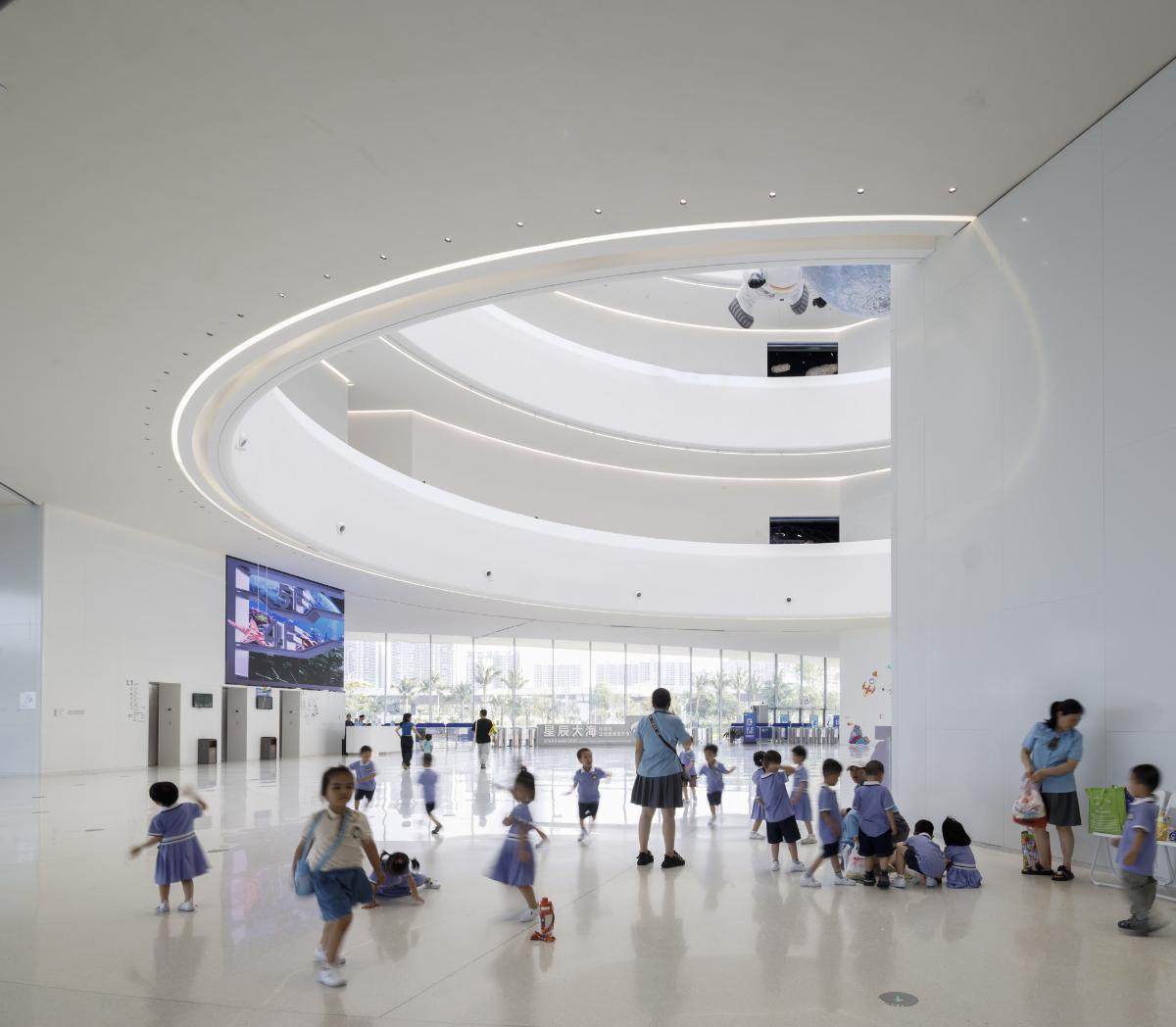
The museum includes a planetarium, giant-screen cinema, interactive exhibition galleries and a sunken plaza. There are also outdoor education spaces dedicated to plant science and tropical agriculture.
More than 30 schools and kindergartens lie within three kilometres of the museum and MAD says the building was conceived as civic infrastructure for local families, as well as being designed as a regional visitor attraction.
At the heart of the building is a continuous spiral route linking all galleries and allowing visitors to explore the museum in either direction. Three concrete cores support the ring-shaped structure, eliminating columns from the exhibition floors and creating the impression that the building floats above reflecting pools and a shaded public plaza.
The exterior is clad in 843 fibre-reinforced polymer panels that form a silver shell which changes with the light and weather.
Hainan has become increasingly important to China’s space programme, boasting the country’s only coastal launch site at Wenchang on the island’s east coast.
The museum adds to a growing portfolio of landmark public buildings in Haikou, including MAD’s nearby Cloudscape of Haikou pavilion, reflecting China’s continued investment in science and cultural institutions as tools for education, place-making and tourism development.
Read more about MAD Architects in CLADmag here.