Latest
issue
GET ATTRACTIONS MANAGEMENT
magazine
Yes! Send me the FREE digital edition of Attractions Management and the FREE weekly Attractions Management ezines and breaking news alerts!
Not right now, thanksclose this window I've already subscribed. I've already subscribed.
Get Attractions Management digital magazine FREE
Sign up here ▸
Jobs   News   Features   Products   Company profilesProfiles   Magazine   Handbook   Advertise    Subscribe  
NEWS
Barnes Foundation uses intelligent machines to offer new ways of interpreting art collections
POSTED 17 Jul 2018 . BY Tom Anstey
Albert Barnes had an unconventional perspective on art interpretation, which was based on making visual connections with different works instead of focusing on art styles and time frames
Philadelphia's Barnes Foundation art gallery has used machine learning to create an intelligent art critic, with the technology able to interpret and pair digital artwork together to recognise art style, objects and even images of Jesus.

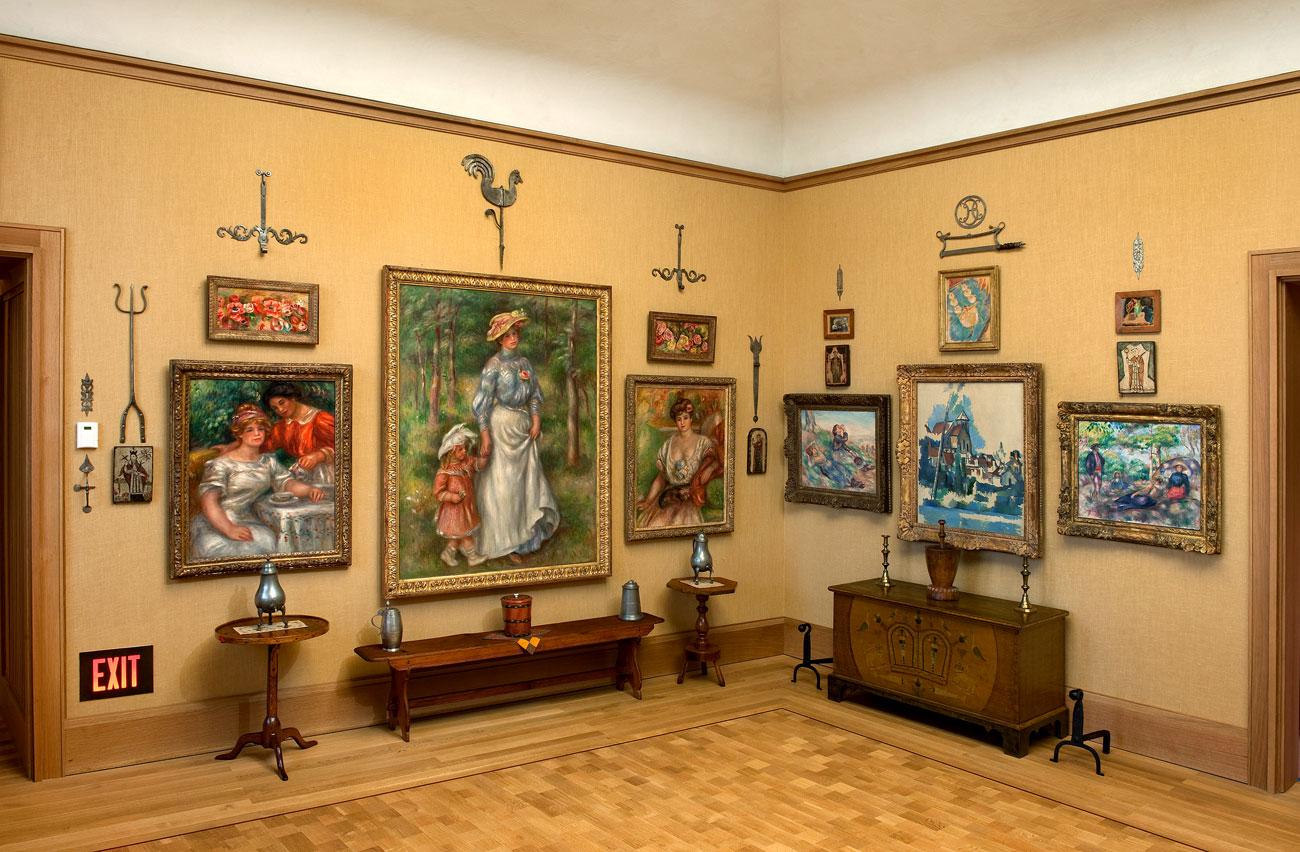
Since its foundation in 1922, the Barnes has built a collection boasting works by the likes of Vincent Van Gogh, Paul Cézzane and Claude Monet. Its founder Albert Barnes had an unconventional perspective on art interpretation, which was based on making visual connections with different works instead of focusing on art styles and time frames.

Created to help users view the artificially generated art collections, the new AI can identify basic elements in an artwork – such as people, objects and animals – which it will then categorise and place in different artificially-generated collections.

The technology, however, sees and interprets things differently to a human. Through computer vision, art is looked at differently, for example, the program interpreting many works by Renoir as being filled with stuffed animals and teddy bears. While on the surface this might seem like a failure in the technology, for Martha Lucy, deputy director for education and public programmes at the Barnes, it supported a theory she had about the artist's work.

"I’ve been working on an essay about Renoir’s obsession with the sense of touch, which I’m trying to link with his desire to revive artisanal values during the industrial era," she said in a blog post.

"A big part of my argument rests on proving (to the extent this is possible) that Renoir was deliberately trying to evoke the sense of touch in his paintings of fleshy naked women. So discovering that the computer was seeing teddy bears – soft things – was good news."

A research team from Rutgers University created the technology, which at its core tries to ascertain visual similarity among objects. The AI differs from a recognition project created by Fabrica for the Tate, which is trained to recognise images using photographs, not art. By comparison, the Rutgers version understands the basics of art and will continue to learn as it takes in more images.

"The Rutgers model will be integral to finding visual connections between works of art. This will most likely be the majority of what a visitor ends up seeing on our website as 'visually similar results'," said Shelly Bernstein, a consultant creative technologist working at the Barnes.

"While web visitors may never discover that computers think our collection is comprised of stuffed animals, we’re curious about this second path and what we may learn from it."

The Rutgers system has had interesting takes on different visual styles of art, sometimes labelling classic artwork as graffiti, while other times tagging bearded faces or similar shapes as Jesus Christ. According to the museum's curators, while sometimes an abstract concept, the computer's method of making visual connections that a human likely would not make, made logical sense.

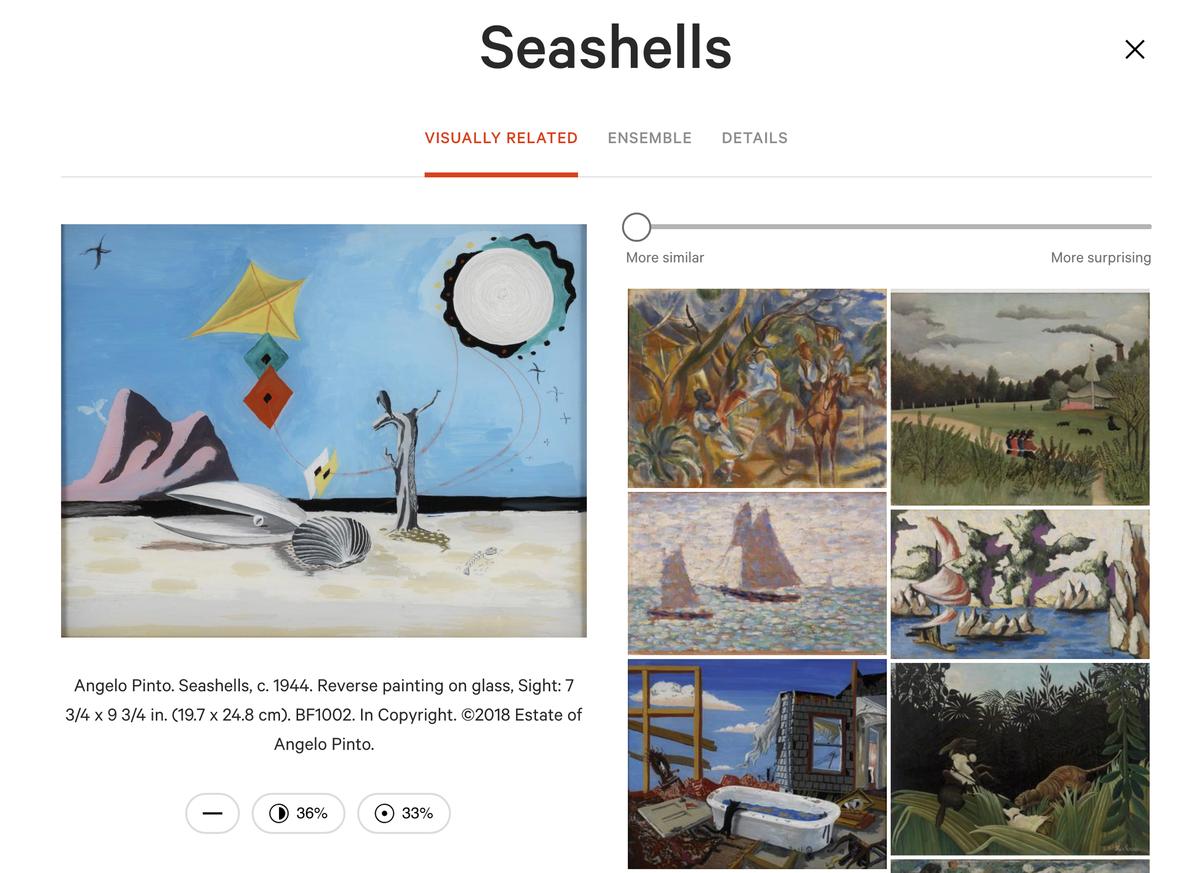
Using the AI, the Barnes website allows visitors to access digitised versions of its collection. When the user selects a particular piece, it offers it alongside visually related works, which then offers a slider toggle ranging from "more similar" to "more surprising".

"The Renoir teddy bears was a case when the computer saw something that supported (however tenuously) what I was already thinking," said Lucy.

"But what about when it reads the work of art as something that you never would have anticipated? When it perceives something that actually makes you look at a familiar object in a totally new way?

"These weird misreadings could stretch the brain, and this is always good for art history."

To explore the Barnes collection and to try out the tool, click here.
Since its foundation in 1922, the Barnes has built a collection boasting works by the likes of Vincent Van Gogh, Paul Cézzane and Claude Monet
When the user selects a particular piece, it offers it alongside visually related works, which then offers a slider toggle ranging from "more similar" to "more surprising"
RELATED STORIES
  Scientists urge London's Science Museum to end fossil fuel partnerships


A collection of nearly 50 scientists has urged the London Science Museum to end three oil company partnerships, with the collective arguing the sponsorships are "undermining" the museum as a scientific institution.
  Cave which trapped Thai schoolboys to become 'living museum'


The cave in which 12 Thai schoolboys and their football coach were trapped for 18 days is to be turned into a museum highlighting the bold rescue operation that saw them escape unharmed.
  Decades of Wheels car museum planned for Route 66 at Kansas


Located beside the famous Route 66 in Kansas, Texas, a new car museum will showcase some of the US’s most loved cars and motorbikes.
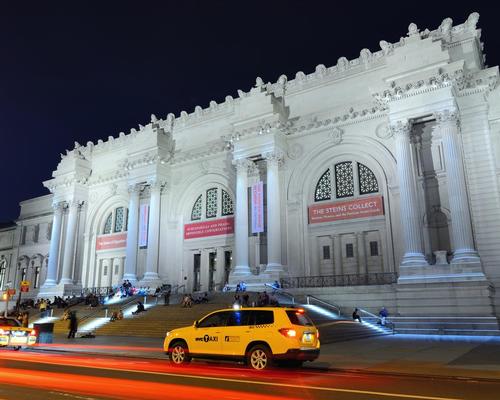
  New York's Met breaks attendance record as visitors flock to popular US institution


New York’s Metropolitan Museum of Art has broken its attendance record, with more than 7.35 million visitors coming through its doors in the last year.
MORE NEWS
Mubadala makes €1 billion bid for Pierre and Vacances
Abu Dhabi-based investment firm Mubadala Capital has made a binding, fully financed €1 billion offer to acquire Pierre and Vacances SA, the European holiday resort operator behind the continental European Center Parcs business.
Expo 2030 Riyadh will create a permanent global destination
Expo 2030 Riyadh is being planned as a permanent visitor destination, with organisers confirming the six-million-square-metre site will become a Global Village after the event closes.
Australian waterpark acquisition creates new leisure attractions group
The owner of one of Australia's best-known waterparks has acquired a major competitor, creating a new attractions business spanning two of the country's largest visitor destinations.
London Museum reveals 2026 opening date for new Smithfield home
The London Museum’s new site will open in Smithfield, East London, on 28 November 2026.
+ More news   
LATEST JOBS
National Event Planning and Logistics Officer
English Heritage
Salary: £30,190 - £32,636pa + matched pension + benefits
Job location: Home-based with countrywide travel , United Kingdom
+ More jobs  

COMPANY PROFILES
instantprint

We’re a Yorkshire-based online printer, founded in 2009 by Adam Carnell and James Kinsella. [more...]
iPlayCO

iPlayCo was established in 1999. [more...]
Simworx Ltd

The company was initially established in 1997. Terry Monkton and Andrew Roberts are the key stakeh [more...]
Clip 'n Climb

Clip ‘n Climb currently offers facility owners and investors more than 40 colourful and unique Cha [more...]
+ More profiles  
CATALOGUE GALLERY
 

+ More catalogues  
DIRECTORY
+ More directory  
DIARY


23-26 Aug 2026

Elevate Spa Riviera Maya Edition

The Riviera Maya Edition Kanai, Playa del Carmen, Mexico
29 Sep - 02 Oct 2026

Synergy - The Retreat Show

Pical Resort, Valamar Collection, Porec, Croatia
+ More diary  
LATEST ISSUES
+ View Magazine Archive

Attractions Management

2026 issue 1


View issue contents
View on turning pages
Download PDF
FREE digital subscription
Print subscription

Attractions Management

2025 issue 2


View issue contents
View on turning pages
Download PDF
FREE digital subscription
Print subscription

Attractions Management

2025 issue 1


View issue contents
View on turning pages
Download PDF
FREE digital subscription
Print subscription

Attractions Management

2024 issue 4


View issue contents
View on turning pages
Download PDF
FREE digital subscription
Print subscription

Attractions Management News

06 Apr 2020 issue 153


View on turning pages
Download PDF
View archive
FREE digital subscription
Print subscription

Attractions Handbook

2019


View issue contents
View on turning pages
Download PDF
FREE digital subscription
Print subscription
 
ABOUT LEISURE MEDIA
LEISURE MEDIA MAGAZINES
LEISURE MEDIA HANDBOOKS
LEISURE MEDIA WEBSITES
LEISURE MEDIA PRODUCT SEARCH
 
ATTRACTIONS MANAGEMENT
ATTRACTIONS MANAGEMENT NEWS
ATTRACTIONS HANDBOOK
PRINT SUBSCRIPTIONS
FREE DIGITAL SUBSCRIPTIONS
ADVERTISE . CONTACT US

Leisure Media
Tel: +44 (0)1462 431385

©Cybertrek 2026
Get Attractions Management digital magazine FREE
Sign up here ▸
Jobs    News   Products   Magazine   Subscribe
NEWS
Barnes Foundation uses intelligent machines to offer new ways of interpreting art collections
POSTED 17 Jul 2018 . BY Tom Anstey
Albert Barnes had an unconventional perspective on art interpretation, which was based on making visual connections with different works instead of focusing on art styles and time frames
Philadelphia's Barnes Foundation art gallery has used machine learning to create an intelligent art critic, with the technology able to interpret and pair digital artwork together to recognise art style, objects and even images of Jesus.

Since its foundation in 1922, the Barnes has built a collection boasting works by the likes of Vincent Van Gogh, Paul Cézzane and Claude Monet. Its founder Albert Barnes had an unconventional perspective on art interpretation, which was based on making visual connections with different works instead of focusing on art styles and time frames.

Created to help users view the artificially generated art collections, the new AI can identify basic elements in an artwork – such as people, objects and animals – which it will then categorise and place in different artificially-generated collections.

The technology, however, sees and interprets things differently to a human. Through computer vision, art is looked at differently, for example, the program interpreting many works by Renoir as being filled with stuffed animals and teddy bears. While on the surface this might seem like a failure in the technology, for Martha Lucy, deputy director for education and public programmes at the Barnes, it supported a theory she had about the artist's work.

"I’ve been working on an essay about Renoir’s obsession with the sense of touch, which I’m trying to link with his desire to revive artisanal values during the industrial era," she said in a blog post.

"A big part of my argument rests on proving (to the extent this is possible) that Renoir was deliberately trying to evoke the sense of touch in his paintings of fleshy naked women. So discovering that the computer was seeing teddy bears – soft things – was good news."

A research team from Rutgers University created the technology, which at its core tries to ascertain visual similarity among objects. The AI differs from a recognition project created by Fabrica for the Tate, which is trained to recognise images using photographs, not art. By comparison, the Rutgers version understands the basics of art and will continue to learn as it takes in more images.

"The Rutgers model will be integral to finding visual connections between works of art. This will most likely be the majority of what a visitor ends up seeing on our website as 'visually similar results'," said Shelly Bernstein, a consultant creative technologist working at the Barnes.

"While web visitors may never discover that computers think our collection is comprised of stuffed animals, we’re curious about this second path and what we may learn from it."

The Rutgers system has had interesting takes on different visual styles of art, sometimes labelling classic artwork as graffiti, while other times tagging bearded faces or similar shapes as Jesus Christ. According to the museum's curators, while sometimes an abstract concept, the computer's method of making visual connections that a human likely would not make, made logical sense.

Using the AI, the Barnes website allows visitors to access digitised versions of its collection. When the user selects a particular piece, it offers it alongside visually related works, which then offers a slider toggle ranging from "more similar" to "more surprising".

"The Renoir teddy bears was a case when the computer saw something that supported (however tenuously) what I was already thinking," said Lucy.

"But what about when it reads the work of art as something that you never would have anticipated? When it perceives something that actually makes you look at a familiar object in a totally new way?

"These weird misreadings could stretch the brain, and this is always good for art history."

To explore the Barnes collection and to try out the tool, click here.
Since its foundation in 1922, the Barnes has built a collection boasting works by the likes of Vincent Van Gogh, Paul Cézzane and Claude Monet
When the user selects a particular piece, it offers it alongside visually related works, which then offers a slider toggle ranging from "more similar" to "more surprising"
RELATED STORIES
Scientists urge London's Science Museum to end fossil fuel partnerships


A collection of nearly 50 scientists has urged the London Science Museum to end three oil company partnerships, with the collective arguing the sponsorships are "undermining" the museum as a scientific institution.
Cave which trapped Thai schoolboys to become 'living museum'


The cave in which 12 Thai schoolboys and their football coach were trapped for 18 days is to be turned into a museum highlighting the bold rescue operation that saw them escape unharmed.
Decades of Wheels car museum planned for Route 66 at Kansas


Located beside the famous Route 66 in Kansas, Texas, a new car museum will showcase some of the US’s most loved cars and motorbikes.
New York's Met breaks attendance record as visitors flock to popular US institution


New York’s Metropolitan Museum of Art has broken its attendance record, with more than 7.35 million visitors coming through its doors in the last year.
MORE NEWS
Mubadala makes €1 billion bid for Pierre and Vacances
Abu Dhabi-based investment firm Mubadala Capital has made a binding, fully financed €1 billion offer to acquire Pierre and Vacances SA, the European holiday resort operator behind the continental European Center Parcs business.
Expo 2030 Riyadh will create a permanent global destination
Expo 2030 Riyadh is being planned as a permanent visitor destination, with organisers confirming the six-million-square-metre site will become a Global Village after the event closes.
Australian waterpark acquisition creates new leisure attractions group
The owner of one of Australia's best-known waterparks has acquired a major competitor, creating a new attractions business spanning two of the country's largest visitor destinations.
London Museum reveals 2026 opening date for new Smithfield home
The London Museum’s new site will open in Smithfield, East London, on 28 November 2026.
Toverland unveils €98m expansion plan as park prepares to launch resort development
The Toverland theme park in the Netherlands has announced a €98m expansion programme that will add a resort, new attractions and staff facilities as it pursues plans to become a multi- day destination.
Butterfly sanctuary to host hot yoga during retreat at Jersey Zoo for Hotel de France
Hotel de France, located on the British Isle of Jersey, has created a wellness retreat package that includes a hot yoga session that will take place in Jersey Zoo’s butterfly sanctuary.
+ More news   
 
COMPANY PROFILES
instantprint

We’re a Yorkshire-based online printer, founded in 2009 by Adam Carnell and James Kinsella. [more...]
iPlayCO

iPlayCo was established in 1999. [more...]
Simworx Ltd

The company was initially established in 1997. Terry Monkton and Andrew Roberts are the key stakeh [more...]
Clip 'n Climb

Clip ‘n Climb currently offers facility owners and investors more than 40 colourful and unique Cha [more...]
+ More profiles  
CATALOGUE GALLERY
+ More catalogues  
DIRECTORY
+ More directory  
DIARY


23-26 Aug 2026

Elevate Spa Riviera Maya Edition

The Riviera Maya Edition Kanai, Playa del Carmen, Mexico
29 Sep - 02 Oct 2026

Synergy - The Retreat Show

Pical Resort, Valamar Collection, Porec, Croatia
+ More diary  


ADVERTISE . CONTACT US

Leisure Media
Tel: +44 (0)1462 431385

©Cybertrek 2026

ABOUT LEISURE MEDIA
LEISURE MEDIA MAGAZINES
LEISURE MEDIA HANDBOOKS
LEISURE MEDIA WEBSITES
LEISURE MEDIA PRODUCT SEARCH
ATTRACTIONS MANAGEMENT NEWS
ATTRACTIONS HANDBOOK
PRINT SUBSCRIPTIONS
FREE DIGITAL SUBSCRIPTIONS