As Luanda’s first science centre gets ready
to open in Angola’s capital, the MD of Hüttinger
Interactive Exhibitions tells Magali Robathan why he’s
on a mission to make science more accessible
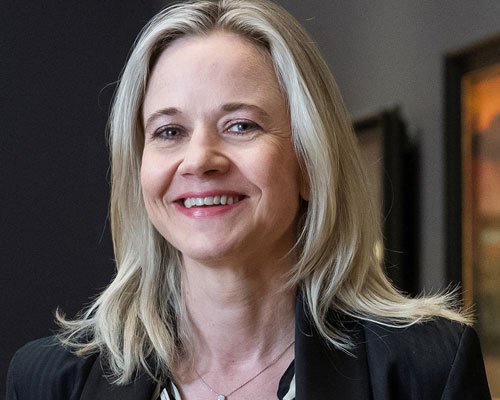
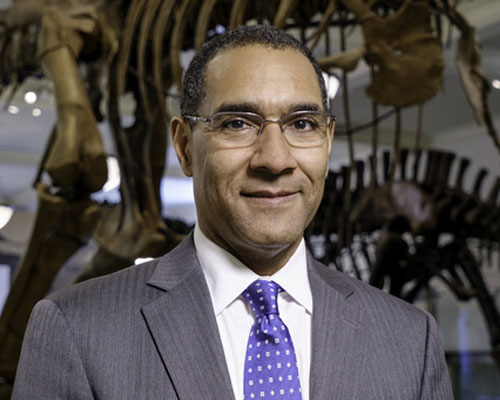
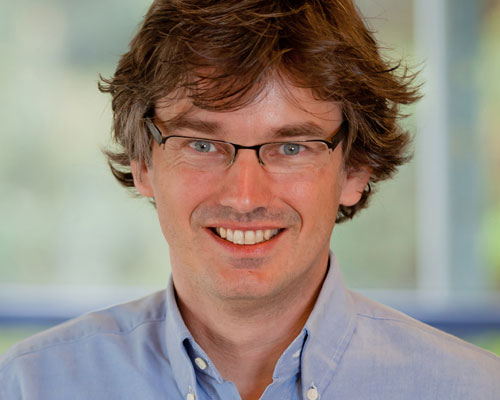
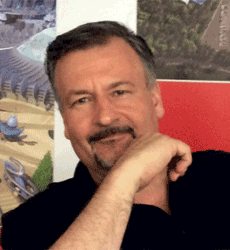
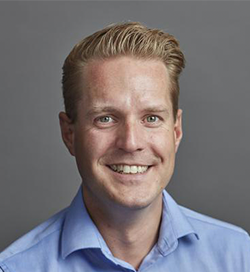
Axel Hüttinger became MD of Hüttinger Interactive Exhibitions in 2002 / Photo: Hüttinger Interactive Exhibitions
In 1921, Emanuel Hüttinger founded engineering consultancy firm Hüttinger Interactive Exhibitions in Furth, near Nuremberg, Germany. The firm evolved over the coming decades from a focus on the design and fabrication of technical models to the design and fit out of exhibitions and information centres. Today it is a ‘one-stop shop for exhibition planning, design and fabrication,’ working across museums, science centres, themed attractions, visitor centres, product presentations and art projects.
Clients include the Aberdeen Science Center, UK; the National Museum of Qatar; the Smithsonian’s National Air and Space Museum, Washington, US; and CosmoCaixa, Barcelona, Spain.
Here Axel Hüttinger shares details of some unique projects due for completion and tells us why he’s not interested in presenting science topics as a ‘finished project’.
You’re working on the creation of a new national science centre in Angola. What can you tell us about the project? The Luanda Science Center in Luanda, Angola is one of the biggest projects we’re working on right now. Our client is Mitrelli/Athena Swiss AG and it is due to open next year.
We’re the general contractor to design and build the exhibition for the new centre. We started fabricating a year ago, and installation started this spring.
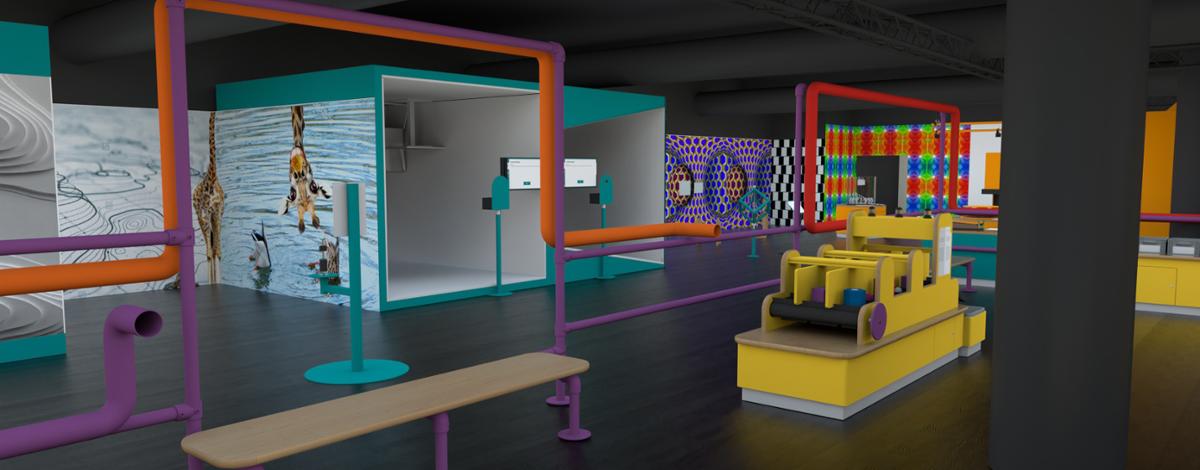
The idea of the museum is to stimulate interest in science and technology, particularly among young people. It will include exhibitions on maths, computer science, natural science and technology, the human body and Angola. It will also feature a children’s playground, a cinema, planetarium, laboratories and temporary exhibitions.
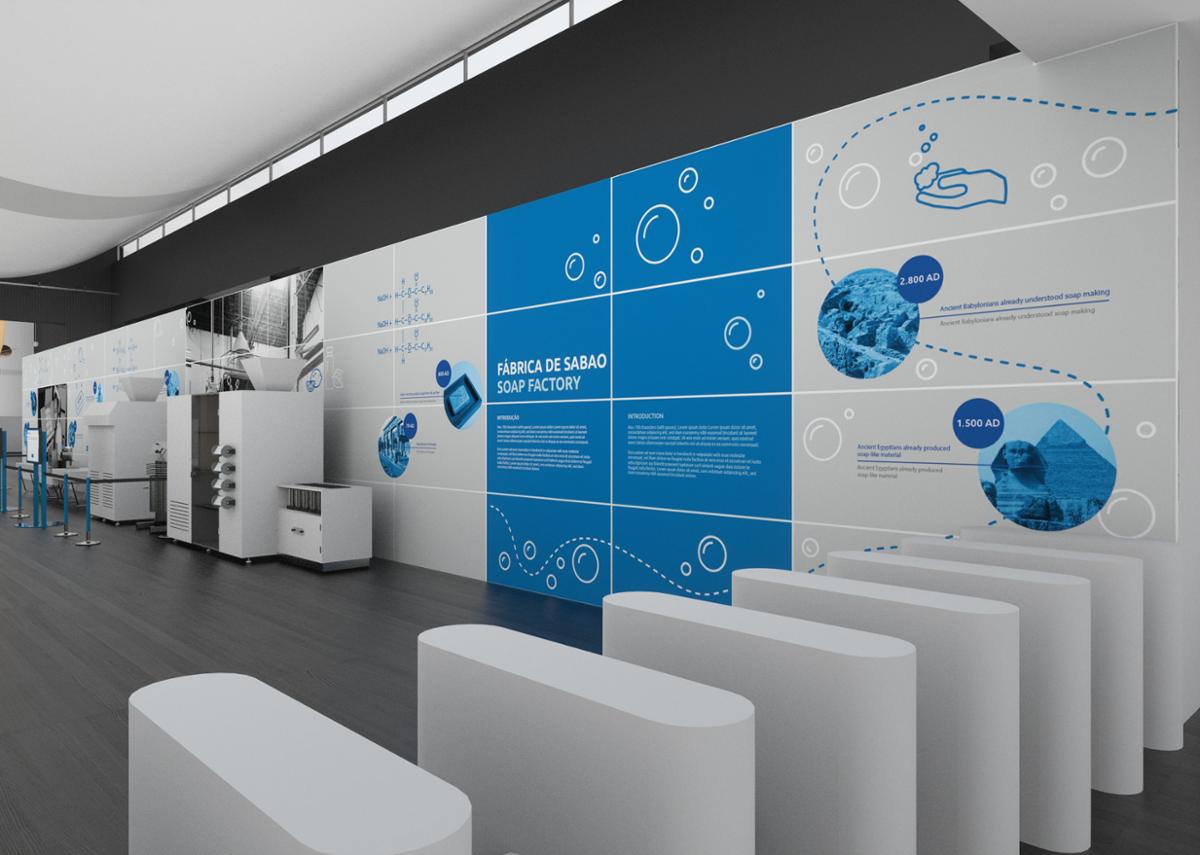
We’re trying to tailor the content to the region as much as possible – the building housing the museum itself used to be a soap factory, so one of the installations allows visitors to make their own soap, and that installation will be connected to a maker space open fabrication lab.
One of the really interesting things about this project, is that the operator has put an outreach programme in right from the very beginning. In Angola, everything is concentrated in the capital – in rural areas, there’s very little in terms of infrastructure and education. The Luanda Science Center will act as a hub of science communication, using interactive science kits to run science programmes in rural communities across Angola. It’s going to be brilliant – you’ll load these kits onto trucks and lorries and go out into the communities.
You’re helping the Smithsonian’s National Air and Space Museum in Washington, US, transform its East Wing. What is happening there? The National Air and Space Museum reopened its West Wing in October 2022 following a redesign, and we worked with them on the exhibits. We’re over the moon to be working with them again; this time, on another project to design and build interactive exhibits for the East Wing of the museum together with US fabrication firm Design and Production Incorporated and Toronto based design firm Reich + Petch.
The East Wing includes a huge gallery called How Things Fly, which we’re designing exhibits for. One of the exhibits will see visitors put on airfoils – like wings – and play about in a walk-in wind tunnel, to allow them to experience the forces of flight with their own bodies.
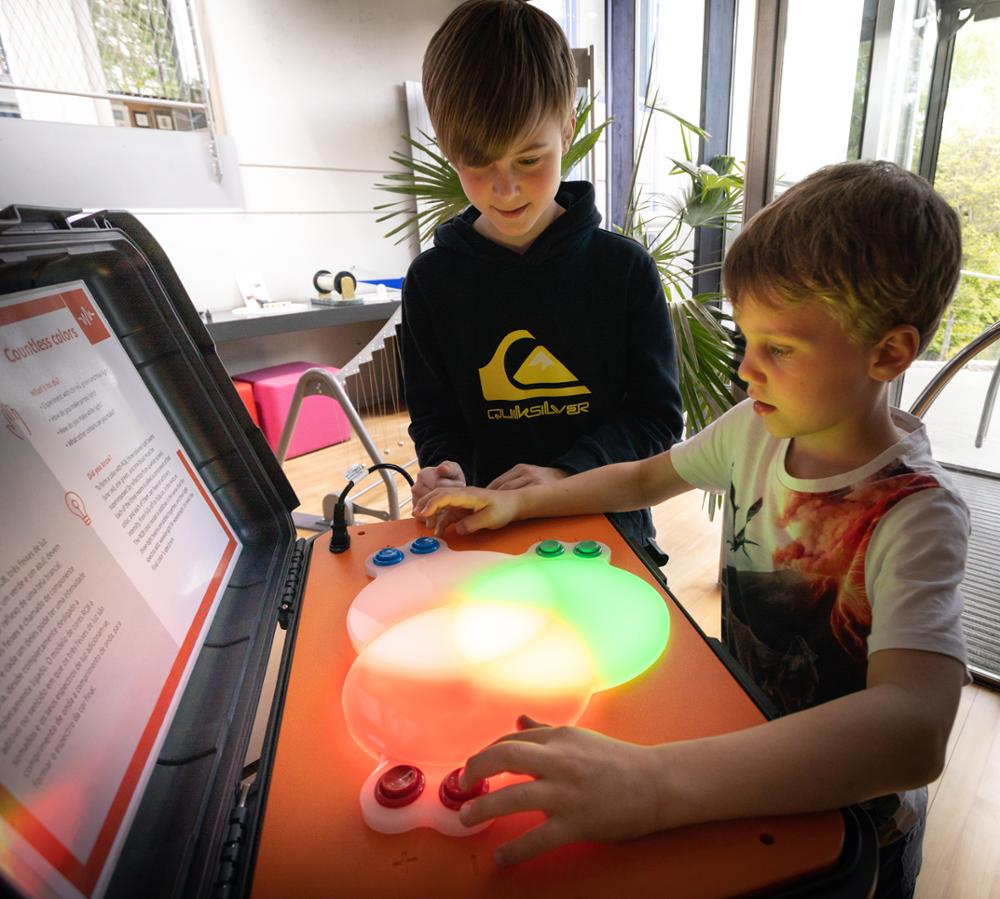
This illustrates our whole approach to learning – it’s not about just pushing a button, or looking at a little model of an aeroplane in a wind tunnel, it’s being in that wind tunnel yourself and feeling the forces with your own body. It’s the opposite of reading about a process, or watching it – it’s actually being part of that process. It’s a far more powerful way of connecting to visitors and helping them to understand a subject.
What else are you working on? We won the design and build contract for a new children’s gallery for CosmoCaixa science museum in Barcelona, which I’m very excited about. We’re helping to create a new indoor/outdoor gallery, which should open by the beginning of next year. It will be an interactive science exhibition for children, featuring a wide range of exhibits, including ones exploring fluid mechanics and physics.
The beauty of the space is that it will be half indoors and half outdoors, which is a great idea – many parents don’t want to go into museums in the summer with their children, because who wants to be inside when you could be outside?
It will feature an outdoor play area and a range of exhibits.
You designed the recently opened Climate Change and Us gallery and exhibition for the Goulandris Natural History Museum in Athens. What’s the aim of this exhibition? The aim was to present climate change not as an inevitable disaster, but as a feasible human challenge.
The great strength of Climate Change and Us is its regional focus – local expertise was used to create an exhibition tailored to the target group – schoolchildren from across the region. All exhibits are linked to the curriculum.
Greece is one of the few countries in Europe that’s managed to cover its electrical energy consumption almost entirely with renewable energy sources. We worked to make this clear via the central exhibit, Renewable Energy City, where visitors can interactively generate electrical energy at individual ‘power stations’ to keep the power grid stable.
The treatment of waste is another topic explored in the exhibition. The idea of a circular economy is communicated in a playful way with the Sort It! exhibit. The aim is to raise awareness that waste is made up of valuable raw materials.
You also recently completed the Electricity and Magnetism Gallery at the Hong Kong Science Museum. What makes this gallery exciting? The beauty of the topic of energy is that it’s relevant to everyone. With this in mind, the Electricity and Magnetism gallery shows what’s behind the power socket, the principles of electric circuits and the effect of magnetism in a simple and vivid way. We designed and manufactured a ferro-fluid magnetoscope, a diamagnetic levitation exhibit and a 10m magnetic levitation train for this new gallery.
How would you sum up the philosophy of your company? What unites all of your work? There are two types of science exhibition, which I describe as ‘about science’ and ‘of science’. ‘About science’ exhibitions present a scientific topic as a finished product – visitors can learn about the topic, press buttons and read panels. In this type of exhibition, visitors tend to be faced with simulations or diagrams with large amounts of explanatory text.
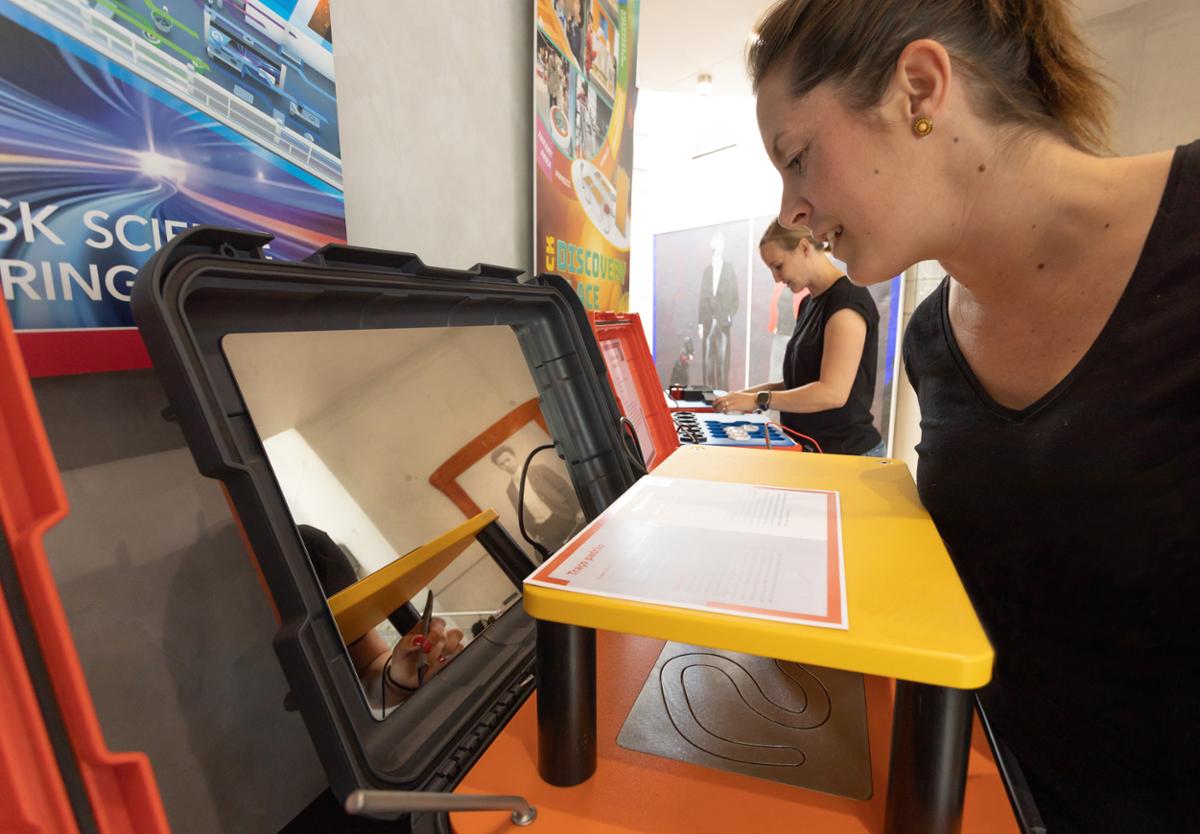
‘Of science’ exhibits encourage visitors to explore topics and create their own experiences and ideas. At Hüttinger Interactive Exhibitions, we try to focus on the exhibitions we create as providers of experience, and we direct our efforts toward making those experiences as rich, meaningful, and memorable as possible. These types of exhibits are designed to act as the start of inquiry and exploration – to pique visitors’ curiosity and lead to further questions.
Swinging pendulums, for example, develop knowledge of simple harmonic motion. Using tools develops knowledge of simple machines. Playing with solar powered model cars develops knowledge of electrical circuits.
You also work with artists to realise their visions. What are you working on in this part of the business right now? We have just been awarded a new contract to create a huge sculpture with the Austrian artist André Heller in Prague in the Czech Republic. We’re at the very beginning of the process, so I can’t say too much, but it will be an interactive piece exploring emotions.
We have worked with Heller before, when we helped to create the world’s largest walk-in kaleidoscope as part of the multimedia show Zeiträume that Heller curated in Taggenbrun Castle in Carinthia, Austria.
We have also worked with US artist Anthony Howe on the creation of Azlon II, a large stainless steel sculpture that displays a unique spectacle of reflections and floating patterns as it moves in the wind.
Read more from this issue of Attractions Management magazine
View contents of Attractions Management 2023 issue 3
Editor's letter: Learning to listen
Young people were involved in every stage of planning for the new Young V&A. Is this the start of a real shift in the way children’s museums are planned?
People: Karin Hindsbo
The head of Scandinavia’s largest museum is set to take over as Tate Modern’s new director. She shares her plans
People: Sean Decatur
It’s a big year for the American Museum of Natural History, as its new president takes over and it launches a major new centre
People: Håkon Lund
As Norway’s largest theme park embraces solar energy, Lund Gruppen’s owner tells us why the industry needs to be at the forefront of change
Interview: Andreas Andersen
As Gothenburg’s Liseberg theme park celebrates its 100th anniversary, its CEO talks celebrations, challenges and COVID-19 with Magali Robathan
Museums: And still we rise
Charleston’s long-awaited International African American Museum opens, reclaiming one of the US’s most painful and sacred spaces. IAAM president Dr Tonya Matthews speaks to Attractions Management about the long road to opening
Aquaria: A fresh start
The team behind New Orleans’ Audubon Aquarium and Insectarium used the COVID-19 pandemic to rethink their offer.
We check out the result, which brings both institutions under the same roof for the first time
Museums: Power of youth
Investing in creative confidence in our young has never been as important as it is now, argues Young V&A director Helen Charman
Science centres: Axel Hüttinger
From the creation of a new science centre in Angola to an indoor/outdoor children’s gallery in Barcelona, Huttinger Interactive Exhibitions is keeping busy
Research: Mixed blessings
Attractions have been helping revitalise shopping centres for many years, but how is this market changing?
Awards: Good lookers
Some of the world’s most beautiful and innovative new museums have been celebrated by Architizer’s A+ Awards. We take a look at the winners
Sponsored: Red Raion
Red Raion has emerged as an industry leader in the realm of digital
attractions, captivating audiences worldwide with its CGI movie
experiences.
An opportunity to reimagine one of the UK’s most recognisable towers has been formally
opened by Rivington Hark, as St Johns Beacon invites operators and partners to shape its
next phase. [more...]
As Luanda’s first science centre gets ready
to open in Angola’s capital, the MD of Hüttinger
Interactive Exhibitions tells Magali Robathan why he’s
on a mission to make science more accessible
Axel Hüttinger became MD of Hüttinger Interactive Exhibitions in 2002 / Photo: Hüttinger Interactive Exhibitions
In 1921, Emanuel Hüttinger founded engineering consultancy firm Hüttinger Interactive Exhibitions in Furth, near Nuremberg, Germany. The firm evolved over the coming decades from a focus on the design and fabrication of technical models to the design and fit out of exhibitions and information centres. Today it is a ‘one-stop shop for exhibition planning, design and fabrication,’ working across museums, science centres, themed attractions, visitor centres, product presentations and art projects.
Clients include the Aberdeen Science Center, UK; the National Museum of Qatar; the Smithsonian’s National Air and Space Museum, Washington, US; and CosmoCaixa, Barcelona, Spain.
Here Axel Hüttinger shares details of some unique projects due for completion and tells us why he’s not interested in presenting science topics as a ‘finished project’.
You’re working on the creation of a new national science centre in Angola. What can you tell us about the project? The Luanda Science Center in Luanda, Angola is one of the biggest projects we’re working on right now. Our client is Mitrelli/Athena Swiss AG and it is due to open next year.
We’re the general contractor to design and build the exhibition for the new centre. We started fabricating a year ago, and installation started this spring.
The idea of the museum is to stimulate interest in science and technology, particularly among young people. It will include exhibitions on maths, computer science, natural science and technology, the human body and Angola. It will also feature a children’s playground, a cinema, planetarium, laboratories and temporary exhibitions.
We’re trying to tailor the content to the region as much as possible – the building housing the museum itself used to be a soap factory, so one of the installations allows visitors to make their own soap, and that installation will be connected to a maker space open fabrication lab.
One of the really interesting things about this project, is that the operator has put an outreach programme in right from the very beginning. In Angola, everything is concentrated in the capital – in rural areas, there’s very little in terms of infrastructure and education. The Luanda Science Center will act as a hub of science communication, using interactive science kits to run science programmes in rural communities across Angola. It’s going to be brilliant – you’ll load these kits onto trucks and lorries and go out into the communities.
You’re helping the Smithsonian’s National Air and Space Museum in Washington, US, transform its East Wing. What is happening there? The National Air and Space Museum reopened its West Wing in October 2022 following a redesign, and we worked with them on the exhibits. We’re over the moon to be working with them again; this time, on another project to design and build interactive exhibits for the East Wing of the museum together with US fabrication firm Design and Production Incorporated and Toronto based design firm Reich + Petch.
The East Wing includes a huge gallery called How Things Fly, which we’re designing exhibits for. One of the exhibits will see visitors put on airfoils – like wings – and play about in a walk-in wind tunnel, to allow them to experience the forces of flight with their own bodies.
This illustrates our whole approach to learning – it’s not about just pushing a button, or looking at a little model of an aeroplane in a wind tunnel, it’s being in that wind tunnel yourself and feeling the forces with your own body. It’s the opposite of reading about a process, or watching it – it’s actually being part of that process. It’s a far more powerful way of connecting to visitors and helping them to understand a subject.
What else are you working on? We won the design and build contract for a new children’s gallery for CosmoCaixa science museum in Barcelona, which I’m very excited about. We’re helping to create a new indoor/outdoor gallery, which should open by the beginning of next year. It will be an interactive science exhibition for children, featuring a wide range of exhibits, including ones exploring fluid mechanics and physics.
The beauty of the space is that it will be half indoors and half outdoors, which is a great idea – many parents don’t want to go into museums in the summer with their children, because who wants to be inside when you could be outside?
It will feature an outdoor play area and a range of exhibits.
You designed the recently opened Climate Change and Us gallery and exhibition for the Goulandris Natural History Museum in Athens. What’s the aim of this exhibition? The aim was to present climate change not as an inevitable disaster, but as a feasible human challenge.
The great strength of Climate Change and Us is its regional focus – local expertise was used to create an exhibition tailored to the target group – schoolchildren from across the region. All exhibits are linked to the curriculum.
Greece is one of the few countries in Europe that’s managed to cover its electrical energy consumption almost entirely with renewable energy sources. We worked to make this clear via the central exhibit, Renewable Energy City, where visitors can interactively generate electrical energy at individual ‘power stations’ to keep the power grid stable.
The treatment of waste is another topic explored in the exhibition. The idea of a circular economy is communicated in a playful way with the Sort It! exhibit. The aim is to raise awareness that waste is made up of valuable raw materials.
You also recently completed the Electricity and Magnetism Gallery at the Hong Kong Science Museum. What makes this gallery exciting? The beauty of the topic of energy is that it’s relevant to everyone. With this in mind, the Electricity and Magnetism gallery shows what’s behind the power socket, the principles of electric circuits and the effect of magnetism in a simple and vivid way. We designed and manufactured a ferro-fluid magnetoscope, a diamagnetic levitation exhibit and a 10m magnetic levitation train for this new gallery.
How would you sum up the philosophy of your company? What unites all of your work? There are two types of science exhibition, which I describe as ‘about science’ and ‘of science’. ‘About science’ exhibitions present a scientific topic as a finished product – visitors can learn about the topic, press buttons and read panels. In this type of exhibition, visitors tend to be faced with simulations or diagrams with large amounts of explanatory text.
‘Of science’ exhibits encourage visitors to explore topics and create their own experiences and ideas. At Hüttinger Interactive Exhibitions, we try to focus on the exhibitions we create as providers of experience, and we direct our efforts toward making those experiences as rich, meaningful, and memorable as possible. These types of exhibits are designed to act as the start of inquiry and exploration – to pique visitors’ curiosity and lead to further questions.
Swinging pendulums, for example, develop knowledge of simple harmonic motion. Using tools develops knowledge of simple machines. Playing with solar powered model cars develops knowledge of electrical circuits.
You also work with artists to realise their visions. What are you working on in this part of the business right now? We have just been awarded a new contract to create a huge sculpture with the Austrian artist André Heller in Prague in the Czech Republic. We’re at the very beginning of the process, so I can’t say too much, but it will be an interactive piece exploring emotions.
We have worked with Heller before, when we helped to create the world’s largest walk-in kaleidoscope as part of the multimedia show Zeiträume that Heller curated in Taggenbrun Castle in Carinthia, Austria.
We have also worked with US artist Anthony Howe on the creation of Azlon II, a large stainless steel sculpture that displays a unique spectacle of reflections and floating patterns as it moves in the wind.
Read more from this issue of Attractions Management magazine
View contents of Attractions Management 2023 issue 3
Editor's letter: Learning to listen
Young people were involved in every stage of planning for the new Young V&A. Is this the start of a real shift in the way children’s museums are planned?
People: Karin Hindsbo
The head of Scandinavia’s largest museum is set to take over as Tate Modern’s new director. She shares her plans
People: Sean Decatur
It’s a big year for the American Museum of Natural History, as its new president takes over and it launches a major new centre
People: Håkon Lund
As Norway’s largest theme park embraces solar energy, Lund Gruppen’s owner tells us why the industry needs to be at the forefront of change
Interview: Andreas Andersen
As Gothenburg’s Liseberg theme park celebrates its 100th anniversary, its CEO talks celebrations, challenges and COVID-19 with Magali Robathan
Museums: And still we rise
Charleston’s long-awaited International African American Museum opens, reclaiming one of the US’s most painful and sacred spaces. IAAM president Dr Tonya Matthews speaks to Attractions Management about the long road to opening
Aquaria: A fresh start
The team behind New Orleans’ Audubon Aquarium and Insectarium used the COVID-19 pandemic to rethink their offer.
We check out the result, which brings both institutions under the same roof for the first time
Museums: Power of youth
Investing in creative confidence in our young has never been as important as it is now, argues Young V&A director Helen Charman
Science centres: Axel Hüttinger
From the creation of a new science centre in Angola to an indoor/outdoor children’s gallery in Barcelona, Huttinger Interactive Exhibitions is keeping busy
Research: Mixed blessings
Attractions have been helping revitalise shopping centres for many years, but how is this market changing?
Awards: Good lookers
Some of the world’s most beautiful and innovative new museums have been celebrated by Architizer’s A+ Awards. We take a look at the winners
Sponsored: Red Raion
Red Raion has emerged as an industry leader in the realm of digital
attractions, captivating audiences worldwide with its CGI movie
experiences.
Hotel de France, located on the British Isle of Jersey, has created a wellness retreat package
that includes a hot yoga session that will take place in Jersey Zoo’s butterfly sanctuary.
A new immersive attraction designed to transport visitors into the final hours of ancient Pompeii
is preparing to open near the world-famous archaeological site in southern Italy.
Experience design company, BRC Imagination Arts, has completed a transition that sees founder
Bob Rogers pass ownership of the business to four long-serving senior executives, while
remaining actively involved with the company.
Movie Park Germany has opened a new Paramount Pictures-themed attraction as part of its 30th
anniversary celebrations, using immersive storytelling and adaptive reuse to reinforce the park’s
longstanding “Hollywood in Germany” positioning.
Therme Manchester’s 28-acre development, which will include interconnected glass pavilions
that measure 65,000sq m, will be the largest bathing and wellbeing attraction in the world once
complete, according to prof David Russell, CEO of Therme UK.
Efteling has opened Hooghmoed, a new family drop tower designed to broaden the appeal of its
recently launched Sirene Island themed area and introduce younger visitors to thrill attractions.
A proposed Puy du Fou development near Bicester and Universal Destinations and Experiences’
planned resort in Bedford are emerging as part of a wider transformation of the Oxford–
Cambridge Growth Corridor into a major centre for UK leisure and tourism inv
Shedd Aquarium has opened the Immersion Theater developed in partnership with SimEx-
Iwerks, as part of a wider strategy to enhance the guest experience and create additional
revenue opportunities.
The UK government has announced a temporary reduction in VAT on visitor attractions and
children’s meals as part of a summer cost-of-living support package designed to stimulate the
visitor economy and encourage family days out.
As designer Yinka Ilori prepares for his first solo gallery show in London, he speaks exclusively
to CLADmag about his mission to spread joy, the power of play, and his bold approach to using
colour (including the colours you won’t see in his work).
The government of Thailand is exploring plans for a THB300bn (£6.3bn, US$8.3bn)
entertainment complex in the country’s Eastern Economic Corridor (EEC), with officials
proposing a large-scale theme park and sports destination as part of a broader tourism and
economic development strategy.
+ More news
COMPANY PROFILES
IDEATTACK IDEATTACK is a full-service planning and
design company with headquarters in
Los Angeles. [more...]
An opportunity to reimagine one of the UK’s most recognisable towers has been formally
opened by Rivington Hark, as St Johns Beacon invites operators and partners to shape its
next phase. [more...]