Spa revenues in US hotels are healthy and wellness elements are now being incorporated into other departments, according to PKF’s latest Trends® in the Hotel Spa Industry study. Andrea Foster outlines the key statistics
By Andrea Foster | Published in Spa Business 2015 issue 1
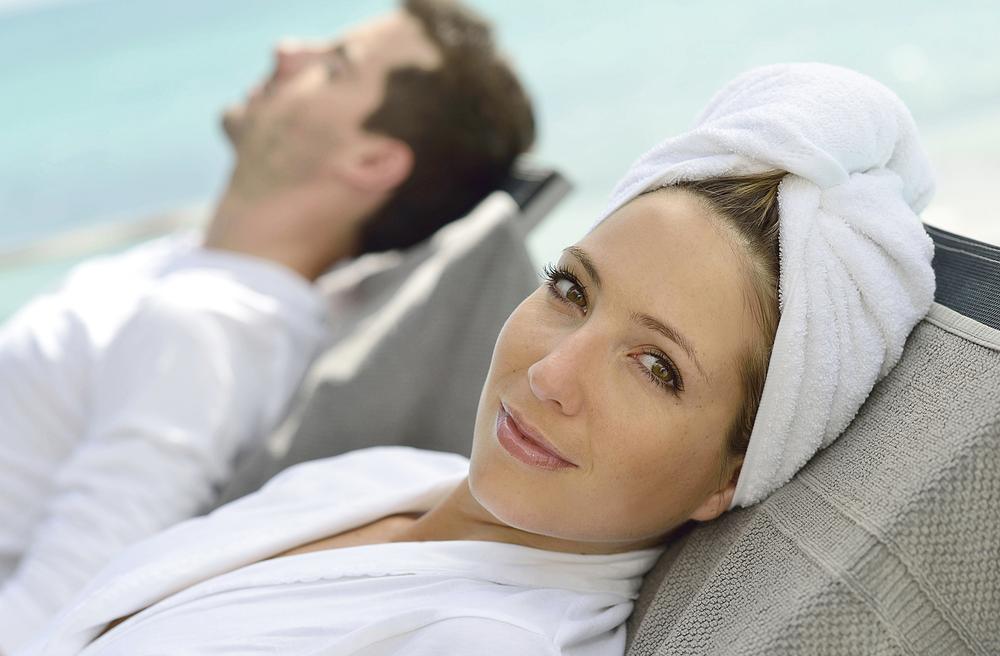
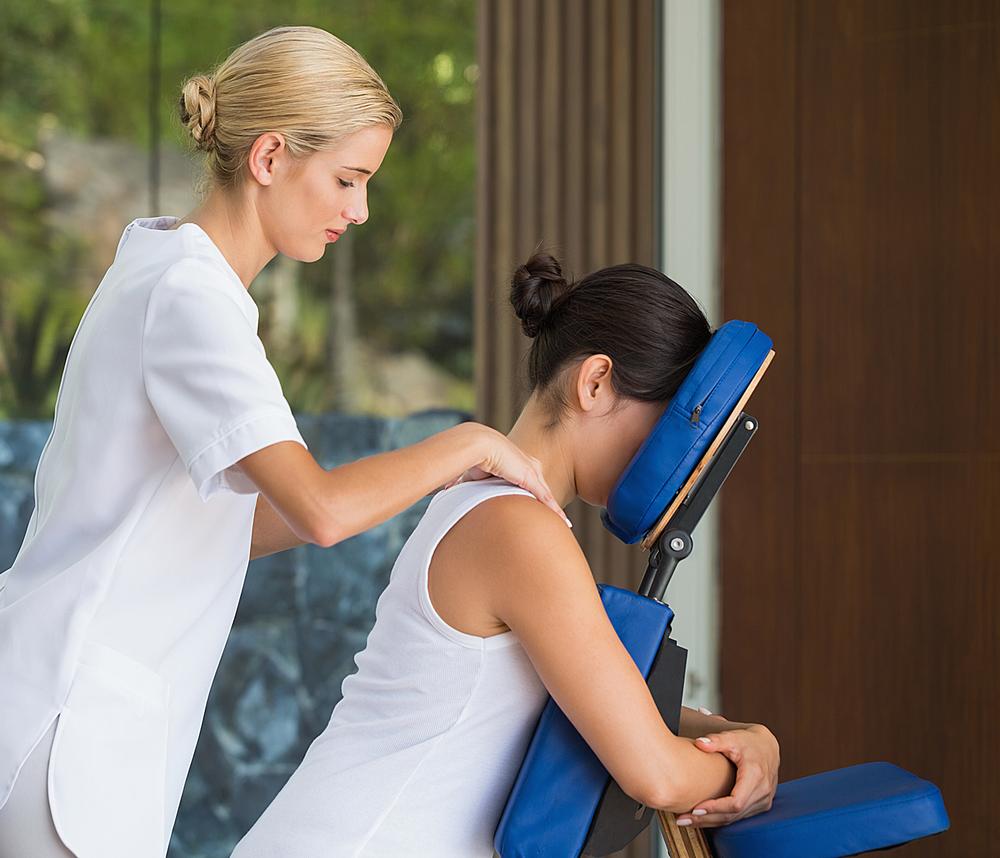
Aspects of spa and wellness are being incorporated into other areas of the hotel creating a ripple effect / photo: shutterstock/Goodluz
The US lodging industry has climbed out of the economic downturn as demand for hotel rooms reaches record levels for the fourth consecutive year. After room revenue, spa and wellness were standout performers in revenue increase according to the 2014 edition of PKF’s Trends® in the Hotel Spa Industry, which was revealed in October and based on the previous year’s numbers.
While room revenues grew by 5.9 per cent in 2013, spa revenues in US hotels increased by 4.6 per cent. In comparison, the combined revenues from other departments such as food and beverage and retail, rose by 4.4 per cent on average.
Hotels, after recouping occupancy and now capturing higher rates, are slowly seeing the return of guest spending. In addition, PKF has identified a wellness ripple effect too. Both spa and wellness are becoming more prevalent in today’s society and hotels are starting to take notice of this. Fuelling the growth of the interest in spas is a combination of an improved economy and a shift in perception – previously spas were seen as an exclusive, luxury experience, but now they’re increasingly viewed as having wellness-orientated offerings. Spa, at its root, is about health and wellbeing.
As trends in society are shifting to healthier, more active lifestyles, hotels are incorporating aspects of spa and wellness into other areas of the hotel. Speciality spa menus are being introduced in restaurants/bars; meeting rooms and guestrooms are getting healthier – the Stay Well® rooms by Delos Living (see SB14/1 p28) are a prime example; and there’s a rise in fitness programmes such as hotel bike shares. Spa and wellness is growing outside the spa department and to facilitate healthier lifestyles and meet the needs of guests, hotels are seeing a positive impact when integrating spa and wellness into their entire operation.
Rising spa revenues The Trends® in the Hotel Spa Industry survey shows that in 2013, both urban and resort hotel spas in the US saw revenues grow by 7.7 and 3.6 per cent respectively. On a per occupied [hotel guest] room (POR) basis, urban hotel spas saw a greater increase in total spa department revenue, driven by a combination of a rise in customers and an upturn in revenue per treatment and revenue per customer.
Revenue per treatment increased 3.2 per cent in urban hotels, while resort hotels experienced a decrease of 1.2 per cent. Revenue per customer in urban hotels went up by 1.3 per cent, compared to going down by 1.3 per cent in resorts. Yet, capture rates – calculated by dividing total occupied hotel rooms by total number of treatments from hotel guests – was much lower in urban hotel spas. On average spa capture rates sat at 7.8 per cent in 2013. Resort spa capture rate was 11 per cent and the urban spa capture rate was 4.6 per cent. With this in mind, PKF attributes a portion of the success in urban hotels to effective revenue management and selling techniques.
Hotels are continuing to reach out to locals to boost spa revenues. By pursuing local patrons, they can decrease the volatility of spa revenues relative to occupancy patterns and shift demand to off-peak periods. Daily facility use, fitness and personal training and membership fees, typically associated with locals and non-hotel guests, grew by 4.5 per cent combined. This is slightly more than the increase in total treatment revenue which grew by 4.2 per cent.
The good news is that spas are finally seeing a return to spending on retail and product merchandise in addition to treatments. Retail revenue rose at urban and resort hotel spas, by 10.4 and 3.3 per cent respectively, which is a healthy sign.
Controlling expenses An increase in hotel spa revenues is welcome and, even better, these were passed through to the bottom line. Both urban and resort hotel spas achieved a greater growth in revenues compared to their change in operating expenses, showing that these departments are becoming more efficient in their operations.
As spas are a ‘high touch’ experience, labour remains the highest expense. As spa department revenues increase, it’s no surprise that staff costs accumulated compared to the prior year as well. Labour expenses at all hotel spas in the US increased 2.6 per cent in total in 2013, while the percentage of total labour expenses to total spa department revenue decreased from 60.8 per cent in 2012 to 59.6 per cent in 2013. As demand increases for hotel spas, higher staffing levels are needed to create the same personal high-quality experience. One notable change PKF saw in 2013 was a decrease in payroll related expenses for spas with less than US$1m in revenue. It seems reasonable that this would be driven by a shift from full-time employees to part-time, on-call, and/or contract labour for which benefits are not offered. For spas with lower volume, this can be an effective cost-saving strategy.
Due to an increase in revenues and the controlling of expenses, hotel spas were able to see high percentage increases in total spa departmental income. Combined, all hotel spas averaged a 13.9 per cent growth in profits. Leading the way were urban hotel spas, which grew their bottom line by an outstanding 40.1 per cent, although it should be noted that as baseline numbers are not high to start with, a small rise in revenue can result in a higher percentage increase. Resort hotels achieved a smaller department profit growth of 8.4 per cent. Despite a lower overall growth in spa departmental profit, resort hotel spas saw higher profit margins than urban hotel spas, at 23.1 per cent compared to 17.7 per cent.
Unique opportunity With rising revenues, controlled expenses and a resulting increase in profits, the hotel spa industry in the US is performing well. As societal trends are moving towards healthier lifestyles, there’s a clear opportunity for spas to offer experiences to a broad guest base. The challenge for hotel spas will be to offer unique, high-quality experiences to more customers, while continuing to control costs.
It will be important for hotel spas to offer innovative treatments as consumers are ever-more driven toward unique experiences and this is what generates posts and shares and creates online trending. This is significant because a presence on social media is no longer a competitive advantage, but a necessity – all hotels and spas must engage with their customers online to remain in the mix. At the same time though, spas will still need to maintain approachability and an essence of wellness.
Hotels can also use spa and wellness elements throughout their properties to rise above rivals and differentiate themselves. This will drive innovative and meaningful experiences that are Facebook- and Instagram-worthy, which will, in turn help increase the awareness of these offerings organically.
Projections for economic growth in the US remain strong and record occupancy levels are expected in 2015. The future looks bright for hoteliers and hotel spas have the opportunity to capture more guests and revenue. By offering engaging experiences, combined with the shifting societal trend to healthier lifestyles, the health and wellness of the hotel spa industry looks equally as bright.
Read more from this issue of Attractions Management magazine
View contents of Attractions Management 2015 issue 1
Letters: Letters
We need sales people in spas says consultant Helen Merchant
Interview -Rich Weissmann: Rich Weissmann
Weissmann, a partner at private equity firm KSL, talks spa investment with Rhianon Howells and reveals its plans for the Miraval brand
Wellness: All in the mind
Twin Peaks director David Lynch has a foundation which uses meditation to help those facing extreme trauma and stress. Julie Cramer talks to the foundation’s co-founder Bob Roth
Trends® in the Hotel Spa Industry is an annual survey of hotel spa departments in the US by PKF Consulting (PKFC). A total of 152 hotels submitted 2013 data for 20 of the most important revenue and expense categories in their spa department.
The report is intended to give hotel spa owners and operators data to benchmark their revenue and expense ratios. It should be noted that day, destination and leased spa operations were not included in the survey sample.
Jenna Finkelstein, a consultant at PKFC, contributed to this article.
To see results from the 2013 edition see Spa Business, issue 1 2014, p62
To purchase the full 2014 edition of Trends® in the Hotel Spa Industry visit www.pkfc.com/store
Andrea Foster is the national director of spa & wellness consulting for PKF Consulting USA
Email: andrea.foster @pkfc.com
The research shows that spa profits and capture rates are increasing
Revenues are greater in urban hotel spas compared to resorts, although capture rates are lower / photo: shutterstock/S.Borisov
Total treatment revenue grew by 4.2 per cent, slightly less than the rise in revenues from daily facility use / photo: shutterstock/wavebreakmedia
COMPANY PROFILES
Alterface
Alterface’s Creative Division team is
seasoned in concept and ride development,
as well as storyte [more...]
Taylor Made Designs
Founded in 1993, Taylor Made
Designs supply corporate clothing
and brand-enhancing merchandise
to [more...]
Simworx Ltd
The company was initially established
in 1997. Terry Monkton and Andrew
Roberts are the key stakeh [more...]
TechnoAlpin Indoor
TechnoAlpin is the world leader for snowmaking systems. With the Indoor snow division, TechnoAlpin c [more...]
An opportunity to reimagine one of the UK’s most recognisable towers has been formally
opened by Rivington Hark, as St Johns Beacon invites operators and partners to shape its
next phase. [more...]
Spa revenues in US hotels are healthy and wellness elements are now being incorporated into other departments, according to PKF’s latest Trends® in the Hotel Spa Industry study. Andrea Foster outlines the key statistics
By Andrea Foster | Published in Spa Business 2015 issue 1
Aspects of spa and wellness are being incorporated into other areas of the hotel creating a ripple effect / photo: shutterstock/Goodluz
The US lodging industry has climbed out of the economic downturn as demand for hotel rooms reaches record levels for the fourth consecutive year. After room revenue, spa and wellness were standout performers in revenue increase according to the 2014 edition of PKF’s Trends® in the Hotel Spa Industry, which was revealed in October and based on the previous year’s numbers.
While room revenues grew by 5.9 per cent in 2013, spa revenues in US hotels increased by 4.6 per cent. In comparison, the combined revenues from other departments such as food and beverage and retail, rose by 4.4 per cent on average.
Hotels, after recouping occupancy and now capturing higher rates, are slowly seeing the return of guest spending. In addition, PKF has identified a wellness ripple effect too. Both spa and wellness are becoming more prevalent in today’s society and hotels are starting to take notice of this. Fuelling the growth of the interest in spas is a combination of an improved economy and a shift in perception – previously spas were seen as an exclusive, luxury experience, but now they’re increasingly viewed as having wellness-orientated offerings. Spa, at its root, is about health and wellbeing.
As trends in society are shifting to healthier, more active lifestyles, hotels are incorporating aspects of spa and wellness into other areas of the hotel. Speciality spa menus are being introduced in restaurants/bars; meeting rooms and guestrooms are getting healthier – the Stay Well® rooms by Delos Living (see SB14/1 p28) are a prime example; and there’s a rise in fitness programmes such as hotel bike shares. Spa and wellness is growing outside the spa department and to facilitate healthier lifestyles and meet the needs of guests, hotels are seeing a positive impact when integrating spa and wellness into their entire operation.
Rising spa revenues The Trends® in the Hotel Spa Industry survey shows that in 2013, both urban and resort hotel spas in the US saw revenues grow by 7.7 and 3.6 per cent respectively. On a per occupied [hotel guest] room (POR) basis, urban hotel spas saw a greater increase in total spa department revenue, driven by a combination of a rise in customers and an upturn in revenue per treatment and revenue per customer.
Revenue per treatment increased 3.2 per cent in urban hotels, while resort hotels experienced a decrease of 1.2 per cent. Revenue per customer in urban hotels went up by 1.3 per cent, compared to going down by 1.3 per cent in resorts. Yet, capture rates – calculated by dividing total occupied hotel rooms by total number of treatments from hotel guests – was much lower in urban hotel spas. On average spa capture rates sat at 7.8 per cent in 2013. Resort spa capture rate was 11 per cent and the urban spa capture rate was 4.6 per cent. With this in mind, PKF attributes a portion of the success in urban hotels to effective revenue management and selling techniques.
Hotels are continuing to reach out to locals to boost spa revenues. By pursuing local patrons, they can decrease the volatility of spa revenues relative to occupancy patterns and shift demand to off-peak periods. Daily facility use, fitness and personal training and membership fees, typically associated with locals and non-hotel guests, grew by 4.5 per cent combined. This is slightly more than the increase in total treatment revenue which grew by 4.2 per cent.
The good news is that spas are finally seeing a return to spending on retail and product merchandise in addition to treatments. Retail revenue rose at urban and resort hotel spas, by 10.4 and 3.3 per cent respectively, which is a healthy sign.
Controlling expenses An increase in hotel spa revenues is welcome and, even better, these were passed through to the bottom line. Both urban and resort hotel spas achieved a greater growth in revenues compared to their change in operating expenses, showing that these departments are becoming more efficient in their operations.
As spas are a ‘high touch’ experience, labour remains the highest expense. As spa department revenues increase, it’s no surprise that staff costs accumulated compared to the prior year as well. Labour expenses at all hotel spas in the US increased 2.6 per cent in total in 2013, while the percentage of total labour expenses to total spa department revenue decreased from 60.8 per cent in 2012 to 59.6 per cent in 2013. As demand increases for hotel spas, higher staffing levels are needed to create the same personal high-quality experience. One notable change PKF saw in 2013 was a decrease in payroll related expenses for spas with less than US$1m in revenue. It seems reasonable that this would be driven by a shift from full-time employees to part-time, on-call, and/or contract labour for which benefits are not offered. For spas with lower volume, this can be an effective cost-saving strategy.
Due to an increase in revenues and the controlling of expenses, hotel spas were able to see high percentage increases in total spa departmental income. Combined, all hotel spas averaged a 13.9 per cent growth in profits. Leading the way were urban hotel spas, which grew their bottom line by an outstanding 40.1 per cent, although it should be noted that as baseline numbers are not high to start with, a small rise in revenue can result in a higher percentage increase. Resort hotels achieved a smaller department profit growth of 8.4 per cent. Despite a lower overall growth in spa departmental profit, resort hotel spas saw higher profit margins than urban hotel spas, at 23.1 per cent compared to 17.7 per cent.
Unique opportunity With rising revenues, controlled expenses and a resulting increase in profits, the hotel spa industry in the US is performing well. As societal trends are moving towards healthier lifestyles, there’s a clear opportunity for spas to offer experiences to a broad guest base. The challenge for hotel spas will be to offer unique, high-quality experiences to more customers, while continuing to control costs.
It will be important for hotel spas to offer innovative treatments as consumers are ever-more driven toward unique experiences and this is what generates posts and shares and creates online trending. This is significant because a presence on social media is no longer a competitive advantage, but a necessity – all hotels and spas must engage with their customers online to remain in the mix. At the same time though, spas will still need to maintain approachability and an essence of wellness.
Hotels can also use spa and wellness elements throughout their properties to rise above rivals and differentiate themselves. This will drive innovative and meaningful experiences that are Facebook- and Instagram-worthy, which will, in turn help increase the awareness of these offerings organically.
Projections for economic growth in the US remain strong and record occupancy levels are expected in 2015. The future looks bright for hoteliers and hotel spas have the opportunity to capture more guests and revenue. By offering engaging experiences, combined with the shifting societal trend to healthier lifestyles, the health and wellness of the hotel spa industry looks equally as bright.
Read more from this issue of Attractions Management magazine
View contents of Attractions Management 2015 issue 1
Letters: Letters
We need sales people in spas says consultant Helen Merchant
Interview -Rich Weissmann: Rich Weissmann
Weissmann, a partner at private equity firm KSL, talks spa investment with Rhianon Howells and reveals its plans for the Miraval brand
Wellness: All in the mind
Twin Peaks director David Lynch has a foundation which uses meditation to help those facing extreme trauma and stress. Julie Cramer talks to the foundation’s co-founder Bob Roth
Trends® in the Hotel Spa Industry is an annual survey of hotel spa departments in the US by PKF Consulting (PKFC). A total of 152 hotels submitted 2013 data for 20 of the most important revenue and expense categories in their spa department.
The report is intended to give hotel spa owners and operators data to benchmark their revenue and expense ratios. It should be noted that day, destination and leased spa operations were not included in the survey sample.
Jenna Finkelstein, a consultant at PKFC, contributed to this article.
To see results from the 2013 edition see Spa Business, issue 1 2014, p62
To purchase the full 2014 edition of Trends® in the Hotel Spa Industry visit www.pkfc.com/store
Andrea Foster is the national director of spa & wellness consulting for PKF Consulting USA
Email: andrea.foster @pkfc.com
The research shows that spa profits and capture rates are increasing
Revenues are greater in urban hotel spas compared to resorts, although capture rates are lower / photo: shutterstock/S.Borisov
Total treatment revenue grew by 4.2 per cent, slightly less than the rise in revenues from daily facility use / photo: shutterstock/wavebreakmedia
A new immersive attraction designed to transport visitors into the final hours of ancient Pompeii
is preparing to open near the world-famous archaeological site in southern Italy.
Experience design company, BRC Imagination Arts, has completed a transition that sees founder
Bob Rogers pass ownership of the business to four long-serving senior executives, while
remaining actively involved with the company.
Movie Park Germany has opened a new Paramount Pictures-themed attraction as part of its 30th
anniversary celebrations, using immersive storytelling and adaptive reuse to reinforce the park’s
longstanding “Hollywood in Germany” positioning.
Therme Manchester’s 28-acre development, which will include interconnected glass pavilions
that measure 65,000sq m, will be the largest bathing and wellbeing attraction in the world once
complete, according to prof David Russell, CEO of Therme UK.
Efteling has opened Hooghmoed, a new family drop tower designed to broaden the appeal of its
recently launched Sirene Island themed area and introduce younger visitors to thrill attractions.
A proposed Puy du Fou development near Bicester and Universal Destinations and Experiences’
planned resort in Bedford are emerging as part of a wider transformation of the Oxford–
Cambridge Growth Corridor into a major centre for UK leisure and tourism inv
Shedd Aquarium has opened the Immersion Theater developed in partnership with SimEx-
Iwerks, as part of a wider strategy to enhance the guest experience and create additional
revenue opportunities.
The UK government has announced a temporary reduction in VAT on visitor attractions and
children’s meals as part of a summer cost-of-living support package designed to stimulate the
visitor economy and encourage family days out.
As designer Yinka Ilori prepares for his first solo gallery show in London, he speaks exclusively
to CLADmag about his mission to spread joy, the power of play, and his bold approach to using
colour (including the colours you won’t see in his work).
The government of Thailand is exploring plans for a THB300bn (£6.3bn, US$8.3bn)
entertainment complex in the country’s Eastern Economic Corridor (EEC), with officials
proposing a large-scale theme park and sports destination as part of a broader tourism and
economic development strategy.
An opportunity to reimagine one of the UK’s most recognisable towers has been formally
opened by Rivington Hark, as St Johns Beacon invites operators and partners to shape its
next phase. [more...]