The long-awaited Young V&A has launched
in London and it heralds a shift in
the way museums are designed for young
people. Magali Robathan takes a look
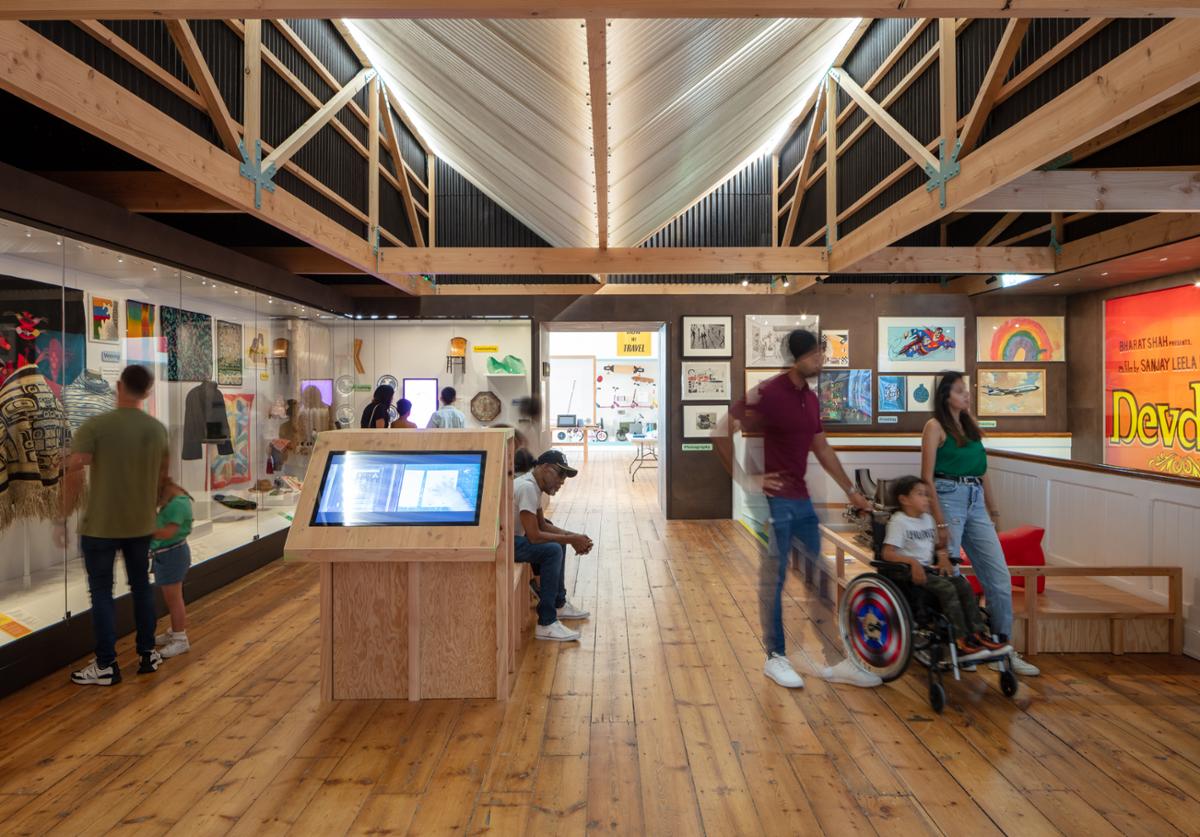
The transformation project cost £13m and took three years to complete / Photo: Luke Hayes/V&A Museum, London
When the V&A made the decision to update its Museum of Childhood – which has been operating in East London since 1872 – it decided to let young people help design the new museum themselves.
“From the outset, we’ve really worked with young people to think about their needs and their perspectives. That’s informed every aspect of the museum,” Dr Helen Charman, director of Young V&A, tells Attractions Management.
The Young V&A, which opened in July in Bethnal Green, is a free museum exploring art, design and performance created for and with young people aged up to 14 years. It’s the product of a seven-year project that involved detailed consultation with more than 22,000 children, young people, parents and teachers.
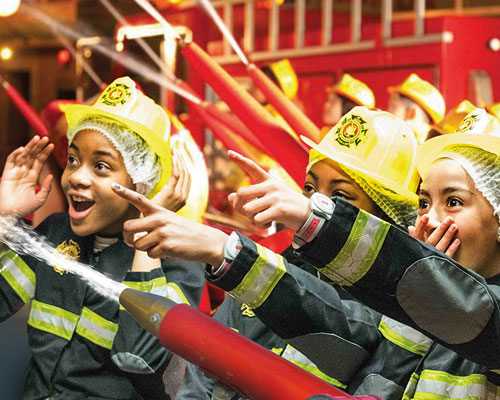
The result is a spacious museum housed in the renovated 150-year-old Grade II listed building that was home to the Museum of Childhood. Revamped by architecture studios De Matos Ryan and AOC, it features three major new galleries where visitors can make noise, interact with the exhibits, design their own creations and learn while having fun.
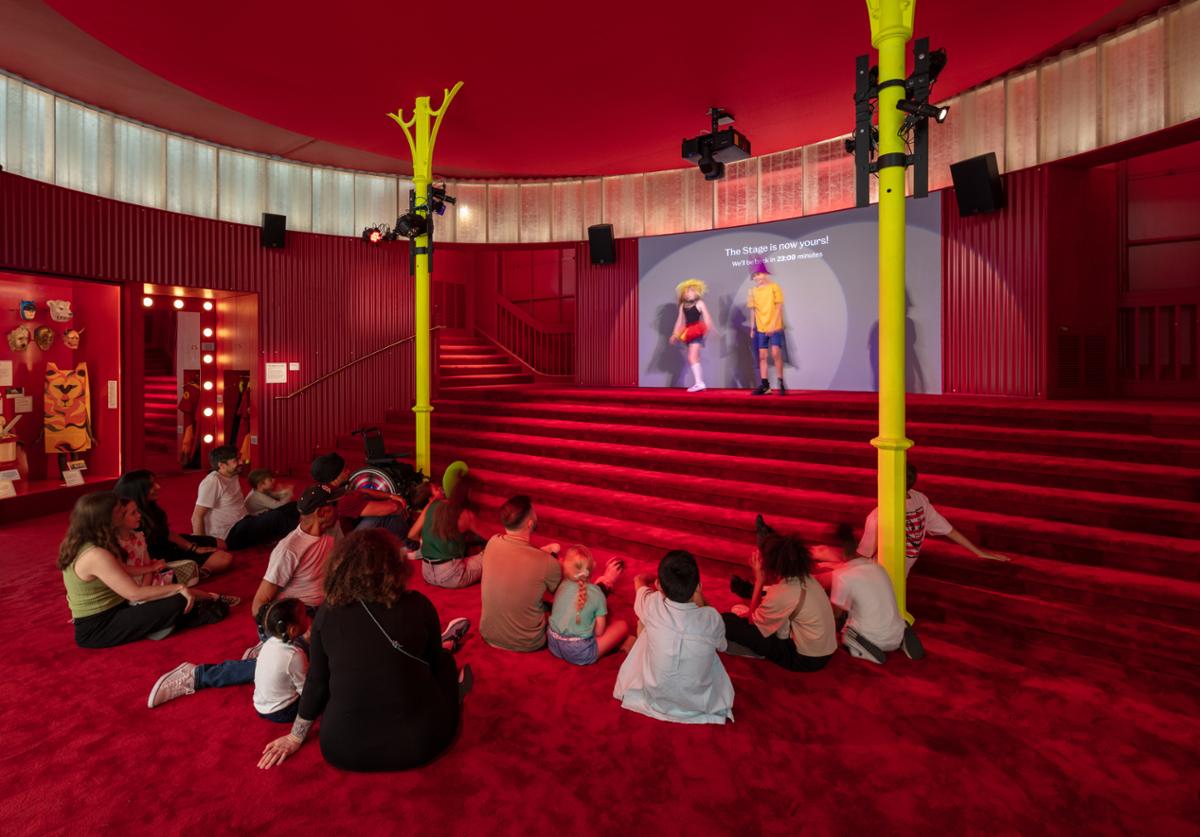
There are no fusty statues or ‘don’t touch’ signs here – instead it features a striking red performance stage, a giant marble run, a spiral staircase informed by optical illusions, an open design studio and exhibits that range from a Syrian rattle dating back to 2300 BC to Team GB medallist Sky Brown’s old skateboard.
Boosting creativity Young people’s input can be seen throughout the museum, from the colour scheme developed with children to storytelling displays and a self-portrait-making station proposed by local pupils. Exhibits include a patchwork quilt made by students using sustainable practices to communicate their thoughts on fast fashion.
“We know creativity is a vital life skill,” says Charman. “Global organisations such as the World Economic Forum and the OECD have been making calls for 21st century skills – creativity, collaboration, communication, critical thinking and confidence. A museum that promotes creative confidence in young people – which is at the very heart of the Young V&A – is very much needed right now.
“It’s about young people having confidence in their ideas; feeling they can bring their ideas into the world and that those ideas can effect change.”
The museum is divided into three galleries broadly aimed at different age ranges (although all children can explore all areas): Play, designed for pre-walkers, featuring a Mini Museum focusing on how small children learn in a sensory environment; Imagine, which has a focus on imaginary worlds and features a stage with props and costumes for children to create their own performances; and Design, which invites older children to think like designers. See overleaf for more details.
Collaborative working For many museums aimed at children, learning programmes are designed once the museum is already operational. At the Young V&A, curatorial and learning teams worked together from the outset to think about which objects to include in the museum and how to present them.
The displays and exhibitions address topics that children said were important to them, and there are plenty of inspiring stories of creative acts by young people around the world.
Object labels are kept short; instead there’s a focus on encouraging children and their adults to think creatively and collaboratively. Galleries have been designed to be as dynamic and interactive as possible, with things to do to help visitors act on the inspiration they take from the collections around them.
“Young people’s voices and creativity are embedded throughout the museum,” says Charman.
“There was a very structured process of co-design, with local children working with the architects to create the museum that they wanted. Over the past two years, we also carried out a massive outreach programme working with schools, children’s centres, libraries and adventure playgrounds in Tower Hamlets.
“Every interactive in the Young V&A has been co-designed and tested with young people. Children have interviewed some of our featured artists, and you can hear those interviews on recordings throughout the museum.
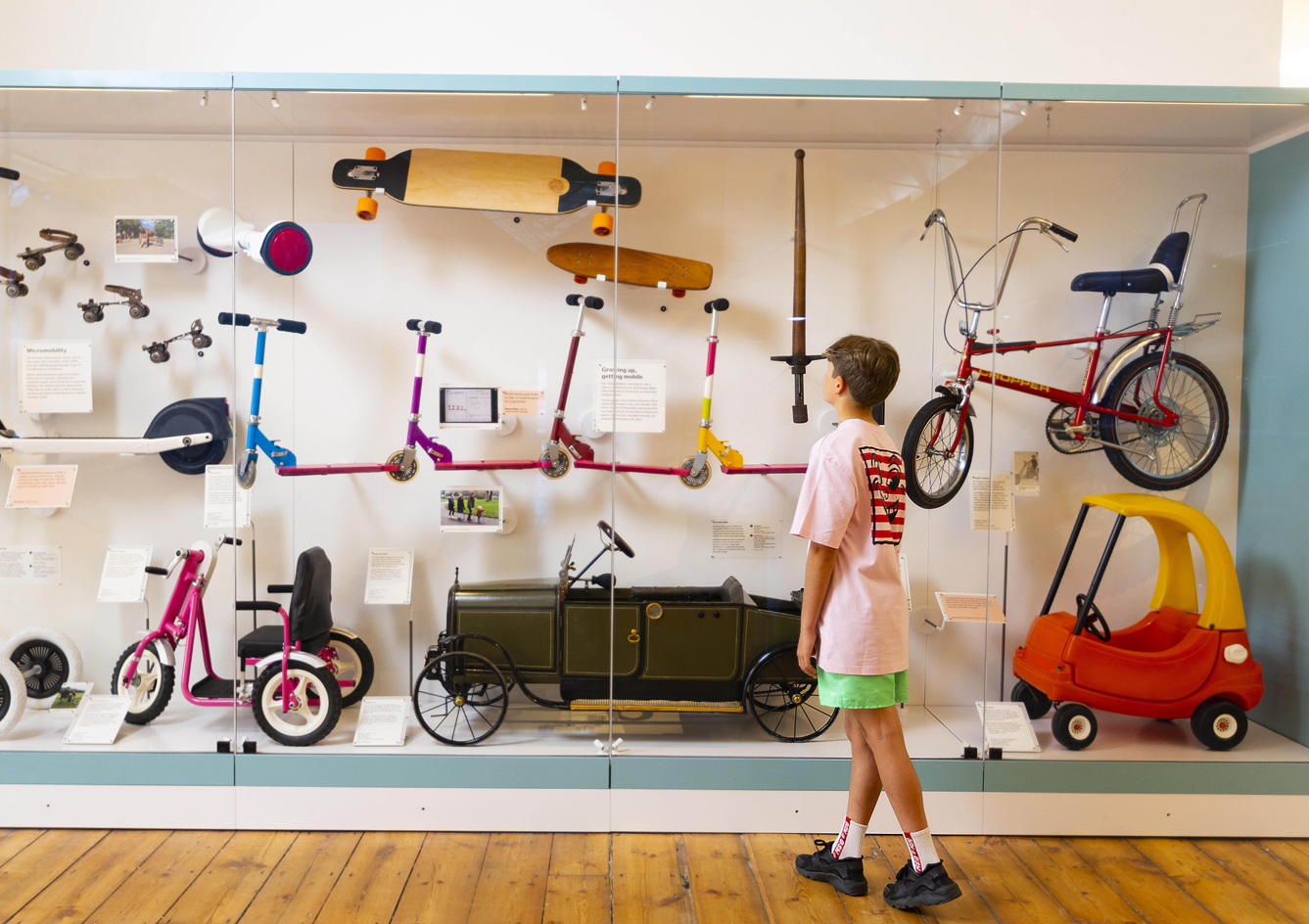
“It’s such a playful, optimistic and uplifting environment. Children come running and gliding in on their scooters; they point, and say ‘wow, look at that!’ It’s a joy to see.”
Photo: Suki Dhanda/V&A Museum, London
"A museum that promotes
creative confidence in
young people is very
much needed right now" – Dr Helen Charman, director, Young V&A</p>
THE GALLERIES: Play
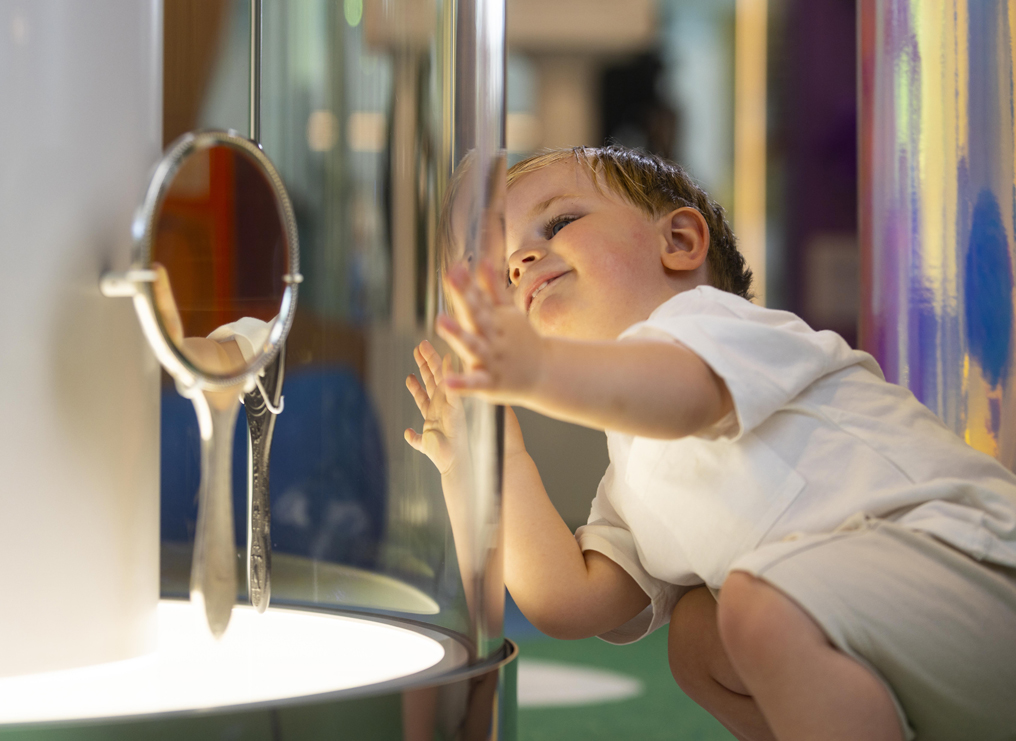
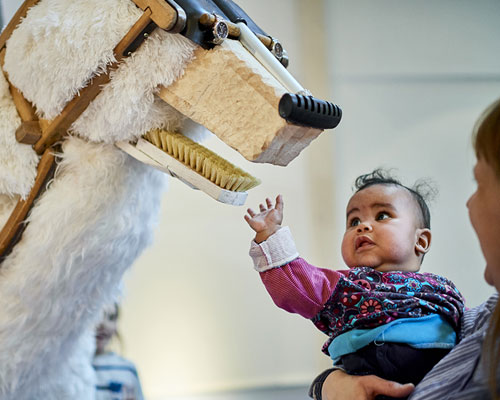
In the Play Gallery, the Mini Museum is inspired by the ways babies and toddlers first experience the world with a sensory landscape in which objects are placed at children’s eye level height, where they can discover colours, textures and shapes as they explore the space.
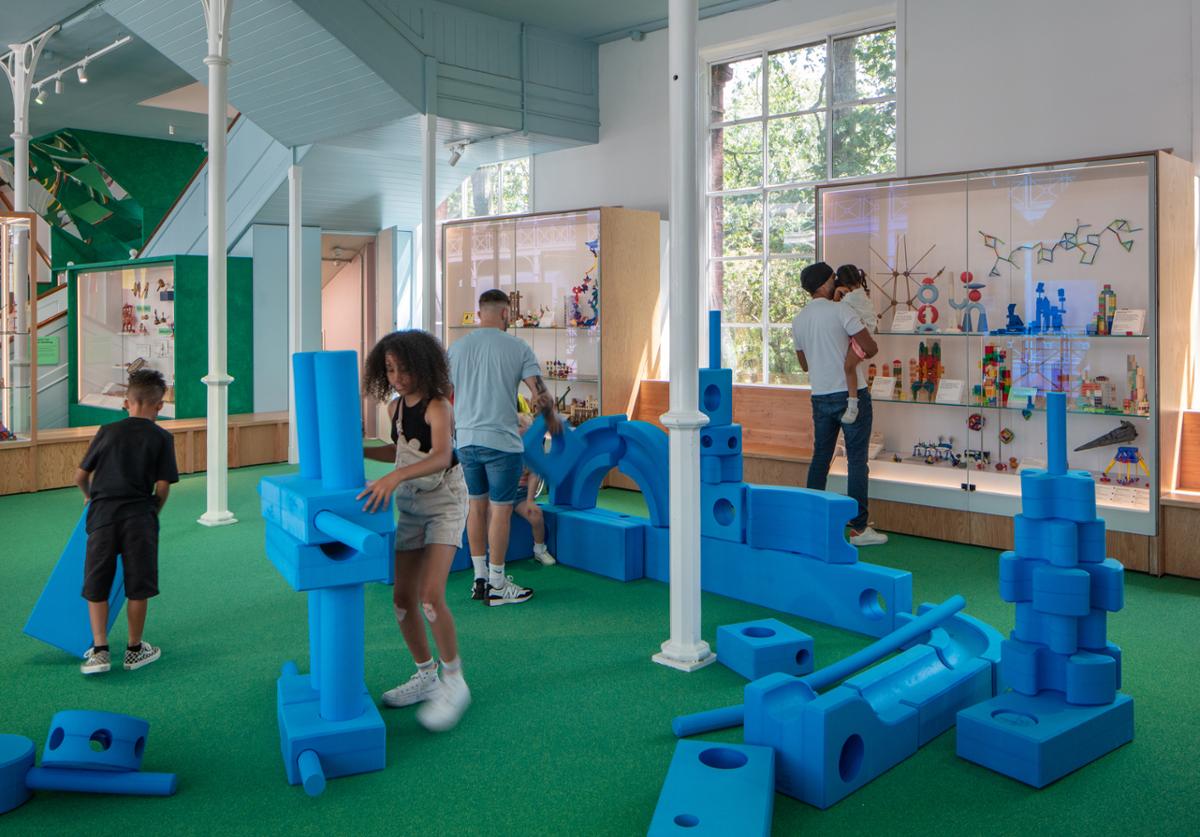
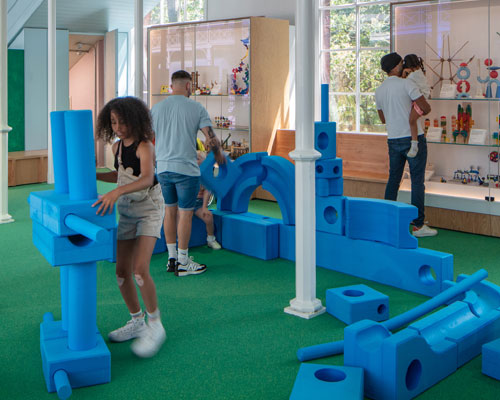
Further parts of the collection are displayed within an alphabet running the length of the gallery, helping little ones build communication and oracy skills. Elsewhere a rainbow of cases shows objects by colour, appealing to early learners. A construction zone encourages children to use their problem-solving and design skills with a large marble run, and to have fun building dens and architectural structures in the Imagination Playground.
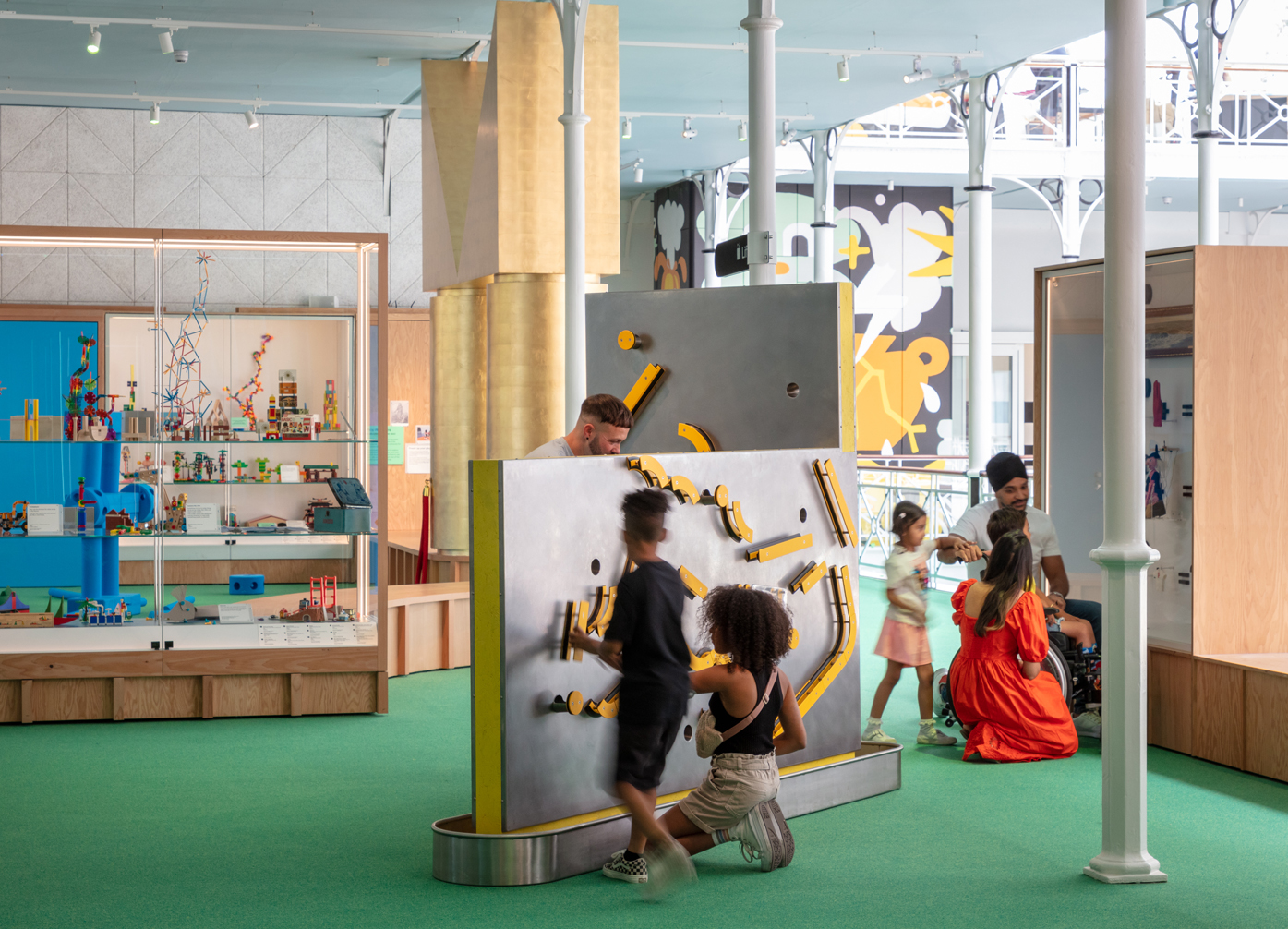
A large magnetic marble run allows children to collaborate to build new tracks / Photo: David Parry/V&A Museum, London
Pre-walkers are encouraged to explore / Photo: David Parry/V&A Museum, London
THE GALLERIES: Imagine
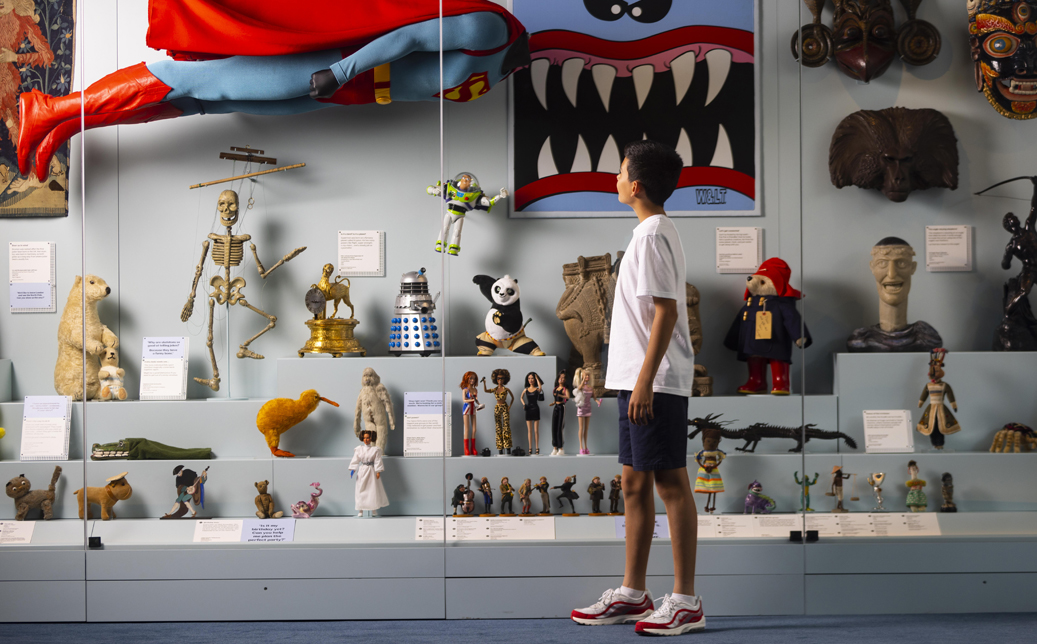
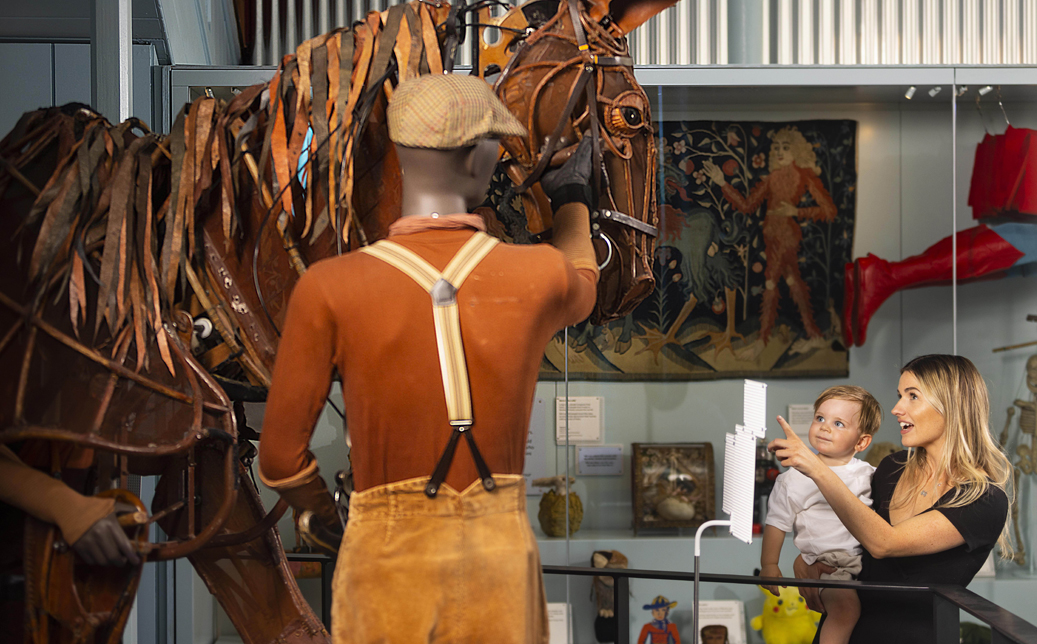
The Imagine Gallery includes a variety of spaces to inspire creative expression through performance, storytelling, imagination and community. Children can choose their own adventure and create their own stories inspired by the collections – including the life-size Joey the War Horse puppet in the Adventure Display.
A performance space, The Stage, hosts programmed activity, while a dressing up box and shadow puppets encourage children to enact their own performances.
A new display called This Is Me by photographer Rehan Jamil, co-curated with young people from the Mile End Community Project, features portraits of local children expressing what creativity means to them. The photo series is presented alongside self-portraits by creatives including Chila Kumari Singh Burman, Quentin Blake, Kenneth Branagh, Dapo Adeola, and Linda McCartney, as well as an interactive self-portrait-making station.
The much-loved dolls’ house collection can be explored within a new streetscape, alongside a commission by Emily Queenie created with local schoolchildren.
The Adventure Display in the Imagine Gallery / Photo: David Parry/V&A Museum, London
The Joey puppet from War Horse is on display / Photo: David Parry/V&A Museum, London
THE GALLERIES: Design
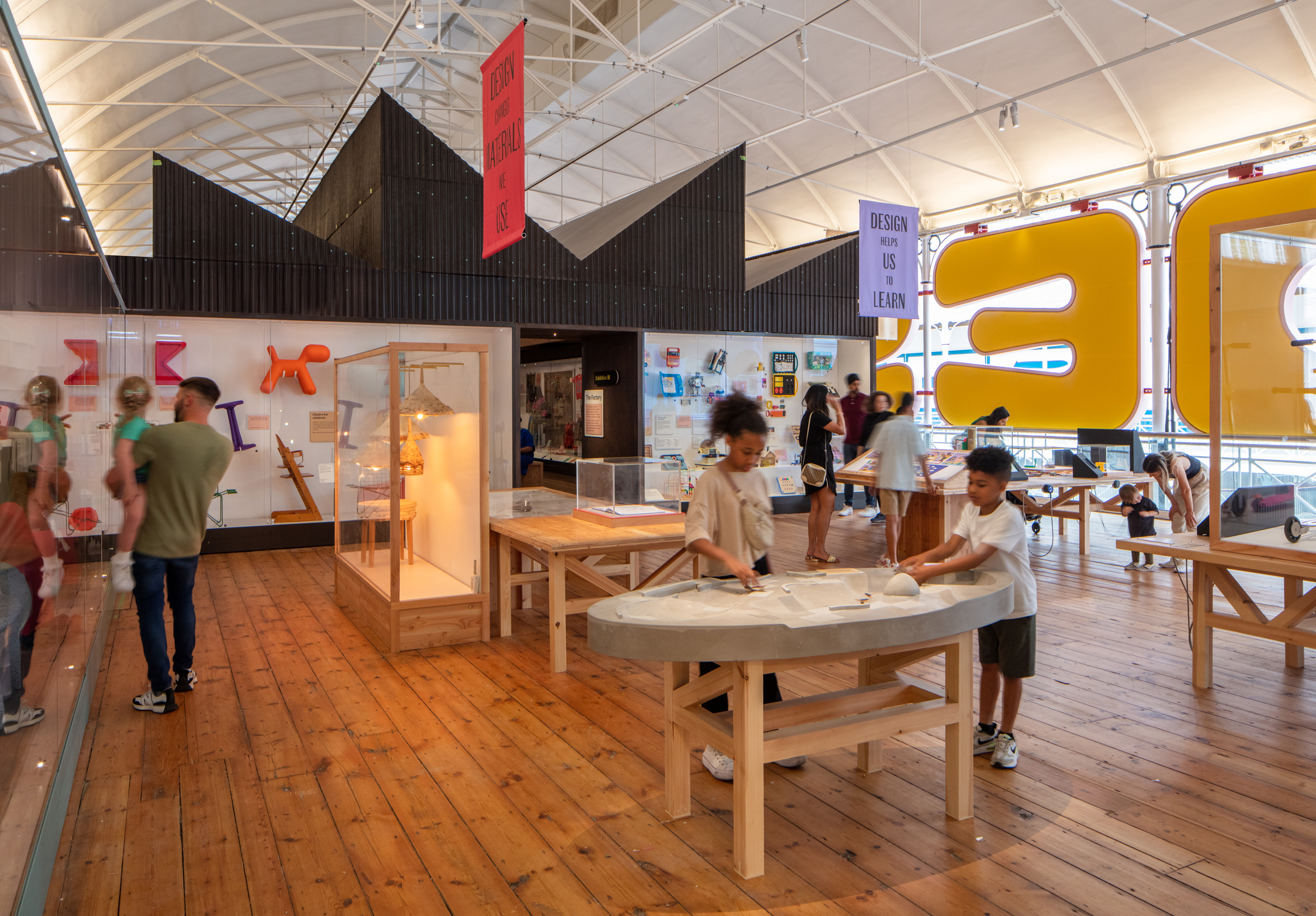
The Design Gallery, conceived for older children, showcases innovative objects and case studies that explore how things are designed, made and used, and the ways in which design can change the world. Hands on activities, workshops and collaborations with contemporary designers introduce young people to different design processes and help develop critical thinking, ideas creation, and problem-solving skills.
Stories illustrating the power of children’s agency are highlighted here, including the invention of the Elephant Detector by 14-year-old Chinmayi Ramasubramanian in India to reduce human-elephant conflict and the UK’s first magazine for Black girls designed by Serlina Boyd, inspired by her daughter Faith. The Factory uncovers some of the many processes and materials used in making familiar and unfamiliar objects, where children can see design processes in action. The Shed is home to Young V&A’s on-site studio resident – and is a space where children can experience the work of a contemporary artist or designer firsthand and take part in design challenges in the adjoining Open Studio.
The Design Gallery was conceived for older children to explore creativity / Photo: Luke Hayes/V&A Museum, London
The Design for Change display / Photo: David Parry/V&A Museum, London
Read more from this issue of Attractions Management magazine
View contents of Attractions Management 2023 issue 3
Editor's letter: Learning to listen
Young people were involved in every stage of planning for the new Young V&A. Is this the start of a real shift in the way children’s museums are planned?
People: Karin Hindsbo
The head of Scandinavia’s largest museum is set to take over as Tate Modern’s new director. She shares her plans
People: Sean Decatur
It’s a big year for the American Museum of Natural History, as its new president takes over and it launches a major new centre
People: Håkon Lund
As Norway’s largest theme park embraces solar energy, Lund Gruppen’s owner tells us why the industry needs to be at the forefront of change
Interview: Andreas Andersen
As Gothenburg’s Liseberg theme park celebrates its 100th anniversary, its CEO talks celebrations, challenges and COVID-19 with Magali Robathan
Museums: And still we rise
Charleston’s long-awaited International African American Museum opens, reclaiming one of the US’s most painful and sacred spaces. IAAM president Dr Tonya Matthews speaks to Attractions Management about the long road to opening
Aquaria: A fresh start
The team behind New Orleans’ Audubon Aquarium and Insectarium used the COVID-19 pandemic to rethink their offer.
We check out the result, which brings both institutions under the same roof for the first time
Museums: Power of youth
Investing in creative confidence in our young has never been as important as it is now, argues Young V&A director Helen Charman
Science centres: Axel Hüttinger
From the creation of a new science centre in Angola to an indoor/outdoor children’s gallery in Barcelona, Huttinger Interactive Exhibitions is keeping busy
Research: Mixed blessings
Attractions have been helping revitalise shopping centres for many years, but how is this market changing?
Awards: Good lookers
Some of the world’s most beautiful and innovative new museums have been celebrated by Architizer’s A+ Awards. We take a look at the winners
Sponsored: Red Raion
Red Raion has emerged as an industry leader in the realm of digital
attractions, captivating audiences worldwide with its CGI movie
experiences.
The long-awaited Young V&A has launched
in London and it heralds a shift in
the way museums are designed for young
people. Magali Robathan takes a look
The transformation project cost £13m and took three years to complete / Photo: Luke Hayes/V&A Museum, London
When the V&A made the decision to update its Museum of Childhood – which has been operating in East London since 1872 – it decided to let young people help design the new museum themselves.
“From the outset, we’ve really worked with young people to think about their needs and their perspectives. That’s informed every aspect of the museum,” Dr Helen Charman, director of Young V&A, tells Attractions Management.
The Young V&A, which opened in July in Bethnal Green, is a free museum exploring art, design and performance created for and with young people aged up to 14 years. It’s the product of a seven-year project that involved detailed consultation with more than 22,000 children, young people, parents and teachers.
The result is a spacious museum housed in the renovated 150-year-old Grade II listed building that was home to the Museum of Childhood. Revamped by architecture studios De Matos Ryan and AOC, it features three major new galleries where visitors can make noise, interact with the exhibits, design their own creations and learn while having fun.
There are no fusty statues or ‘don’t touch’ signs here – instead it features a striking red performance stage, a giant marble run, a spiral staircase informed by optical illusions, an open design studio and exhibits that range from a Syrian rattle dating back to 2300 BC to Team GB medallist Sky Brown’s old skateboard.
Boosting creativity Young people’s input can be seen throughout the museum, from the colour scheme developed with children to storytelling displays and a self-portrait-making station proposed by local pupils. Exhibits include a patchwork quilt made by students using sustainable practices to communicate their thoughts on fast fashion.
“We know creativity is a vital life skill,” says Charman. “Global organisations such as the World Economic Forum and the OECD have been making calls for 21st century skills – creativity, collaboration, communication, critical thinking and confidence. A museum that promotes creative confidence in young people – which is at the very heart of the Young V&A – is very much needed right now.
“It’s about young people having confidence in their ideas; feeling they can bring their ideas into the world and that those ideas can effect change.”
The museum is divided into three galleries broadly aimed at different age ranges (although all children can explore all areas): Play, designed for pre-walkers, featuring a Mini Museum focusing on how small children learn in a sensory environment; Imagine, which has a focus on imaginary worlds and features a stage with props and costumes for children to create their own performances; and Design, which invites older children to think like designers. See overleaf for more details.
Collaborative working For many museums aimed at children, learning programmes are designed once the museum is already operational. At the Young V&A, curatorial and learning teams worked together from the outset to think about which objects to include in the museum and how to present them.
The displays and exhibitions address topics that children said were important to them, and there are plenty of inspiring stories of creative acts by young people around the world.
Object labels are kept short; instead there’s a focus on encouraging children and their adults to think creatively and collaboratively. Galleries have been designed to be as dynamic and interactive as possible, with things to do to help visitors act on the inspiration they take from the collections around them.
“Young people’s voices and creativity are embedded throughout the museum,” says Charman.
“There was a very structured process of co-design, with local children working with the architects to create the museum that they wanted. Over the past two years, we also carried out a massive outreach programme working with schools, children’s centres, libraries and adventure playgrounds in Tower Hamlets.
“Every interactive in the Young V&A has been co-designed and tested with young people. Children have interviewed some of our featured artists, and you can hear those interviews on recordings throughout the museum.
“It’s such a playful, optimistic and uplifting environment. Children come running and gliding in on their scooters; they point, and say ‘wow, look at that!’ It’s a joy to see.”
Photo: Suki Dhanda/V&A Museum, London
"A museum that promotes
creative confidence in
young people is very
much needed right now" – Dr Helen Charman, director, Young V&A</p>
THE GALLERIES: Play
In the Play Gallery, the Mini Museum is inspired by the ways babies and toddlers first experience the world with a sensory landscape in which objects are placed at children’s eye level height, where they can discover colours, textures and shapes as they explore the space.
Further parts of the collection are displayed within an alphabet running the length of the gallery, helping little ones build communication and oracy skills. Elsewhere a rainbow of cases shows objects by colour, appealing to early learners. A construction zone encourages children to use their problem-solving and design skills with a large marble run, and to have fun building dens and architectural structures in the Imagination Playground.
A large magnetic marble run allows children to collaborate to build new tracks / Photo: David Parry/V&A Museum, London
Pre-walkers are encouraged to explore / Photo: David Parry/V&A Museum, London
THE GALLERIES: Imagine
The Imagine Gallery includes a variety of spaces to inspire creative expression through performance, storytelling, imagination and community. Children can choose their own adventure and create their own stories inspired by the collections – including the life-size Joey the War Horse puppet in the Adventure Display.
A performance space, The Stage, hosts programmed activity, while a dressing up box and shadow puppets encourage children to enact their own performances.
A new display called This Is Me by photographer Rehan Jamil, co-curated with young people from the Mile End Community Project, features portraits of local children expressing what creativity means to them. The photo series is presented alongside self-portraits by creatives including Chila Kumari Singh Burman, Quentin Blake, Kenneth Branagh, Dapo Adeola, and Linda McCartney, as well as an interactive self-portrait-making station.
The much-loved dolls’ house collection can be explored within a new streetscape, alongside a commission by Emily Queenie created with local schoolchildren.
The Adventure Display in the Imagine Gallery / Photo: David Parry/V&A Museum, London
The Joey puppet from War Horse is on display / Photo: David Parry/V&A Museum, London
THE GALLERIES: Design
The Design Gallery, conceived for older children, showcases innovative objects and case studies that explore how things are designed, made and used, and the ways in which design can change the world. Hands on activities, workshops and collaborations with contemporary designers introduce young people to different design processes and help develop critical thinking, ideas creation, and problem-solving skills.
Stories illustrating the power of children’s agency are highlighted here, including the invention of the Elephant Detector by 14-year-old Chinmayi Ramasubramanian in India to reduce human-elephant conflict and the UK’s first magazine for Black girls designed by Serlina Boyd, inspired by her daughter Faith. The Factory uncovers some of the many processes and materials used in making familiar and unfamiliar objects, where children can see design processes in action. The Shed is home to Young V&A’s on-site studio resident – and is a space where children can experience the work of a contemporary artist or designer firsthand and take part in design challenges in the adjoining Open Studio.
The Design Gallery was conceived for older children to explore creativity / Photo: Luke Hayes/V&A Museum, London
The Design for Change display / Photo: David Parry/V&A Museum, London
Read more from this issue of Attractions Management magazine
View contents of Attractions Management 2023 issue 3
Editor's letter: Learning to listen
Young people were involved in every stage of planning for the new Young V&A. Is this the start of a real shift in the way children’s museums are planned?
People: Karin Hindsbo
The head of Scandinavia’s largest museum is set to take over as Tate Modern’s new director. She shares her plans
People: Sean Decatur
It’s a big year for the American Museum of Natural History, as its new president takes over and it launches a major new centre
People: Håkon Lund
As Norway’s largest theme park embraces solar energy, Lund Gruppen’s owner tells us why the industry needs to be at the forefront of change
Interview: Andreas Andersen
As Gothenburg’s Liseberg theme park celebrates its 100th anniversary, its CEO talks celebrations, challenges and COVID-19 with Magali Robathan
Museums: And still we rise
Charleston’s long-awaited International African American Museum opens, reclaiming one of the US’s most painful and sacred spaces. IAAM president Dr Tonya Matthews speaks to Attractions Management about the long road to opening
Aquaria: A fresh start
The team behind New Orleans’ Audubon Aquarium and Insectarium used the COVID-19 pandemic to rethink their offer.
We check out the result, which brings both institutions under the same roof for the first time
Museums: Power of youth
Investing in creative confidence in our young has never been as important as it is now, argues Young V&A director Helen Charman
Science centres: Axel Hüttinger
From the creation of a new science centre in Angola to an indoor/outdoor children’s gallery in Barcelona, Huttinger Interactive Exhibitions is keeping busy
Research: Mixed blessings
Attractions have been helping revitalise shopping centres for many years, but how is this market changing?
Awards: Good lookers
Some of the world’s most beautiful and innovative new museums have been celebrated by Architizer’s A+ Awards. We take a look at the winners
Sponsored: Red Raion
Red Raion has emerged as an industry leader in the realm of digital
attractions, captivating audiences worldwide with its CGI movie
experiences.
London Museum will open four new food and drink destinations when it launches its new home
at Smithfield on 28 November, making hospitality a central part of the visitor experience at one
of the capital's biggest cultural openings of the year.
OMA has completed a major transformation of New York's New Museum, creating a larger
cultural campus that combines expanded exhibition spaces with learning, performance,
hospitality and public programming.
A US$50 million (£44.2 million, €51.2 million) transformation of Chicago's historic McCormick
Mansion has created a new destination that combines live magic, immersive theatre, dining and
private membership under one roof.
The Montana Historical Society has officially celebrated the opening of its new Montana
Heritage
Center, a US$107 million (£79 million, €92 million) destination that combines immersive
storytelling with cutting-edge audiovisual technology to bring the sta
San Antonio Zoo has reported a US$283 million economic impact for 2025, following a decade-
long transformation programme that has seen almost US$200 million invested into the Texas
attraction.
Plans for the AU$180 million redevelopment of Reef HQ Aquarium in Townsville, Australia, are
progressing, with the project set to transform the attraction into a global centre for reef
education and conservation.
Abu Dhabi-based investment firm Mubadala Capital has made a binding, fully financed
€1 billion
offer to acquire Pierre and Vacances SA, the European holiday resort operator behind the
continental European Center Parcs business.
Disney has reaffirmed its commitment to investing US$30 billion in its US parks and cruise
business by 2033, using new America250 celebrations to underline the role its attractions play
in supporting jobs, tourism and economic growth.
Expo 2030 Riyadh is being planned as a permanent visitor destination, with organisers
confirming the six-million-square-metre site will become a Global Village after the event closes.
The owner of one of Australia's best-known waterparks has acquired a major competitor,
creating a new attractions business spanning two of the country's largest visitor destinations.