Potentially a quick and exciting way of generating cash for facility projects and athletes, crowdfunding is establishing itself as a permanent feature on the sports landscape
By Kath Hudson | Published in Sports Management 2015 issue 2
Canadian alpine skier Larisa Yurkiw raised more than CA$20,000 on crowdfunding site pursu.it, which enabled her to compete at Sochi 2014
At a time when public sector budgets are strained, grants are often too time consuming for small projects and bank finance is hard to get, crowdfunding offers an increasingly attractive option for clubs, organisations, individuals and teams.
There are four principle categories. Donation crowdfunding provides a straightforward donation to the project, while reward crowdfunding offers donors something in return. Loan-based crowdfunding allows people to borrow money from lots of people and return it with some interest and equity-based crowdfunding is based on an offer of a share or stake in the business in return for investment. Not all of the pledged cash goes to the project, however. Most crowdfunding platforms take a cut – around 10 to 15 per cent – of the amount raised as a return for the high profile and exposure they offer.
Kicking it off Kickstarter was the trailblazer of the crowdfunding concept and a number of platforms have followed in its wake. The most popular industry sectors to have their own funding platforms – according to Luke Lang, founder of Crowdcube – are technology and food and beverage, but sporting platforms are becoming an increasingly popular niche.
An area which is rising fast is athletes asking their fans to donate money to take them to the next level. This can be easier than finding sponsorship, but also the skills they learn through a crowdfunding campaign – such as how to engage with fans – can benefit them when looking for a sponsor later. The 2014 Sochi Olympics put crowdfunding on the map in this respect, as many athletes and teams raised necessary funds through crowd funding.
“Athletes who successfully crowdfund have a great relationship with their fans and are generally strong on social media, which is exactly what sponsors are looking for,” says Emily White, co-founder of Dreamfuel.
“We love providing new revenue streams for athletes, and also showing them how to engage and connect with their audience, so sponsors can work with them in that regard.”
Canada-based Pursu.it was formed by Olympic kayaker Julia Rivard and former gymnast Leah Skerry in 2013. It has raised hundreds of thousands of dollars for athletes around the world and sent eight athletes to Sochi, including Canadian skier Larisa Yurkiw who needed to find CA$20,000 after losing her funding through injury. “We started Pursu.it after seeing the success of some of the larger crowdfunding sites, like Kickstarter,” says Rivard. “Our goal has always been to connect the athletes directly to the fans who want to help them on their journey.
“The athletes are outstanding ambassadors and each campaign helps market the site.”
Rewards are an important part of crowdfunding and an elite sportsperson offers a great deal of scope for fun rewards for fans. “They can be as simple as a shoutout on Twitter or as customised as a personalised song or private lesson via Skype,” says White.
Community funding Crowdfunding for an elite athlete might be one thing, but for a small community sports project, the experience can be quite different, as the pool of donors becomes much smaller. Many projects have found it’s not easy money and targets can be hard to reach. Campaigns take a lot of promoting both online and off.
When rugby club Bury Broncos decided to expand its facilities, it chose crowdfunding to raise £3,500 towards a pavilion upgrade. Club chair, Ryan Lewis, says they took the crowdfunding route, instead of looking for grants, because it seemed like the most achievable way of getting the money in a short space of time, and the project was too small to warrant the investment of time and skills needed for a funding bid. Lewis has found that crowdfunding has some drawbacks.
“There’s a lot of community support for the club, but that doesn’t automatically convert into giving money,” he says. “People seem to have a ‘what’s in it for me’ attitude about giving money, so if we were going to do another bid we would raise the stakes on the rewards.”
Twickenham Alive, the organiser of the Strawberry Hill House ice rink in Twickenham, also found that translating public support into cash is not as easy as it might appear. “People might like the projects, but they don’t just give you their money,” says Teresa Read, who ran the crowdfunding campaign.
This first experience of crowdfunding has put Read off running future campaigns: “To start with the campaign was fun, but then it became hard going.
“We just about managed to hit our £5,000 target, but we had to work very hard to make this happen. That said, the money raised was crucial and although it was a small percentage of the £200,000 we needed in total, we couldn’t have opened the rink without it.”
Other clubs have had a smoother experience of fundraising. Community-owned football team Portsmouth Football Club completed the largest football crowdfunding project in the UK last year when it raised £270,000 on the Tifosy website to build a new academy building. The club went down the crowdfunding route in response to feedback from fans for a fan-funded project.
Colin Farmery, who project managed the campaign said they tried to make it a textbook campaign: “We got the backing of a sports personality, kept fans up to date all the way along and made sure the interest never lulled. The project suited the model perfectly because it was a clearly defined, concrete project.”
Although he says the club would consider using crowdfunding again, he says it’s important not to over use it: “Crowdfunding isn’t a tap which can be turned on and off.”
Hertfordshire company, WallJAM, completed an equity crowdfunding campaign last year to get £100,000 to complete the funding needed to build its prototype interactive rebound wall. They went over the target by £30,000. Again, founder, Tim Worboys stressed the need to work the network.
Looking ahead, it is clear that crowdfunding offers an option worth exploring, but it’s not a case of sit back and let the money roll in. If you take this route be prepared to work your network, max out on social media and take every media opportunity offered.
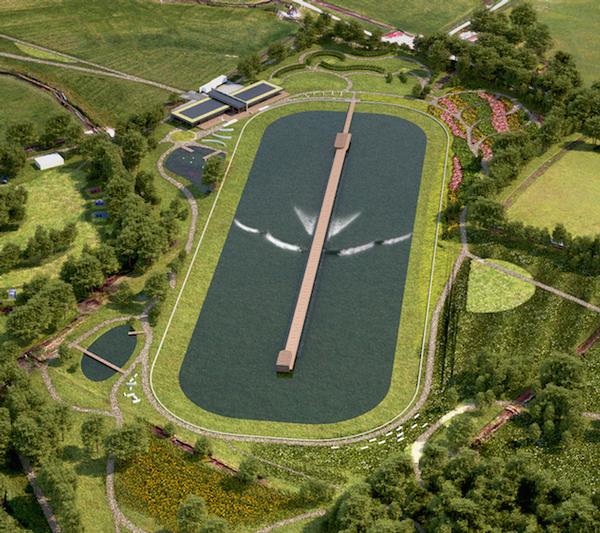
Case Study - THE WAVE Urban surf reef, The Wave, in Bristol, decided to take the crowdfunding route as it had many supporters it was confident of mobilising. “Crowdfunder UK got in touch as they could see we were gathering a large base of online support and thought this could be a great project to showcase this unique form of fundraising,” says the Wave founder, Nick Hounsfield. “We saw the crowdfunder campaign as a great way to deliver some core aspirations, such as setting up a charitable trust and delivering more renewable technology and design into our development.”
A mix of rewards including bespoke t-shirts, surf lessons and preview parties were offered and they hit their £150,000 target about halfway through the campaign, ending up with a whopping £224,000.
“Building a big audience to talk to was critical in the success. I would suggest anyone wanting to attempt this fundraising needs a huge critical mass of people to talk to. Social media overload!” says Hounsfield.
A PR company was also engaged to keep up the fundraising exposure, which led to features in national papers and radio interviews.
“It totally absorbs your life for at least a month (the length of the campaign) and lots of admin afterwards. However, the sense of support and achievement is overwhelming. It’s also allowed us to go back to our investors with confidence of public support for the project,” says Hounsfield. “If the organisation or project is inspiring enough, crowdfunding could work. The bigger and more exciting the vision, the bigger the opportunity.”
The Wave’s crowdfunding project raised a total of £224,000
Case Study - British Nordic Ski team The British Nordic Ski Team is now ranked in the top 20 in the world. Despite the British Ski and Snowboard (the national governing body for skiing and snowboarding) distributing a record £4.9m of National Lottery funding in 2014, the ski team receives very little direct funding and has had to raise most of its own funding.
Crowdfunding gave the team the chance to raise the additional funds for more coaching camps at altitude, in the run up to the Sochi Olympics.
“Being a small team, fundraising tends to come directly from parents and families and the support team is principally made up of volunteers,” says spokesperson Bruce Murray. “Access to commercial lending doesn’t exist and being a minority sport can be a challenge to ensure any sponsors maximize their ROI. Crowdfunding gave us the opportunity to both raise funds and the profile of the sport.”
A range of British Nordic products were created as rewards. Fans were encouraged to take selfies in their gear, which were posted on social media. With donations from all over the world, it took just 10 days to reach the target and they ended up with 147 per cent of the initial target.
“Social media was key to the success,” says Murray. “Prior to 2013 our media presence had been poor, but after the London 2012 Olympics we realised we needed to capture that spirit and had a limited window of opportunity to raise funds, as well as the profile of the team and the sport of cross country skiing.”
The next goal is a top 10 position at the 2018 Winter Olympics in South Korea. “We would definitely use crowdfunding again, but only when it fits with our objectives. It’s an option we intend to use sparingly,” he says. “We’re confident crowdfunding will play an important part in British Nordic achieving gold for Team GB.”
Andrew Musgrave, a member of the cross country team which raised £7,700
US athlete Alex Love hopes to compete at Rio 2016 and is using crowdfunding to train as a full-time athlete
An opportunity to reimagine one of the UK’s most recognisable towers has been formally
opened by Rivington Hark, as St Johns Beacon invites operators and partners to shape its
next phase. [more...]
Potentially a quick and exciting way of generating cash for facility projects and athletes, crowdfunding is establishing itself as a permanent feature on the sports landscape
By Kath Hudson | Published in Sports Management 2015 issue 2
Canadian alpine skier Larisa Yurkiw raised more than CA$20,000 on crowdfunding site pursu.it, which enabled her to compete at Sochi 2014
At a time when public sector budgets are strained, grants are often too time consuming for small projects and bank finance is hard to get, crowdfunding offers an increasingly attractive option for clubs, organisations, individuals and teams.
There are four principle categories. Donation crowdfunding provides a straightforward donation to the project, while reward crowdfunding offers donors something in return. Loan-based crowdfunding allows people to borrow money from lots of people and return it with some interest and equity-based crowdfunding is based on an offer of a share or stake in the business in return for investment. Not all of the pledged cash goes to the project, however. Most crowdfunding platforms take a cut – around 10 to 15 per cent – of the amount raised as a return for the high profile and exposure they offer.
Kicking it off Kickstarter was the trailblazer of the crowdfunding concept and a number of platforms have followed in its wake. The most popular industry sectors to have their own funding platforms – according to Luke Lang, founder of Crowdcube – are technology and food and beverage, but sporting platforms are becoming an increasingly popular niche.
An area which is rising fast is athletes asking their fans to donate money to take them to the next level. This can be easier than finding sponsorship, but also the skills they learn through a crowdfunding campaign – such as how to engage with fans – can benefit them when looking for a sponsor later. The 2014 Sochi Olympics put crowdfunding on the map in this respect, as many athletes and teams raised necessary funds through crowd funding.
“Athletes who successfully crowdfund have a great relationship with their fans and are generally strong on social media, which is exactly what sponsors are looking for,” says Emily White, co-founder of Dreamfuel.
“We love providing new revenue streams for athletes, and also showing them how to engage and connect with their audience, so sponsors can work with them in that regard.”
Canada-based Pursu.it was formed by Olympic kayaker Julia Rivard and former gymnast Leah Skerry in 2013. It has raised hundreds of thousands of dollars for athletes around the world and sent eight athletes to Sochi, including Canadian skier Larisa Yurkiw who needed to find CA$20,000 after losing her funding through injury. “We started Pursu.it after seeing the success of some of the larger crowdfunding sites, like Kickstarter,” says Rivard. “Our goal has always been to connect the athletes directly to the fans who want to help them on their journey.
“The athletes are outstanding ambassadors and each campaign helps market the site.”
Rewards are an important part of crowdfunding and an elite sportsperson offers a great deal of scope for fun rewards for fans. “They can be as simple as a shoutout on Twitter or as customised as a personalised song or private lesson via Skype,” says White.
Community funding Crowdfunding for an elite athlete might be one thing, but for a small community sports project, the experience can be quite different, as the pool of donors becomes much smaller. Many projects have found it’s not easy money and targets can be hard to reach. Campaigns take a lot of promoting both online and off.
When rugby club Bury Broncos decided to expand its facilities, it chose crowdfunding to raise £3,500 towards a pavilion upgrade. Club chair, Ryan Lewis, says they took the crowdfunding route, instead of looking for grants, because it seemed like the most achievable way of getting the money in a short space of time, and the project was too small to warrant the investment of time and skills needed for a funding bid. Lewis has found that crowdfunding has some drawbacks.
“There’s a lot of community support for the club, but that doesn’t automatically convert into giving money,” he says. “People seem to have a ‘what’s in it for me’ attitude about giving money, so if we were going to do another bid we would raise the stakes on the rewards.”
Twickenham Alive, the organiser of the Strawberry Hill House ice rink in Twickenham, also found that translating public support into cash is not as easy as it might appear. “People might like the projects, but they don’t just give you their money,” says Teresa Read, who ran the crowdfunding campaign.
This first experience of crowdfunding has put Read off running future campaigns: “To start with the campaign was fun, but then it became hard going.
“We just about managed to hit our £5,000 target, but we had to work very hard to make this happen. That said, the money raised was crucial and although it was a small percentage of the £200,000 we needed in total, we couldn’t have opened the rink without it.”
Other clubs have had a smoother experience of fundraising. Community-owned football team Portsmouth Football Club completed the largest football crowdfunding project in the UK last year when it raised £270,000 on the Tifosy website to build a new academy building. The club went down the crowdfunding route in response to feedback from fans for a fan-funded project.
Colin Farmery, who project managed the campaign said they tried to make it a textbook campaign: “We got the backing of a sports personality, kept fans up to date all the way along and made sure the interest never lulled. The project suited the model perfectly because it was a clearly defined, concrete project.”
Although he says the club would consider using crowdfunding again, he says it’s important not to over use it: “Crowdfunding isn’t a tap which can be turned on and off.”
Hertfordshire company, WallJAM, completed an equity crowdfunding campaign last year to get £100,000 to complete the funding needed to build its prototype interactive rebound wall. They went over the target by £30,000. Again, founder, Tim Worboys stressed the need to work the network.
Looking ahead, it is clear that crowdfunding offers an option worth exploring, but it’s not a case of sit back and let the money roll in. If you take this route be prepared to work your network, max out on social media and take every media opportunity offered.
Case Study - THE WAVE Urban surf reef, The Wave, in Bristol, decided to take the crowdfunding route as it had many supporters it was confident of mobilising. “Crowdfunder UK got in touch as they could see we were gathering a large base of online support and thought this could be a great project to showcase this unique form of fundraising,” says the Wave founder, Nick Hounsfield. “We saw the crowdfunder campaign as a great way to deliver some core aspirations, such as setting up a charitable trust and delivering more renewable technology and design into our development.”
A mix of rewards including bespoke t-shirts, surf lessons and preview parties were offered and they hit their £150,000 target about halfway through the campaign, ending up with a whopping £224,000.
“Building a big audience to talk to was critical in the success. I would suggest anyone wanting to attempt this fundraising needs a huge critical mass of people to talk to. Social media overload!” says Hounsfield.
A PR company was also engaged to keep up the fundraising exposure, which led to features in national papers and radio interviews.
“It totally absorbs your life for at least a month (the length of the campaign) and lots of admin afterwards. However, the sense of support and achievement is overwhelming. It’s also allowed us to go back to our investors with confidence of public support for the project,” says Hounsfield. “If the organisation or project is inspiring enough, crowdfunding could work. The bigger and more exciting the vision, the bigger the opportunity.”
The Wave’s crowdfunding project raised a total of £224,000
Case Study - British Nordic Ski team The British Nordic Ski Team is now ranked in the top 20 in the world. Despite the British Ski and Snowboard (the national governing body for skiing and snowboarding) distributing a record £4.9m of National Lottery funding in 2014, the ski team receives very little direct funding and has had to raise most of its own funding.
Crowdfunding gave the team the chance to raise the additional funds for more coaching camps at altitude, in the run up to the Sochi Olympics.
“Being a small team, fundraising tends to come directly from parents and families and the support team is principally made up of volunteers,” says spokesperson Bruce Murray. “Access to commercial lending doesn’t exist and being a minority sport can be a challenge to ensure any sponsors maximize their ROI. Crowdfunding gave us the opportunity to both raise funds and the profile of the sport.”
A range of British Nordic products were created as rewards. Fans were encouraged to take selfies in their gear, which were posted on social media. With donations from all over the world, it took just 10 days to reach the target and they ended up with 147 per cent of the initial target.
“Social media was key to the success,” says Murray. “Prior to 2013 our media presence had been poor, but after the London 2012 Olympics we realised we needed to capture that spirit and had a limited window of opportunity to raise funds, as well as the profile of the team and the sport of cross country skiing.”
The next goal is a top 10 position at the 2018 Winter Olympics in South Korea. “We would definitely use crowdfunding again, but only when it fits with our objectives. It’s an option we intend to use sparingly,” he says. “We’re confident crowdfunding will play an important part in British Nordic achieving gold for Team GB.”
Andrew Musgrave, a member of the cross country team which raised £7,700
US athlete Alex Love hopes to compete at Rio 2016 and is using crowdfunding to train as a full-time athlete
Hotel de France, located on the British Isle of Jersey, has created a wellness retreat package
that includes a hot yoga session that will take place in Jersey Zoo’s butterfly sanctuary.
A new immersive attraction designed to transport visitors into the final hours of ancient Pompeii
is preparing to open near the world-famous archaeological site in southern Italy.
Experience design company, BRC Imagination Arts, has completed a transition that sees founder
Bob Rogers pass ownership of the business to four long-serving senior executives, while
remaining actively involved with the company.
Movie Park Germany has opened a new Paramount Pictures-themed attraction as part of its 30th
anniversary celebrations, using immersive storytelling and adaptive reuse to reinforce the park’s
longstanding “Hollywood in Germany” positioning.
Therme Manchester’s 28-acre development, which will include interconnected glass pavilions
that measure 65,000sq m, will be the largest bathing and wellbeing attraction in the world once
complete, according to prof David Russell, CEO of Therme UK.
Efteling has opened Hooghmoed, a new family drop tower designed to broaden the appeal of its
recently launched Sirene Island themed area and introduce younger visitors to thrill attractions.
A proposed Puy du Fou development near Bicester and Universal Destinations and Experiences’
planned resort in Bedford are emerging as part of a wider transformation of the Oxford–
Cambridge Growth Corridor into a major centre for UK leisure and tourism inv
Shedd Aquarium has opened the Immersion Theater developed in partnership with SimEx-
Iwerks, as part of a wider strategy to enhance the guest experience and create additional
revenue opportunities.
The UK government has announced a temporary reduction in VAT on visitor attractions and
children’s meals as part of a summer cost-of-living support package designed to stimulate the
visitor economy and encourage family days out.
As designer Yinka Ilori prepares for his first solo gallery show in London, he speaks exclusively
to CLADmag about his mission to spread joy, the power of play, and his bold approach to using
colour (including the colours you won’t see in his work).
The government of Thailand is exploring plans for a THB300bn (£6.3bn, US$8.3bn)
entertainment complex in the country’s Eastern Economic Corridor (EEC), with officials
proposing a large-scale theme park and sports destination as part of a broader tourism and
economic development strategy.
+ More news
COMPANY PROFILES
Alterface Alterface’s Creative Division team is
seasoned in concept and ride development,
as well as storyte [more...]
DJW David & Lynn Willrich started the Company
over thirty years ago, from the Audio Visual
Department [more...]
Painting With Light By combining lighting, video, scenic and architectural elements, sound and special effects we tell s [more...]
Clip 'n Climb Clip ‘n Climb currently offers facility owners and
investors more than 40 colourful and unique
Cha [more...]
An opportunity to reimagine one of the UK’s most recognisable towers has been formally
opened by Rivington Hark, as St Johns Beacon invites operators and partners to shape its
next phase. [more...]