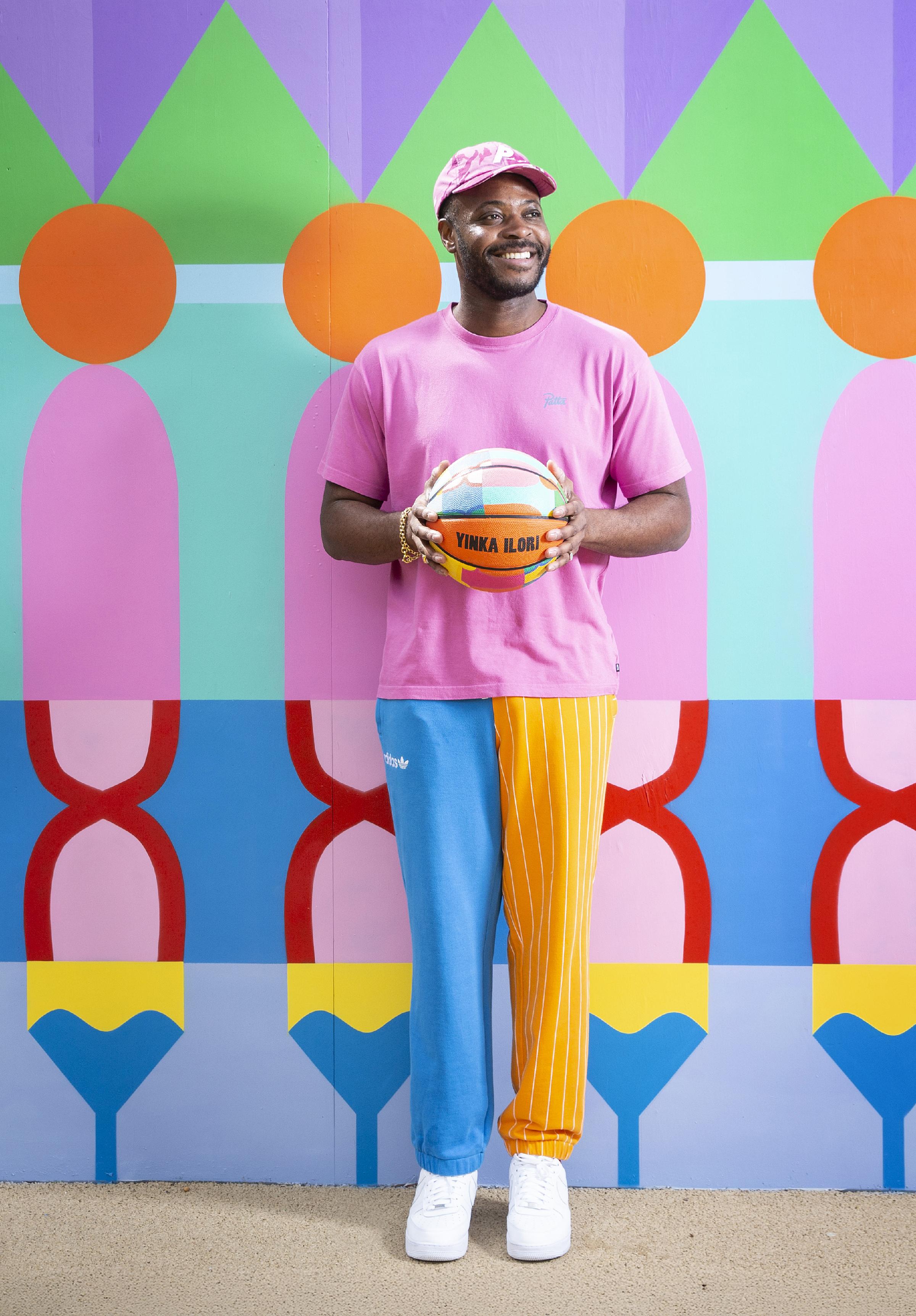
Designer and artist Yinka Ilori his first solo gallery show in London
Ilori also recently launched the Yinka Ilori Foundation, which aims to create permanent community play spaces worldwide
The designer recently transformed the riverside boardwalk at Fulham Pier, London
Ilori is known for his bold approach to colour - but there are some colours he avoids
As designer Yinka Ilori prepares for his first solo gallery show in London, he speaks exclusively to CLADmag about his mission to spread joy, the power of play, and his bold approach to using colour (including the colours you won’t see in his work).
Running at London’s Cristea Roberts Gallery from 5 June to 11 July 2026, Yinka Ilori: Joy Through Resistance, He Who Laughs Last, Laughs Best, spans new paintings, prints, sculpture, and an immersive sound installation. Inspired by his British-Nigerian heritage and the energy of communal gatherings, the exhibition explores themes of diaspora, identity and celebration.
“I’m so excited to present my first immersive solo show, looking at the power of joy in communities,” Ilori said.
“This exhibition is my most personal to date – a reflection of my own story and the resilience of the diaspora. By layering the Nigerian yellow trumpet and the British daffodil over ornamental lace, I’m exploring how we transform hardship into strength.
“These works are about more than just beauty, they are about the ‘quiet resistance’ found in our traditions and our ability to blossom consistently, even in the face of struggle.”
Empowering communities through play
Ilori also recently launched the Yinka Ilori Foundation - a non-profit organisation committed to developing permanent community spaces that ‘empower young people, celebrate local identity and foster long-term self-sufficiency.’
“Throughout my career, I’ve seen how art and design can unite people,” he said. “The Foundation is my way of using design for social change. Play was always my escape and inspiration – a swing could be a spaceship, a seesaw or a stage. That sense of freedom and imagination is central to everything we do.”
The Foundation’s first flagship site will open in Nigeria, where Ilori will launch a permanent playscape created with and for local residents. This space will feature modular play structures that are co-built with the community, and will be supported by a year of free cultural and skills-based programming.
Workshops in music, craft, storytelling, entrepreneurship and fabrication will be offered alongside training in maintenance and caretaking, to ensure that each site remains sustainable and locally stewarded.
“I want to create spaces that aren’t just for communities, but with them,” said Yinka Ilori. “Spaces that empower, connect, and inspire. We’re starting in Nigeria, but this is just the beginning.”
“I want to create spaces that aren’t just for communities, but with them,” said Ilori. “Spaces that empower, connect, and inspire.
“After launching in Nigeria, we plan to expand across Africa, as well as into the US, UK, Middle East, and Asia.”
The power of colour
Known for his bright colours, bold patterns and joy-led design philosophy, Ilori has made his name with large scale public art installations including Transparent Pavilion at Helsinki’s Amox Rex Museum and the Riverside Boardwalk at Fulham Pier, London. He has collaborated with a wide range of brands including Apple, Lego, Playstation, Veuve Cliquot and Bloomingdales.
Ilori’s use of vibrant colours is designed to evoke feelings of happiness and hope, and is strongly tied to his Nigerian heritage. “I often use purple, pink, lilac and orange – colours that radiate warmth and joy,” he said. “Pink, in particular, runs through all my work. Although it’s seen as a feminine colour in some cultures, for me it represents celebration.
“Growing up, I saw my parents and their friends wearing pink to weddings, church, and parties – it was a colour of happiness. I tend to avoid colours like red or black, which my parents associated with danger or darkness. I remember I bought my mum a red suitcase and sent it to her, and she refused to use it because it was red.
“At home, we surrounded ourselves with bright tones – oranges, yellows, pinks – colours that made us smile.”